North Bellmore's Water Table Doesn't Wait — Neither Should We
When your basement floods in North Bellmore, the clock starts immediately. We respond 24/7 with licensed flooded basement cleanup built for the South Shore’s high water table and aging home stock.
I needed a professional consultation explanation of procedure for safe removal of Asbestos in my apartment complex. Without having an account yet, I was very impressed with the caring, knowledgeable and generous advice offered by Jessica, and will look forward to doing business in the future. Thank you so much! I feel much more informed about a sometimes scary endeavor. Peace. Nancy Silva Mineola, NY.
Mia Munoz
Used this company to clean up some water flood in my house. They were fast and easy to work with.very professional, Would recommend to anyone!
Nini Valle
Great company, had a flood and they responded quickly and efficiently. Billed my insurance company directly. I highly recommend this company!
joe colapietro, jr
I had pipe freeze in my basement right before a snow storm and they made to within an hour to help start the clean up process. They we by our side throughout the entire process and even helped with the insurance company. They did such a great job with the cleanup, repair, remidiation, I contracted them to perform the repairs and finishes in the basement. They came with enough manpower and material to get the job done. Leo and Jessica were nothing but a pleasure to deal with!!
Cristian Arredondo c
I had some water damage in my home and Green Island was able to take care of my issue quickly and effectively. I am very pleased with the work they did. They responded quickly and were very professional.
Michael M
Outstanding service! From the office to the field crew everyone was friendly, helpful and responsive. I highly recommend Green Island Group.
Water in your basement isn’t just an inconvenience — in North Bellmore, it’s a compounding problem. The South Shore’s water table sits close to the surface, and the flat terrain means saturated ground stays saturated. That moisture doesn’t just evaporate. It pushes through block foundation walls, seeps under flooring, and settles into framing — where mold can take hold in as little as 24 to 48 hours.
Most of the homes throughout North Bellmore were built between the 1940s and 1960s. That era of construction means older foundations, aging drainage systems, and building materials — floor tiles, pipe insulation — that may contain asbestos. A flooded basement in a home like that isn’t just a water damage call. It can become a hazmat situation if it’s not handled by someone who knows what they’re dealing with.
When the job is done right, you get more than a dry floor. You get a basement that’s been properly dried, tested, and cleared — with no hidden moisture left behind to cause problems six months from now. For a North Bellmore home worth $650,000 or more in this market, that kind of thoroughness isn’t optional. It’s the whole point.
Licensed Basement Flood Restoration North Bellmore
Every License the Job Actually Requires
We’re not a general contractor who added water damage to our service list. We’re a fully licensed restoration and remediation company — holding a NYS DOL Mold License, NYS DOL Asbestos License, USEPA Lead and RRP certifications, IICRC Water Damage Certification, and a Nassau County General Contractor license. That combination matters in North Bellmore, where the housing stock is old and the flood risk is real.
We serve North Bellmore homeowners directly, handling the full scope of what a flooded basement actually involves — water extraction, structural drying, mold remediation, asbestos assessment, and complete restoration back to livable condition. One company. One point of contact. No subcontracting the parts that require a license someone else doesn’t hold.
The team that shows up is the same team customers talk about by name in their reviews — responsive, clear, and focused on getting your home back to normal without cutting corners on the parts you can’t see.
Basement Flooding Remediation Process North Bellmore
What Actually Happens From First Call to Finished Basement
It starts with a call — any hour, any day. When you reach out, you’re talking to someone who can dispatch a crew, not a call center routing your ticket. Response time matters here because in North Bellmore’s high water table environment, water that sits overnight isn’t just spreading — it’s soaking into materials that are much harder and more expensive to restore once mold sets in.
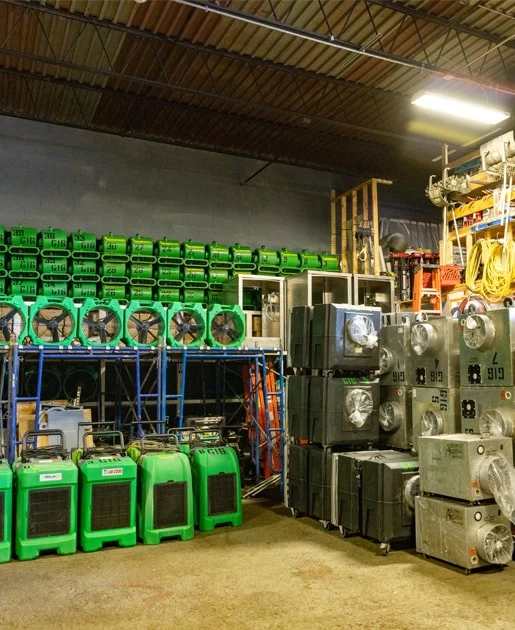
When we arrive, the first priority is assessing the full scope. That means moisture readings, material identification, and — in homes built before 1978, which is most of North Bellmore — a check for asbestos-containing materials before anything gets disturbed. This step protects your family and keeps the job legally compliant under New York State and Nassau County requirements. Industrial extraction equipment removes standing water, then commercial-grade drying equipment runs until moisture levels are confirmed normal — not just until the floor looks dry.
From there, any affected materials — drywall, insulation, flooring — are removed, treated, or replaced depending on what the assessment shows. If mold is present, we handle remediation following NYS DOL licensed protocols. The job closes with documentation: moisture logs, photo records, and the kind of paper trail that supports an insurance claim if you’re filing one. You’ll know exactly what was done and why.
Flooded Basement Cleaning Services North Bellmore NY
Built for the Basements That Have Been Through It
Flooded basement cleanup in North Bellmore covers more ground than most companies advertise. Our scope includes emergency water extraction, structural drying with industrial air movers and dehumidifiers, mold testing and NYS-licensed remediation, asbestos and lead assessment for pre-1978 homes, sewage backup decontamination for Category 3 events, and full structural restoration — framing, drywall, flooring — under a Nassau County General Contractor license.
The sewage backup piece is worth calling out specifically. Older plumbing in homes built in the 1950s and 1960s throughout North Bellmore fails differently than newer systems, and a sewer line backup is a biohazard situation — not a wet floor situation. It requires full decontamination, not just drying. We’re equipped and licensed for that, which most water damage companies are not.
Insurance documentation is also part of our process. Navigating what your homeowners policy covers — and what it doesn’t when flooding comes from groundwater rather than a burst pipe — is genuinely confusing. We help you build the documentation from day one so you’re not trying to reconstruct the damage record after the fact. For North Bellmore homeowners carrying $10,000-plus in annual property taxes on homes approaching $660,000 in value, getting the claim right matters as much as getting the basement dry.
Why do North Bellmore basements flood even without a major storm?
North Bellmore sits on Nassau County’s South Shore coastal plain — a landscape that was historically wetland terrain before suburban development. The water table in this corridor, which runs through Bellmore, Wantagh, Merrick, and Seaford, sits close to the surface year-round. When steady rain falls on already-saturated ground, there’s nowhere for the water to go. It builds hydrostatic pressure against foundation walls and floor slabs, and eventually finds its way in through cracks, floor drains, and the mortar joints of older concrete block foundations.
There’s also a documented drainage issue specific to North Bellmore and the surrounding area. Nassau County maps show a 1,596-acre watershed spanning North Bellmore and North Merrick that funnels into a single 10-acre pond near Sunrise Highway. When debris clogs the weirs and culvert grates at the pond’s outlet, even a few inches of rain can send water backing up into yards and basements throughout the neighborhood. It’s not bad luck — it’s geography. And it’s why sump pump maintenance and knowing who to call when the pump gets overwhelmed matters so much in this community.
How quickly does mold start growing after a basement floods?
Mold can begin colonizing porous materials — drywall, wood framing, carpet, insulation — within 24 to 48 hours of water exposure. The EPA recommends starting cleanup within that same window. The practical target for preventing mold growth entirely is 72 hours from the time water enters the space. After that, you’re no longer just dealing with water damage. You’re dealing with water damage and a mold situation, which adds remediation cost and time to the job.
In North Bellmore, the timeline is compressed by local conditions. Because the water table stays elevated after heavy rain, the ground surrounding your foundation stays saturated longer than it would in areas with deeper water tables. That means the moisture driving into your basement walls doesn’t stop when the rain does — it continues for hours or days afterward. Getting industrial drying equipment running quickly isn’t just good practice here. It’s the difference between a straightforward cleanup and a full remediation project.
My North Bellmore home was built in the 1950s — does that affect flood cleanup?
Yes, significantly. The median construction year for homes in North Bellmore is 1958, and the bulk of the housing stock was built between 1940 and 1969. Homes of that era commonly contain asbestos floor tiles, asbestos pipe insulation, and lead-based paint. Under normal conditions, those materials are stable and don’t pose a risk. But when a basement floods, flooring gets saturated, insulation gets disturbed, and walls get damaged — and that’s when those materials can become a regulated hazard.
New York State and federal EPA rules are clear: any contractor disturbing asbestos-containing materials must hold a NYS DOL Asbestos License. Work involving lead paint in pre-1978 homes requires compliance with EPA Lead RRP protocols. Most water damage restoration companies — including national franchises — do not hold these credentials. We do. That means the cleanup doesn’t stop at the water line. If your 1950s North Bellmore basement has asbestos tile that got soaked, it gets handled correctly — contained, documented, and disposed of properly — not ripped out and tossed in a dumpster.
Does homeowners insurance cover flooded basement cleanup in North Bellmore?
It depends on what caused the flooding, and the distinction matters a lot. Standard homeowners insurance typically covers sudden, accidental water damage — a burst pipe, a failed water heater, an appliance leak. What it generally does not cover is flooding caused by groundwater, surface water, or storm surge. For that, you’d need a separate flood insurance policy, typically through the National Flood Insurance Program (NFIP).
The tricky part for North Bellmore homeowners is that the most common cause of basement flooding here — the water table rising and pushing through foundation walls — often falls into that uncovered category. A sump pump failure during a storm may or may not be covered depending on your specific policy language and whether you have a water backup rider. The best move is to document everything from the moment water appears: photos, moisture readings, a written account of what happened and when. We assist with that documentation process because a well-documented claim gives your adjuster what they need to make the right call. Don’t wait until after the cleanup to start building your file.
Can I clean up a flooded basement myself instead of hiring a professional?
For a small amount of clean water from a known source — say, a slow pipe drip that was caught early — a DIY approach with a wet vac and fans might be sufficient. But for anything beyond that, the risks of doing it yourself in a North Bellmore home outweigh the savings pretty quickly. Consumer-grade fans and dehumidifiers don’t move enough air volume to dry out wall cavities, subfloor layers, or the space between framing members where moisture hides. If that moisture stays, mold follows — and by the time you see or smell it, it’s already established.
There’s also the material question. If your home was built before 1978, which covers almost every house in North Bellmore, you may be dealing with asbestos floor tiles or lead paint without knowing it. Pulling up wet flooring without testing it first is a regulatory violation and a health risk. A licensed professional can identify those materials before anything gets disturbed, handle them correctly, and give you documentation that protects you if questions come up later — whether from an insurance adjuster, a future buyer, or a health concern.
How long does flooded basement cleanup typically take in North Bellmore?
The timeline depends on how much water entered, how long it sat, what materials were affected, and whether mold or hazardous materials are involved. A straightforward water extraction and drying job — caught quickly, clean water source, no mold — typically runs three to five days for the drying phase alone. Structural drying isn’t complete when the floor looks dry. It’s complete when moisture meters confirm that wall cavities, subfloor layers, and framing have returned to normal levels.
In North Bellmore, the drying timeline can run longer than in communities with lower water table exposure because the surrounding soil stays saturated after a rain event, which slows the rate at which moisture migrates out of foundation walls. If mold remediation is needed, that adds time — typically a few additional days depending on the extent. If asbestos-containing materials need to be addressed, abatement follows its own regulated process and timeline. The honest answer is that a thorough job takes as long as it takes to do correctly. Rushing the drying phase to hit an arbitrary deadline is one of the most common reasons homeowners end up dealing with mold problems months after a cleanup was supposedly finished.