When North Massapequa's Drains Back Up, Your Basement Pays the Price
In North Massapequa, where 1960s homes sit on a high water table and storm drains regularly back up during heavy rain, a flooded basement isn’t just an inconvenience — it’s a clock. We respond 24/7 with the licenses and equipment to stop the damage before it compounds.
I needed a professional consultation explanation of procedure for safe removal of Asbestos in my apartment complex. Without having an account yet, I was very impressed with the caring, knowledgeable and generous advice offered by Jessica, and will look forward to doing business in the future. Thank you so much! I feel much more informed about a sometimes scary endeavor. Peace. Nancy Silva Mineola, NY.
Mia Munoz
Used this company to clean up some water flood in my house. They were fast and easy to work with.very professional, Would recommend to anyone!
Nini Valle
Great company, had a flood and they responded quickly and efficiently. Billed my insurance company directly. I highly recommend this company!
joe colapietro, jr
I had pipe freeze in my basement right before a snow storm and they made to within an hour to help start the clean up process. They we by our side throughout the entire process and even helped with the insurance company. They did such a great job with the cleanup, repair, remidiation, I contracted them to perform the repairs and finishes in the basement. They came with enough manpower and material to get the job done. Leo and Jessica were nothing but a pleasure to deal with!!
Cristian Arredondo c
I had some water damage in my home and Green Island was able to take care of my issue quickly and effectively. I am very pleased with the work they did. They responded quickly and were very professional.
Michael M
Outstanding service! From the office to the field crew everyone was friendly, helpful and responsive. I highly recommend Green Island Group.
A Dry Basement Isn't the Finish Line — It's the Starting Point
Most homeowners think the job is done when the water is gone. It isn’t. Moisture hides in wall cavities, under flooring, and inside the framing of your basement — and in a North Massapequa home built in the 1950s or 1960s, that hidden moisture has decades of porous concrete and aging infrastructure to work with. Left alone, it becomes mold. And in North Massapequa, where the water table sits high and storm drains regularly back up during heavy rainfall, the conditions that caused the flooding in the first place don’t disappear when the sun comes out.
What you actually want after a flooded basement is confidence — that the water is gone, the structure is dry, the air is safe, and nothing was missed. That means moisture readings taken inside the walls, not just on the surface. It means understanding whether the water that came in was clean, gray, or sewage-contaminated, because that changes everything about how the cleanup has to be handled. And in a home where asbestos floor tiles or lead paint are likely present — which describes most of the housing stock in North Massapequa — it means making sure whoever is doing the work is actually licensed to touch those materials.
When the job is done right, you’re not just dry. You’re protected from what comes next.
Licensed Basement Flood Remediation, North Massapequa
The License Stack That Most Restoration Companies in North Massapequa Can't Match
We’re a full-service disaster restoration and environmental remediation company serving Nassau County, Suffolk County, and the broader New York metro area. What sets us apart isn’t a tagline — it’s a combination of credentials that almost no competitor in this market holds simultaneously: NYS DOL Mold License, NYS DOL Asbestos License, USEPA Lead and RRP certifications, IICRC Water and Fire Damage certification, and General Contractor licenses covering Nassau County and New York City.
That matters specifically in North Massapequa, where the vast majority of homes were built during the postwar construction boom of the 1950s and 1960s. When water enters a basement in a home of that era, it doesn’t just touch drywall and flooring — it can disturb asbestos-containing floor tiles, pipe insulation, and lead-based paint. Most restoration companies operating in this area are not licensed to handle those materials. We are. That means you get a complete response from one company, on one call, without gaps in accountability or delays waiting for a subcontractor.
Flooded Basement Cleaning Process, North Massapequa
What Actually Happens From the Moment You Call Us
When you call, the first thing we do is ask the right questions — not to delay, but to dispatch the right equipment and the right crew for what you’re actually dealing with. A sump pump overflow is a different situation than a storm drain backup pushing sewage through your floor drain, and those two scenarios require different approaches from the moment we arrive.
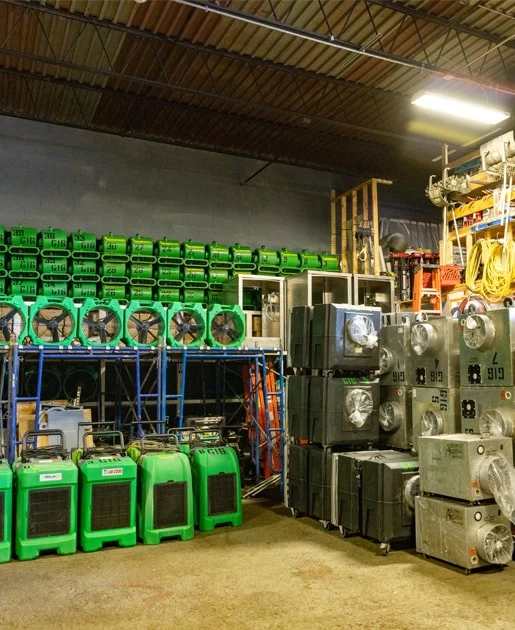
Once on-site, we assess the water category first. Clean water from a pipe failure gets handled differently than the gray or black water that comes back through North Massapequa’s drainage system during a major storm event. We extract standing water, then use professional-grade drying equipment — air movers, dehumidifiers, and moisture detection tools — to address what you can’t see. Moisture readings are taken inside wall cavities and beneath flooring, not just at the surface. We document the entire drying process, which matters when you’re working with an insurance carrier.
If the home has materials that require licensed handling — asbestos tile, pipe insulation, or lead paint disturbed by the water — we address that as part of the same job, under the same roof, without sending you to find a second contractor. Once the structure is confirmed dry and safe, we can handle the full reconstruction under Nassau County’s building codes, from new drywall to finished flooring. One company, start to finish.
Basement Flooding Remediation Services, Nassau County
Built for the Specific Homes and Conditions in North Massapequa
North Massapequa sits in a part of Nassau County where flooding isn’t a freak event — it’s a recurring reality. The community is landlocked, which means it doesn’t face the coastal storm surge that affects Massapequa Park or Seaford to the south, but it does sit on a naturally elevated water table that rises fast when the ground is already saturated. Add aging sump pump systems, degraded drainage tile around 60-year-old foundations, and storm drains that back up during heavy rainfall, and you have a flooding profile that’s specific to this neighborhood.
Every flooded basement cleanup we perform in North Massapequa is scoped to match what’s actually present in the home. That includes a water category assessment, full extraction, structural drying with documentation, and a hazardous materials evaluation for homes built before 1978 — which is most of the housing stock here. If mold is found, we handle it under our NYS DOL Mold License. If asbestos-containing materials are disturbed, we handle abatement under our NYS DOL Asbestos License. If structural repairs are needed after drying, our Nassau County General Contractor license covers the rebuild.
We also help you navigate the insurance piece. There’s a real difference between what standard homeowners insurance covers and what requires a separate flood policy through the NFIP, and we help you document the damage in a way that supports your claim — whatever type of policy you’re working with.
How quickly does mold start growing after a basement floods in North Massapequa?
Mold can begin developing within 24 to 48 hours of water exposure, and by the 72-hour mark, growth is likely if the space hasn’t been professionally dried. That window is tight under any circumstances, but it’s especially relevant in North Massapequa, where the water table stays elevated after a heavy storm. Even after standing water is removed, moisture trapped in wall cavities and under flooring continues to feed mold growth — and in a home built in the 1950s or 1960s, those materials are often porous and highly absorbent.
The critical thing to understand is that surface dryness doesn’t mean structural dryness. A floor that looks and feels dry can still have moisture readings well above safe levels inside the framing. Professional drying equipment — dehumidifiers, air movers, and calibrated moisture meters — is what actually closes that window. The sooner extraction and drying begins, the more likely you are to avoid a mold remediation project on top of the water damage cleanup.
Does homeowners insurance cover a flooded basement in North Massapequa?
It depends entirely on what caused the flooding — and this is where a lot of homeowners in North Massapequa get caught off guard. Standard homeowners insurance typically covers sudden, accidental water damage from internal sources: a burst pipe, a failed water heater, an appliance malfunction. What it generally does not cover is flooding from external sources — storm runoff, groundwater, or drainage system backups — unless you have a specific water backup rider or a separate flood insurance policy through the National Flood Insurance Program (NFIP).
In North Massapequa, where a significant portion of basement flooding is caused by overwhelmed storm drains and a rising water table during heavy rain, many homeowners find themselves in a coverage gap if they haven’t added a water backup endorsement to their policy. The first step after a flood is documenting everything thoroughly — photos, moisture readings, a written scope of damage — before anything is removed or dried. That documentation is what supports your claim, and it’s something we help you build as part of the cleanup process.
My basement flooded and the water smells bad — is that a sewage backup?
Possibly, yes. When storm drains in North Massapequa become overwhelmed during a major rainfall event, water doesn’t just stop at the curb — it can reverse through the municipal sewer system and push back into homes through basement floor drains. That’s called a Category 3 or “black water” event, and it’s a biohazard situation that requires full decontamination, not just extraction and drying.
The smell is a strong indicator, but it’s not the only one. If your basement flooding happened during or immediately after a heavy storm and the water entered through a floor drain rather than through the walls or a window well, sewage contamination is likely. This type of cleanup involves removing and safely disposing of any porous materials that came into contact with the water — flooring, drywall, insulation — and treating the space with appropriate antimicrobial agents before drying begins. It’s a more involved process than clean water extraction, and it requires proper documentation if you’re filing an insurance claim. Don’t try to clean this one up yourself.
Does my North Massapequa home have asbestos in the basement, and does that matter for cleanup?
If your home was built before 1978 — which covers the vast majority of homes in North Massapequa — there’s a real possibility that asbestos-containing materials are present in the basement. The most common locations are floor tiles (especially 9×9 inch vinyl floor tiles, which were nearly universally made with asbestos through the 1970s), pipe insulation wrapped around older heating and plumbing lines, and ceiling tiles. These materials are generally considered stable when left undisturbed, but flooding changes that.
When water saturates asbestos floor tiles or soaks insulation, it can compromise the material’s integrity and create a condition where fibers are more easily disturbed during cleanup. In New York State, any contractor who disturbs asbestos-containing materials is required to hold a NYS DOL Asbestos License — and most water damage restoration companies operating in this area do not have one. We do. That means we can assess, contain, and abate those materials as part of the same cleanup job, without stopping work and calling in a separate subcontractor. For a 1960s home in North Massapequa, that’s not a hypothetical scenario — it’s a practical reality we’re prepared for.
How much does flooded basement cleanup cost in North Massapequa, NY?
The range is genuinely wide — typically somewhere between $1,600 and $12,000 or more — and the variation comes down to a few key factors: the size of the basement, how long the water sat before cleanup began, what category of water was involved (clean, gray, or sewage), and whether hazardous materials like asbestos or lead paint require licensed handling. In North Massapequa, that last factor is relevant more often than not, given the age of the housing stock.
The number that puts cost in perspective: FEMA estimates that just one inch of standing water can cause approximately $25,000 in property damage when you factor in structural repairs, flooring replacement, and content losses. The cleanup itself — even at the higher end — is a fraction of what deferred or incomplete remediation costs down the road. Mold remediation added on top of water damage cleanup, or structural damage from moisture that wasn’t fully dried, pushes total costs significantly higher. We provide a clear scope and cost estimate before any work begins, so you know exactly what you’re looking at.
Why does my basement keep flooding every time it rains hard in North Massapequa?
This is one of the most common questions we hear from homeowners in this area, and the honest answer is that North Massapequa’s geography makes recurring basement flooding more likely than in many other parts of Long Island. The community sits on a naturally elevated water table — meaning the ground is already holding significant moisture before a storm even arrives. When heavy rain comes in, that water table rises quickly, creating hydrostatic pressure against basement walls and floors that pushes water through even small cracks in the foundation.
At the same time, North Massapequa’s storm drain infrastructure — like most of Nassau County’s — was built to handle typical rainfall, not the extreme precipitation events that have become more frequent in recent years. When those drains back up, water has nowhere to go except into the lowest point available, which is usually your basement floor drain or the base of your foundation walls. In homes built 60 or 70 years ago, the original drainage tile around the foundation has often degraded, sump pump systems are aging, and foundation walls have developed small cracks over decades of seasonal ground movement. Addressing the immediate flooding is step one — but understanding the underlying drainage and foundation conditions is what prevents the next event from being just as bad.