North Merrick's Older Homes Don't Forgive a Slow Response
When water gets into a basement built in the 1950s, the clock starts immediately. We respond 24/7 across North Merrick with the licenses and equipment to stop the damage before it compounds.
I needed a professional consultation explanation of procedure for safe removal of Asbestos in my apartment complex. Without having an account yet, I was very impressed with the caring, knowledgeable and generous advice offered by Jessica, and will look forward to doing business in the future. Thank you so much! I feel much more informed about a sometimes scary endeavor. Peace. Nancy Silva Mineola, NY.
Mia Munoz
Used this company to clean up some water flood in my house. They were fast and easy to work with.very professional, Would recommend to anyone!
Nini Valle
Great company, had a flood and they responded quickly and efficiently. Billed my insurance company directly. I highly recommend this company!
joe colapietro, jr
I had pipe freeze in my basement right before a snow storm and they made to within an hour to help start the clean up process. They we by our side throughout the entire process and even helped with the insurance company. They did such a great job with the cleanup, repair, remidiation, I contracted them to perform the repairs and finishes in the basement. They came with enough manpower and material to get the job done. Leo and Jessica were nothing but a pleasure to deal with!!
Cristian Arredondo c
I had some water damage in my home and Green Island was able to take care of my issue quickly and effectively. I am very pleased with the work they did. They responded quickly and were very professional.
Michael M
Outstanding service! From the office to the field crew everyone was friendly, helpful and responsive. I highly recommend Green Island Group.
Most North Merrick homes were built between 1940 and 1969. That’s not a small detail — it’s the entire context for what a flooded basement actually means here. Foundations that have been in the ground for 60 or 70 years develop micro-cracks. Drainage systems installed in the 1950s weren’t designed for the storm intensity this area sees now. When groundwater pushes through those walls, it doesn’t just wet the floor — it gets into framing, insulation, and wall cavities that hold moisture long after the visible water is gone.
When we handle the cleanup correctly, you’re not just dry — you’re protected. We find hidden moisture with detection equipment, not guesswork. Framing and insulation that absorbed water get addressed before mold has a chance to take hold. And because the median home value in North Merrick is approaching $850,000, getting this right isn’t optional — it’s the only responsible outcome for a property of that worth.
The 72-hour window is real. After water sits in a basement for more than two to three days, mold becomes likely — especially in older homes with original framing and limited airflow. A fast, thorough response doesn’t just clean up the mess. It protects your home’s structure, your indoor air quality, and the long-term value of an asset you’ve invested heavily in.
Every License New York Requires — We Hold Them All
We’re a full-service disaster restoration and environmental remediation company serving Nassau County, including North Merrick and the surrounding Town of Hempstead communities. Our credentials aren’t a marketing angle — they’re the reason homeowners in this area trust us with properties that have been in their families for decades.
New York State requires a dedicated mold contractor license that most companies operating in this market simply don’t hold. We do. We also carry a NYS DOL Asbestos License, USEPA Lead and RRP certifications, IICRC Water and Fire Damage certification, and a Nassau County General Contractor license — which means we can legally pull permits and complete full structural restoration right here in the Town of Hempstead.
For a neighborhood like North Merrick — where a significant portion of homes predate 1960 and may contain asbestos floor tiles or lead-based paint — that licensing stack isn’t a bonus. It’s the baseline for doing this work safely and legally. We handle everything from water extraction through structural rebuild under one roof, with no subcontracting and no handoffs.
Flooded Basement Remediation Process North Merrick
From Standing Water to Solid Ground — Here's Our Sequence
The first thing we do when we arrive is assess the situation honestly. That means identifying where the water came from, what category it falls into, and what’s actually wet — including materials you can’t see. Clean water from a burst pipe is a different job than sewage that backed up through a floor drain during a heavy nor’easter, and our process reflects that. Category 3 events — black water from sewer backup — require full biohazard decontamination, not just drying. North Merrick’s aging municipal infrastructure makes this a real scenario, not a hypothetical one.
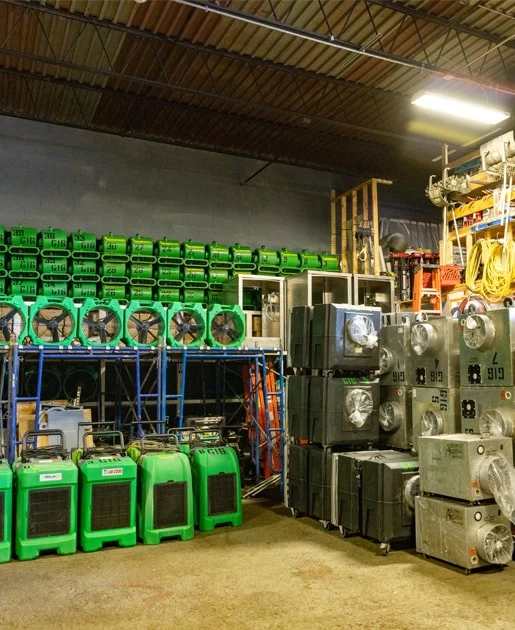
Once we control the source, we extract standing water and begin structural drying using commercial-grade equipment. Moisture readings guide the process — we don’t call a basement dry because it looks dry. We call it dry when the numbers confirm it. If materials like drywall, insulation, or flooring need to come out, we handle that carefully. In a home built before 1978, that means testing or treating for asbestos and lead before anything gets disturbed — a step that’s legally required in New York State and one that unlicensed operators routinely skip.
After drying is confirmed, we assess what needs to be rebuilt. Because we hold a Nassau County General Contractor license, we can pull the necessary permits through the Town of Hempstead and complete the structural restoration ourselves. You’re not left coordinating a second contractor to finish what we started.
Basement Flooding Remediation Services North Merrick NY
What's Actually Included When We Handle Your Basement
Flooded basement cleanup in North Merrick isn’t a single service — it’s a sequence of connected steps that have to be done in the right order by someone licensed to do all of them. We cover the full scope: emergency water extraction, structural drying, moisture mapping, mold assessment and remediation, asbestos and lead handling where required, debris removal, and complete structural rebuild. Nothing gets handed off to a subcontractor.
The asbestos and lead component matters more in North Merrick than it does in newer communities. With roughly a third of homes built before 1950 and the majority constructed before federal hazmat regulations took effect, the odds of encountering asbestos floor tiles, pipe insulation, or lead paint during basement remediation are meaningful — not remote. Our NYS DOL Asbestos License and USEPA Lead/RRP certification mean we’re legally authorized to handle those materials. A company without those credentials cannot legally disturb them during the course of cleanup in New York State.
We also manage the insurance process directly. We document the damage, coordinate with your adjuster, and bill your carrier directly where coverage applies. Whether your event falls under a standard homeowners policy or requires a separate flood insurance claim, we handle the documentation so you’re not navigating that process alone on top of everything else. One call, one team, start to finish.
What causes basement flooding in North Merrick homes after heavy rain?
North Merrick sits on Long Island’s South Shore geology — a mix of sand, clay, and glacial deposits where the water table in many neighborhoods sits only a few feet below the surface. When a nor’easter rolls through or a heavy summer storm drops several inches of rain in a short window, that water table rises fast. It pushes against foundation walls through hydrostatic pressure, and in homes built in the 1940s and 1950s, those walls have had decades to develop the micro-cracks and deteriorated mortar joints that let water in.
Sump pumps are the first line of defense, but many North Merrick homes have pumps that are undersized for today’s storm intensity or simply past their service life. When the pump fails during peak demand — which is exactly when you need it most — the basement fills. Storm drain systems installed in the 1950s weren’t engineered for the rainfall volumes this area now sees regularly. All of that adds up to a flooding risk that’s structural, not just situational.
How quickly does mold grow after a basement floods, and why does it matter?
The EPA recommends starting cleanup within 24 to 48 hours of water exposure. Industry data consistently shows that if a basement is dried out within 72 hours, mold growth is unlikely. After that window, the conditions in an older North Merrick home — original framing, limited airflow, insulation that holds moisture — become exactly what mold needs to establish itself inside wall cavities and behind materials you can’t see from the surface.
In a home built in the 1950s, mold isn’t just a cosmetic problem. It can compromise structural framing, create serious indoor air quality issues, and turn what started as a water damage event into a full remediation project with a significantly higher cost and a longer timeline. That’s why the 72-hour window drives everything we do — it’s not urgency for its own sake, it’s the actual science behind why a fast response produces a fundamentally different outcome than waiting until morning.
Does homeowners insurance cover basement flooding in North Merrick, NY?
It depends on the cause, and that distinction matters a lot. Standard homeowners insurance typically covers sudden and accidental water damage — a burst pipe, a failed water heater, an appliance malfunction. It does not cover flooding from outside sources, which includes groundwater rising through the foundation or surface water entering the home from a storm. That type of flooding requires a separate flood insurance policy, usually through FEMA’s National Flood Insurance Program.
Sewer backup is its own category. Many standard homeowners policies exclude it unless you’ve added a specific sewer backup rider. Given North Merrick’s aging sewer infrastructure and the frequency of heavy rain events that overwhelm those systems, this is a coverage gap worth knowing about before you need it. When you call us, we help you understand what your specific event is likely categorized as, document the damage thoroughly for your adjuster, and bill your carrier directly where coverage applies. You don’t have to figure out the insurance side of this on your own.
My North Merrick home was built in the 1950s — is asbestos a concern during basement cleanup?
Yes, and it’s not a remote concern — it’s a realistic one for the majority of homes in North Merrick. The median construction year for homes in this hamlet is 1953, and a significant portion were built before 1950. Homes from that era commonly contain asbestos floor tiles, asbestos pipe insulation, and asbestos-containing ceiling materials. When a basement floods and remediation work begins — removing damaged flooring, cutting into walls, disturbing insulation — those materials can be released if they’re not handled by a licensed contractor.
New York State requires a separate NYS DOL Asbestos License for this work. A restoration company that doesn’t hold that license cannot legally disturb asbestos-containing materials during the course of cleanup. We hold the NYS DOL Asbestos License and USEPA Lead/RRP certification, which means we can legally identify, contain, and handle these materials as part of your basement remediation. If your home was built before 1978, this is something you should ask any contractor about before they start pulling up flooring or cutting into walls.
What's the difference between water damage cleanup and mold remediation — are they the same job?
They’re related but not the same, and the distinction affects both the process and the cost. Water damage cleanup focuses on extracting standing water, drying out affected materials, and preventing further damage. Mold remediation is what happens when mold has already established itself — it involves containment, removal of affected materials, treatment, and clearance testing to confirm the space is safe.
If water damage cleanup is done quickly and thoroughly, mold remediation may not be necessary at all. That’s the goal. But if cleanup is delayed — or if it’s done incompletely, with moisture left behind in wall cavities or under subflooring — mold can grow before anyone realizes it’s there. In North Merrick’s older housing stock, where original framing and insulation hold moisture longer than modern materials, incomplete drying is a real risk. We hold a NYS DOL Mold License, which means if remediation becomes necessary, we handle that phase too — without bringing in a second company or starting the process over.
What should I do in the first hour after discovering a flooded basement?
The first priority is safety. Don’t enter a flooded basement if there’s any possibility that electrical outlets, panels, or appliances are submerged or in contact with water. If you’re not certain the power is off, don’t go in — call your utility provider first. Once it’s confirmed safe to enter, try to identify the source. If it’s a burst pipe, shut off the main water supply. If it’s sewage backing up through a floor drain, don’t attempt to clean it yourself — that’s a biohazard situation that requires licensed remediation.
After that, call a restoration company immediately. Every hour matters. In a North Merrick home with older framing and insulation, moisture migrates fast — into wall cavities, up through subfloor materials, and into spaces you can’t see from the surface. Document everything with photos and video before anything is moved or cleaned, because that documentation becomes your insurance claim. We operate 24 hours a day, seven days a week, specifically because flooding doesn’t happen on a convenient schedule — and because waiting until business hours in a home built in 1953 can mean the difference between a cleanup and a full remediation.