Flooded Basement Cleanup in North Valley Stream, NY
When Your 1950s Basement Floods, Half Measures Make It Worse
North Valley Stream homes were built long before modern waterproofing existed — and when they flood, the damage goes deeper than what you can see. We handle the full cleanup, drying, and restoration so you’re not left guessing whether the problem is actually gone.
I needed a professional consultation explanation of procedure for safe removal of Asbestos in my apartment complex. Without having an account yet, I was very impressed with the caring, knowledgeable and generous advice offered by Jessica, and will look forward to doing business in the future. Thank you so much! I feel much more informed about a sometimes scary endeavor. Peace. Nancy Silva Mineola, NY.
Mia Munoz
Used this company to clean up some water flood in my house. They were fast and easy to work with.very professional, Would recommend to anyone!
Nini Valle
Great company, had a flood and they responded quickly and efficiently. Billed my insurance company directly. I highly recommend this company!
joe colapietro, jr
I had pipe freeze in my basement right before a snow storm and they made to within an hour to help start the clean up process. They we by our side throughout the entire process and even helped with the insurance company. They did such a great job with the cleanup, repair, remidiation, I contracted them to perform the repairs and finishes in the basement. They came with enough manpower and material to get the job done. Leo and Jessica were nothing but a pleasure to deal with!!
Cristian Arredondo c
I had some water damage in my home and Green Island was able to take care of my issue quickly and effectively. I am very pleased with the work they did. They responded quickly and were very professional.
Michael M
Outstanding service! From the office to the field crew everyone was friendly, helpful and responsive. I highly recommend Green Island Group.
Surface drying is the most common mistake made after a basement flood — and in a pre-1960 Cape Cod or ranch home in North Valley Stream, it’s also the most expensive one. Water moves into plaster walls, under original hardwood floors, and into the wood framing between joists. If it doesn’t get pulled out completely, mold follows within 24 to 48 hours. By the time you smell it, you’re already looking at a significantly larger job.
The homes on these streets were built in the 1940s and 1950s, and many sit on concrete block foundations that weren’t designed to handle the groundwater pressure Nassau County sees today. When heavy rain hits and the drainage system gets overwhelmed — which restoration specialists specifically flag as a recurring problem in the North Valley Stream and Elmont area — water doesn’t just come in through the floor drain. It seeps through foundation walls. It backs up through old pipes. It finds every gap a 70-year-old foundation has to offer.
What you get when the job is done right isn’t just a dry floor. It’s documented moisture readings, confirmed air quality, and the confidence that mold isn’t quietly growing inside your walls while you go back to your normal routine.
We are a Nassau County-licensed general contractor and certified restoration company serving North Valley Stream and the surrounding communities. That combination matters more than it might sound. Most restoration companies can extract water and run dehumidifiers. What they can’t always do — legally — is replace your drywall, repair your framing, or handle the asbestos floor tiles that show up in a lot of basements in homes built before 1960. We hold the NYS DOL Mold License, NYS DOL Asbestos License, USEPA Lead certifications, and the Nassau County General Contractor license. That’s the full stack needed to take a flooded basement in North Valley Stream from soaked to fully restored without handing the job off to a second contractor.
We’re available 24 hours a day, seven days a week — because flooding in this area doesn’t wait for business hours, and neither should your response.
Flooded Basement Cleaning Process North Valley Stream
What Actually Happens From the First Call to the Final Walkthrough
When you call, someone picks up — day or night. The first step is getting a crew to your home quickly, because the 72-hour window before mold takes hold starts the moment water enters your basement, not the moment you call. Once on-site, we assess the full scope of what you’re dealing with: how the water got in, how far it’s traveled, and what’s been affected beyond the visible surface. In older North Valley Stream homes, that assessment includes checking for compromised floor tiles, lead paint exposure, and moisture inside structural elements — not just the floor.
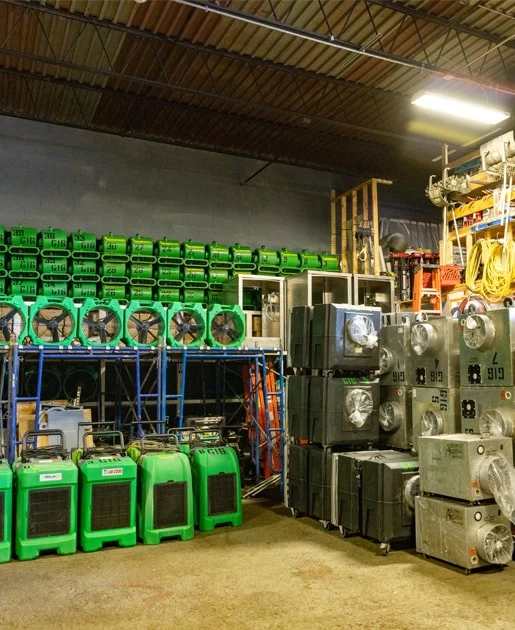
From there, water extraction and structural drying begin using professional-grade equipment. Moisture readings are taken throughout the process, not just at the end, so there’s a documented record of what was found and when it was resolved. If the event is covered by your homeowners insurance — which applies to sudden, accidental causes like a burst pipe or failed sump pump — we work directly with your carrier and handle the documentation. You don’t have to figure out what’s covered on your own.
If the cleanup reveals damage that requires structural repair, our Nassau County General Contractor license means that work can happen under the same contract, with the same team. No gaps, no handoffs, no second contractor to coordinate.
Basement Flood Cleanup Services North Valley Stream NY
Built for Older Homes, Nassau County Codes, and Real Emergencies
Flooded basement cleanup in North Valley Stream isn’t a one-size-fits-all job. The housing stock here is older, the groundwater table is high, and the drainage infrastructure in this part of southwestern Nassau County has been absorbing more than it was designed to handle for decades. An approach built for a newer home in a different county doesn’t translate here.
Our scope of work covers water extraction, structural drying, moisture documentation, mold assessment and remediation, and full structural restoration when needed — including drywall, flooring, and framing. For homes with pre-1978 materials, we are licensed to handle asbestos and lead hazards that surface during the process, which is a real consideration in a community where a meaningful share of homes were built before 1950. All restoration work requiring permits falls under our Nassau County General Contractor license, so there’s no question about who’s accountable for the finished result.
For homeowners dealing with sewage backup — which happens in this area when heavy rain overwhelms aging combined sewer lines — we treat the cleanup as a Category 3 biohazard event, not a standard water job. That means full decontamination, not just drying. The Southern State Parkway interchange sits right here in North Valley Stream, which means our response teams have direct highway access to this community at any hour — and that matters when every hour counts.
Does homeowners insurance cover a flooded basement in North Valley Stream, NY?
It depends on what caused the flooding, and this is where a lot of North Valley Stream homeowners get confused. Standard homeowners insurance typically covers sudden, accidental water damage — a burst pipe during a January freeze, a sump pump that failed during a storm, a washing machine line that gave out. What it generally does not cover is natural flooding from groundwater rising, storm runoff coming in through the foundation, or water backing up from an overwhelmed municipal drain.
North Valley Stream sits in a low-lying area with a high groundwater table, and the drainage infrastructure here was built to handle a different era’s rainfall patterns. That means some flooding events fall into a gray area that’s worth discussing with your carrier before you assume you’re not covered. We assist with insurance documentation and work directly with carriers — so if there’s a legitimate claim to be made, you’re not navigating that process alone while also dealing with a wet basement.
How quickly does mold grow after a basement floods in an older North Valley Stream home?
Mold can begin growing within 24 to 48 hours of water exposure — and in an older North Valley Stream home, the conditions often accelerate that timeline. Pre-1960 construction typically includes materials like plaster, original wood framing, and older insulation that hold moisture longer than modern building materials. Once water gets into those materials, it doesn’t evaporate on its own, and the environment inside a wall cavity or under a subfloor is exactly what mold needs to establish itself.
The 72-hour mark is the critical threshold. Before that point, professional drying and extraction can usually prevent mold from taking hold. After it, you’re often looking at a separate mold remediation job on top of the original water damage cleanup — which is a meaningful cost difference. That’s why response time matters as much as it does, and why calling sooner rather than waiting to see if things dry out on their own is almost always the right call.
What causes basements to flood in North Valley Stream even during moderate rain?
The main culprit is a combination of high groundwater and aging infrastructure. Nassau County has naturally elevated groundwater levels, and North Valley Stream’s flat, low-lying terrain doesn’t drain quickly. When rain is sustained over a period of hours — or when consecutive storms hit within days of each other — the ground becomes saturated and the water table rises. At that point, hydrostatic pressure pushes groundwater through foundation cracks and floor gaps even without a direct pipe failure or major storm event.
The drainage systems in this part of southwestern Nassau County were designed for a different era. Many of the storm drains and sewer lines serving these streets were installed alongside homes built in the 1930s through 1950s, and they weren’t built to handle the volume or intensity of rainfall that’s become more common. Add in the fact that the Southern State Parkway and its interchange — which runs directly through North Valley Stream — generates significant impervious surface runoff that compounds local drainage pressure, and you have a community that sees basement flooding more often than homeowners in newer, better-drained areas.
Do I need a permit for basement restoration work in North Valley Stream after flooding?
For basic water extraction and drying, no permit is typically required. But once the work moves into structural repairs — replacing drywall, repairing or replacing flooring, addressing damaged framing — you’re in general contractor territory, and permits are required under Nassau County and Town of Hempstead jurisdiction. North Valley Stream is an unincorporated hamlet, which means it doesn’t have its own village building department. Permit and code compliance falls under Nassau County and the Town of Hempstead, not a local village office.
This is worth knowing before you hire anyone. A contractor who performs structural restoration work in Nassau County without the appropriate general contractor license is doing that work without proper authorization — which can create problems when you go to sell the home or file an insurance claim. We hold the Nassau County General Contractor license, so all structural work performed after a flood cleanup is fully permitted and compliant from start to finish.
Should I be worried about asbestos or lead if my North Valley Stream basement flooded?
If your home was built before 1978 — and a significant portion of homes in North Valley Stream were built well before that — it’s a legitimate question worth asking before anyone starts tearing out materials. Asbestos was commonly used in floor tiles, pipe insulation, and ceiling materials in homes built through the mid-1970s. Lead paint was standard on interior and exterior surfaces before 1978. When a basement floods and materials get disturbed, those hazards can become active concerns.
The problem is that most restoration companies aren’t licensed to handle them. They can extract water and dry surfaces, but if they pull up floor tiles or cut into walls without the proper licensing, they may be creating a hazmat situation rather than resolving one. We hold both the NYS DOL Asbestos License and USEPA Lead and RRP certifications. If those materials are present in your basement, our team is equipped and licensed to handle them as part of the same cleanup — not as a separate job you have to coordinate with someone else.
How do I know the basement is actually dry and safe after a cleanup crew leaves?
The honest answer is that you can’t know based on how it looks or feels — and that’s the core problem with incomplete cleanup jobs. A basement can appear dry on the surface while retaining significant moisture inside walls, under flooring, and within structural framing. In a North Valley Stream home built in the 1940s or 1950s, those materials absorb and hold water differently than modern construction, which makes visual inspection an unreliable standard.
Professional moisture detection equipment reads saturation levels inside structural elements, not just on surfaces. We take moisture readings throughout the drying process and document them — so when the job is marked complete, there’s a record showing actual moisture levels at multiple points in the space, not just a technician’s visual sign-off. That documentation also matters for insurance purposes and for your own peace of mind if you ever have questions down the road about whether the work was done thoroughly.