When Old Bethpage's Aging Homes Flood, Incomplete Cleanup Costs More Than the Water Did
Most homes in Old Bethpage were built in the 1950s and 60s — and when those basements flood, what’s hiding inside the walls matters just as much as the water on the floor. We handle flooded basement cleanup in Old Bethpage, NY with the licensing and equipment to do it completely, the first time.
I needed a professional consultation explanation of procedure for safe removal of Asbestos in my apartment complex. Without having an account yet, I was very impressed with the caring, knowledgeable and generous advice offered by Jessica, and will look forward to doing business in the future. Thank you so much! I feel much more informed about a sometimes scary endeavor. Peace. Nancy Silva Mineola, NY.
Mia Munoz
Used this company to clean up some water flood in my house. They were fast and easy to work with.very professional, Would recommend to anyone!
Nini Valle
Great company, had a flood and they responded quickly and efficiently. Billed my insurance company directly. I highly recommend this company!
joe colapietro, jr
I had pipe freeze in my basement right before a snow storm and they made to within an hour to help start the clean up process. They we by our side throughout the entire process and even helped with the insurance company. They did such a great job with the cleanup, repair, remidiation, I contracted them to perform the repairs and finishes in the basement. They came with enough manpower and material to get the job done. Leo and Jessica were nothing but a pleasure to deal with!!
Cristian Arredondo c
I had some water damage in my home and Green Island was able to take care of my issue quickly and effectively. I am very pleased with the work they did. They responded quickly and were very professional.
Michael M
Outstanding service! From the office to the field crew everyone was friendly, helpful and responsive. I highly recommend Green Island Group.
A Dry Basement Isn't Enough — Here's What Complete Actually Looks Like
When the water is gone and the fans are off, most homeowners assume the job is done. It usually isn’t. Moisture trapped inside concrete block walls, original drywall, and aging insulation — the kind you’ll find in the majority of homes throughout Old Bethpage — keeps feeding mold growth long after the floor looks dry. The EPA puts mold’s starting window at 24 to 48 hours. That’s not a sales line. That’s just how fast things move when water gets into a 60-year-old wall.
What complete cleanup actually looks like is this: water extracted, structural moisture mapped with detection equipment, affected materials properly removed or treated, air quality restored, and documentation in hand for your insurance carrier. For homes built before 1970 — which accounts for roughly three-quarters of Old Bethpage’s housing stock — that process also means checking whether asbestos-containing floor tiles or pipe insulation were disturbed during the event. That’s not a step most cleanup companies are licensed to handle. It’s a step we handle as standard.
The result isn’t just a dry basement. It’s a basement you don’t have to think about again — no mold surprise two weeks later, no insurance dispute over undocumented damage, no second contractor to call when the structural work starts.
Licensed Basement Flooding Remediation, Nassau County
Every License This Job Requires — Under One Roof
We’re a full-service disaster restoration and environmental remediation company serving Nassau County, Suffolk County, and the greater New York metro area. The credential stack matters here: NYS DOL Mold License, NYS DOL Asbestos License, USEPA Lead and RRP certifications, IICRC Water Damage Certification, and a Nassau County General Contractor license. That combination means one company handles the full scope — extraction, remediation, and structural restoration — without handing you off to anyone else.
For Old Bethpage specifically, that licensing depth isn’t a formality. Homes throughout this hamlet were built during the exact decades when asbestos and lead-based materials were standard in basement construction. When a flood disturbs those materials, the cleanup requires state and federal authorization that most restoration companies simply don’t hold. We do.
The team that responds to your call is the same team that sees the job through. Customers consistently describe the experience the same way — from the first phone call to the final walkthrough, the whole operation runs like a professional outfit should.
What Happens From the Moment You Call to the Day It's Done
It starts with a call — any time, day or night. We run 24/7 emergency response because the flooding events that hit Old Bethpage most often don’t wait for business hours. Sump pump failures during power outages, burst pipes during a February cold snap, appliance overflows — these happen at midnight and on weekends. When you call, you reach a real person, and dispatch moves quickly from there.
Once on-site, the first priority is assessment. That means identifying the water source, categorizing the contamination level, and running moisture detection equipment through the affected areas — not just the visible ones. In older Old Bethpage homes, water travels. It gets into concrete block foundations, under original subflooring, and inside wall cavities that look perfectly fine from the outside. Skipping this step is exactly how a “cleaned up” basement develops a mold problem three weeks later.
From there, extraction and structural drying begin in sequence, with equipment staged based on what the moisture readings actually show — not a standard setup dropped in every job. If asbestos-containing materials were disturbed, that work is handled under proper containment protocols before anything else moves forward. Once the structure is confirmed dry, we can carry the job through full restoration — drywall, flooring, framing — under our Nassau County General Contractor license, so you’re not starting over with a second company to get your basement back to normal.
Basement Flood Damage Remediation, Old Bethpage NY
Built for Nassau County's Oldest Homes — Not Just the Water on the Floor
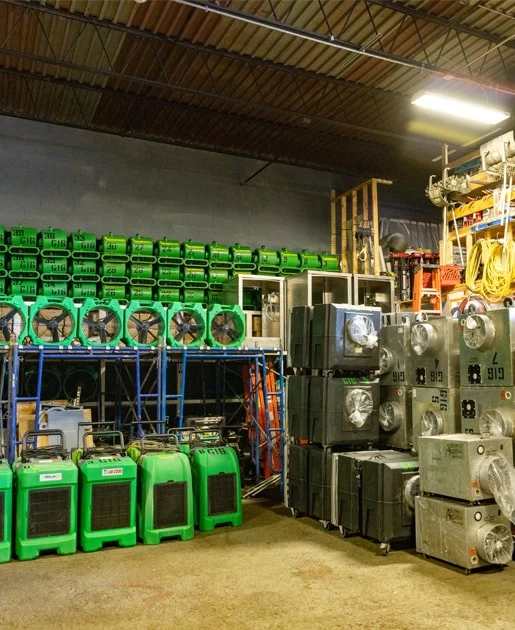
Our flooded basement cleanup in Old Bethpage covers more ground than most companies advertise. The full scope includes emergency water extraction, thermal imaging and moisture mapping, structural drying with industrial air movers and dehumidifiers, mold assessment and remediation under NYS DOL licensing, and insurance documentation prepared to carrier standards. For pre-1978 homes — the overwhelming majority of Old Bethpage’s housing stock — the process also includes inspection for asbestos-containing materials and lead-based paint under USEPA and NYS DOL authorization before any demolition or removal takes place.
The insurance piece gets its own attention here because it’s where a lot of Old Bethpage homeowners get tripped up. Standard homeowners insurance typically covers sudden and accidental events — a burst pipe, a failed appliance, a sump pump overflow. Natural groundwater flooding from a storm usually requires a separate flood policy. We help you identify which coverage applies, prepare the documentation your insurer needs, and work directly with your carrier so the claim process doesn’t fall on you to figure out alone.
When structural restoration is needed after the remediation is complete — new drywall, flooring replacement, framing repair — that work is completed under our Nassau County General Contractor license. No referrals, no coordination gap, no waiting on a second contractor’s schedule. One company, start to finish.
What actually causes basement flooding in Old Bethpage homes, and why so often?
The most common cause in Old Bethpage is sump pump failure during a power outage — and it’s a particularly frustrating pattern because the same storm that floods your basement is usually the one that knocks out your power. Most homes in this hamlet were built in the 1950s and 60s, which means many were constructed before battery-backup sump systems were standard equipment. When the power goes, the pump stops, and groundwater that’s been rising against the foundation has nowhere to go.
Beyond sump pump failures, burst pipes during February cold snaps are a consistent issue across Old Bethpage’s older housing stock. Galvanized steel plumbing from that era corrodes over decades, and a hard freeze can push an already-weakened pipe past its limit. Appliance failures — water heaters, washing machines, older HVAC condensate lines — account for a significant share of the rest. The common thread is aging infrastructure in homes that are 55 to 70 years old, and the solution isn’t just cleanup — it’s cleanup done by someone who understands what’s inside those walls.
How quickly does mold start growing after a basement floods in Nassau County?
The EPA’s guidance puts mold growth at 24 to 48 hours after water exposure under the right conditions — and basements in Old Bethpage’s older homes provide exactly those conditions. Concrete block foundations, original fiberglass insulation, and wood framing that’s been in place for 60-plus years absorb moisture deeply and hold it. Even after surface water is extracted, that residual moisture inside structural materials keeps the mold clock running.
The 72-hour window is the industry benchmark for preventing mold growth — if a basement is fully dried within that timeframe, the risk drops significantly. That’s why response speed matters, but it’s also why extraction alone isn’t enough. A basement that looks dry but still reads elevated moisture inside the walls is still a mold risk. We use professional moisture detection equipment to confirm actual structural dryness, not just surface dryness, before the job is considered complete. If mold has already begun, remediation is handled under our NYS DOL Mold License — which is a legal requirement in New York State for any professional mold work.
Does my homeowners insurance cover a flooded basement in Old Bethpage, NY?
It depends entirely on what caused the flooding — and this is where a lot of Old Bethpage homeowners get caught off guard. Standard homeowners insurance typically covers sudden and accidental water damage: a pipe that bursts, a sump pump that fails due to a mechanical issue, a washing machine that overflows. These are considered internal, unexpected events, and most policies include them.
What standard homeowners insurance does not cover is natural flooding — groundwater that rises after a heavy rain and seeps through your foundation, or stormwater that backs up through a drain. That type of flooding requires a separate flood insurance policy, typically through FEMA’s National Flood Insurance Program. Since Old Bethpage’s flooding risk is entirely inland — driven by groundwater and infrastructure, not coastal surge — many residents don’t carry flood coverage and don’t realize the gap until they’re filing a claim. We help you work through which coverage applies to your specific situation, prepare the documentation your insurer needs, and communicate directly with your carrier. That support alone can make a meaningful difference in how your claim gets processed.
My Old Bethpage home was built in the 1960s — is asbestos a real concern during basement cleanup?
Yes, and it’s one of the most important questions to ask before any cleanup company starts pulling up floor tiles or cutting into walls. Homes built between roughly 1945 and 1975 — which covers the majority of Old Bethpage’s housing stock — commonly contain asbestos in basement floor tiles, pipe insulation, duct wrapping, and joint compound. Under normal conditions, those materials aren’t a hazard. But when a flood disturbs them — lifting tiles off the floor, saturating insulation, loosening wrapped pipe coverings — the risk changes.
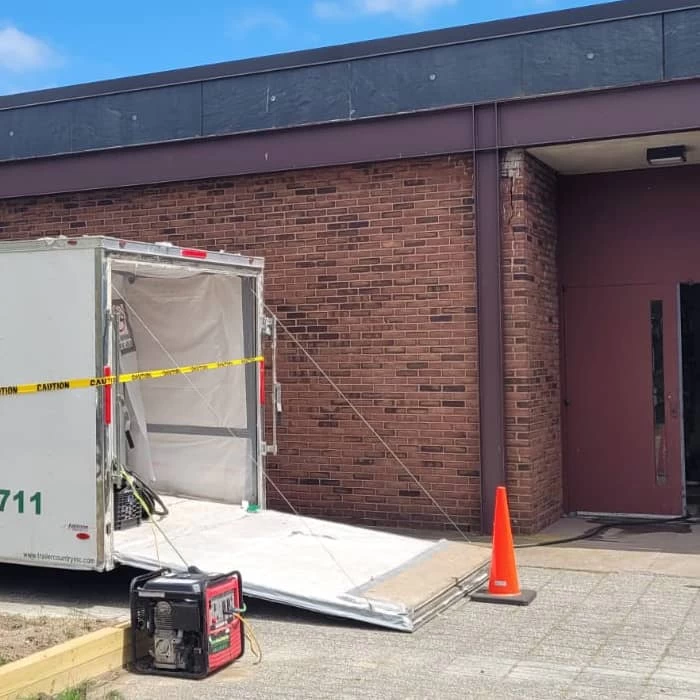
New York State law requires a licensed asbestos contractor to handle any disturbance of asbestos-containing materials. That’s not optional guidance — it’s a legal requirement, and hiring a company that doesn’t hold a NYS DOL Asbestos License to do this work creates real liability for the homeowner. We hold that license and treat asbestos inspection as a standard part of the assessment process for pre-1978 homes in Old Bethpage, not an add-on. If materials need to be tested or removed, that work is done under proper containment protocols before any other demolition or restoration begins.
How long does flooded basement cleanup and drying typically take?
The honest answer is that it depends on the extent of the flooding, the materials involved, and how quickly the job started. For a straightforward water extraction and structural drying job — say, a sump pump failure caught within a few hours — the drying process typically runs three to five days with industrial equipment in place. Moisture readings are taken daily to track progress, and the equipment stays until the structure confirms dry, not until a calendar date passes.
More complex jobs take longer. If water was standing for an extended period, if it reached inside wall cavities or under subflooring, or if mold has already begun developing, the timeline extends. In Old Bethpage’s older homes, hidden moisture in concrete block walls and original insulation is common and can add time to the drying phase. If asbestos-containing materials were disturbed and need to be removed, that work follows its own timeline under state protocols. We give you a realistic assessment at the start — not a number designed to get you to sign, but an honest range based on what the moisture readings and site conditions actually show.
Can Green Island Group handle the full restoration after basement flooding, or just the cleanup?
We handle the full job — from the moment water enters your basement to the day the restored space is finished. That includes emergency extraction, structural drying, mold and hazardous material remediation, and complete structural restoration: drywall replacement, flooring installation, framing repair, and finishing work. All of it is performed under our Nassau County General Contractor license, which means the work is permitted and legal under Town of Oyster Bay building requirements when applicable.
For Old Bethpage homeowners, this matters practically. A significant flooding event in a home worth close to $940,000 — the median property value in this hamlet — isn’t a minor repair. It’s a multi-phase project, and coordinating separate contractors for cleanup, remediation, and reconstruction creates delays, accountability gaps, and cost overruns. Having one licensed company carry the entire scope means the job moves in sequence, the documentation is consistent for your insurance carrier, and you have a single point of contact from start to finish. That’s not a convenience feature — for a job of this scale, it’s the difference between a clean outcome and a drawn-out one.