When Glen Cove Creek Rises, Your Old Brookville Basement Pays the Price
Old Brookville’s wooded, creek-fed landscape is beautiful — until a storm hits and the water table does what it does. If your basement is flooded, you have about 72 hours before mold becomes your next problem. We respond 24/7 with licensed flooded basement cleanup built for exactly this kind of situation.
I needed a professional consultation explanation of procedure for safe removal of Asbestos in my apartment complex. Without having an account yet, I was very impressed with the caring, knowledgeable and generous advice offered by Jessica, and will look forward to doing business in the future. Thank you so much! I feel much more informed about a sometimes scary endeavor. Peace. Nancy Silva Mineola, NY.
Mia Munoz
Used this company to clean up some water flood in my house. They were fast and easy to work with.very professional, Would recommend to anyone!
Nini Valle
Great company, had a flood and they responded quickly and efficiently. Billed my insurance company directly. I highly recommend this company!
joe colapietro, jr
I had pipe freeze in my basement right before a snow storm and they made to within an hour to help start the clean up process. They we by our side throughout the entire process and even helped with the insurance company. They did such a great job with the cleanup, repair, remidiation, I contracted them to perform the repairs and finishes in the basement. They came with enough manpower and material to get the job done. Leo and Jessica were nothing but a pleasure to deal with!!
Cristian Arredondo c
I had some water damage in my home and Green Island was able to take care of my issue quickly and effectively. I am very pleased with the work they did. They responded quickly and were very professional.
Michael M
Outstanding service! From the office to the field crew everyone was friendly, helpful and responsive. I highly recommend Green Island Group.
When the water is gone and the basement is professionally dried, something shifts. You stop worrying about what’s growing behind the drywall. You stop wondering if the sump pump got everything. You know — because the moisture readings say so, and a licensed crew signed off on it.
That matters more in Old Brookville than most people realize. The village sits in the headwaters of Cedar Swamp Creek, with Glen Cove Creek running directly through residential properties and across the grounds of Village Hall. When a nor’easter rolls through or spring storms saturate the North Shore soil, the water table rises fast — and basements in low-lying, creek-adjacent properties are the first to feel it. This isn’t generic Long Island flooding. It’s a specific hydrological reality of living in this particular village.
Add to that the fact that many homes here are large, older, custom-built estates — finished basements, wood framing, organic materials — and the stakes of incomplete cleanup become very real. Mold doesn’t care how much your home is worth. But the right crew, with the right equipment, can stop it before it starts. That’s the outcome you’re actually paying for.
Licensed Basement Flooding Remediation, Nassau County
Every License That Matters. One Company. One Call.
We’re a full-service disaster restoration and environmental remediation company serving Nassau County, Suffolk County, and the greater New York metro area. What makes the difference here isn’t just experience — it’s the credential stack. NYS DOL Mold License. NYS DOL Asbestos License. USEPA Lead and RRP certifications. IICRC Water Damage certification. Nassau County General Contractor license. No other restoration company serving Old Brookville holds all of these simultaneously.
That matters because a flooded basement in a mid-century estate home near McCouns Lane isn’t always just a water problem. Older construction may contain asbestos floor tiles or lead paint that become active hazards the moment they’re disturbed by water or demolition. Most companies can’t legally handle that. We can — and do — under one roof, on one invoice.
From the first call to the final walkthrough, you’re dealing with one accountable team. No handoffs. No subcontractors for the hard parts. Just licensed professionals who know what they’re doing and can prove it.
What Actually Happens From Your First Call to Final Clearance in Old Brookville
It starts the moment you call. We dispatch 24/7, because the 72-hour mold window doesn’t wait for business hours. When our crew arrives, the first priority is understanding what you’re dealing with — what type of water entered the space, where it came from, and what materials it contacted. In Old Brookville, where some flooding events are driven by rising groundwater from the Cedar Swamp Creek watershed rather than a burst pipe, that source identification matters. It affects your insurance claim, your cleanup protocol, and what comes next.
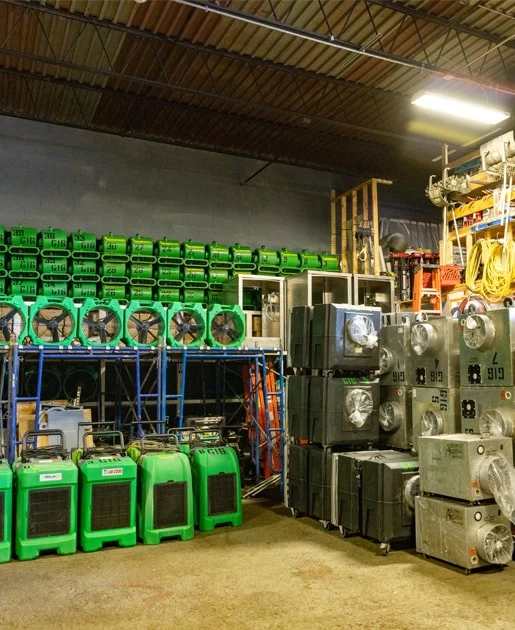
From there, industrial extraction equipment removes standing water fast. Then the drying process begins — not with box fans, but with commercial-grade dehumidifiers and air movers placed strategically based on moisture readings taken inside walls, under subflooring, and in insulation. What you can’t see is what causes mold weeks later. That’s why every job includes professional moisture detection, not just a visual inspection.
Once the space is confirmed dry — with documentation — the restoration phase begins. Because we hold a Nassau County General Contractor license, we can pull the required building permits for structural work within Old Brookville’s incorporated village limits, replace drywall, restore flooring, and return the space to pre-loss condition. One team, full scope, code-compliant from start to finish.
Basement Flooding Remediation Services, Old Brookville NY
Built for Old Brookville's Homes — Not a Generic Checklist
Every flooded basement cleanup we perform in Old Brookville includes emergency water extraction, structural drying with industrial equipment, moisture mapping with calibrated detection tools, and post-drying verification before any restoration work begins. That verification step is non-negotiable — it’s what separates a real cleanup from one that looks finished but leaves moisture trapped inside walls.
For homes built before 1978 — and Old Brookville has plenty of them — the process also includes a hazardous materials assessment before demolition begins. Asbestos floor tiles and lead paint are common in mid-century estate construction on the North Shore, and disturbing those materials without proper licensing isn’t just dangerous, it’s illegal. We hold both the NYS DOL Asbestos License and the USEPA Lead/RRP certification, which means we can assess, contain, and remediate those hazards legally and safely as part of the same project.
For Category 3 events — sewage backup, contaminated groundwater intrusion — we apply full biohazard decontamination protocols before any drying or restoration work begins. And because Old Brookville is an incorporated village with its own code enforcement structure, all structural restoration work is permitted properly under the New York State Uniform Fire Prevention and Building Code. We also provide insurance documentation assistance, which is especially useful here given that groundwater flooding from a creek watershed event may not be covered the same way an internal plumbing failure would be.
Does homeowners insurance cover basement flooding in Old Brookville, NY?
It depends entirely on where the water came from — and that distinction is more complicated in Old Brookville than in most communities. Standard homeowners insurance covers sudden, accidental water damage: a burst pipe, a failed water heater, an appliance malfunction. What it typically does not cover is flooding caused by surface water, rising groundwater, or overflow from a body of water — which is exactly the kind of flooding that can happen when the Cedar Swamp Creek watershed is overwhelmed after a major storm.
If your basement flooded because of a plumbing failure, you’re likely covered. If it flooded because the water table rose and came through your foundation walls after a nor’easter, you may be looking at a FEMA flood claim instead — or out-of-pocket costs if you don’t carry separate flood insurance. We help homeowners document the damage, identify the water source accurately, and present the claim with professional-grade evidence. Getting that source categorization right from the start can make a significant difference in what your carrier approves.
How quickly does mold start growing after a basement floods?
Mold can begin developing within 24 to 48 hours of water intrusion under the right conditions — and “the right conditions” in a finished basement with wood framing, drywall, and carpeting are easier to meet than most people expect. The critical window the restoration industry works within is 72 hours. If the space is fully dried within that timeframe, mold growth is unlikely. If not, the scope of the problem — and the cost to fix it — escalates quickly.
In Old Brookville, this window matters more than in many communities because the village’s wooded, humid microclimate and the proximity to the Glen Cove Creek corridor mean that basements in this area tend to hold ambient moisture even under normal conditions. A finished basement that doesn’t get fully dried within 72 hours can develop mold inside wall cavities, under subflooring, and behind insulation — none of which is visible on the surface. That’s why we use calibrated moisture detection equipment rather than relying on visual inspection alone, and why 24/7 emergency response isn’t just a selling point — it’s the actual mechanism that protects your home.
What's the difference between Category 1, 2, and 3 basement flooding?
The water damage industry classifies flooding into three categories based on contamination level, and the category determines the entire cleanup protocol. Category 1 is clean water — a broken supply line, an overflowing sink, a malfunctioning appliance. It’s the most straightforward to clean up and carries the lowest health risk. Category 2, sometimes called gray water, comes from sources like washing machine discharge or toilet overflow without solid waste. It contains biological contaminants and requires more thorough decontamination.
Category 3 — black water — is the most serious. This includes sewage backup, flooding from an external water source like a creek or storm drain, and any water that has been sitting long enough to develop significant bacterial growth. In Old Brookville, where some flooding events are driven by groundwater intrusion from the Cedar Swamp Creek watershed, what looks like a straightforward basement flood may actually qualify as Category 3 depending on what the water contacted on its way in. Category 3 events require full biohazard decontamination protocols, protective equipment, and in many cases, removal of porous materials that cannot be safely restored. We’re equipped and licensed to handle all three categories.
Do I need a permit for basement restoration work in Old Brookville after a flood?
Yes — and this is a point that catches a lot of homeowners off guard. Old Brookville is an incorporated village with its own code enforcement structure, and any structural restoration work following a flooded basement cleanup falls under the New York State Uniform Fire Prevention and Building Code as adopted by the village. That means drywall replacement, subfloor removal and reinstallation, framing repairs, and similar work require a proper building permit before the work begins and a certificate of completion once it’s done.
This matters for two reasons. First, unpermitted work can create complications when you go to sell the home — and in a market where Old Brookville properties regularly list at $3 million to $5 million or more, that’s not a risk worth taking. Second, your insurance carrier may require documentation of code-compliant restoration as part of the claims process. We hold a Nassau County General Contractor license, which means we can legally pull permits, perform the structural restoration work, and close out the project with full code compliance. Most water-damage-only operators cannot do this — they stop at the drying phase and leave the structural rebuild to you.
How much does flooded basement cleanup typically cost in Nassau County?
The range is wide, and it depends on three things: the size of the space, the category of water involved, and how far the damage has spread into walls, flooring, and structural components. For a smaller clean-water event in an unfinished basement, costs can start around $1,600 to $3,000. For a larger space with contaminated water, finished materials, and mold involvement, total costs can reach $12,000 to $60,000 or more — especially once structural restoration is factored in.
In Old Brookville specifically, the cost profile tends to sit toward the higher end of that range — not because of arbitrary pricing, but because of what’s actually at stake. Estate-scale homes with finished basements, custom woodwork, and older construction materials require more careful, thorough work. And the consequences of cutting corners — a mold outbreak in a $4 million home, unpermitted restoration work that surfaces during a sale — cost far more than getting it right the first time. The investment in professional, licensed cleanup is measured against the actual damage exposure, not against the cheapest quote you can find online.
How do I know if my Old Brookville basement was fully dried after cleanup?
You shouldn’t have to take anyone’s word for it. A properly completed flooded basement cleanup includes post-drying moisture verification using calibrated detection equipment — not a visual check, not a hand test, not a guess. Moisture meters and thermal imaging can detect water trapped inside wall cavities, beneath subflooring, and in insulation that looks and feels dry on the surface. That hidden moisture is exactly what causes mold to develop weeks after the visible water is gone.
In Old Brookville’s older estate homes, this step is especially important. Thick plaster walls, layered flooring systems, and finished basement configurations common in mid-century North Shore construction can hold moisture in places that aren’t obvious. We document moisture readings before, during, and after the drying process — so when the job is called complete, there’s actual data behind it. If readings aren’t where they need to be, the equipment stays until they are. That documentation also serves a practical purpose: it gives you something concrete to present to your insurance carrier and provides a clear record that the space was returned to a safe, dry condition.