When Long Island Sound Pushes Water Into Your Home, You Need More Than a Shop Vac
Old Field basements flood differently than most coastal humidity, a tidal estuary at the village center, and nor’easters that knock out sump pumps don’t leave much room for a slow response. We handle flooded basement cleanup in Old Field from the first call to the final inspection, and we bill your insurance directly.
I needed a professional consultation explanation of procedure for safe removal of Asbestos in my apartment complex. Without having an account yet, I was very impressed with the caring, knowledgeable and generous advice offered by Jessica, and will look forward to doing business in the future. Thank you so much! I feel much more informed about a sometimes scary endeavor. Peace. Nancy Silva Mineola, NY.
Mia Munoz
Used this company to clean up some water flood in my house. They were fast and easy to work with.very professional, Would recommend to anyone!
Nini Valle
Great company, had a flood and they responded quickly and efficiently. Billed my insurance company directly. I highly recommend this company!
joe colapietro, jr
I had pipe freeze in my basement right before a snow storm and they made to within an hour to help start the clean up process. They we by our side throughout the entire process and even helped with the insurance company. They did such a great job with the cleanup, repair, remidiation, I contracted them to perform the repairs and finishes in the basement. They came with enough manpower and material to get the job done. Leo and Jessica were nothing but a pleasure to deal with!!
Cristian Arredondo c
I had some water damage in my home and Green Island was able to take care of my issue quickly and effectively. I am very pleased with the work they did. They responded quickly and were very professional.
Michael M
Outstanding service! From the office to the field crew everyone was friendly, helpful and responsive. I highly recommend Green Island Group.
What Changes When the Water Is Actually Gone for Good
There’s a difference between a basement that looks dry and one that actually is. Moisture hides in wall cavities, under flooring, and behind insulation and in a home built in the 1950s or 1960s along the North Shore, those spaces haven’t always been opened in decades. When the job is done right, you’re not just removing standing water. You’re stopping the clock on mold, protecting the structural integrity of a home that’s worth well over a million dollars, and making sure nothing is left behind that an insurance adjuster or a future buyer will flag.
Old Field’s position on a coastal peninsula surrounded by Conscience Bay, Long Island Sound, and Flax Pond’s tidal estuary means your basement is under chronic moisture pressure not just during storms, but year-round. The humidity coming off the Sound doesn’t stop between events. When a nor’easter hits and the power goes out, your sump pump goes with it, and that water has nowhere to go. The outcome you’re looking for isn’t just extraction it’s a basement that’s been dried, tested, treated, and documented so you know exactly what you’re dealing with and what your insurance covers.
When this process is handled properly, you get your home back without the second wave of problems: no mold showing up six weeks later, no insurance disputes because the documentation was incomplete, and no contractor coming back to redo work that wasn’t finished the first time.
We’ve been doing environmental restoration and remediation work across Long Island and New York City for over 12 years, with more than 5,000 completed projects across New York State. That includes North Shore Suffolk County communities like Old Field that share the same coastal character the aging housing stock, the Long Island Sound exposure, the pre-1980 construction that comes with its own set of complications.
What sets us apart in a market like Old Field isn’t just response time. It’s that our CEO Jessica Dussan and VP Leo Torres hold the licenses to handle whatever a flooded basement in a 60-year-old estate home actually reveals NYS DOL Mold and Asbestos licenses, USEPA Lead and RRP certifications, and a Suffolk County General Contractor license that lets us take the job all the way through reconstruction. Most restoration companies can extract water. Not all of them can legally and safely handle what’s behind the walls of a home built in Woodcrest Estates or Flax Pond Woods.
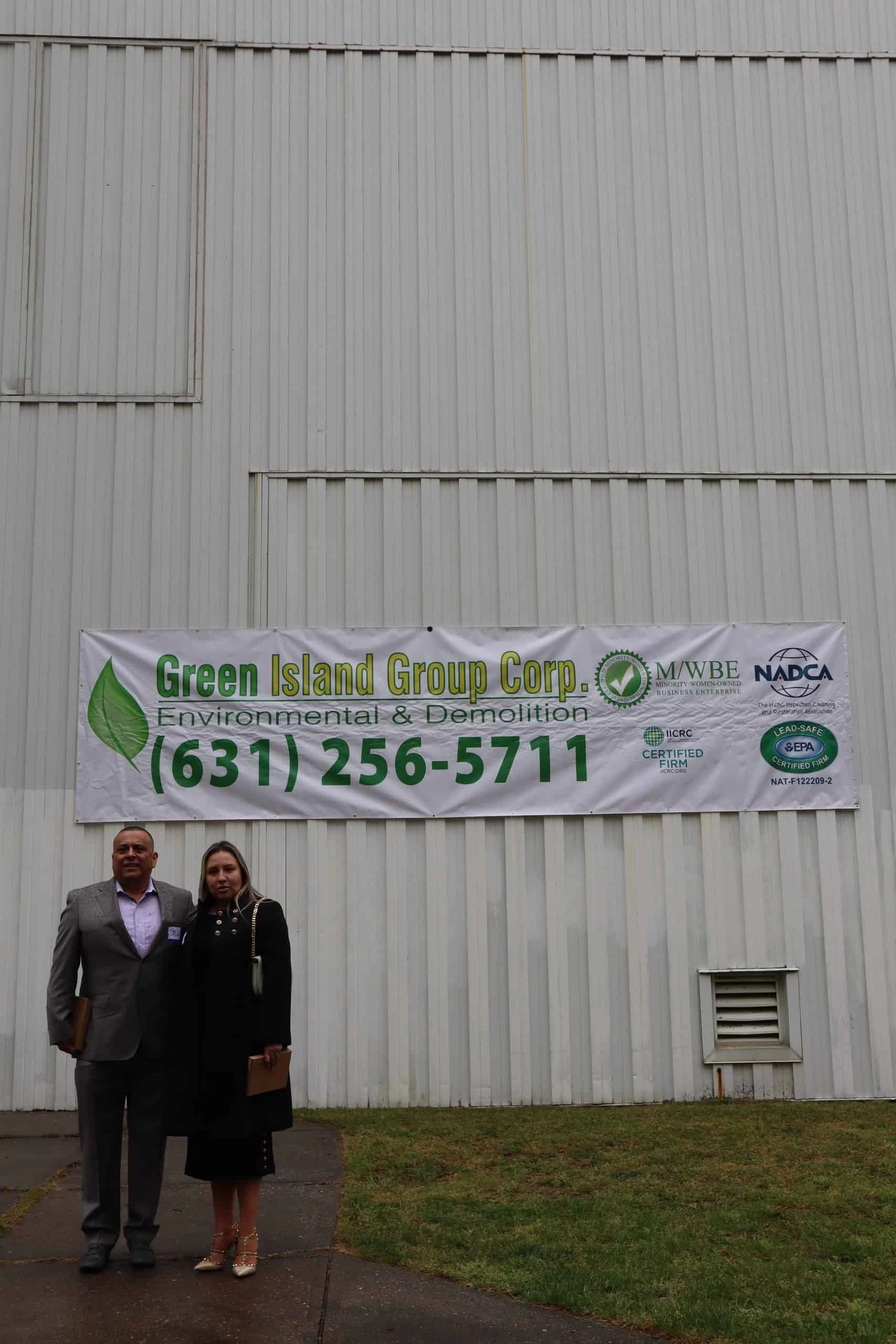
We’re also NYS-certified MBE and WBE, and an approved emergency response contractor for the NYS Office of General Services credentials that are independently verified, not self-declared.
From Standing Water to Dry and Documented Here's the Actual Process
The first call triggers an immediate response. For Old Field, that means a team that’s equipped and moving not a call center routing you to a franchise two counties away. When we arrive, the first step is assessing the water category: clean water from a burst pipe is handled differently than gray or black water from a sewage backup or storm surge event, and that classification drives everything that follows, including what your insurance covers.
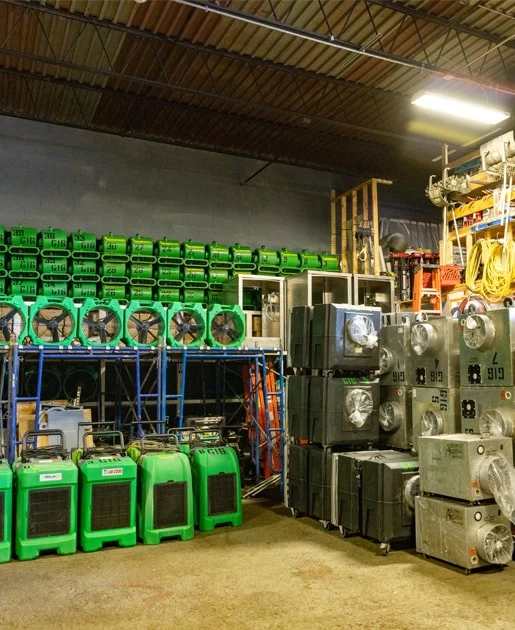
Extraction comes first industrial pumps and wet vacuums pulling standing water out as fast as possible. Then the real work starts. We deploy commercial dehumidifiers, air movers, and moisture meters into every affected space, including wall cavities and crawlspaces, which are common in North Shore estate homes. Thermal imaging helps us find moisture that isn’t visible to the eye. In a home with pre-1980 construction, any wall breach is assessed for asbestos-containing materials before demolition begins this is a legal requirement in New York State, and it’s why licensing matters here.
Once the space is dry and cleared, we document everything for your insurance claim. Old Field participates in the National Flood Insurance Program, and if you’re filing under an NFIP policy alongside a standard homeowners claim, the documentation requirements are specific. We handle that paperwork directly. If the scope of work triggers permitting under Old Field’s Flood Damage Prevention ordinance Chapter 44 of the Village Code we manage that process as well. The job isn’t done until you have a dry basement, a clean clearance, and a closed claim.
What's Actually Included When We Handle Your Old Field Basement
Flooded basement cleanup in Old Field covers more ground than most homeowners expect when they first call. The service starts with emergency water extraction and runs through structural drying, moisture mapping, antimicrobial treatment, material removal, and full documentation for insurance. For homes in the village’s older subdivisions Crane Neck Bluffs, Woodhull Cove, Brambletye Farm where basements and crawlspaces haven’t been significantly updated since original construction, the scope often includes assessment and handling of asbestos-containing insulation, lead paint in disturbed surfaces, and mold remediation under New York State’s Article 32 licensing requirements.
If your basement has finished living space, we carefully remove saturated drywall, flooring, and insulation materials that cannot be dried in place and must come out to prevent mold growth behind the surface. In coastal homes near Flax Pond or the Long Island Sound bluffs, where baseline humidity is already elevated, that 24-to-48-hour mold window closes faster than it does inland. Getting the right equipment in quickly isn’t a preference it’s the difference between a cleanup and a full remediation.
Every job includes direct insurance billing and adjuster-ready documentation. If you’re carrying both a homeowners policy and NFIP flood coverage, we coordinate with both carriers. The goal is that you’re not managing paperwork while also managing a disrupted home that’s our job, and it’s included in the scope from the start.
Does homeowners insurance cover a flooded basement in Old Field, NY?
It depends on what caused the flooding, and that distinction matters more than most people realize. Standard homeowners insurance typically covers sudden and accidental water damage a burst pipe, a failed water heater, an appliance leak. It does not cover flooding from outside the home, which includes storm surge from Long Island Sound, rising groundwater near Flax Pond, or surface water entering through foundation walls during a heavy nor’easter. That type of event falls under flood insurance, which is a separate policy through FEMA’s National Flood Insurance Program.
Old Field participates in the NFIP, so if you have a flood policy, you may have coverage for storm-related basement flooding but NFIP policies come with their own documentation requirements, waiting periods, and coverage limits that differ from a standard homeowners claim. The most important thing you can do immediately after a flooding event is document everything before any cleanup begins: photos, video, written descriptions of water levels and affected materials. We handle the adjuster communication and documentation process directly, which matters when you’re navigating two separate policies with different triggers and timelines.
How quickly does mold start growing after a basement floods?
Mold can begin colonizing within 24 to 48 hours of a water event under the right conditions and in Old Field, the conditions are often right. The coastal humidity coming off Long Island Sound creates a baseline moisture level in North Shore basements that’s already elevated compared to inland communities. When a flooding event adds standing water to that environment, especially in a finished basement or a crawlspace with limited airflow, mold growth can begin faster than the 48-hour window suggests.
The practical implication is that extraction and drying need to start as soon as possible not the next business day. Once mold is established in wall cavities or behind flooring, the job shifts from water cleanup to full mold remediation under New York State Article 32, which requires a licensed assessor, a written remediation plan, and post-clearance testing. That’s a more involved and more expensive process than straightforward drying. Calling within the first few hours of a flooding event is the single most effective thing you can do to keep the scope of work and the cost manageable.
What causes basement flooding in Old Field specifically, and is it preventable?
Old Field’s geography creates several overlapping flooding risks that most Long Island communities don’t face simultaneously. The village sits on a coastal peninsula surrounded by Long Island Sound, Conscience Bay, Smithtown Bay, and Port Jefferson Harbor, with Flax Pond a 135-acre tidal estuary at its geographic center. That means groundwater levels in the village are influenced by tidal cycles, not just rainfall. During wet springs or sustained coastal storms, the water table can rise enough to increase hydrostatic pressure on basement walls and foundations, pushing water in even without a direct breach.
Nor’easters are the most consistent acute risk. They generate sustained onshore winds from the north that drive storm surge directly toward Old Field’s Long Island Sound-facing bluffs, and they frequently cause extended power outages that disable sump pumps at exactly the wrong moment. Burst pipes from winter freeze-thaw cycles are another common cause, particularly in large estate homes with complex plumbing across multiple zones. Prevention starts with a properly sized and battery-backed sump pump system, maintained gutters given the village’s heavy tree canopy, and foundation waterproofing appropriate for a coastal environment. After a flooding event, a thorough assessment of what failed can help prevent the next one.
Do I need a permit to repair my basement after flooding in Old Field?
Possibly, and it’s worth knowing before work begins rather than after. Old Field has its own Flood Damage Prevention ordinance Chapter 44 of the Village Code which applies to structures in Special Flood Hazard Areas as designated on FEMA’s Flood Insurance Rate Maps for the village. If your home is in one of those areas and the repair work constitutes a “substantial improvement” generally defined as repairs exceeding 50% of the structure’s pre-damage market value the work must comply with the village’s elevation and floodproofing standards, and certifications may need to be filed with the village’s local administrator.
Even outside the substantial improvement threshold, reconstruction work that involves structural elements, electrical systems, or HVAC in a flooded basement typically requires a building permit under the NYS Uniform Code, which applies in Old Field. We hold a Suffolk County General Contractor license, which means we can pull permits, execute compliant work, and handle the documentation required by both the village code and the state. If you hire a restoration-only company that isn’t licensed as a general contractor, you may find yourself managing the permit process separately or discovering after the fact that the work wasn’t compliant.
Should I be worried about asbestos or lead in my Old Field basement after a flood?
If your home was built before 1980, it’s a legitimate concern and Old Field’s named subdivisions put a significant portion of the village’s housing stock squarely in that window. Woodcrest Estates, Blueberry Ridge, and Flax Pond Woods were developed in the 1950s. Crane Neck Bluffs, Woodhull Cove, and Brambletye Farm followed in the 1960s. Homes from that era commonly contain asbestos in pipe insulation, floor tiles, and ceiling materials, and lead paint in wall surfaces that may not have been disturbed in decades.
When a basement floods and walls are breached, or when saturated materials need to be removed, those hazards can become active. New York State law requires that asbestos-containing materials be identified and handled by a licensed asbestos contractor before demolition begins. Mold remediation in residential properties requires a separately licensed assessor and remediator under Article 32. These aren’t optional steps they’re legal requirements, and skipping them creates liability for the homeowner. We hold both the NYS DOL Asbestos license and the NYS DOL Mold license, which means the full scope of what a flooded basement in an older Old Field home can reveal is handled by one licensed team, not pieced together across multiple contractors.
How long does it take to fully dry out a flooded basement in Old Field?
A straightforward water extraction in a small, unfinished basement can be largely dry within three to five days with the right equipment running continuously. A larger finished basement in one of Old Field’s estate homes especially one with multiple rooms, built-in cabinetry, and wall cavities that absorbed water typically takes five to seven days of active drying before moisture readings reach acceptable levels. The timeline depends heavily on how long the water sat before extraction began, how much of the structure absorbed moisture, and the ambient humidity conditions during drying.
In Old Field, that last factor matters more than in most places. The coastal microclimate along the North Shore means outdoor humidity is consistently higher than inland Suffolk County, which makes the drying equipment work harder to pull moisture out of the structure. Commercial dehumidifiers and air movers need to run longer, and moisture readings need to be taken across multiple days before the space is cleared. Rushing that process or stopping equipment early because the floor looks dry is how hidden moisture becomes a mold problem six weeks later. We use calibrated moisture meters and thermal imaging throughout the drying phase to confirm that walls, subfloors, and structural framing have actually reached dry standard, not just that the surface appears dry.