Old Westbury's Estates Deserve More Than a Shop Vac and a Fan
When your basement floods, the clock starts immediately — and in a home this size, what you do in the next few hours determines whether you’re looking at cleanup or a full rebuild.
I needed a professional consultation explanation of procedure for safe removal of Asbestos in my apartment complex. Without having an account yet, I was very impressed with the caring, knowledgeable and generous advice offered by Jessica, and will look forward to doing business in the future. Thank you so much! I feel much more informed about a sometimes scary endeavor. Peace. Nancy Silva Mineola, NY.
Mia Munoz
Used this company to clean up some water flood in my house. They were fast and easy to work with.very professional, Would recommend to anyone!
Nini Valle
Great company, had a flood and they responded quickly and efficiently. Billed my insurance company directly. I highly recommend this company!
joe colapietro, jr
I had pipe freeze in my basement right before a snow storm and they made to within an hour to help start the clean up process. They we by our side throughout the entire process and even helped with the insurance company. They did such a great job with the cleanup, repair, remidiation, I contracted them to perform the repairs and finishes in the basement. They came with enough manpower and material to get the job done. Leo and Jessica were nothing but a pleasure to deal with!!
Cristian Arredondo c
I had some water damage in my home and Green Island was able to take care of my issue quickly and effectively. I am very pleased with the work they did. They responded quickly and were very professional.
Michael M
Outstanding service! From the office to the field crew everyone was friendly, helpful and responsive. I highly recommend Green Island Group.
Most basement flooding jobs look finished before they actually are. Water gets extracted, a few fans get set up, and the crew leaves. What stays behind is moisture inside your walls, under your flooring, and behind built-ins — the kind that doesn’t show up until mold does, usually a few weeks later. That’s just what happens when the job stops at visible water.
Old Westbury homes aren’t small, and their basements aren’t simple. A finished lower level with custom millwork, a wine room, or a home gym holds moisture in ways a bare concrete floor doesn’t. The clay soil and high water table across Nassau County’s North Shore mean the ground stays saturated long after a storm passes — and that sustained pressure keeps pushing moisture into foundation walls even after the standing water is gone.
When we finish the job right, you get more than a dry floor. You get documented moisture readings confirming the structure is actually dry, a clear picture of what was affected and what isn’t, and a restoration that holds up — not one that looks fine for a month and then doesn’t.
Every License the Job Actually Requires — Under One Roof
We hold NYS DOL Mold, NYS DOL Asbestos, USEPA Lead, IICRC Water Damage, and Nassau County General Contractor licenses — simultaneously. That combination matters more in Old Westbury than almost anywhere else in Nassau County.
A lot of the homes here were built well before 1978. When a flooded basement in one of those Old Westbury properties requires material removal, you’re not just dealing with water — you’re potentially dealing with asbestos floor tiles, lead paint, and aged pipe insulation that federal and state law require licensed handling to touch. Most water damage companies operating in this area don’t hold those credentials. Hiring one that doesn’t creates legal exposure for you, not just them.
From the North Shore estates near Old Westbury Gardens to the newer builds closer to the Northern State Parkway, we’ve worked across this community and we understand what these properties actually involve. One call covers the full scope — water out, structure dried, materials handled correctly, and everything rebuilt to the standard your home deserves.
Flooded Basement Remediation Process, Old Westbury
What Actually Happens From the First Call to the Final Walkthrough
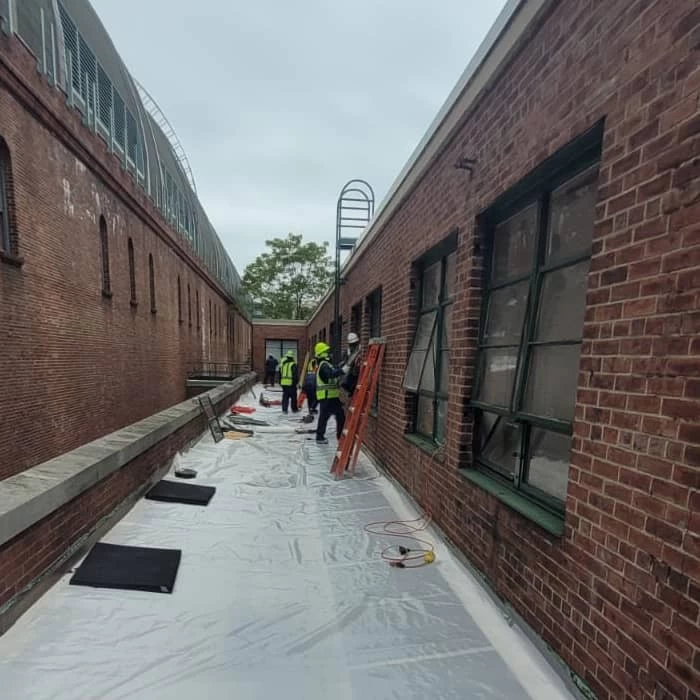
The first thing we do when we arrive is assess — not just what’s visible, but what the moisture meters are telling us. In a large-footprint estate home, water travels. It wicks into drywall, migrates under flooring, and collects behind cabinetry in places you wouldn’t think to look. We map it all before we start pulling anything out, because the scope of the job has to be based on data, not guesswork.
From there, extraction and industrial drying equipment go in. Our goal is to get the structure below the moisture threshold where mold growth becomes likely — and that window is 72 hours from the initial flooding event. In older Old Westbury homes where building materials may include asbestos or lead-containing components, any demolition or material removal follows NYS DOL and USEPA protocols before anything else is touched. That’s not optional — it’s the law, and it protects your family and your property’s legal standing.
Once the structure is confirmed dry through clearance readings, restoration begins. Because we hold a Nassau County General Contractor license, we handle the rebuild ourselves — drywall, flooring, finish work, all of it. You don’t coordinate a second contractor. The job isn’t done until the space looks and functions the way it did before the water came in.
Basement Flooding Remediation Services, Old Westbury NY
Built for the Scope of What These Homes Actually Involve
Flooded basement cleanup in Old Westbury covers a lot of ground depending on what happened, how long the water sat, and what the basement contains. A burst pipe in a finished lower level is a different job than a sewage backup in an unfinished utility space — and both are different from the slow groundwater intrusion that happens when Nassau County’s clay soil stays saturated for days after a nor’easter or a heavy summer storm.
For clean water events — pipe bursts, appliance overflows — the focus is fast extraction, structural drying, and moisture verification. For gray or black water events, including sewage backups, the job involves full decontamination of every surface the water contacted, removal of all contaminated materials, and disposal in compliance with state and federal requirements. Category 3 water isn’t just dirty — it’s a biohazard, and we treat it accordingly. For homes along the older estate corridors of Old Westbury where infrastructure dates back decades, sewage backup risk during heavy rain events is real and worth knowing about before it happens.
Every job includes moisture documentation from start to finish, direct communication with your insurance carrier if applicable, and a complete scope of work in writing before anything begins. If the basement needs to be rebuilt after remediation, that work stays with us — no handoff to a separate GC, no gap in accountability.
How quickly does mold start growing after a basement floods in Old Westbury?
The EPA puts the window at 24 to 48 hours for mold growth to begin, and the 72-hour mark is where it becomes likely if the structure hasn’t been properly dried. That timeline applies everywhere, but it hits harder in Old Westbury for a specific reason — the basements here are large, often finished, and filled with materials like drywall, wood framing, and insulation that absorb and hold moisture far longer than bare concrete.
The other factor worth knowing is that Nassau County’s North Shore clay soil stays saturated well after a storm ends. That means the hydrostatic pressure pushing moisture into your foundation walls doesn’t stop when the rain does. Even after standing water is extracted, moisture continues migrating into the structure — which is why extraction alone isn’t enough. The job has to include structural drying confirmed by moisture readings, not just a visual check, to actually stop the clock on mold growth.
Does homeowners insurance cover flooded basement cleanup in Nassau County?
It depends on what caused the flooding. Homeowners insurance typically covers sudden, accidental water events — a burst pipe, an appliance failure, an ice dam that forces water in. What it generally does not cover is flooding from groundwater, surface water, or storm surge, which falls under separate flood insurance through the NFIP or a private carrier.
For Old Westbury homeowners, this distinction matters because the most common cause of basement flooding here — ground saturation and hydrostatic pressure from Long Island’s clay soil and high water table — often falls into a gray area that depends on your specific policy language. The best thing you can do before you call your carrier is have a documented damage assessment in hand. We handle that documentation and communicate directly with adjusters, which typically results in better claim outcomes than a homeowner navigating it alone. If you’re unsure what your policy covers, start with the cleanup and let us help you build the claim from there.
My Old Westbury home was built in the 1920s — does that affect the cleanup process?
Yes, and significantly. Homes built before 1978 may contain lead-based paint, and homes built before the mid-1980s frequently contain asbestos in floor tiles, pipe insulation, ceiling materials, and other building components. When a flooded basement in one of these properties requires material removal — which is common in any serious water damage event — federal and New York State law mandates that those materials be handled by licensed contractors using specific protocols.
This is one of the most important things to verify before you hire anyone for basement flood cleanup in an older Old Westbury estate. A company that isn’t licensed for asbestos abatement or lead paint disturbance cannot legally perform the full scope of that work — and if they do it anyway, the liability falls on the property owner, not just the contractor. We hold NYS DOL Asbestos and USEPA Lead/RRP certifications alongside our water damage credentials, which means we can handle the full job legally and correctly without you needing to bring in a separate hazmat contractor.
What's the difference between water extraction and actually drying out a basement?
Extraction removes standing water — the visible stuff you can pump or vacuum out. Drying is what happens after, and it’s the part that actually determines whether your basement recovers cleanly or develops mold and structural damage over the following weeks.
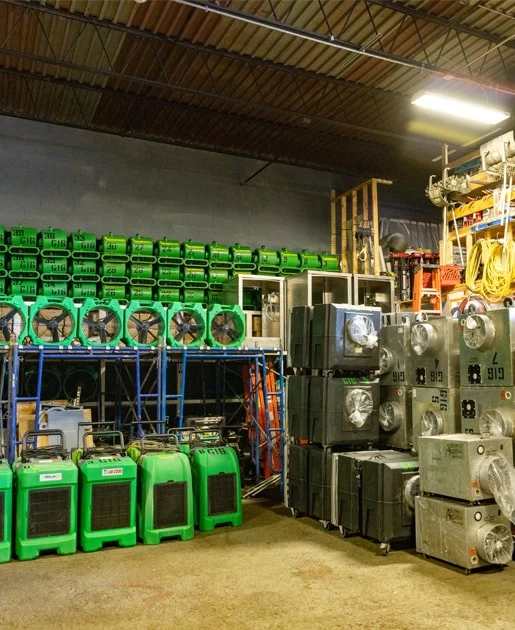
After extraction, moisture is still present inside walls, under flooring, and within the structural framing — often in concentrations that fans alone can’t address in time. Professional drying uses industrial dehumidifiers and air movers calibrated to the size of the space, combined with moisture meters that track what’s happening inside the structure, not just at the surface. In a large Old Westbury basement with finished walls and custom materials, that process can take several days and requires monitoring to confirm it’s actually working. The job isn’t complete until the readings say it is — not when the equipment gets picked up.
How do I know if the water in my basement is a sewage backup or just groundwater?
The short answer is that you often can’t tell by looking, and the distinction matters a lot for how the cleanup is handled. Groundwater intrusion — the kind driven by Nassau County’s high water table and clay soil during heavy rain or snowmelt — is typically clear or slightly cloudy and carries a mineral or earthy smell. Sewage backup water is darker, carries a distinct odor, and may contain visible solids.
That said, even groundwater that’s been sitting for more than 24 hours can become contaminated as it contacts building materials, stored items, and organic debris. The safest approach is to treat any basement flooding as a potential contamination event until testing confirms otherwise. If there’s any indication of sewage involvement — which can happen in older Old Westbury properties when heavy storms overwhelm aging sewer infrastructure — the cleanup protocol shifts to full biohazard decontamination, not just extraction and drying. We assess the water category on arrival and adjust the scope accordingly.
How long does flooded basement cleanup typically take for a large Old Westbury home?
For a standard clean-water event in a smaller or unfinished basement, extraction and drying can be complete in two to three days. For a large finished basement in an Old Westbury estate — the kind with multiple rooms, custom materials, and thousands of square feet — the drying phase alone typically runs three to five days, sometimes longer depending on how saturated the structure is and how long the water sat before cleanup began.
If material removal is required — which is common when water has been in contact with drywall, insulation, or flooring for more than 24 to 48 hours — that adds time to the front end of the job. And if the home predates 1978 and testing confirms the presence of asbestos or lead, abatement protocols add additional time before demolition can begin. The rebuild phase after remediation varies based on scope. We give you a clear timeline in writing before work starts, and we update you as the moisture readings progress — so you’re never guessing where the job stands.