Peck Slip sits on landfill that was once the bottom of the East River and your basement feels it. We handle flooded basement cleanup in Lower Manhattan’s most flood-exposed neighborhood, fast.
I needed a professional consultation explanation of procedure for safe removal of Asbestos in my apartment complex. Without having an account yet, I was very impressed with the caring, knowledgeable and generous advice offered by Jessica, and will look forward to doing business in the future. Thank you so much! I feel much more informed about a sometimes scary endeavor. Peace. Nancy Silva Mineola, NY.
Mia Munoz
Used this company to clean up some water flood in my house. They were fast and easy to work with.very professional, Would recommend to anyone!
Nini Valle
Great company, had a flood and they responded quickly and efficiently. Billed my insurance company directly. I highly recommend this company!
joe colapietro, jr
I had pipe freeze in my basement right before a snow storm and they made to within an hour to help start the clean up process. They we by our side throughout the entire process and even helped with the insurance company. They did such a great job with the cleanup, repair, remidiation, I contracted them to perform the repairs and finishes in the basement. They came with enough manpower and material to get the job done. Leo and Jessica were nothing but a pleasure to deal with!!
Cristian Arredondo c
I had some water damage in my home and Green Island was able to take care of my issue quickly and effectively. I am very pleased with the work they did. They responded quickly and were very professional.
Michael M
Outstanding service! From the office to the field crew everyone was friendly, helpful and responsive. I highly recommend Green Island Group.
When the water is gone, the real work starts. Moisture hides inside plaster walls, under original wood framing, and behind stone foundations that have been standing since before the Civil War. In a Peck Slip building like yours pre-war, on landfill, steps from the East River a surface cleanup that misses what’s inside the walls is not a finished job. It’s a mold problem waiting to happen within the next 48 hours.
What you get after a proper flooded basement remediation is measurable: moisture readings at safe levels, air quality that clears post-remediation testing, and documentation your building management or co-op board will actually accept. Not just a crew that leaves when the water looks gone.
Peck Slip’s building stock is categorically different from a 1990s suburban home. The materials are older, the construction is denser, and the flood risk is more persistent driven not just by storms but by the water-saturated landfill your foundation sits on every single day. The outcome you need isn’t just “dry.” It’s confirmed dry, tested, and documented.
Licensed for Everything Your Building Actually Contains
We’ve completed over 5,000 jobs across New York City and Long Island. That includes the specific building types you find in and around the South Street Seaport Historic District converted commercial buildings, pre-war loft construction, and structures that predate the 1978 lead paint ban by a century or more. Our crews serving Peck Slip know this neighborhood intimately. They understand what old plaster walls hide, what stone foundations do when they’re wet, and what your insurance adjuster needs to see.
Most water damage companies hold a single license. When they hit asbestos pipe insulation or lead paint in your 150-year-old Peck Slip basement and they will they stop and refer you out. We hold active New York State DOL licenses for water damage restoration, mold remediation, asbestos abatement, and lead abatement. One call handles all of it.
From Standing Water to Signed Clearance Here's the Sequence
The first thing that happens when we arrive is an assessment not just of what’s visible, but of what isn’t. Calibrated moisture meters and thermal imaging map every pocket of water inside your walls, beneath your flooring, and in the structural elements your building’s integrity depends on. In a Peck Slip pre-war building, this step is non-negotiable. Water migrates in ways that modern construction simply doesn’t, and missing it costs far more to fix later.
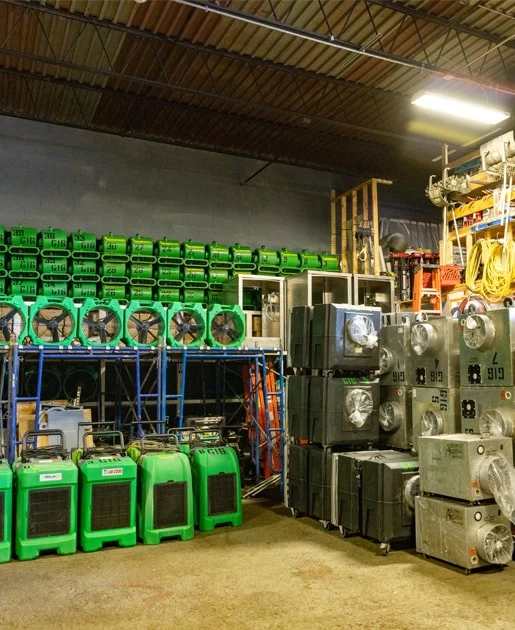
Once the full picture is clear, extraction and structural drying begin using industrial-grade equipment. If the flooding came from a storm event East River surge, combined sewer overflow during a heavy rain, or groundwater pushed up through the landfill beneath your foundation the water is classified and treated accordingly. Storm surge and sewer backup produce Category 3 contaminated water, which requires a different and more aggressive protocol than a burst pipe. Our crew knows the difference and responds to what’s actually there.
If hazardous materials are present asbestos in floor tiles, pipe insulation, or wall materials that work is handled in-scope, not referred out. After drying is complete, post-remediation air quality and moisture testing confirms the job is done. You receive written documentation. If your building has a co-op board or management company that needs sign-off before reoccupancy, that paperwork is ready for them.
Flooded basement cleanup in Peck Slip covers more ground than it does almost anywhere else in the city, and that’s because of what these buildings are made of and where they sit. Our scope includes emergency water extraction, structural drying, moisture mapping, mold assessment, and where needed, asbestos and lead abatement all under one contract.
The South Street Seaport Historic District adds a regulatory layer that affects how demolition and structural work is permitted. If the scope of your remediation reaches structural elements which it sometimes does after significant flooding we work within NYC Department of Buildings permit requirements and understand where Landmarks Preservation Commission considerations may apply. You won’t find out halfway through the job that something needs to stop for approvals.
Insurance billing is handled directly with your carrier. That includes both standard homeowner’s policies and National Flood Insurance Program (NFIP) claims, which are the more common policy type in a neighborhood with Peck Slip’s documented coastal flood history. The documentation, adjuster communication, and billing process is managed on your behalf not handed back to you to figure out while your basement is still wet.
Does my insurance actually cover a flooded basement in Peck Slip?
It depends on what caused the flooding, and this is where a lot of Peck Slip property owners get caught off guard. Standard homeowner’s insurance typically does not cover flooding from external sources storm surge from the East River, groundwater pushing through your foundation, or sewer backup from an overwhelmed combined sewer system. Those scenarios require a separate flood insurance policy, usually through the National Flood Insurance Program (NFIP).
Given Peck Slip’s location and its documented history with Hurricane Sandy, many property owners in this neighborhood carry NFIP policies specifically for this reason. NFIP claims have their own documentation requirements and coverage limits that differ from standard claims and navigating them while also managing an active water damage situation is a lot. We bill carriers directly and handle the documentation process, whether you’re filing through a standard policy, an NFIP policy, or both. The first step is knowing what you have pull your declarations page and we can help you understand what applies.
How quickly does mold start growing after a basement flood?
Mold can begin colonizing wet building materials within 24 to 48 hours of a flooding event, according to EPA guidance. That window is tight under any circumstances. In a Peck Slip pre-war building, it’s even more consequential because moisture doesn’t just sit on the surface it migrates into plaster walls, original wood framing, and century-old structural materials that hold water differently than modern drywall.
The practical implication is that speed matters, but thoroughness matters more. A fast cleanup that misses hidden moisture inside your walls will still produce a mold problem it just won’t show up until weeks later, by which point it’s a larger and more expensive remediation. We use thermal imaging and calibrated moisture meters to find water that isn’t visible, and the job isn’t declared complete until the readings confirm safe levels throughout the affected area. If you’ve had any standing water in your basement, don’t wait to see if it dries on its own.
My Peck Slip building is over 100 years old does that affect the cleanup process?
Yes, significantly. Buildings in and around the South Street Seaport Historic District including many of the converted commercial and residential structures near Peck Slip were built before 1978, which means they almost certainly contain lead paint. Many also contain asbestos in floor tiles, pipe insulation, plaster compounds, and other materials that were standard construction practice through the late 1970s.
When flooding disturbs these materials, they become regulated hazardous substances that require licensed handling under New York State DOL requirements and, for asbestos specifically, NYC Department of Environmental Protection rules that apply to Manhattan work. A water damage company without asbestos and lead abatement licenses is legally prohibited from disturbing those materials which means they either stop your job or cut corners you don’t want cut. We hold all the required licenses to handle hazardous materials in-scope, so the job doesn’t stall when something turns up in your basement walls.
What is Category 3 water and does it apply to flooding in this neighborhood?
Water damage is classified on a scale from Category 1 (clean water, like a burst supply line) to Category 3, which the industry calls black water. Category 3 includes water that contains pathogens, bacteria, sewage, or other contaminants and it requires a fundamentally more aggressive cleanup protocol than clean water extraction.
In Peck Slip, Category 3 scenarios are common. East River storm surge carries contaminants. The neighborhood’s combined sewer system which handles both stormwater and sewage in a single pipe can overflow during heavy rainfall events and push sewage-contaminated water into basements. This happened across Lower Manhattan during Hurricane Ida in September 2021. Groundwater intrusion through the landfill foundation beneath your building can also carry contaminants depending on what’s in the surrounding soil. If your basement flooded during a storm event or you notice any odor, assume Category 3 until a professional assessment says otherwise. The cleanup protocol, the protective equipment, and the disposal requirements are all different and they matter for your health and your building’s safety.
Can I handle flooded basement cleanup myself in a pre-war Manhattan building?
For minor, clean-water incidents a small appliance leak, for example some DIY cleanup is manageable if you act fast and dry everything thoroughly. But in a Peck Slip pre-war building, the risk profile for DIY is much higher than in a modern home, for a few specific reasons.
First, if the flooding came from any external source storm surge, sewer backup, groundwater you’re dealing with contaminated water that requires proper protective equipment and disposal protocols. Second, the building materials in your walls and floors may contain asbestos or lead, and disturbing them without proper licensing is both a health risk and a legal violation. Third, moisture in old plaster walls and original wood framing is very difficult to fully dry without industrial equipment and incomplete drying leads to mold growth that’s harder and more expensive to remediate than the original flood damage. The short answer is: for anything beyond a small, clean-water spill in a modern material, get a professional assessment before you start pulling things apart.
How does flooding risk in Peck Slip compare to other parts of Manhattan?
Peck Slip sits at one of the highest flood-risk locations in all of Manhattan, and that’s not an opinion it’s reflected in the city’s own capital investment decisions. The NYC government’s Seaport Coastal Resilience project is an active, funded initiative specifically designed to protect the South Street Seaport neighborhood from tidal flooding that the city projects will become a regular monthly occurrence by the 2050s without intervention.
The reason the risk is so concentrated here comes down to geography and geology. Peck Slip is at sea level, directly adjacent to the East River, with no significant inland buffer from storm surge. More importantly, the ground beneath every building in this area is landfill material that was used to fill in the East River over the course of two centuries, beginning when Benjamin Peck’s wharf marked the actual shoreline in the 1700s. That fill is water-saturated, and it creates persistent hydrostatic pressure against foundations that other Manhattan neighborhoods built on bedrock or stable soil further from the waterfront simply don’t experience. Flooding here isn’t just a storm risk. For many buildings, it’s a chronic condition that requires a remediation company with specific experience in this neighborhood’s geology and building stock.