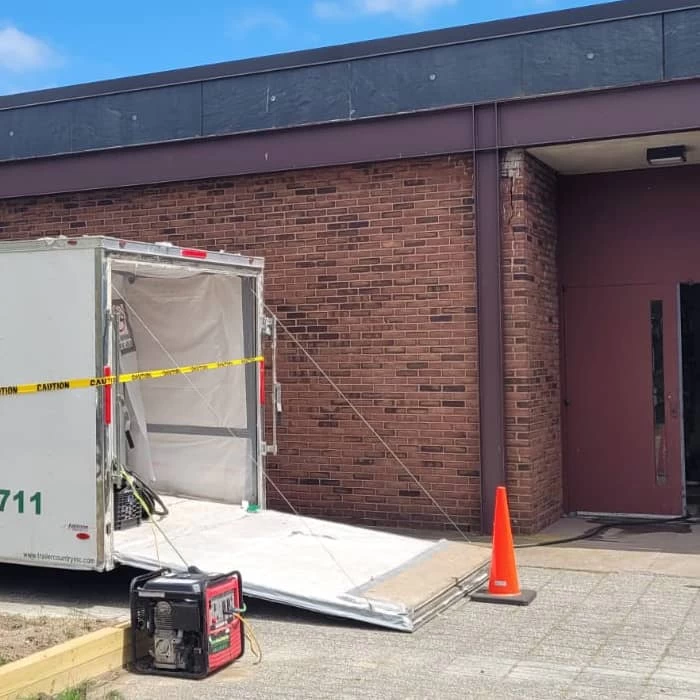
When Port Jefferson Harbor Pushes Water Into Your Home
Living on the harbor means you already know the risk. When a nor’easter knocks out your sump pump at midnight and the basement starts filling, you need someone who picks up the phone and shows up not a franchise call center routing your emergency to whoever’s available. We respond 24/7 and arrive within the hour for flooded basements in Poquott and surrounding areas.
I needed a professional consultation explanation of procedure for safe removal of Asbestos in my apartment complex. Without having an account yet, I was very impressed with the caring, knowledgeable and generous advice offered by Jessica, and will look forward to doing business in the future. Thank you so much! I feel much more informed about a sometimes scary endeavor. Peace. Nancy Silva Mineola, NY.
Mia Munoz
Used this company to clean up some water flood in my house. They were fast and easy to work with.very professional, Would recommend to anyone!
Nini Valle
Great company, had a flood and they responded quickly and efficiently. Billed my insurance company directly. I highly recommend this company!
joe colapietro, jr
I had pipe freeze in my basement right before a snow storm and they made to within an hour to help start the clean up process. They we by our side throughout the entire process and even helped with the insurance company. They did such a great job with the cleanup, repair, remidiation, I contracted them to perform the repairs and finishes in the basement. They came with enough manpower and material to get the job done. Leo and Jessica were nothing but a pleasure to deal with!!
Cristian Arredondo c
I had some water damage in my home and Green Island was able to take care of my issue quickly and effectively. I am very pleased with the work they did. They responded quickly and were very professional.
Michael M
Outstanding service! From the office to the field crew everyone was friendly, helpful and responsive. I highly recommend Green Island Group.
The real cost of a flooded basement isn’t just what you see standing in the water. It’s what gets left behind moisture trapped inside walls, under flooring, inside insulation that turns into a mold problem weeks later when you think the worst is already over. Professional remediation done right means that doesn’t happen.
For homes in Poquott, that risk is higher than most people realize. Many homes here were built in the 1950s, 60s, and 70s, which means wet drywall and disturbed insulation can reveal asbestos or lead materials that require licensed handling, not just a shop vac and a fan. Getting the cleanup wrong doesn’t just leave moisture behind; it can create a hazmat situation in your own basement.
The other thing worth knowing: mold starts growing within 24 to 48 hours of flooding. Every hour between the flood and professional drying adds to the scope of the problem. When the job is done correctly full extraction, industrial drying, moisture verification, and proper documentation you get your basement back and you get peace of mind that it’s actually done.
One Company That Can Handle Everything Your Poquott Basement Reveals
We are an independently owned environmental restoration company serving Suffolk County, Nassau County, and New York City. With over 12 years of experience and more than 5,000 completed restoration projects across New York State, we’ve handled every variation of basement flooding that Poquott and Long Island’s North Shore can produce harbor storm surge, sump pump failure, Category 3 sewage contamination, and everything in between.
What sets us apart in the Port Jefferson area isn’t just experience it’s licensing. We hold NYS DOL Mold, NYS DOL Asbestos, USEPA Lead, and Suffolk County General Contractor licenses, which means we can legally and safely handle whatever your older Poquott home is hiding behind the walls. Most water damage franchises operating in this market cannot say the same.
We’re also an approved emergency response contractor for the NYS Office of General Services independently vetted by New York State, not self-declared. That’s the same standard we bring to every residential job in Poquott.
From the First Call to a Fully Documented, Dry Basement
When you call, someone answers around the clock, every day of the year. The first priority is getting to your home fast, because the clock on mold growth starts immediately and the longer water sits, the deeper it penetrates into structural materials. We target arrival within one hour of your call in Poquott.
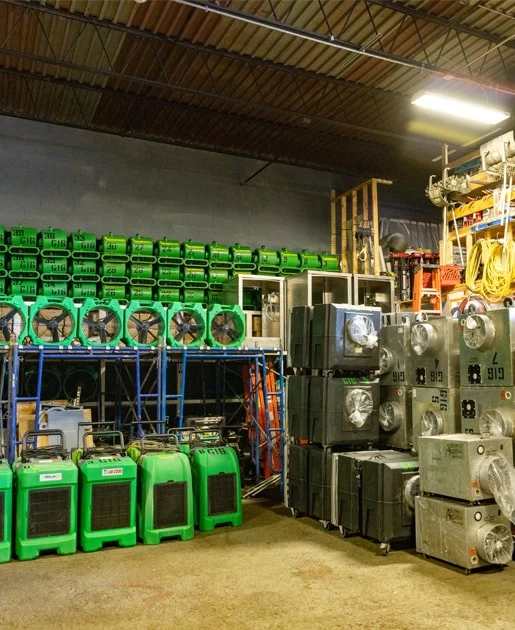
Once on-site, our team assesses the water category first. Storm surge from Port Jefferson Harbor is Category 3 contaminated water that requires full hazmat protocols, proper PPE, and licensed disposal under IICRC S500 standards. That’s not how every company operates, but it’s the only way to operate safely when the water came in from outside. After categorization, industrial extraction equipment removes standing water, followed by commercial-grade dehumidifiers and air movers that drive moisture out of structural materials not just the surface.
Moisture meters and thermal imaging confirm dryness throughout the process, not just at the end. If water-damaged materials need to come out drywall, flooring, insulation and if asbestos or lead is present in your pre-1980 Poquott home, that’s handled in-house under the appropriate licenses before reconstruction begins. Every step is documented for your insurance carrier, and we bill directly, so you’re not managing paperwork while managing a crisis. As an incorporated village, Poquott has its own permit process separate from the Town of Brookhaven we’re familiar with that distinction and handle it as part of the job.
Basement Flooding Remediation North Shore Long Island
Built for What Coastal Homes in Poquott Actually Face
Flooded basement cleanup in Poquott isn’t a one-size-fits-all job. The peninsula geography, the age of the housing stock, and the nature of the flooding itself all shape what the work actually involves. Our scope covers the full picture from emergency extraction through structural drying, mold remediation, hazmat abatement if needed, and complete basement reconstruction under one Suffolk County General Contractor license.
For waterfront and near-waterfront properties on or near Port Jefferson Harbor, storm surge is the most common culprit, and it brings contaminated water with it. That changes the entire protocol. For homes further into the village, sump pump failure during a nor’easter power outage is the more typical scenario clean water that becomes a serious mold risk if drying is delayed or done incompletely. Both situations are handled with the same standard: industrial equipment, verified dryness, and full documentation.
Homes built before 1980 a significant portion of Poquott’s housing stock receive particular attention during the demolition phase. Before any wet drywall or insulation comes out, materials are assessed for asbestos and lead. If they’re present, abatement is handled in-house under NYS DOL Asbestos and USEPA Lead certifications, not handed off to a subcontractor who doesn’t know the history of the job. From the first pump to the last coat of paint, it’s one company, one contract, and one clear line of accountability.
Does homeowners insurance cover flooded basement cleanup in Poquott, NY?
It depends on the cause of the flooding, and this is one of the most important questions to get right before you file. Standard homeowners insurance in New York typically covers sudden and accidental water damage like a burst pipe or a failed appliance but it generally does not cover flooding from outside sources, including storm surge from Port Jefferson Harbor. That type of flooding is usually only covered under a separate flood insurance policy through the National Flood Insurance Program.
If your basement in Poquott flooded because your sump pump failed during a nor’easter power outage, coverage may depend on whether you have a sump pump rider or water backup endorsement on your policy. These are relatively common add-ons in coastal Suffolk County communities, but not universal. We document all damage thoroughly and communicate directly with adjusters, which helps ensure you’re capturing everything your policy actually covers rather than leaving money on the table because the documentation was incomplete.
How quickly can mold grow after a basement flood on Long Island?
Mold can begin colonizing wet materials within 24 to 48 hours under the right conditions and basements in coastal communities like Poquott provide nearly ideal conditions. High ambient humidity, limited airflow, and organic materials like drywall, wood framing, and insulation give mold exactly what it needs to establish quickly. By 72 hours, you can have active growth behind walls that you can’t see and won’t smell for weeks.
The bigger issue is that mold growing inside wall cavities or under flooring is often invisible until it’s a much larger remediation project. Waiting a day or two to “see how it dries out” is the most common mistake homeowners make after a basement flood in Poquott, and it routinely turns a $3,000 cleanup into a $7,000 or $8,000 remediation. The 24 to 48 hour window is real professional drying equipment started within that window makes a measurable difference in outcome and cost.
What is Category 3 water damage and does it apply to my Poquott basement?
Water damage is classified in three categories based on contamination level, and the category determines the entire cleanup protocol. Category 1 is clean water a burst supply line, for example. Category 2 is gray water from appliance overflow or washing machine discharge. Category 3 is black water sewage backup, toilet overflow, or water that has come in from outside sources like storm surge, ground flooding, or an overflowing body of water.
For homes in Poquott that flood during a nor’easter or tropical storm, the water entering from outside through window wells, foundation cracks, or overwhelmed drainage is almost always Category 3. That means it carries bacteria, sewage, and other contaminants that require full hazmat-level protocols proper PPE, containment, antimicrobial treatment, and licensed disposal. It cannot be treated the same way as a burst pipe. Any contractor who doesn’t differentiate between water categories and adjust their process accordingly is cutting corners that create real health risks for your family.
My Poquott home was built in the 1960s should I be worried about asbestos during cleanup?
Yes, and it’s worth taking seriously before any demolition begins. Homes built between roughly 1940 and 1980 commonly contain asbestos in pipe insulation, floor tiles, ceiling tiles, joint compound, and certain types of insulation board. When a basement floods and materials need to come out wet drywall, damaged flooring, deteriorated pipe wrap there’s a real possibility of disturbing asbestos-containing materials in the process.
New York State law requires licensed contractors for asbestos abatement, and the NYS Department of Labor enforces this strictly. Hiring a water damage company that isn’t licensed to handle asbestos doesn’t just create a legal issue it creates a genuine exposure risk for your household and for the workers in your home. We hold NYS DOL Asbestos licensing and handle assessment and abatement in-house, so if something is found during the cleanup, the job doesn’t stop while you scramble to find a separate contractor. It gets handled as part of the same project, under the same roof.
How do I know if my basement is actually dry after cleanup not just dry on the surface?
Surface dryness and structural dryness are two different things, and the gap between them is exactly where mold problems start. A basement floor can look and feel completely dry while the wall framing, subfloor, and insulation behind it are still holding significant moisture. Standard fans and consumer-grade dehumidifiers can create the appearance of a dry basement without actually achieving the moisture levels needed to prevent mold growth.
Professional remediation uses calibrated moisture meters and thermal imaging cameras to measure moisture inside structural materials not just at the surface. These readings are taken throughout the drying process and again at completion to verify that materials have reached acceptable moisture levels before the job is closed out. In Poquott’s coastal environment, where ambient humidity is already elevated relative to inland communities, this step matters more than it would in a drier climate. Skipping it is how you end up with a mold problem two months after the cleanup company left.
How much does flooded basement cleanup typically cost in the Port Jefferson area?
The range is wide because the scope varies significantly depending on how much water entered, how long it sat, what category of water it was, and what materials need to come out. For a straightforward cleanup extraction, drying, and monitoring with no structural damage or mold you’re typically looking at somewhere between $2,000 and $5,000 in the Suffolk County market. If mold remediation is needed on top of that, add another $1,500 to $6,000 depending on the extent of growth and the materials involved.
For older homes in Poquott where asbestos or lead abatement becomes part of the scope, costs increase further but so does the risk of not addressing it properly. The more important number to understand is what delay costs: every 24 hours of unaddressed moisture adds to the remediation scope, and a cleanup that could have been $3,500 on day one can easily become $8,000 or more by day three. We provide detailed, line-item estimates and bill insurance carriers directly, so you’re not guessing at what’s covered or managing the adjuster conversation on your own during an already stressful situation.