When Manhasset Bay Storms Hit, Your Port Washington Basement Pays the Price
Port Washington sits on a peninsula with water on both sides — and when a coastal storm rolls through, basements flood fast. We respond 24/7 with licensed flooded basement cleanup built for exactly this kind of home and this kind of event.
I needed a professional consultation explanation of procedure for safe removal of Asbestos in my apartment complex. Without having an account yet, I was very impressed with the caring, knowledgeable and generous advice offered by Jessica, and will look forward to doing business in the future. Thank you so much! I feel much more informed about a sometimes scary endeavor. Peace. Nancy Silva Mineola, NY.
Mia Munoz
Used this company to clean up some water flood in my house. They were fast and easy to work with.very professional, Would recommend to anyone!
Nini Valle
Great company, had a flood and they responded quickly and efficiently. Billed my insurance company directly. I highly recommend this company!
joe colapietro, jr
I had pipe freeze in my basement right before a snow storm and they made to within an hour to help start the clean up process. They we by our side throughout the entire process and even helped with the insurance company. They did such a great job with the cleanup, repair, remidiation, I contracted them to perform the repairs and finishes in the basement. They came with enough manpower and material to get the job done. Leo and Jessica were nothing but a pleasure to deal with!!
Cristian Arredondo c
I had some water damage in my home and Green Island was able to take care of my issue quickly and effectively. I am very pleased with the work they did. They responded quickly and were very professional.
Michael M
Outstanding service! From the office to the field crew everyone was friendly, helpful and responsive. I highly recommend Green Island Group.
A Dry Basement — Before the 72-Hour Mold Clock Runs Out
Here’s what most Port Washington homeowners don’t know until it’s too late: mold can start growing within 72 hours of a flooding event. Not eventually. Not if conditions are right. Within three days. Once that window closes, you’re no longer dealing with a cleanup — you’re dealing with a full mold remediation, which costs significantly more and takes significantly longer.
Port Washington’s housing stock makes this window even more critical. More than a third of homes here were built before 1939, and the median construction year is 1953. That means original wood framing, older foundation walls, and materials that absorb water and hold it invisibly long after the floor looks dry. We use industrial moisture detection equipment to find what the eye misses — inside walls, under subflooring, inside structural framing — and that’s the difference between a job that’s actually done and one that just looks done.
The dual-waterfront geography here also matters. Surrounded by Manhasset Bay to the west and Hempstead Harbor to the east, Port Washington faces coastal flooding from two directions simultaneously. That’s a different risk profile than most Nassau County towns, and it calls for a company that understands what North Shore flooding actually looks like — not one applying a generic playbook built for inland communities.
We hold the full credential stack that New York State and Nassau County require for this type of work — NYS DOL Mold License, NYS DOL Asbestos License, USEPA Lead Abatement and RRP certifications, IICRC Water Damage Certification, and a Nassau County General Contractor license. That last one matters more than most people realize. It means we can pull permits within the Town of North Hempstead and the incorporated villages of Port Washington — Manorhaven, Port Washington North, Sands Point, Baxter Estates — and take the job from water extraction all the way through structural rebuild without handing you off to a second contractor.
For homeowners near Shore Road, in Beacon Hill, or up in Sands Point with a pre-war home, this isn’t just a credential list. It’s the practical difference between a company that can legally handle every hazard in your basement and one that has to stop when the scope gets complicated. We don’t stop.
Basement Flooding Remediation Process Port Washington
From Standing Water to Structurally Sound — Here's the Honest Walkthrough
The first call matters. When you reach us — day, night, or during a nor’easter — we ask a few quick questions to understand what you’re dealing with. Is this a burst pipe, storm surge, sump pump failure, or a sewage backup? The answer determines how we respond and what protocols we bring. A Category 3 sewage event requires full biohazard handling. A pipe burst is a different scope entirely. We don’t treat every flooded basement the same way.
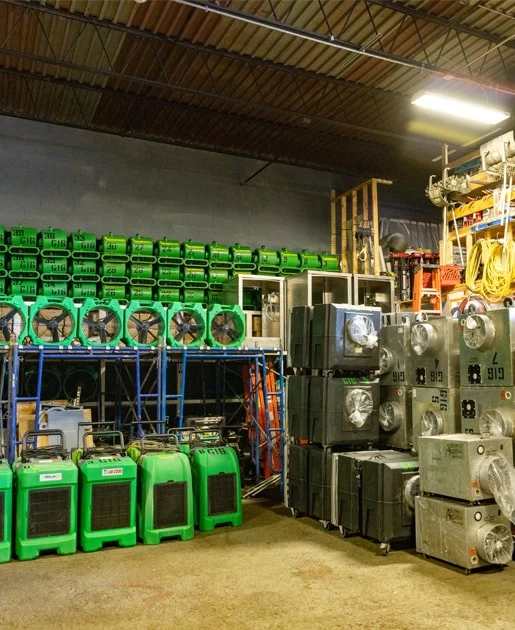
Once on-site, we extract standing water, then move into the structural drying phase using industrial dehumidifiers and air movers — not box fans. Moisture meters go into the walls, the subfloor, and the framing to confirm actual dryness, not surface-level dryness. In Port Washington’s older homes, where original plaster walls and wood beam ceilings are common, this step is where shortcuts get expensive later.
If mold is found, we remediate under our NYS DOL Mold License. If asbestos floor tiles or lead paint are disturbed — which is a real possibility in any pre-1978 Port Washington home — we handle that under our separate state and federal certifications before any reconstruction begins. When the structure is clean, dry, and cleared, our Nassau County licensed GC team handles the rebuild. One company, start to finish.
Flooded Basement Cleaning Services Port Washington NY
What's Actually Included When Your Basement Floods Here
The scope of flooded basement cleanup in Port Washington isn’t always the same job. A coastal storm event that pushes water through a Shore Road-adjacent foundation is a different situation than a frozen pipe bursting in a Beacon Hill colonial in January. What stays consistent is what we bring to every job: 24/7 emergency response, industrial extraction and drying equipment, moisture documentation for insurance purposes, and licensed handling of every hazard the job uncovers.
For homes in Port Washington North, Manorhaven, or anywhere in the older housing stock along the peninsula, we routinely assess for asbestos-containing materials before any demolition begins. This isn’t optional — it’s required by law, and skipping it creates liability for the homeowner. If your pre-war or mid-century Port Washington home has asbestos floor tiles, transite pipe insulation, or lead paint near the flooded area, we handle it in-house under our NYS DOL Asbestos License and USEPA Lead certifications. No subcontractors, no coordination gaps.
We also assist with insurance documentation from the first assessment. This matters in Port Washington because many homeowners here don’t realize that standard homeowners insurance covers sudden events like pipe bursts — but not natural flooding from storm surge or rising groundwater. That requires separate flood insurance. Knowing which type of event you had, and documenting it correctly from the start, is the difference between a paid claim and a denied one.
Does homeowners insurance cover basement flooding from a coastal storm in Port Washington?
This is one of the most common — and most costly — misunderstandings for Port Washington homeowners. Standard homeowners insurance covers sudden, accidental water events: a burst pipe, a failed water heater, an appliance leak. It does not cover flooding from natural sources — storm surge from Manhasset Bay, rising groundwater during a nor’easter, or water backing up through the municipal sewer system during a heavy rain event. That type of flooding requires a separate flood insurance policy through the National Flood Insurance Program (NFIP) or a private flood carrier.
The reason this matters so much in Port Washington specifically is the geography. Living on the Cow Neck Peninsula means coastal flooding is a realistic, recurring risk — not a freak event. If you’re not sure which type of event caused your basement to flood, that’s exactly where we start. We assess the source, document it correctly, and help you understand what your policy may or may not cover before you file. Getting that wrong from the beginning can result in a denied claim on a five- or six-figure loss.
How fast does mold actually grow after a basement floods?
Mold can begin growing within 24 to 72 hours of a flooding event under the right conditions — and basements in Port Washington’s older housing stock tend to create those conditions quickly. Original wood framing, older concrete block foundations, and materials that weren’t designed with modern moisture barriers absorb water and hold it in ways that modern construction doesn’t. The surface might look dry while the framing behind the wall is still wet enough to support mold growth.
The 72-hour window is real, but it’s not a hard cutoff — it’s a warning. If your basement floods and sits untreated over a weekend because you couldn’t reach anyone, or because you assumed it would dry on its own, the remediation scope grows significantly. What might have been a $4,000–$8,000 cleanup can become a $20,000+ mold remediation job involving material removal, air testing, and structural work. Calling immediately — even at 2 a.m. during a storm — is the single most important thing you can do to control the outcome and the cost.
My Port Washington home was built in the 1940s — does that change how basement cleanup works?
Yes, meaningfully. Homes built before 1978 may contain lead paint, and homes built before the mid-1980s may contain asbestos in floor tiles, pipe insulation, joint compound, or ceiling materials. In Port Washington, where approximately 34.7% of homes were built before 1939 and the median construction year is 1953, this isn’t a rare edge case — it describes the majority of the housing stock.
When a basement floods and materials need to be removed or disturbed, those hazards have to be identified and handled before any demolition or drying work touches them. New York State requires a separate DOL Asbestos License for any asbestos abatement work, and federal law requires USEPA Lead/RRP certification for lead paint disturbance. A company that skips this step — or doesn’t hold these licenses — isn’t just cutting corners. They’re creating legal and health liability for you as the homeowner. We hold both certifications and include hazardous material assessment as part of every job in older Port Washington homes.
What's the difference between water removal and full basement flood remediation?
Water removal is the first step — extracting standing water from the floor using truck-mounted or portable extraction equipment. It’s fast, and it’s necessary. But it’s only the beginning. Full basement flooding remediation includes the structural drying phase, which uses industrial dehumidifiers and air movers to pull moisture out of walls, framing, and subfloor materials over a period of days. It also includes moisture monitoring with calibrated meters to confirm that structural materials have reached safe dryness levels — not just that the floor is no longer wet.
After drying, a complete remediation assesses for mold growth, treats any affected materials under proper licensing, and addresses any damaged structural components. In Port Washington, where many basements have original plaster walls, wood beam ceilings, and older insulation, the drying process takes longer and requires more monitoring than a newer construction home. Skipping straight from extraction to reconstruction — without confirming the structure is actually dry — is one of the most common causes of mold problems showing up three to six months after a flood that was supposedly “handled.”
My sump pump failed during a storm and the basement flooded — is that covered by insurance?
Sump pump failure is one of the most frequent causes of basement flooding in North Shore communities like Port Washington, especially during coastal storms when power outages knock out the pump at exactly the moment it’s needed most. Whether it’s covered by your homeowners insurance depends on your specific policy. Some policies include a sump pump failure rider or water backup endorsement — but it’s a separate add-on, not standard coverage. If you don’t have that rider, a sump pump failure flooding event may not be covered at all.
The first thing to do is not assume. Pull your policy, look for a water backup or equipment breakdown endorsement, and call your carrier before assuming the claim will or won’t go through. What we can do is document the event thoroughly from the start — the source, the extent of damage, the timeline — so that if coverage does apply, your claim has the strongest possible foundation. Sump pump failures during nor’easters and coastal storms are a known, recurring pattern in Port Washington, and insurance carriers know it too. Proper documentation is what separates a paid claim from a disputed one.
How do I know if a basement flood cleanup company is actually licensed to work in Port Washington, NY?
New York State is one of only a handful of states in the country that requires a dedicated DOL Mold License for any mold remediation work. That license is issued by the New York State Department of Labor and is publicly searchable. If a company is advertising mold cleanup in Port Washington without it, they’re operating outside the law — and if they perform the work, the liability can fall on you as the homeowner. Beyond mold, NYS DOL Asbestos certification and USEPA Lead/RRP credentials are legally required for disturbance of those materials, which is directly relevant in a town where most of the housing stock predates 1978.
On the contractor side, any structural repair work following a flood — replacing drywall, flooring, or framing — requires a licensed General Contractor. In Port Washington, that means a Nassau County GC license, which also covers the incorporated villages within the area including Manorhaven, Port Washington North, and Sands Point. Ask any company you’re considering to name their licenses specifically. Not “we’re certified” — the actual license type and issuing authority. A company that holds everything will name everything. One that doesn’t will get vague.