Queens Village Basements Flood. Yours Deserves a Real Fix.
When water hits your basement in Queens Village, every hour you wait costs more than the last. We handle flooded basement cleanup from first call to fully restored one company, no handoffs.
I needed a professional consultation explanation of procedure for safe removal of Asbestos in my apartment complex. Without having an account yet, I was very impressed with the caring, knowledgeable and generous advice offered by Jessica, and will look forward to doing business in the future. Thank you so much! I feel much more informed about a sometimes scary endeavor. Peace. Nancy Silva Mineola, NY.
Mia Munoz
Used this company to clean up some water flood in my house. They were fast and easy to work with.very professional, Would recommend to anyone!
Nini Valle
Great company, had a flood and they responded quickly and efficiently. Billed my insurance company directly. I highly recommend this company!
joe colapietro, jr
I had pipe freeze in my basement right before a snow storm and they made to within an hour to help start the clean up process. They we by our side throughout the entire process and even helped with the insurance company. They did such a great job with the cleanup, repair, remidiation, I contracted them to perform the repairs and finishes in the basement. They came with enough manpower and material to get the job done. Leo and Jessica were nothing but a pleasure to deal with!!
Cristian Arredondo c
I had some water damage in my home and Green Island was able to take care of my issue quickly and effectively. I am very pleased with the work they did. They responded quickly and were very professional.
Michael M
Outstanding service! From the office to the field crew everyone was friendly, helpful and responsive. I highly recommend Green Island Group.
Most Queens Village homes were built in the 1930s and 40s. That’s not a small detail it means plaster walls, original wood framing, and decades-old drain lines that hold moisture long after the visible water disappears. When basement flooding remediation is done right, you’re not just drying a floor. You’re stopping mold before it takes hold in places you can’t see, protecting structural materials that can’t be easily replaced, and making sure your home is actually safe to be in again.
The city spent $3.9 million installing green drainage infrastructure specifically in Queens Village because the neighborhood’s combined sewer system regularly gets overwhelmed during heavy rain. That investment helps the streets. It doesn’t waterproof your basement. When the system backs up and sewage enters through your floor drain, that’s black water the most hazardous category of water damage and it requires licensed handling that most contractors in this area simply aren’t certified to perform.
When the job is done correctly, you get your space back without the lingering smell, the hidden moisture, or the mold problem that shows up six weeks later. You also get documentation your insurance company will accept, because the work was performed by a licensed, certified team that follows the process from start to finish.
Licensed Basement Flood Remediation in Queens Village
17 Certifications. One Call. No Subcontractors.
We’re a full-service environmental remediation and restoration company serving Queens Village and Queens County with 24/7 emergency response. When you call us, you’re not reaching a call center that dispatches a subcontractor you’re reaching a team that arrives, does the work, and sees it through to completion.
The certifications matter here more than they might anywhere else. Queens Village’s pre-war housing stock means basement floods routinely disturb asbestos pipe insulation and lead-based paint. We hold NYS DOL Mold, NYS DOL Asbestos, USEPA Lead, USEPA RRP, IICRC Water Damage, and NYC General Contractor licenses making us one of the only companies legally equipped to handle a complete basement flood in an older Queens Village home without bringing in a second or third contractor.
That’s not a credential list for its own sake. It’s what makes the difference between a cleanup that’s legal, safe, and insurance-approved and one that isn’t.
Basement Flooding Remediation Process Queens Village
From Standing Water to Finished Space Here's the Sequence
The first thing that happens is emergency water extraction. We arrive documented response times put this within the hour and remove standing water using industrial-grade equipment. This is where speed directly affects your total cost. Every additional hour water sits against the plaster walls and wood framing of a pre-war Queens Village home is another hour mold has to establish itself in places you won’t be able to see until it’s a much bigger problem.
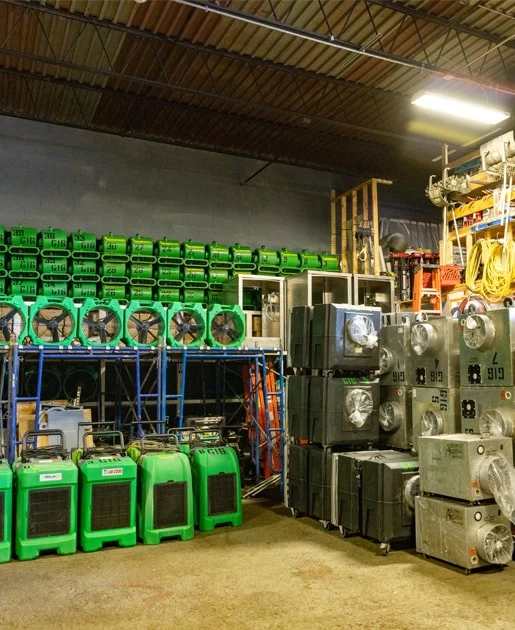
Once the water is out, the focus shifts to structural drying. Thermal imaging identifies moisture pockets hidden inside walls, under floors, and inside structural cavities exactly where mold colonies start. Consumer fans and rental dehumidifiers don’t reach these spaces. Our industrial drying systems do. In Queens Village’s older homes, this step is non-negotiable, because the building materials absorb and retain moisture differently than newer construction.
If the flood involved sewage backup which happens regularly here when the combined sewer system gets overwhelmed during heavy storms we follow NYC DEP and USEPA protocols for black water handling and disposal. From there, mold prevention treatment is applied, and reconstruction begins. Drywall, flooring, structural repairs, permits all of it handled under one roof. When it’s done, the space is livable again and the paperwork is in order for your insurance claim.
Flooded Basement Cleaning Services Queens Village, NY
Built for Queens Village's Homes, Not Just Any Basement
Flooded basement cleanup in Queens Village isn’t a one-size job. The neighborhood sits on aging combined sewer infrastructure, has a high water table influenced by Jamaica Bay’s proximity to the south, and is made up almost entirely of pre-1950 single-family homes. That combination shapes everything about how we do this work from the hazardous materials assessment at the start to the reconstruction materials we use at the finish.
Our scope covers emergency water removal, full structural drying, mold prevention and remediation, content restoration, and complete reconstruction. Because we hold a NYC General Contractor license alongside our environmental certifications, we can pull the permits and complete the physical rebuild without handing you off to a separate contractor. That matters for homeowners in Hollis Hills, central Queens Village, and the Bellaire area who have finished basements recreation rooms, home offices, in-law suites that represent years of investment.
We also bill insurance directly and work with your adjuster on your behalf. For most Queens Village homeowners, this is the first time they’ve navigated a water damage claim. Having a company that handles that conversation not just the physical work is the difference between getting a fair settlement and getting a lowball offer you don’t know how to push back on.
My basement flooded in Queens Village is it safe to go in?
It depends on the source of the water. If it came in through a window well or foundation crack during a rainstorm, the risk level is lower though you should still avoid prolonged contact and keep children and pets out until the space is assessed. If the water came up through a floor drain, that’s a different situation entirely. Queens Village’s combined sewer system regularly backs up during heavy storms, and when it does, what enters your basement is classified as black water meaning it contains raw sewage, bacteria, and pathogens that pose a genuine health risk.
In either case, don’t run standard box fans or a shop vac and assume the problem is handled. The real danger in a pre-war Queens Village home isn’t always what you can see it’s the moisture that absorbs into plaster walls, original wood framing, and subfloor assemblies and creates mold within 24 to 72 hours. The safest move is to limit your time in the space, turn off electricity to the affected area if you can do so safely from a dry location, and call us before the clock runs out on that mold window.
How quickly does mold start growing after a basement flood?
Mold can begin establishing itself within 24 to 48 hours of water exposure and in Queens Village’s older homes, that timeline is compressed by the building materials themselves. Plaster walls, original wood joists, and older insulation absorb and retain moisture far more aggressively than modern drywall and engineered lumber. By the time you can smell something, the colony is already behind the wall.
The 72-hour mark is the critical threshold. Acting before that point gives a professional remediation team the best chance of drying the structure before mold takes hold, which keeps your total cost significantly lower. Waiting past 72 hours doesn’t just mean more mold it often means the difference between drying and salvaging your walls versus tearing them out entirely. Given that most Queens Village basements were built with materials that are no longer easy to source or match, that distinction matters both financially and practically.
Does homeowners insurance cover flooded basement cleanup in Queens Village, NY?
It depends on the cause, and the distinction matters more than most homeowners realize. Standard homeowners insurance typically covers sudden and accidental water damage a burst pipe, for example. It does not cover flooding from outside the home, which falls under a separate flood insurance policy through the National Flood Insurance Program. Sewer backup coverage is often a separate rider that many Queens Village homeowners don’t know they have or don’t have and should.
The most important thing you can do is call us before you call your adjuster, not after. The documentation generated during professional cleanup moisture readings, thermal imaging reports, scope of damage assessments is what supports your claim and protects you from a lowball settlement. We bill insurance directly and communicate with adjusters on your behalf, which means you’re not navigating that process alone while also dealing with a damaged home. For a first-time claim, that support is worth as much as the physical cleanup itself.
My Queens Village home was built in the 1940s does that change the cleanup process?
Yes, significantly. Roughly 70 percent of homes in Queens Village were built before 1950, and that era of construction comes with materials that require specific licensing to handle legally. Asbestos was commonly used in pipe insulation, floor tiles, and ceiling materials in homes built before 1980. Lead-based paint was standard on walls, trim, and pipes in homes built before 1978. When a basement floods in a pre-war home, the cleanup process routinely disturbs both.
Under New York State law, mold remediation requires an active NYS DOL Mold License. Disturbing asbestos without a NYS DOL Asbestos License is illegal. Any renovation work that disturbs lead paint must comply with the EPA’s Renovation, Repair, and Painting Rule which requires specific certification. We hold all of these licenses, which means we can legally and safely handle the full scope of a basement flood in an older Queens Village home in a single engagement. Most water damage companies operating in this area hold none of them.
How much does flooded basement cleanup typically cost in Queens Village?
The range is wide because the variables are significant. A straightforward water extraction and drying job in an unfinished basement clean water source, caught within 24 hours might run $2,500 to $5,000. A finished basement with sewage contamination, mold remediation required, and reconstruction involved can reach $15,000 to $30,000 or more depending on the scope.
In Queens Village specifically, a few factors push costs higher than the national average. Pre-war construction materials are harder to source and match. NYC permitting requirements add steps that aren’t present in Nassau County or Suffolk County jobs. And because the neighborhood’s older homes frequently involve asbestos or lead concerns, the remediation process requires licensed hazmat handling that adds both time and cost but that cost is non-negotiable if you want the work done legally. The most reliable way to understand your specific number is a professional assessment after the water is out and the full scope of damage is documented.
Why does Queens Village flood so often, and what can I actually do about it?
Queens Village floods as often as it does because of a combination of factors that aren’t going away anytime soon. The neighborhood sits on aging combined sewer infrastructure designed for early 20th-century rainfall patterns, not the intensified storm events that have become more frequent over the past decade. When heavy rain overwhelms the system’s capacity, it backs up and the path of least resistance is through basement floor drains. The high water table in the southern portions of the neighborhood, influenced by Jamaica Bay’s proximity, adds hydrostatic pressure that pushes water through foundation walls and floor slabs even without a direct sewer event.
The city’s $3.9 million green infrastructure project which converted seven concrete medians in Queens Village into subsurface drainage systems capable of absorbing five million gallons of stormwater annually will help reduce surface flooding over time. But it doesn’t protect individual basements. What you can actually control is your response time when flooding happens and the quality of the company you call. A sump pump with a battery backup, properly sealed foundation penetrations, and a relationship with us a licensed remediation company you’ve already vetted are the practical steps that make the difference between a manageable cleanup and a catastrophic one.