When Your Rego Park Basement Backs Up With Sewage, You Need More Than a Wet-Vac
Basements in Rego Park don’t just floodthey back up with raw sewage from an overwhelmed combined sewer system. We respond in under an hour with licensed crews ready to handle everything from black water extraction to full basement restoration. When 63rd Avenue and the surrounding sewer infrastructure can’t keep up with a storm, your basement pays the price. We know this neighborhood’s specific flooding patterns, and we’re equipped to handle them.
I needed a professional consultation explanation of procedure for safe removal of Asbestos in my apartment complex. Without having an account yet, I was very impressed with the caring, knowledgeable and generous advice offered by Jessica, and will look forward to doing business in the future. Thank you so much! I feel much more informed about a sometimes scary endeavor. Peace. Nancy Silva Mineola, NY.
Mia Munoz
Used this company to clean up some water flood in my house. They were fast and easy to work with.very professional, Would recommend to anyone!
Nini Valle
Great company, had a flood and they responded quickly and efficiently. Billed my insurance company directly. I highly recommend this company!
joe colapietro, jr
I had pipe freeze in my basement right before a snow storm and they made to within an hour to help start the clean up process. They we by our side throughout the entire process and even helped with the insurance company. They did such a great job with the cleanup, repair, remidiation, I contracted them to perform the repairs and finishes in the basement. They came with enough manpower and material to get the job done. Leo and Jessica were nothing but a pleasure to deal with!!
Cristian Arredondo c
I had some water damage in my home and Green Island was able to take care of my issue quickly and effectively. I am very pleased with the work they did. They responded quickly and were very professional.
Michael M
Outstanding service! From the office to the field crew everyone was friendly, helpful and responsive. I highly recommend Green Island Group.
A Dry Basement Isn't EnoughHere's What You Actually Need After a Rego Park Sewage Backup
When sewage backs up through your basement floor drain or toiletwhich happens regularly in Rego Park, especially along the 63rd Avenue corridoryou’re not dealing with clean water. You’re dealing with Category 3 black water: raw sewage containing bacteria and biological waste that can’t be handled with household cleaners or a basic extraction service. Getting the water out is step one. Making the space genuinely safe is a different job entirely, and most companies stop at step one.
What makes Rego Park different from most neighborhoods is the building stock itself. The majority of homes and co-ops here were built between the 1920s and 1960s. That means plaster walls, hollow-block foundations, and decades-old insulationall of which absorb moisture aggressively and hold it long after the floor looks dry. If that moisture isn’t tracked and fully removed, mold starts within 24 to 72 hours. In buildings this age, it doesn’t take long before what started as a wet basement becomes a mold remediation job hiding inside the walls.
The outcome you’re actually looking for isn’t just a dry floor. It’s a basement that tests clean, smells clean, and is structurally sound enough to use againwhether that’s finished living space, a home office, or storage you can trust. That’s the standard we hold every job to.
Licensed Basement Flooding Remediation in Rego Park
One Call Covers What Rego Park Basements Actually Contain
We’re a full-service environmental remediation and restoration company serving New York State, and we have direct experience in Rego Park’s specific conditions. The reason that matters in this neighborhood specifically is that older buildingsthe pre-war co-ops along Queens Boulevard, the Tudor homes in the Crescents, the postwar mid-rises throughout Rego Parkdon’t just have water problems after a flood. They have asbestos pipe insulation, lead paint on basement walls, and mold conditions that require licensed professionals, not just a restoration crew with dehumidifiers.
We hold the NYS DOL Mold License, the NYS DOL Asbestos License, USEPA Lead and RRP certifications, and a New York City General Contractor license. That combination means one company can legally handle the full scopefrom sewage extraction through hazardous materials abatement through complete reconstructionwithout handing you off to a second or third contractor mid-project.
Available 24/7 with documented response times under one hour, and with direct experience working in Rego Park’s specific building types and flooding conditions, we’re not a national franchise reading from a playbook. We’re a team that has already been in basements like yours.
From Sewage Backup to Finished SpaceWhat the Process Looks Like in Rego Park
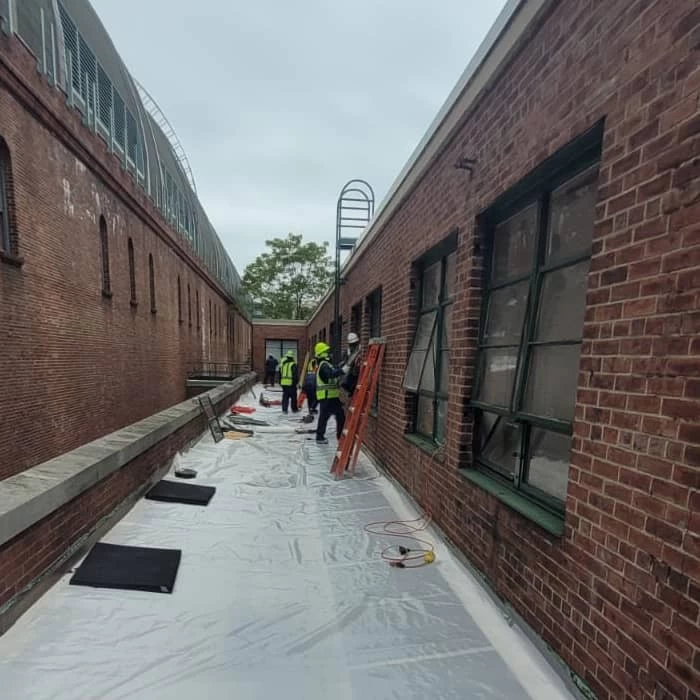
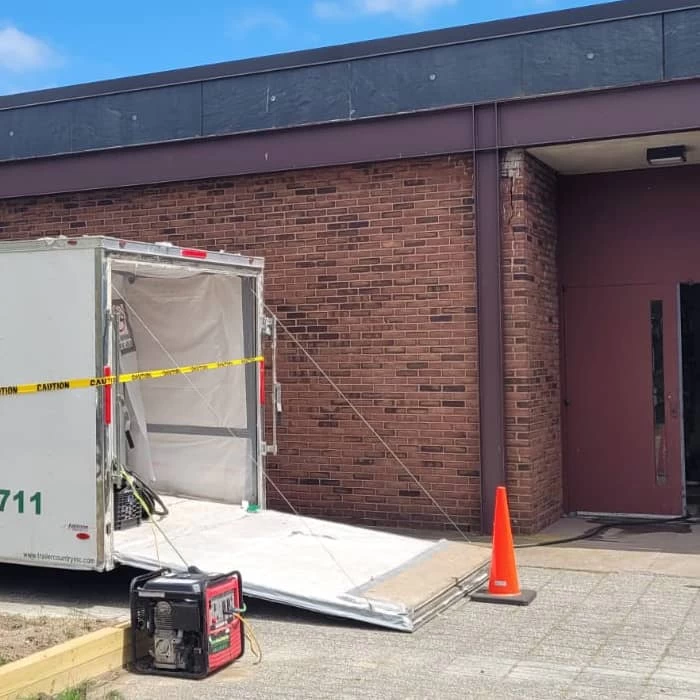
The first call triggers an immediate dispatch. Given that Rego Park flooding is almost always tied to storm events or combined sewer overflowsconditions that affect multiple households at oncespeed is the job. We arrive, assess the water source and contamination category, and begin extraction. If sewage is involved, which it frequently is in this neighborhood, containment protocols go up before anything else moves.
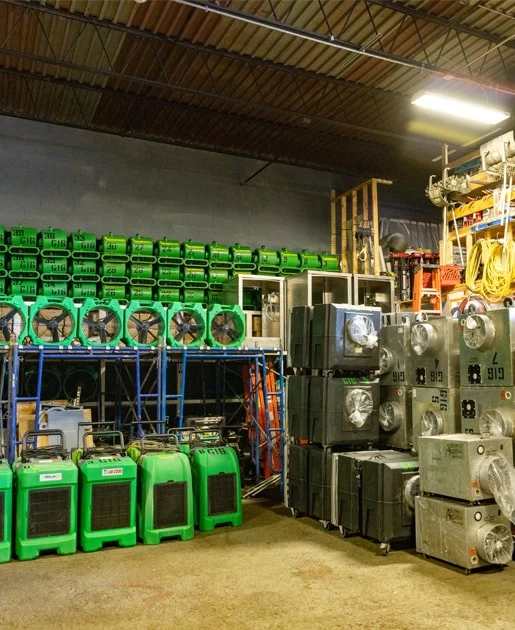
Once the water is out, the real diagnostic work starts. We use thermal imaging to scan the walls, framing, and foundation for moisture that isn’t visible to the eye. In Rego Park’s older building stockplaster over hollow block, brick facades with wood framing insidewater travels in ways that a visual inspection misses entirely. Every wet zone gets mapped, and drying equipment is placed based on that map, not just wherever the floor is wet.
From there, the process depends on what the water disturbed. If there’s mold, we remediate it under the NYS DOL Mold License. If there’s asbestos pipe wrap or lead paint that the flood contacted, we handle it under the appropriate certifications before any reconstruction begins. In New York City, work in multi-family buildings requires NYC DOB permitswe handle those as part of the job, not hand them off to you to figure out. When everything clears testing, we begin the rebuild. Drywall, flooring, utilitieswhatever the basement needs to be functional again.
Every flooded basement job in Rego Park starts with a contamination assessmentbecause the source of the water determines everything that follows. A burst pipe is a different job than a combined sewer overflow, and in a neighborhood where sewage backup is a documented, decades-long issue, that distinction matters. Black water jobs include full containment, licensed sewage extraction, EPA-compliant disposal, and complete sanitization of all affected surfaces before drying equipment is ever placed.
For Rego Park’s older buildings specifically, the scope routinely includes hazardous materials evaluation. Pre-1978 constructionwhich covers the vast majority of housing in this ZIP codecommonly contains asbestos floor tiles, asbestos pipe insulation, and lead paint. When a flood disturbs those materials, federal and state law requires licensed abatement before the space can be rebuilt. Because we hold those licenses in-house, that work happens within the same project, on the same timeline, under the same contract.
The final phase is reconstruction. Whether the basement was unfinished utility space or a finished room generating rental income, our goal is to return it to pre-loss conditionor better. For Rego Park co-op shareholders navigating both an HO-6 policy and a building master policy, we prepare all documentation for direct insurance billing. You don’t need to become an expert in your policy language to get this resolved.
Why does my Rego Park basement flood every time it rains hard?
Rego Park sits within New York City’s combined sewer system, which means stormwater runoff and sewage share the same pipes. When a heavy rain event pushes more water into those pipes than they can handle, the overflow has to go somewhereand the path of least resistance is often your basement floor drain, shower, or toilet. This isn’t a freak occurrence in this neighborhood. Residents along 63rd Avenue and surrounding streets have been dealing with this for decades, and it’s been documented by local news outlets going back years.
The clay-heavy glacial soils under Rego Park don’t help either. Unlike sandy soils that drain quickly, clay holds water near the surface and around foundations, which increases the hydrostatic pressure pushing against basement walls during and after a storm. Even if your building has a sump pump, a severe enough event can overwhelm it. The combination of aging sewer infrastructure and slow-draining soil is why this neighborhood sees basement flooding at a frequency that surprises people who didn’t buy in a designated flood zone.
Is it safe to go into my basement after sewage backed up into it?
Nonot without proper protective equipment, and honestly, not at all until a licensed professional has assessed the space. Sewage backup is classified as Category 3 water damage, also called black water, which contains raw human waste, bacteria, and pathogens that pose real health risks. Exposure through skin contact, inhalation of airborne particles, or contact with contaminated surfaces can cause serious illness. This isn’t overstatedit’s the reason licensed remediation exists as a distinct category from basic water damage cleanup.
In Rego Park’s older buildings, the risk compounds quickly. Sewage-contaminated water wicks into plaster walls, soaks into wood framing, and saturates concrete block foundations in ways that don’t dry out on their own. What you can see on the floor is a fraction of what’s actually contaminated. Until the space has been properly extracted, sanitized, and tested, it should be treated as a hazardous environment. If you have a finished basement or a ground-floor unit below the affected area, keep those spaces closed off as well until the job is complete.
How quickly does mold start growing after a basement flood in Rego Park?
Mold can begin colonizing porous materials within 24 to 72 hours of water exposureand in Rego Park’s older building stock, that window moves fast. Plaster walls, wood framing, and hollow-block foundations absorb moisture deeply and hold it long after the surface appears dry. By the time you can smell mold, it’s already established inside the wall cavity, not just on the surface.
The practical implication is that response time is everything. A flooded basement that gets properly extracted and dried within the first 24 hours has a dramatically different outcome than one that sits for two or three days while you wait on a contractor’s schedule. This is why our 24/7 emergency availability with sub-one-hour response times isn’t just a selling pointit’s the difference between a cleanup job and a full mold remediation project. If mold is already present when we arrive, we handle it under the NYS DOL Mold License as part of the same project, but the faster you call, the better your odds of keeping the scope manageable.
Does homeowners insurance cover sewage backup damage in a Rego Park co-op?
It depends on your specific policy, and in Rego Park’s co-op-heavy housing environment, the answer is more complicated than a standard homeowners claim. Most HO-6 policiesthe type co-op shareholders carry for their individual unitscover sudden internal water damage like burst pipes, but sewage backup coverage is typically a separate endorsement that not every policy includes. If you don’t have that endorsement, a combined sewer overflow event may not be covered at all under your personal policy.
The additional layer for co-op shareholders is the building’s master policy. Structural elements, common areas, and shared systems may fall under the building’s coverage rather than yoursbut the line between what’s your responsibility and what’s the co-op’s isn’t always obvious, and insurance companies don’t always agree with building managers on where that line falls. We bill insurance companies directly and have experience working through exactly this kind of overlapping coverage situation. The documentation we prepare during the job is specifically designed to support the adjuster review process, which matters when you’re navigating two separate policies at once.
What happens if my flooded basement has asbestos or lead paint in it?
In Rego Park, this is less of an “if” and more of a “when.” The neighborhood’s housing was predominantly built between the 1920s and 1960s, which means asbestos floor tiles, asbestos pipe wrap around heating lines, and lead paint on basement walls are standard findingsnot exceptions. Federal and New York State law requires that any contractor disturbing these materials during demolition or reconstruction hold the appropriate licenses. Without them, the work is illegal, and the liability falls on the property owner.
When a flood soaks into a basement that contains these materials, they can’t simply be dried and rebuilt around. Wet asbestos tile adhesive, saturated pipe insulation, and lead paint on water-damaged walls all require licensed abatement before reconstruction can begin. Because we hold the NYS DOL Asbestos License, USEPA Lead certification, and USEPA RRP certification in-house, this work happens within the same project scopenot as a separate engagement you have to source independently. For Rego Park building owners and co-op shareholders, that means one contract, one insurance claim, and one project timeline from start to finish.
How long does flooded basement cleanup and restoration take in Rego Park?
The honest answer is that it depends on what the water disturbedbut most jobs move through a predictable sequence. Initial extraction and containment typically happen within the first few hours of our arrival. Structural drying, which involves dehumidifiers, air movers, and thermal imaging to confirm moisture levels throughout the walls and framing, usually takes three to five days depending on how deeply the water penetrated. In Rego Park’s older plaster-and-block construction, that drying phase can run longer than it would in a newer building with standard drywall.
If mold remediation or hazardous materials abatement is requiredwhich is common in this neighborhood’s pre-1970 building stockthat adds time before reconstruction can begin. NYC DOB permits for work in multi-family buildings are part of the process and we handle them as part of the job. Reconstruction timelines vary based on the scope: a utility basement with exposed concrete and basic mechanicals is a faster rebuild than a finished space with drywall, flooring, and electrical. Most complete restorations, from initial call to finished space, run between two and four weeks. The goal throughout is to move as quickly as the work allows without cutting corners that create a second problem down the road.