Richmond Hill's Old Pipes Don't Wait Neither Do We
When your basement floods in a neighborhood built on century-old plumbing, every hour you wait costs more than the last. We respond 24/7 with licensed crews who know exactly what’s inside these walls and what it takes to make it right.
I needed a professional consultation explanation of procedure for safe removal of Asbestos in my apartment complex. Without having an account yet, I was very impressed with the caring, knowledgeable and generous advice offered by Jessica, and will look forward to doing business in the future. Thank you so much! I feel much more informed about a sometimes scary endeavor. Peace. Nancy Silva Mineola, NY.
Mia Munoz
Used this company to clean up some water flood in my house. They were fast and easy to work with.very professional, Would recommend to anyone!
Nini Valle
Great company, had a flood and they responded quickly and efficiently. Billed my insurance company directly. I highly recommend this company!
joe colapietro, jr
I had pipe freeze in my basement right before a snow storm and they made to within an hour to help start the clean up process. They we by our side throughout the entire process and even helped with the insurance company. They did such a great job with the cleanup, repair, remidiation, I contracted them to perform the repairs and finishes in the basement. They came with enough manpower and material to get the job done. Leo and Jessica were nothing but a pleasure to deal with!!
Cristian Arredondo c
I had some water damage in my home and Green Island was able to take care of my issue quickly and effectively. I am very pleased with the work they did. They responded quickly and were very professional.
Michael M
Outstanding service! From the office to the field crew everyone was friendly, helpful and responsive. I highly recommend Green Island Group.
When the water’s gone and the fans have been running for days, the real question is whether the job was actually finished or just started. A dry floor doesn’t mean a safe basement. In Richmond Hill’s pre-war homes, moisture hides behind plaster walls, inside original wood framing, and underneath floors that have absorbed decades of humidity. If it isn’t found and treated, mold follows. And in a home built before 1940, mold remediation isn’t a small line item.
Richmond Hill’s combined sewer system is one of the most direct drivers of basement flooding in the neighborhood. When heavy rain hits, stormwater and sewage share the same pipes and those pipes back up into basements. That’s not clean water. That’s a contamination event that requires licensed handling, proper disposal, and a crew that knows the difference between a surface cleanup and a real remediation. Most companies that show up with a wet vac and a dehumidifier aren’t equipped for what’s actually in that water.
What you get when this is done right is a basement that’s dry down to the structure, documented with moisture readings, cleared of contamination, and ready for whatever comes next whether that’s putting the space back together or just knowing it’s safe for your family. That’s the outcome worth paying for.
Licensed Basement Flooding Remediation in Richmond Hill
17 Certifications. One Call. No Handoffs.
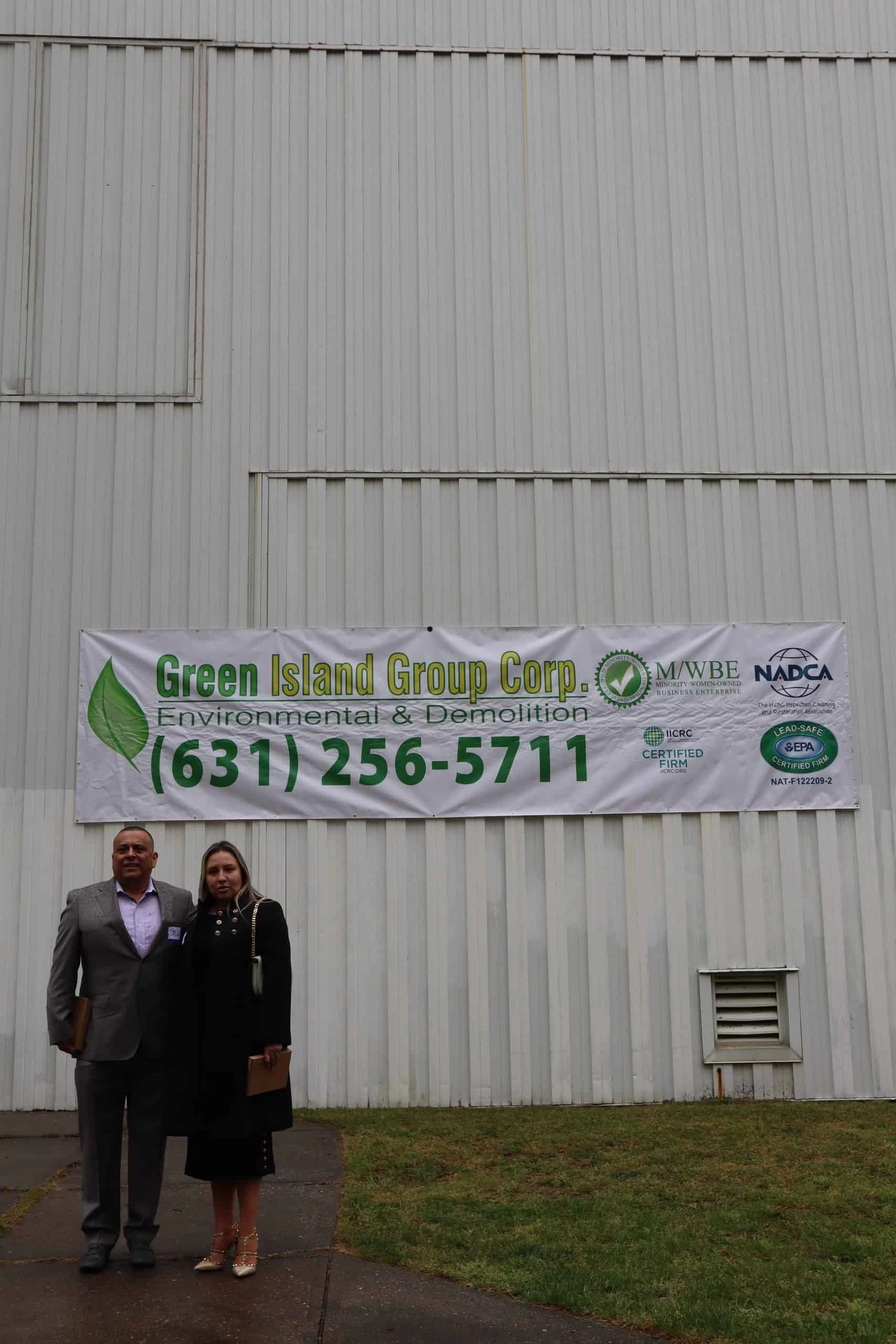
We are a full-service environmental remediation and restoration company operating across New York State, including right here in Richmond Hill and the surrounding Queens neighborhoods. We hold more than 17 active certifications including the NYS DOL Mold License, NYS DOL Asbestos License, USEPA Lead certification, IICRC Water Damage certification, and an NYC General Contractor license. That last one matters more than most homeowners realize: it’s what allows our team to legally complete reconstruction work inside New York City limits, not just dry out the damage and leave.
In a neighborhood like Richmond Hill where homes along streets like 114th and 115th date back to the 1880s and the basement environments are almost guaranteed to contain asbestos pipe insulation and lead paint that full certification stack isn’t a marketing point. It’s the difference between a company that can finish the job and one that legally can’t. We bill insurance directly and support clients through the adjuster process from start to finish, which means you’re not navigating that alone.
Flooded Basement Cleaning Process in Richmond Hill
From the First Call to a Fully Restored Basement
It starts with the call any hour, any day. We dispatch a crew immediately, and response times are typically under an hour. When our team arrives, the first priority is assessing the water source and contamination category. In Richmond Hill, that step matters more than in most places. A sewer backup from the combined system is black water the highest contamination level and it requires a completely different protocol than a burst pipe. Getting that classification right upfront determines everything that follows.
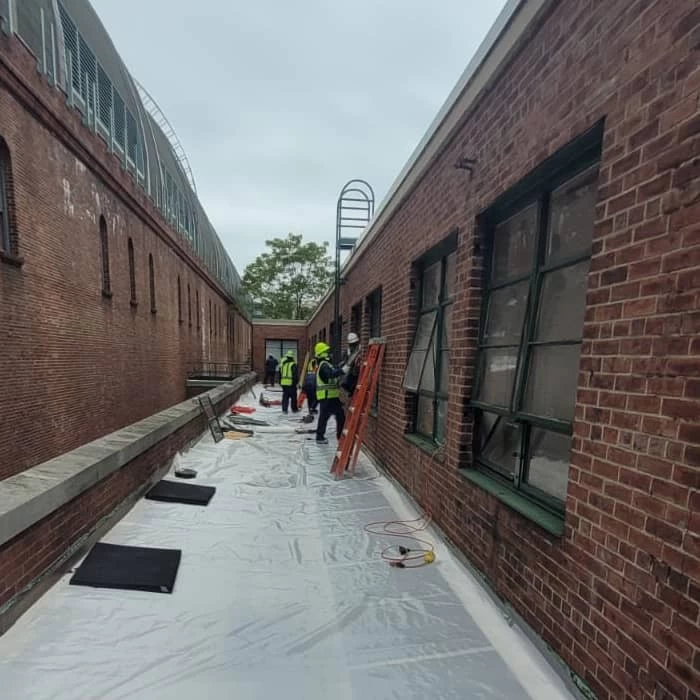
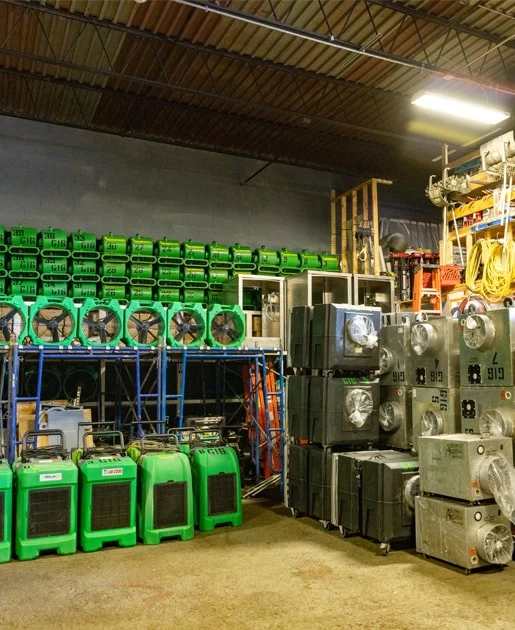
Once the source is identified and contained, extraction begins using industrial-grade equipment. After the standing water is out, thermal imaging is used to locate moisture that isn’t visible inside walls, under flooring, in the substructure. This is where a lot of companies cut corners. Richmond Hill’s older homes have horsehair plaster, original hardwood, and wood framing that holds moisture in ways that newer construction doesn’t. Skipping the imaging means leaving moisture behind, and moisture left behind becomes mold within 24 to 72 hours.
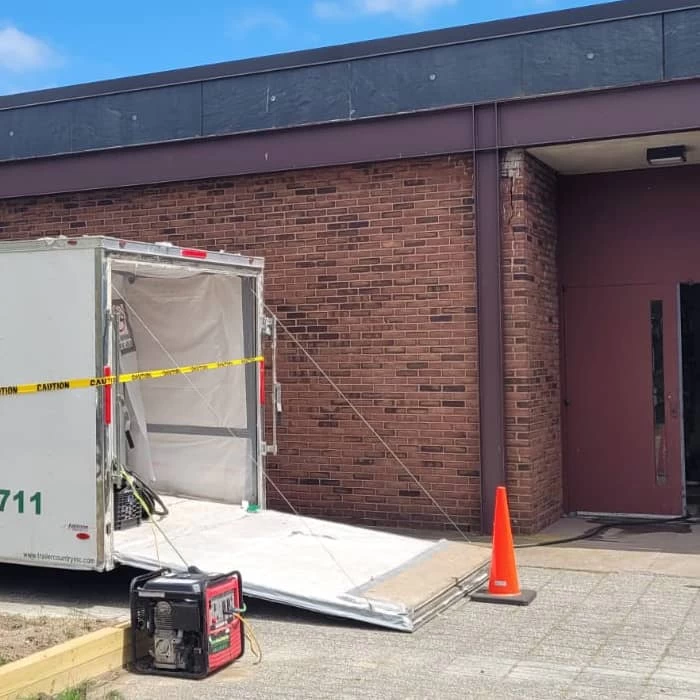
Structural drying follows, with equipment staged and monitored until readings confirm the space is genuinely dry not just surface dry. From there, if mold remediation, asbestos handling, or reconstruction is needed, it’s all handled under the same contract. No second company, no gap in accountability, no starting the insurance process over from scratch.
Basement Flooding Remediation Services in Richmond Hill, NY
Built for Richmond Hill's Basements Specifically
The homes in Richmond Hill aren’t generic suburban builds, and our service isn’t either. The basement flooding remediation work we do in this neighborhood is shaped by what’s actually in these buildings: cast iron plumbing that’s been in the ground since before World War II, clay sewer laterals that shift and crack over time, and foundation walls that face constant hydrostatic pressure from the clay-heavy soil underneath the neighborhood. Every one of those factors affects how the work gets done.
Our service covers the full arc emergency water extraction, structural drying, contamination assessment, mold remediation under the NYS DOL Mold License, asbestos and lead handling under the applicable federal and state certifications, and complete reconstruction through our NYC General Contractor license. That means if the flood damaged finished walls, flooring, or a renovated basement space, we can restore it all to pre-flood condition without bringing in a separate contractor. One scope of work, one point of contact, one insurance claim.
For Richmond Hill homeowners dealing with sewage backup specifically, we follow NYC DEP disposal protocols for black water contamination which is a legal requirement, not optional. If you’ve had a sewer backup and someone cleaned it up without mentioning contamination categories or disposal protocols, it’s worth asking whether the job was done to code.
Does homeowners insurance cover basement flooding from a sewer backup in Richmond Hill?
It depends on your specific policy, and the answer is often frustrating. Standard homeowners insurance in New York typically does not cover flooding caused by sewer backup unless you have a separate sewer backup rider or endorsement attached to your policy. Flooding from an external source like Richmond Hill’s combined sewer system backing up into your basement during a heavy rain event is also generally excluded from standard coverage and falls under flood insurance, which is a separate policy entirely.
That said, the source of the water matters a lot. A burst pipe inside your home is usually covered under a standard policy. A sewer backup is usually not, unless you’ve added that rider. A storm-driven flood is usually only covered under a separate NFIP or private flood policy. We work directly with insurance carriers and can help you understand what your specific policy covers before the claim is filed which avoids the situation where you assume you’re covered and find out otherwise after the work is done.
How quickly does mold start growing after a basement flood?
Mold can begin colonizing porous materials within 24 to 48 hours of a flood event. By the 72-hour mark, active mold growth is likely in any area that hasn’t been professionally dried and in Richmond Hill’s pre-war homes, that timeline is compressed by the building materials themselves. Original wood framing, horsehair plaster, and older drywall absorb moisture faster and hold it longer than modern construction materials. That means the window for preventing mold is shorter here than in a newer build.
The cost difference between acting within 72 hours and waiting is significant. A basement that’s treated promptly water extracted, structure dried, moisture confirmed gone typically avoids mold remediation entirely. A basement where the drying was delayed or incomplete routinely adds $2,000 to $8,000 or more in mold remediation costs on top of the original cleanup. In a neighborhood where basement apartments are common and families depend on that space, the financial and health stakes of waiting are real.
What does it mean if the water in my basement smells like sewage?
It means you’re dealing with black water the most serious contamination category in water damage restoration. In Richmond Hill, this is a direct consequence of how the neighborhood’s sewer infrastructure works. The combined sewer system carries both stormwater runoff and raw sewage in the same pipes. When those pipes get overwhelmed during a heavy rain event, the pressure forces sewage backward through floor drains, toilets, and utility connections into your basement.
Black water contains bacteria, pathogens, and waste materials that pose genuine health risks, especially to children, elderly residents, and anyone with a compromised immune system. It cannot be cleaned up with household products, and it cannot be handled by unlicensed contractors under NYC DEP regulations. The cleanup requires proper containment, licensed disposal, and documentation that the space has been decontaminated to a safe standard. If someone cleaned up what appeared to be a sewage backup without discussing contamination categories, disposal protocols, or post-remediation testing, the job likely wasn’t completed to the standard required by city and state regulations.
Are there asbestos or lead risks in Richmond Hill basements during a flood cleanup?
In most Richmond Hill homes, yes and it’s not a minor consideration. The neighborhood’s housing stock is predominantly pre-1940 construction, and homes built before 1980 commonly contain asbestos in pipe insulation, floor tiles, and joint compound. Homes built before 1978 almost certainly contain lead-based paint somewhere in the structure. When a basement floods and remediation work begins cutting into walls, removing flooring, disturbing pipe insulation those materials can become airborne if they’re not handled correctly.
New York State law requires a current NYS DOL Asbestos License to legally disturb or remove asbestos-containing materials. The USEPA’s RRP (Renovation, Repair, and Painting) rule requires certified contractors for any work that disturbs lead paint in pre-1978 buildings. We hold both certifications, along with the USEPA Lead certification which means we can handle the asbestos and lead work under the same contract as the water damage cleanup. Most restoration companies operating in Richmond Hill do not hold these licenses, which means they either skip the hazardous material assessment entirely or stop work and refer you elsewhere, adding time and cost to an already stressful situation.
How long does flooded basement cleanup actually take in Richmond Hill, NY?
For a straightforward water intrusion from a burst pipe with no contamination and no mold, the extraction and structural drying process typically takes three to five days from start to finish. That timeline assumes the moisture is found quickly, the drying equipment is properly staged, and the space is monitored until readings confirm the structure is genuinely dry not just surface dry.
In Richmond Hill, the timeline is often longer for a few reasons. Sewage backup events require additional decontamination steps before drying can begin. Pre-war building materials hold moisture longer than modern construction, which means drying equipment runs longer. And if asbestos or lead materials are disturbed during the cleanup, those need to be assessed and handled before reconstruction begins. If mold is already present which is possible if the flooding wasn’t discovered immediately remediation adds additional time. The honest answer is that the timeline depends heavily on what’s found once the work starts, and any company that quotes you a hard completion date before doing a full moisture assessment is guessing.
Can Richmond Hill's flooding from the Van Wyck area affect my basement even without a direct pipe failure?
Yes, and it happens more than most homeowners expect. The Van Wyck Expressway corridor along Richmond Hill’s eastern boundary sits at a lower elevation in several sections, and during significant rain events, surface runoff from that area contributes to the stormwater volume that overwhelms the neighborhood’s combined sewer system. You don’t need a pipe to fail inside your home to end up with water in your basement the pressure from an overwhelmed sewer system can push water backward through any below-grade drain connection.
Richmond Hill’s clay-heavy soil compounds the problem. Unlike sandy soil that absorbs and disperses water quickly, clay retains it. After a heavy rain, that retained water continues pushing against your foundation walls and floor slab for days, creating hydrostatic pressure that forces water through cracks, joints, and any weak point in the basement envelope. This is why basements in this neighborhood sometimes flood or seep hours after a storm ends the soil is still saturated and still pushing. A proper remediation accounts for this by monitoring moisture levels until the hydrostatic pressure has normalized, not just until the standing water is gone.