When the Bay and Ocean Both Come for Your Basement
At the western tip of the Rockaway Peninsula, flooding isn’t a fluke it’s a forecast. We respond 24/7 with licensed flooded basement cleanup built for exactly where you live. When water finds your basement in Rockaway Point, the clock starts immediately. The ambient humidity from Jamaica Bay and the Atlantic Ocean means mold colonization happens faster here than in inland neighborhoods. We know this because we’ve been responding to flooded basements in Rockaway Point for years.
I needed a professional consultation explanation of procedure for safe removal of Asbestos in my apartment complex. Without having an account yet, I was very impressed with the caring, knowledgeable and generous advice offered by Jessica, and will look forward to doing business in the future. Thank you so much! I feel much more informed about a sometimes scary endeavor. Peace. Nancy Silva Mineola, NY.
Mia Munoz
Used this company to clean up some water flood in my house. They were fast and easy to work with.very professional, Would recommend to anyone!
Nini Valle
Great company, had a flood and they responded quickly and efficiently. Billed my insurance company directly. I highly recommend this company!
joe colapietro, jr
I had pipe freeze in my basement right before a snow storm and they made to within an hour to help start the clean up process. They we by our side throughout the entire process and even helped with the insurance company. They did such a great job with the cleanup, repair, remidiation, I contracted them to perform the repairs and finishes in the basement. They came with enough manpower and material to get the job done. Leo and Jessica were nothing but a pleasure to deal with!!
Cristian Arredondo c
I had some water damage in my home and Green Island was able to take care of my issue quickly and effectively. I am very pleased with the work they did. They responded quickly and were very professional.
Michael M
Outstanding service! From the office to the field crew everyone was friendly, helpful and responsive. I highly recommend Green Island Group.
Rockaway Point sits at the end of the road literally with the Atlantic pushing from the south and Jamaica Bay pressing from the north. When a storm moves through, water doesn’t need a reason to find your basement. It just does. What matters after that is how fast the response is, and whether the company showing up actually knows what they’re dealing with.
When you work with us, the goal isn’t just getting the water out. It’s making sure the moisture hiding in your wall cavities, subfloor, and framing doesn’t turn into a mold problem that costs you two or three times more than the original flood did. The 72-hour window before mold takes hold is real and in a coastal community with the ambient humidity Rockaway Point carries year-round, that window closes faster than it does in any inland neighborhood.
For seasonal homeowners who come back to a basement that’s been sitting in water for weeks, the situation is different and the stakes are higher. We handle extended-exposure flooding with full documentation for your insurance claim and a clear picture of what needs to happen to make the space livable again.
We’re a full-service environmental remediation and restoration company that has been working on the Rockaway Peninsula long before you called. We have existing service history throughout Rockaway Point, Breezy Point, Rockaway Beach, and Rockaway Park which means we know the access situation at the Cooperative entrance on Rockaway Point Boulevard, we understand the housing stock, and we’re not figuring out your neighborhood on the way over.
We hold over 17 active certifications including NYS DOL Mold, NYS DOL Asbestos, USEPA Lead, USEPA RRP, IICRC Water and Fire Damage, and General Contractor licenses covering New York City, Nassau County, and Suffolk County. In New York State, mold remediation performed without an active NYS DOL Mold license is illegal not a technicality, but a statute. That matters when your insurance adjuster asks for documentation, and it matters for the safety of everyone in the home.
We’re not a franchise. We’re not a storm-chasing outfit that showed up after Sandy and disappeared. We operate 24/7 and we stay on the job from extraction through reconstruction, because handing you off to a second contractor halfway through is not how this should work.
Basement Flooding Remediation Process Rockaway Point
What Actually Happens From Your First Call to a Finished Basement
When you call, we ask a few quick questions how much water, how long it’s been there, whether you’re dealing with sewage backup or storm surge, and whether the property has been vacant. That last question matters more in Rockaway Point than almost anywhere else we serve. If your seasonal home has been sitting with water in it for longer than a few days, the scope of work changes, and we need to know that upfront so we can send the right crew with the right equipment.
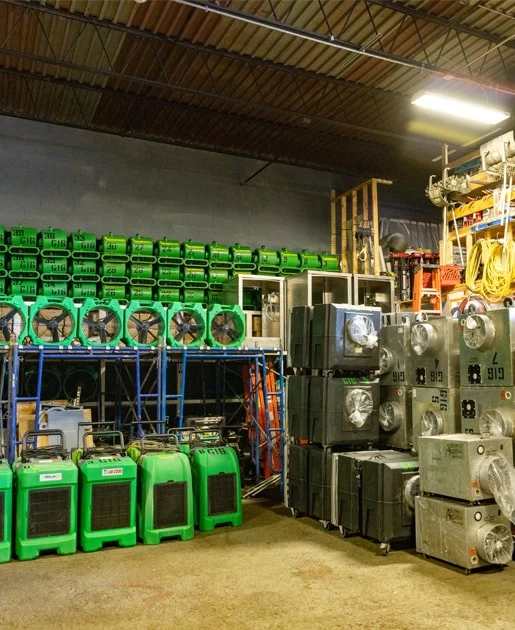
We arrive, assess the full situation, and begin water extraction immediately. From there, we set up industrial drying equipment dehumidifiers, air movers, and in most cases thermal imaging to locate moisture that’s migrated into wall cavities and structural framing. In a community where a significant portion of the housing stock dates to the 1940s and 1960s, that hidden moisture is almost always present, and it’s almost always where mold starts. If we find asbestos pipe insulation or lead-based paint disturbed by the flooding which is a real possibility in older Rockaway Point bungalows we’re licensed to handle it. That’s not a hand-off to another company. That’s us, same crew, same job.
Once the structure is confirmed dry by our moisture readings, we move into mold prevention treatment and then reconstruction if needed. We pull the necessary NYC Building Department permits, handle all documentation for your insurance claim, and bill your insurer directly. If you’re carrying both a homeowners policy and NFIP flood insurance which many properties in Rockaway Point’s FEMA Special Flood Hazard Area do we know how to navigate that dual-claim process.
Flooded Basement Cleaning Services Rockaway Point NY
Everything the Job Requires, Under One License
Flooded basement cleanup in Rockaway Point isn’t a one-size situation. The service we deliver here reflects what this specific community actually deals with older construction, high water tables, storm surge exposure, seasonal vacancy, and a housing stock that frequently contains hazardous materials behind the walls.
Every job starts with emergency water extraction and structural drying. From there, it includes moisture mapping with thermal imaging technology, mold prevention treatment, content assessment, and a full damage report built for your insurance carrier. If the flooding involved sewage which happens in Rockaway Point during heavy storm events when the municipal system gets overwhelmed the remediation scope expands to include full sanitization and biohazard protocols.
For homes that need it, we carry the job through to complete reconstruction. That means replacing water-damaged framing, drywall, flooring, and mechanical systems with NYC DOB permits pulled and inspections completed. We also handle asbestos abatement and lead paint remediation under our NYS DOL Asbestos and USEPA Lead certifications when those materials are encountered which, in a community where much of the housing was built before 1978, is not an uncommon finding. The Breezy Point Cooperative has its own internal approval process for construction work, and we’re familiar with how that works alongside the City permitting process. You won’t be navigating that alone.
How quickly can you reach a flooded basement in Rockaway Point, NY?
We respond 24 hours a day, seven days a week, and our documented response time is under one hour for emergency calls on the Rockaway Peninsula. We’re already familiar with the access situation at the Breezy Point Cooperative the gated entrance off Rockaway Point Boulevard, the single road in and out of the community so we’re not losing time figuring out how to get to you.
Speed matters here more than in most places. The peninsula’s naturally high water table and baseline ocean humidity mean that conditions inside a flooded basement deteriorate faster than they would in an inland neighborhood. Every hour of delay is time for moisture to migrate deeper into wall assemblies and framing. We move fast because the situation demands it.
My Rockaway Point basement has been flooded for days is it too late to call?
It’s not too late, but the scope of work will be larger than if you had called on day one. Extended water exposure which happens frequently in Rockaway Point’s seasonal homes when no one is there to catch a sump pump failure or a storm surge event means mold has likely already begun establishing in wall cavities and subfloor assemblies. That doesn’t make the situation unrecoverable. It changes the remediation plan.
When we assess a basement that’s been sitting in water for an extended period, we use thermal imaging to map exactly where moisture has traveled, not just where it’s visible. That full picture is also what your insurance company needs to process a claim for damage that occurred over time rather than in a single event. We document everything moisture readings, photos, scope of damage so your claim reflects the actual loss, not just what’s obvious on the surface.
Does homeowners insurance cover flooded basement cleanup after a storm surge?
This is one of the most important questions to understand before you’re in the middle of a claim, because the answer depends on which policy you’re filing under. Standard homeowners insurance typically covers sudden and accidental water damage a burst pipe, an appliance failure, that kind of thing. Storm surge flooding from the ocean or bay is generally excluded from homeowners policies and falls under flood insurance, which in Rockaway Point usually means the National Flood Insurance Program.
Many properties on the Rockaway Peninsula carry both policies, especially those with federally backed mortgages in FEMA Special Flood Hazard Areas which covers most of the western peninsula. Navigating two simultaneous claims is genuinely complicated, and the documentation requirements are different for each. We bill insurance directly and have experience working through the dual-claim process that a lot of Rockaway Point homeowners face after a significant storm event. We’ve done this before in this community. We’ll tell you upfront what’s likely covered and what documentation we need to build the strongest possible claim.
Will you find mold even if I can't see any after my basement flooded?
Yes and in most cases, that’s exactly where the problem is. Mold doesn’t start on the surface you can see. It starts inside wall cavities, behind drywall, and under flooring where moisture has migrated and settled. By the time it’s visible, it’s already been growing for days. In Rockaway Point specifically, the ambient humidity from the ocean and bay exposure means that mold colonization after a flood happens faster here than it would in a drier, inland environment.
We use thermal imaging cameras as part of every flooded basement assessment. Thermal imaging detects temperature differentials in walls and floors that indicate hidden moisture moisture that a standard visual inspection or basic meter reading would completely miss. If mold is present or developing, we find it before it spreads. And because we hold an active NYS DOL Mold license which New York State law requires for any professional performing mold remediation the work we do is legal, documented, and accepted by insurance carriers.
My Rockaway Point bungalow is older does that affect the basement cleanup process?
It does, and it’s worth knowing about before anyone starts pulling things apart. A significant portion of Rockaway Point’s housing stock was built between the 1940s and 1970s. Construction from that era almost universally contains asbestos pipe insulation and lead-based paint materials that are completely stable when left undisturbed, but become a hazardous materials issue the moment floodwater or demolition activity disturbs them.
Most water damage companies are not licensed to handle what they find in an older basement. When they encounter asbestos insulation on a pipe or lead paint on a wall framing member, the job stops. We hold NYS DOL Asbestos, USEPA Lead, and USEPA RRP certifications, which means we’re legally equipped to handle those materials as part of the same job no stopping, no handing off to a separate abatement contractor, no delay while you find someone else. In a community where older bungalows are the norm rather than the exception, that matters a lot.
How do you handle flooded basement cleanup in a gated cooperative community like Breezy Point?
The Breezy Point Cooperative’s gated access and internal approval process for construction work is something we’re already familiar with. We’ve served residents throughout the Cooperative in Rockaway Point, Roxbury, and Breezy Point proper and we understand that getting a contractor into the community isn’t as simple as driving up to any address in Queens. We coordinate the access logistics on our end so that doesn’t become your problem when you’re already dealing with a flooded basement.
On the construction and permitting side, the Cooperative has its own internal review process that runs alongside the NYC Building Department permit requirements. Any structural work following water damage replacing framing, drywall, mechanical systems needs to satisfy both. We handle the NYC DOB permits and we’re familiar with how the Cooperative’s process works in parallel. For residents who’ve already been through a post-storm rebuild and know how complicated that coordination can get, having one company that understands both sides of it is a meaningful difference.