Your Rockville Centre Home Is Too Valuable to Leave This to Chance
One inch of water can cause $25,000 in damage — and in a village where homes are worth close to a million dollars, flooded basement cleanup in Rockville Centre isn’t something you hand off to just anyone.
I needed a professional consultation explanation of procedure for safe removal of Asbestos in my apartment complex. Without having an account yet, I was very impressed with the caring, knowledgeable and generous advice offered by Jessica, and will look forward to doing business in the future. Thank you so much! I feel much more informed about a sometimes scary endeavor. Peace. Nancy Silva Mineola, NY.
Mia Munoz
Used this company to clean up some water flood in my house. They were fast and easy to work with.very professional, Would recommend to anyone!
Nini Valle
Great company, had a flood and they responded quickly and efficiently. Billed my insurance company directly. I highly recommend this company!
joe colapietro, jr
I had pipe freeze in my basement right before a snow storm and they made to within an hour to help start the clean up process. They we by our side throughout the entire process and even helped with the insurance company. They did such a great job with the cleanup, repair, remidiation, I contracted them to perform the repairs and finishes in the basement. They came with enough manpower and material to get the job done. Leo and Jessica were nothing but a pleasure to deal with!!
Cristian Arredondo c
I had some water damage in my home and Green Island was able to take care of my issue quickly and effectively. I am very pleased with the work they did. They responded quickly and were very professional.
Michael M
Outstanding service! From the office to the field crew everyone was friendly, helpful and responsive. I highly recommend Green Island Group.
There’s a difference between a basement that looks dry and a basement that is dry. Most homeowners only find out which one they have months later — when the mold shows up behind the drywall, the smell won’t go away, or a home inspector flags moisture that nobody caught the first time around. That gap between visible and verified is where the real damage lives.
In Rockville Centre, that gap is wider than most people expect. A significant portion of the village’s homes were built before World War II — and those older foundations, plaster walls, and wood-frame floors absorb water in ways that a fan and a shop vac will never fully address. The former marshland beneath much of the South Shore means the water table sits close to the surface, so hydrostatic pressure can push moisture through your foundation walls even after the visible water is gone. You need equipment that measures what your eyes can’t see.
When we complete basement flooding remediation the right way, you get back a space that’s structurally sound, documented for insurance, and genuinely safe for your family. No lingering moisture. No hidden mold clock ticking inside your walls. And if your home contains asbestos materials or lead paint — which is likely if it was built before 1978 — you get the assurance that those materials were handled by someone who’s actually licensed to touch them.
Licensed Basement Flooding Remediation Nassau County
Every License the Job in Rockville Centre Actually Requires
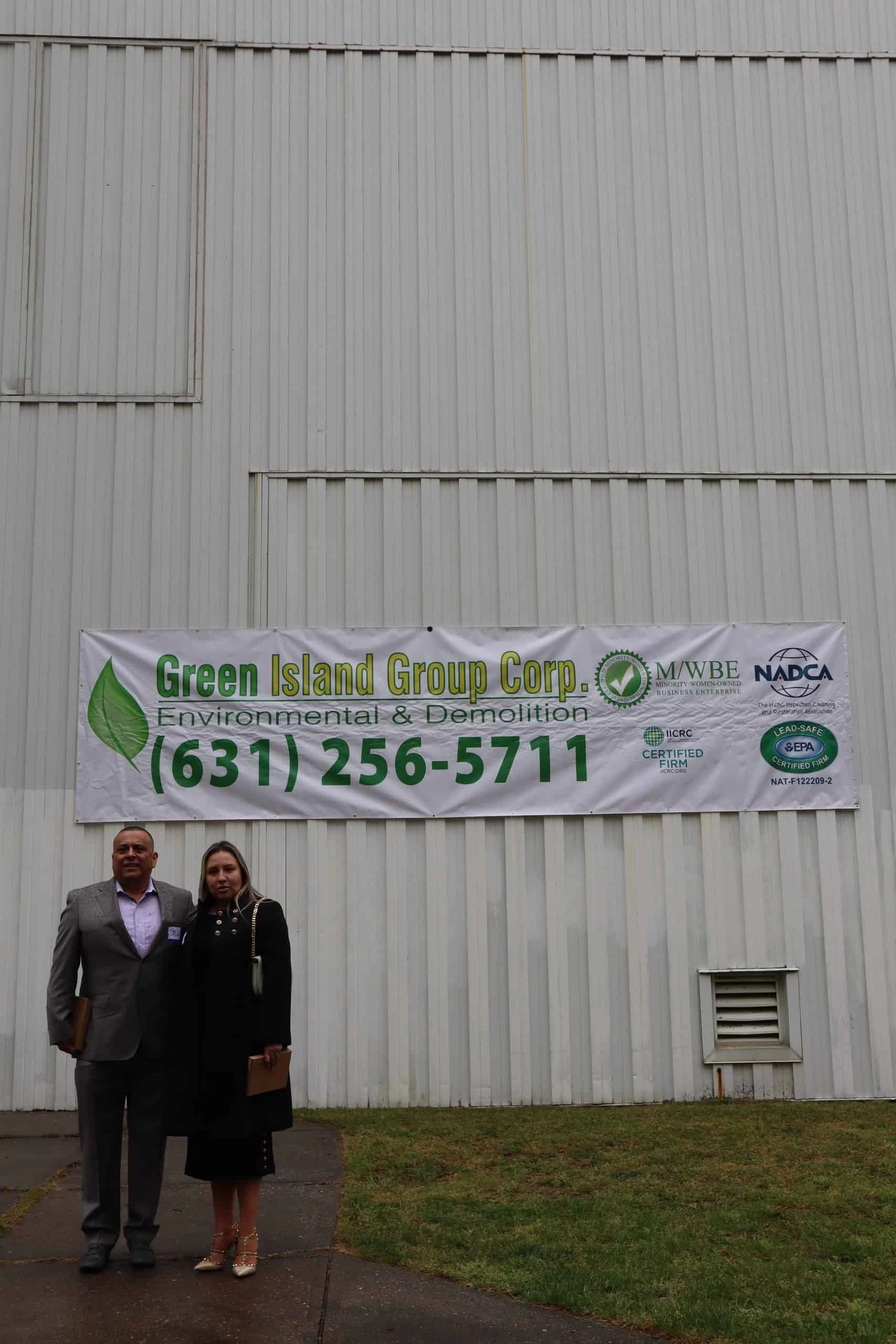
Green Island Group is a Nassau County-based restoration and environmental remediation company with deep roots in Rockville Centre and the surrounding South Shore. We hold the NYS Department of Labor Mold License, NYS DOL Asbestos License, USEPA Lead and RRP certifications, IICRC Water Damage certification, and an active General Contractor license for Nassau County. That combination matters because a flooded basement in an older Rockville Centre home isn’t just a water problem — it’s often a mold problem, a hazardous materials problem, and a structural repair problem all at once. We handle all of it.
We’ve worked throughout Rockville Centre and the surrounding South Shore communities — from the older residential blocks near St. Agnes Cathedral to the homes closer to the Mill River flood zone in the village’s eastern section. We’re not a franchise, and we’re not a national call center. We’re a minority and women-owned business with real roots in this county, and every job we do here reflects that directly.
Flooded Basement Cleaning Process Rockville Centre
From the First Call to the Final Moisture Reading
When you call us, the first thing we do is ask the right questions — where the water came from, how long it’s been sitting, and what your basement is finished with. That determines whether you’re dealing with a clean-water event from a burst pipe, a gray-water situation from an appliance or drain backup, or a Category 3 sewage backup — which requires full biohazard decontamination, not just extraction. Rockville Centre’s aging combined sewer infrastructure is documented as a source of sewage backup during heavy rain events, so that third category comes up more often than people expect.
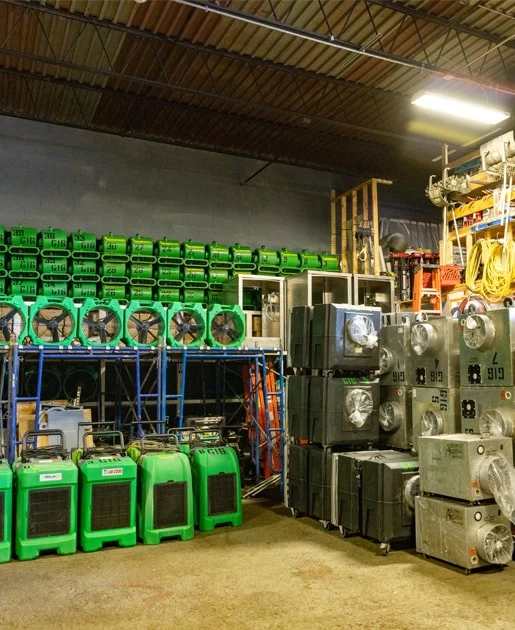
Once we’re on-site, we extract standing water, then set up industrial dehumidifiers and high-velocity air movers to begin structural drying. We use calibrated moisture meters to track readings inside wall cavities, under flooring, and in the concrete block itself — not just the surface. In homes with pre-1978 construction, we assess for asbestos and lead materials before any demolition work begins. This is a legal requirement in New York State, and it’s one that many cleanup companies quietly skip.
If structural repairs are needed — drywall, framing, flooring, or anything that requires a permit from the Village of Rockville Centre Building Department — we pull those permits and complete the rebuild ourselves. You don’t coordinate a second contractor. We carry the Nassau County General Contractor license to close the job out completely, from water out to walls back in.
Basement Water Damage Restoration Rockville Centre NY
Built for Older Homes, South Shore Conditions, and Real Hazards
Flooded basement cleanup in Rockville Centre covers more ground than it does in newer suburban towns. The housing stock here is older — the majority of homes predate World War II, and the next largest segment was built between 1940 and 1969. That means asbestos floor tiles, asbestos pipe insulation, and lead-based paint are common in the very spaces that flooding hits hardest. Our scope of work includes hazardous material assessment and licensed abatement as part of the same project — not a separate contractor you have to find and schedule yourself.
On the water side, our process covers full extraction, structural drying with industrial equipment, moisture verification, and mold testing where warranted. If mold is present, we hold the NYS DOL Mold License to remediate it legally — which is required by New York State and held by far fewer companies than most homeowners realize. For sewage backup events, we apply EPA-registered disinfectants and full decontamination protocols.
We also assist with insurance documentation from the first visit. Whether your flooding came from a burst pipe covered under standard homeowners insurance, or from groundwater pressure near the Long Beach Road corridor that may fall under a separate flood policy, we help you understand what you’re dealing with and document it the right way. Nothing gets missed, and nothing gets left for you to figure out alone.
How quickly does mold actually start growing after a basement floods in Rockville Centre?
The EPA sets the window at 24 to 48 hours, and most restoration professionals treat 72 hours as the outer threshold before mold growth becomes likely. After that point, what started as a water damage project becomes a water damage plus mold remediation project — and the cost and complexity increase significantly. In Rockville Centre, this timeline is especially relevant for homeowners who commute into Manhattan and may not discover the flooding until hours after it began. If you’re on the LIRR Babylon Branch and get a call about your basement mid-afternoon, the clock is already running by the time you get home.
The other factor specific to Rockville Centre’s older housing stock is that the materials water soaks into — plaster, wood framing, cellulose insulation — hold moisture longer and give mold more to feed on than modern drywall does. Getting professional extraction and structural drying started quickly isn’t just about peace of mind. It’s the difference between a manageable cleanup and a remediation project that runs into the tens of thousands of dollars.
Does homeowners insurance cover flooded basement cleanup, or do I need flood insurance?
It depends on where the water came from, and this is where a lot of Rockville Centre homeowners get caught off guard. Standard homeowners insurance typically covers sudden and accidental water damage — a burst pipe, a failed water heater, an appliance that overflows. What it does not cover is flooding from outside the home: groundwater pushing through your foundation, storm drainage backing up through a floor drain, or water entering from the Mill River corridor during a major storm event. That type of flooding falls under flood insurance, which is a separate policy typically issued through the National Flood Insurance Program.
If you’re in one of the village’s identified flood-prone zones — the areas between Long Beach Road and Maple Avenue, or between Hempstead Avenue and Village Avenue — it’s worth knowing which policy you have before you need it. We document damage thoroughly from the first visit and can help you understand what’s covered under which policy. Filing incorrectly or incompletely is one of the most common and costly mistakes homeowners make after a basement flood.
My Rockville Centre home was built in the 1930s — does that change how cleanup is handled?
Yes, meaningfully. Homes built before 1978 have a high likelihood of containing asbestos in floor tiles, pipe insulation, and ceiling materials, as well as lead-based paint on walls and trim. In a basement flood, water disturbs these materials — and once disturbed, they become a regulated hazard under both New York State and federal law. A cleanup crew that isn’t licensed to handle asbestos and lead can’t legally do the work correctly, and in some cases can make the situation worse by spreading contaminated material during extraction or demolition.
We hold both the NYS DOL Asbestos License and USEPA Lead and RRP certifications, which means we assess for these materials before any demolition begins and handle them according to the legal requirements that apply in Nassau County. This isn’t an add-on service — it’s built into how we approach every job in a pre-war home. For a house worth close to a million dollars in Rockville Centre, cutting corners on hazardous materials isn’t just a safety risk. It’s a liability that follows the property.
What's the difference between water extraction and actual structural drying — and why does it matter?
Water extraction removes the standing water you can see. Structural drying removes the moisture that has absorbed into your walls, subfloor, framing, and foundation — the water you can’t see but that continues causing damage long after the puddles are gone. These are two different phases of the process, and skipping or rushing the second one is the most common reason homeowners end up with mold problems weeks after a cleanup.
In Rockville Centre’s older homes, structural drying is particularly involved. Plaster walls, wood-frame construction, and concrete block foundations all absorb and hold water differently than modern materials, and they require calibrated moisture meters to track accurately — not just a visual check. We use industrial dehumidifiers and high-velocity air movers positioned specifically based on where the readings are elevated, and we don’t call the job complete until the numbers confirm that moisture levels are back within normal range throughout the affected area. That’s the standard the job requires, and it’s the one we hold ourselves to on every project.
How much does flooded basement cleanup typically cost in Rockville Centre, NY?
The range is wide because the scope varies significantly depending on the source of the water, how long it sat, the size of the basement, and what materials are involved. For a straightforward clean-water event in a smaller unfinished basement caught quickly, professional cleanup can run in the $1,600 to $3,500 range. For a larger finished basement, a sewage backup event, or a situation where mold has already developed, costs can reach $8,000 to $12,000 or more — and if full structural restoration is needed, the total climbs higher from there.
In Rockville Centre specifically, the age of the housing stock adds a variable that doesn’t apply in newer towns. If asbestos or lead materials are present and need to be assessed and abated as part of the cleanup, that’s additional licensed work that affects the final number. The honest answer is that a proper estimate requires someone to see the space — but the more important number to keep in mind is that a single inch of standing water can cause approximately $25,000 in property damage when left unaddressed. Professional cleanup is an investment relative to what it prevents.
Why does sewage backup in a basement require a different process than regular water damage?
Because sewage isn’t just dirty water — it’s classified as Category 3 contamination, which means it contains raw sewage, bacteria, and pathogens that can’t be addressed with standard extraction and drying. Category 3 events require full biohazard decontamination protocols: EPA-registered disinfectants, proper containment, appropriate protective equipment, and disposal procedures that comply with state and local regulations. Treating a sewage backup the same way you’d treat a burst pipe isn’t just ineffective — it leaves your home genuinely unsafe.
This matters in Rockville Centre because sewage backup is a documented and recurring issue here. The village’s aging combined sewer infrastructure gets overwhelmed during heavy rain events, and when it does, the pressure can force sewage back up through basement floor drains. It’s not a rare edge case — it’s a known consequence of the infrastructure that serves the older neighborhoods throughout Rockville Centre. We’re licensed and equipped for Category 3 events, and we apply the full decontamination process every time — not a scaled-down version of it because the source “wasn’t that bad.”