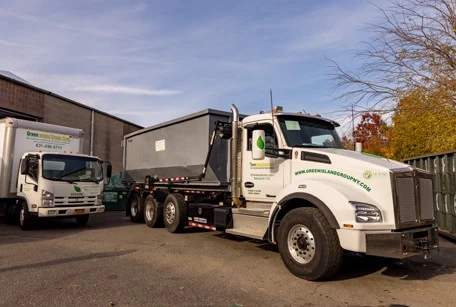
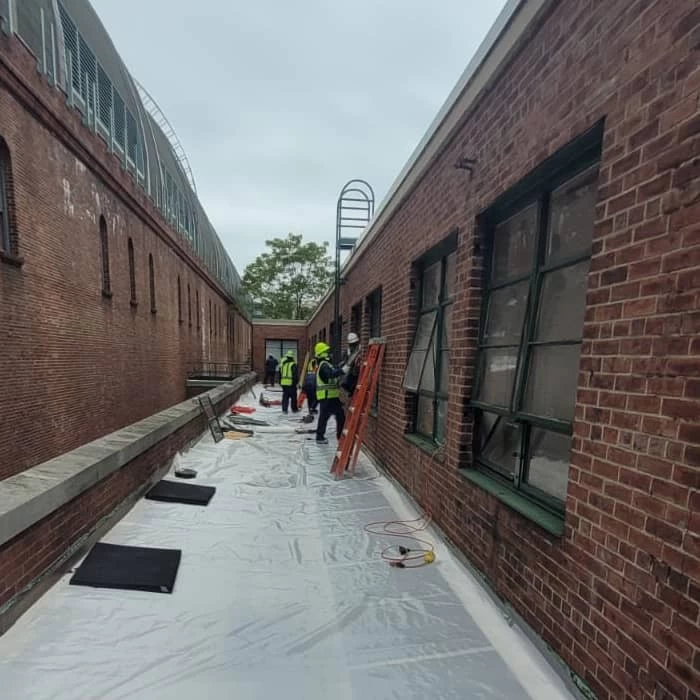
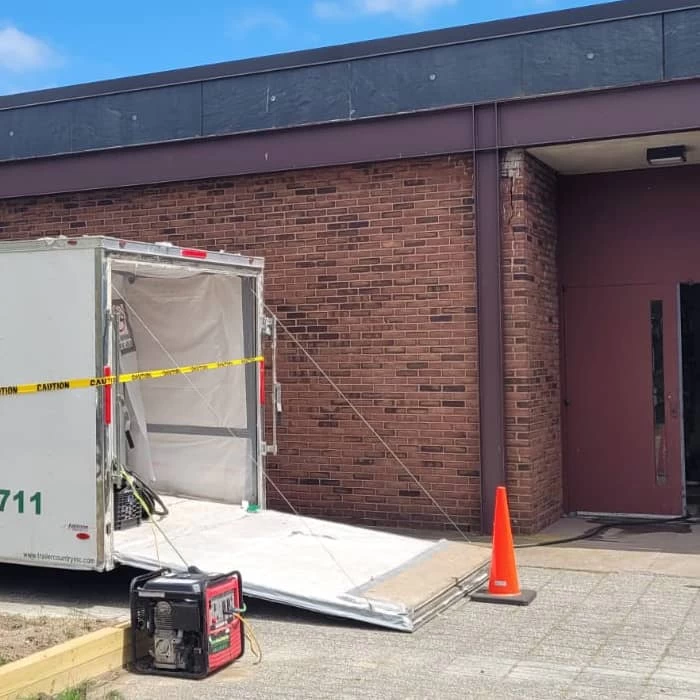
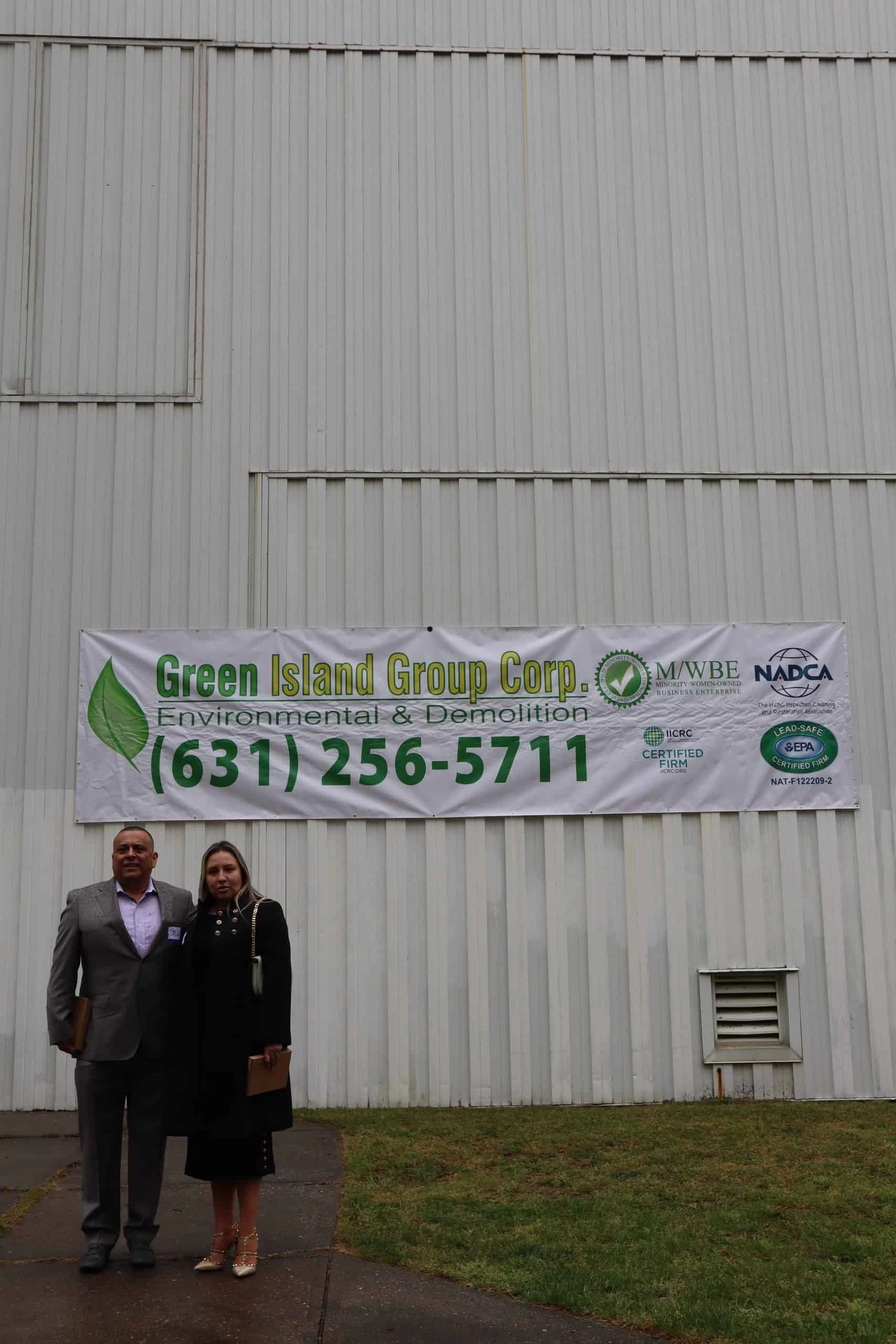
Roosevelt’s high water table and South Shore geography make basement flooding one of the most common — and costly — emergencies local homeowners face. We respond 24/7 with licensed crews, industrial equipment, and the full credentials to handle whatever your basement is hiding.
I needed a professional consultation explanation of procedure for safe removal of Asbestos in my apartment complex. Without having an account yet, I was very impressed with the caring, knowledgeable and generous advice offered by Jessica, and will look forward to doing business in the future. Thank you so much! I feel much more informed about a sometimes scary endeavor. Peace. Nancy Silva Mineola, NY.
Mia Munoz
Used this company to clean up some water flood in my house. They were fast and easy to work with.very professional, Would recommend to anyone!
Nini Valle
Great company, had a flood and they responded quickly and efficiently. Billed my insurance company directly. I highly recommend this company!
joe colapietro, jr
I had pipe freeze in my basement right before a snow storm and they made to within an hour to help start the clean up process. They we by our side throughout the entire process and even helped with the insurance company. They did such a great job with the cleanup, repair, remidiation, I contracted them to perform the repairs and finishes in the basement. They came with enough manpower and material to get the job done. Leo and Jessica were nothing but a pleasure to deal with!!
Cristian Arredondo c
I had some water damage in my home and Green Island was able to take care of my issue quickly and effectively. I am very pleased with the work they did. They responded quickly and were very professional.
Michael M
Outstanding service! From the office to the field crew everyone was friendly, helpful and responsive. I highly recommend Green Island Group.
Your Roosevelt Basement Back — Before Mold Makes It Worse
When water gets into your basement, the clock starts immediately. Mold can begin growing within 24 to 48 hours of exposure — and once it takes hold in the walls, insulation, or framing of an older Roosevelt home, what started as a water problem becomes a significantly more expensive remediation project. The difference between catching it in time and missing that window is almost always response speed.
Roosevelt’s housing stock tells a specific story here. Most homes in this hamlet were built in the late 1940s and 1950s — post-war Cape Cods and ranches with plaster walls, older framing, and materials that hold moisture in ways modern construction doesn’t. Surface dryness after a flood means almost nothing in a house like this. Moisture hides inside wall cavities, beneath subfloors, and in insulation that looks fine from the outside. That’s exactly why professional drying equipment and moisture measurement matter more here than in a newer build.
There’s also the water table to consider. The South Shore’s naturally high groundwater levels mean your basement can take on water even when the storm wasn’t that bad — just sustained enough to push the water table up against your foundation. When that’s the source, a shop vac and a box fan won’t get you there. You need extraction, industrial dehumidification, and someone who understands why the water came in before recommending how to keep it out.
We’re a full-service disaster restoration and environmental remediation company serving Nassau County, Suffolk County, and the surrounding metro area. When a basement floods in Roosevelt — whether it’s storm-driven groundwater coming up through the floor or a sewage backup through an aging drain — the team that shows up is equipped and licensed to handle the full scope of what we find.
That matters more in Roosevelt than people realize. Homes near Centennial Park and throughout the Nassau Road corridor were built in an era when asbestos floor tiles and lead-based paint were standard materials. A flooded basement in one of these homes isn’t just a water cleanup — it can be a multi-hazard event. We hold the NYS DOL Mold License, NYS DOL Asbestos License, USEPA Lead/RRP certification, IICRC Water Damage certification, and a Nassau County General Contractor license. That’s every credential the job might require, under one roof, on one contract.
No handoffs. No subcontractors showing up blind to what the last crew left behind. One team, start to finish.
Basement Flooding Remediation Process Roosevelt NY
What Actually Happens From First Call to Final Walkthrough
When you call, you reach someone who can actually help — not a call center routing you to a franchise queue. Our team will ask the right questions upfront: how the water got in, how long it’s been sitting, what the basement contains, and whether there are any visible signs of sewage involvement or hazardous materials. That conversation shapes the response before anyone sets foot in your home.
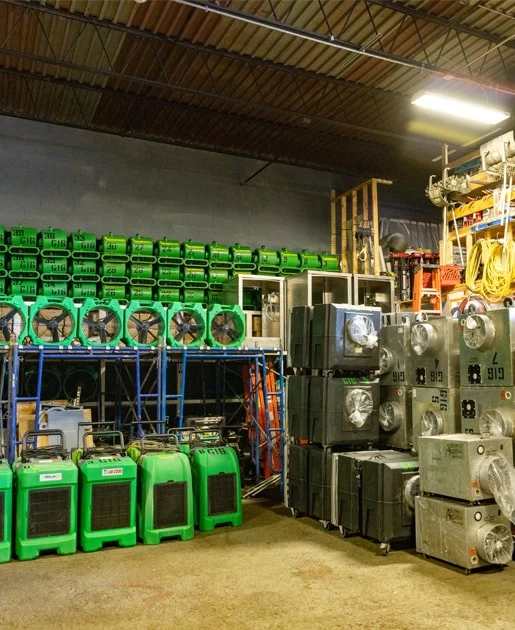
Once on-site, our first priority is extraction. Industrial pumps remove standing water fast, because every hour of contact time increases the damage to flooring, framing, and stored belongings. After extraction, we deploy commercial dehumidifiers and high-velocity air movers — not consumer-grade equipment, but the kind of industrial drying setup that actually pulls moisture out of wall cavities and subfloor assemblies. Thermal imaging and professional moisture meters confirm what the eye can’t see, which is critical in Roosevelt’s older plaster-and-lath construction where hidden moisture is the rule, not the exception.
If the assessment turns up mold, asbestos, or lead — all realistic findings in Nassau County’s post-war housing stock — those are handled in-house under the appropriate state licenses. No stopping work. No “you need to call someone else.” From there, structural restoration follows: new drywall, flooring, insulation, framing repairs — all permitted and performed under our Nassau County General Contractor license. The final walkthrough confirms everything is dry, safe, and restored before the job is closed.
Everything the Job Needs — Not Just the Easy Parts
Flooded basement cleanup in Roosevelt means something specific. It means dealing with a South Shore water table that doesn’t give much margin, a housing stock that’s 70-plus years old, and a municipal drainage system that wasn’t designed for the kind of rainfall events Nassau County has been seeing — including the August 2024 storm that dropped over nine inches of rain in a single 24-hour period and triggered a county-wide state of emergency. We’ve worked through events like that one. Our process is built around what Roosevelt homes actually need, not a generic checklist.
Every job starts with a full assessment — water source, contamination category, and hazardous material screening. Category 1 (clean water from a pipe or appliance) is handled differently than Category 3 (sewage backup through a floor drain), and the distinction matters both for health and for what your insurance carrier will require in documentation. We handle all three categories, including full biohazard decontamination for sewage events, which are a real risk in Roosevelt given the age of the local sewer infrastructure.
We also manage the insurance documentation process directly. Standard homeowners insurance typically covers sudden and accidental flooding — a burst pipe, a failed water heater — but not natural groundwater intrusion or storm-driven flooding, which usually requires separate NFIP flood insurance. Knowing which applies to your situation, and documenting it correctly from the start, can be the difference between a covered claim and an out-of-pocket bill. We handle that paperwork alongside the physical work, so you’re not navigating the insurance conversation alone while your basement is still wet.
Does homeowners insurance cover basement flooding in Roosevelt, NY?
It depends entirely on how the water got in — and this is where a lot of Roosevelt homeowners get caught off guard. Standard homeowners insurance typically covers basement flooding caused by a sudden and accidental event: a burst pipe, a failed sump pump, or an appliance that malfunctions. What it does not cover is natural flooding — storm-driven groundwater pushing up through your foundation, or rainwater overwhelming the drainage system during a heavy event. That type of flooding requires a separate NFIP flood policy, and many South Shore Nassau homeowners don’t carry one.
This distinction matters a lot in Roosevelt, where the August 2024 storm caused widespread basement flooding across the hamlet from exactly the kind of groundwater intrusion that standard policies exclude. If you’re unsure which type of event you experienced, the documentation collected during professional cleanup — water source identification, contamination category, moisture mapping — is what your insurance carrier will use to evaluate the claim. We handle that documentation as part of the job, so the record is accurate and complete from day one.
How fast does mold actually start growing after a basement floods?
Mold can begin developing within 24 to 48 hours of water exposure under the right conditions — and Roosevelt’s South Shore humidity during storm season creates exactly those conditions. The critical window for professional drying is 72 hours. If a basement is fully dried within that timeframe, mold growth is unlikely. Beyond it, mold can start colonizing drywall, wood framing, insulation, and stored belongings — and once that happens, you’re no longer dealing with a water damage project. You’re dealing with a mold remediation project, which is a different scope, a different cost, and a different timeline.
In Roosevelt’s older housing stock, this risk is compounded by the construction materials themselves. Plaster walls, older wood framing, and fiberglass insulation all hold moisture longer than modern materials, and they provide the organic matter mold needs to grow. That’s why surface dryness isn’t a reliable indicator — and why professional moisture measurement, not visual inspection, is the only way to confirm a basement is actually dry before closing the job.
Can I clean up a flooded basement myself, or do I need a professional?
For a minor, clean-water event in a newer home — a small appliance leak caught quickly — DIY cleanup is sometimes manageable if you act fast and have the right equipment. But for most Roosevelt homeowners dealing with storm-related flooding, the honest answer is that DIY cleanup creates more risk than it resolves. The issue isn’t effort. It’s equipment and hidden moisture. Consumer dehumidifiers and fans don’t have the capacity to pull moisture out of wall assemblies and subfloor systems the way industrial equipment does, and what looks dry on the surface can remain saturated inside the structure for weeks.
There’s also the hazardous materials question. Roosevelt’s post-war homes commonly contain asbestos floor tiles, asbestos pipe insulation, and lead-based paint. Disturbing those materials during cleanup — even accidentally — without proper licensing and containment protocols creates a health risk and a legal liability. In New York State, mold remediation also requires a state-issued contractor license. A DIY cleanup that misses mold or disturbs asbestos doesn’t save money — it creates a larger, more expensive problem down the road.
What does flooded basement cleanup actually cost in Nassau County?
The range is wide because the variables are significant. A minor clean-water event in a small basement can run as low as $1,500 to $3,000 for extraction, drying, and basic restoration. A larger event involving contaminated water, mold development, or structural damage — which is common in Roosevelt’s older housing stock — can reach $8,000 to $15,000 or more. Sewage backup events, which are a real risk in Roosevelt given the age of the local sewer infrastructure, are classified as Category 3 contamination and require full biohazard decontamination, which adds to both scope and cost.
FEMA data puts the average property damage from just one inch of standing water at approximately $25,000 — a number that reflects how quickly water damage compounds when it’s not addressed quickly and completely. The cost of professional cleanup almost always looks different when measured against the cost of a mold remediation project that follows an incomplete DIY attempt, or structural repairs that result from moisture that was never fully removed. Getting an accurate assessment upfront — before committing to a scope — is the most important step.
Why does Roosevelt's South Shore location increase my basement flood risk?
A few factors stack on top of each other here. Roosevelt sits on Nassau County’s South Shore, where the terrain is flat, the elevation is low, and the natural water table is already close to the surface in many areas. That means your basement has less buffer between the foundation and groundwater than homes in higher-elevation parts of Nassau or Suffolk. When a sustained rain event hits — or a slow-moving storm system like the one that produced nine-plus inches of rainfall across Nassau County in August 2024 — the ground saturates quickly and water has nowhere to go except up.
The drainage infrastructure is also a factor. Roosevelt’s municipal systems were built for the development patterns of the 1950s, not the rainfall intensity that’s become more common on Long Island in recent years. When those systems are overwhelmed, water backs up into low-lying residential areas — and South Shore hamlets like Roosevelt, Freeport, and Baldwin feel that pressure more acutely than communities further inland. Understanding why your basement flooded is the first step to understanding what it will take to protect it going forward.
Does a flooded basement in an older Roosevelt home require asbestos or lead testing?
If your home was built before 1980, the answer is: it should be assessed, not assumed. Roosevelt’s housing boom happened primarily in the late 1940s and 1950s, which means a large share of the hamlet’s homes were built during the era when asbestos-containing materials were standard — floor tiles, pipe insulation, joint compound, and ceiling texture. Homes built before 1978 also commonly contain lead-based paint. When a basement floods and cleanup begins, those materials can be disturbed without anyone realizing it.
In New York State, contractors are legally required to hold a NYS DOL Asbestos License to disturb or remove asbestos-containing materials, and USEPA Lead/RRP certification is required for work in pre-1978 housing. These aren’t optional credentials — they’re state and federal law. We hold both, along with the NYS DOL Mold License required for any mold remediation work in New York. If your Roosevelt home is from that era and your basement has flooded, a proper assessment before cleanup begins isn’t just good practice — it’s the only way to know what you’re actually dealing with and handle it legally and safely.