Saint Albans Basements Flood Different Here's Why That Matters
Water coming up through your floor isn’t a fluke it’s a known problem in southeastern Queens. We handle flooded basement cleanup in Saint Albans, NY from first call to full restoration.
I needed a professional consultation explanation of procedure for safe removal of Asbestos in my apartment complex. Without having an account yet, I was very impressed with the caring, knowledgeable and generous advice offered by Jessica, and will look forward to doing business in the future. Thank you so much! I feel much more informed about a sometimes scary endeavor. Peace. Nancy Silva Mineola, NY.
Mia Munoz
Used this company to clean up some water flood in my house. They were fast and easy to work with.very professional, Would recommend to anyone!
Nini Valle
Great company, had a flood and they responded quickly and efficiently. Billed my insurance company directly. I highly recommend this company!
joe colapietro, jr
I had pipe freeze in my basement right before a snow storm and they made to within an hour to help start the clean up process. They we by our side throughout the entire process and even helped with the insurance company. They did such a great job with the cleanup, repair, remidiation, I contracted them to perform the repairs and finishes in the basement. They came with enough manpower and material to get the job done. Leo and Jessica were nothing but a pleasure to deal with!!
Cristian Arredondo c
I had some water damage in my home and Green Island was able to take care of my issue quickly and effectively. I am very pleased with the work they did. They responded quickly and were very professional.
Michael M
Outstanding service! From the office to the field crew everyone was friendly, helpful and responsive. I highly recommend Green Island Group.
When the water is gone, the real work is just starting. Moisture hides inside walls, under flooring, and behind the plaster in older homes and in Saint Albans, where over 40% of homes were built before 1940, that’s not a hypothetical. It’s what actually happens. If it’s not found and dried completely, mold follows within 24 to 48 hours. That’s when a manageable cleanup turns into a much bigger problem.
Saint Albans has a flooding situation that’s different from most of Queens. The groundwater table in southeastern Queens has been rising for decades ever since the Jamaica Water Supply Company stopped pumping in 2007. That means some basements here take on water from below the foundation, not just from rain or a broken pipe. A company that doesn’t understand that will dry what they can see and leave the rest. That’s not good enough.
What you get when this is handled right is a basement that’s genuinely dry not surface dry with moisture readings to back it up, mold risk eliminated, and a full picture of what was damaged and what your insurance should cover. If your home is in Addisleigh Park or anywhere else in the 11412 area, you also get a team that knows how to handle pre-war construction without creating new problems in the process.
Licensed for What's Actually Inside These Saint Albans Walls
We’ve been serving Saint Albans and the surrounding Queens region for over 30 years. We hold active NYC General Contractor licensing which matters because a lot of operators working in Saint Albans carry only Nassau or Suffolk County credentials. Those licenses don’t authorize work inside the five boroughs. If something goes wrong, that gap becomes your problem.
Beyond the contractor license, we carry NYS DOL Mold, NYS DOL Asbestos, USEPA Lead, and IICRC Water Damage certifications, among 17 others. In a neighborhood where homes date back to the 1910s and 1930s especially in the Addisleigh Park Historic District along Linden Boulevard those credentials aren’t extras. Disturbing basement walls, pipe insulation, or floor tile in a pre-1940 home without proper hazmat licensing is a legal issue and a health issue. Most cleanup companies can’t legally do that work. We can.
We also handle insurance billing directly, communicate with adjusters on your behalf, and carry the job through to full reconstruction if needed no handoffs, no second contractor.
Flooded Basement Cleaning Process Saint Albans, NY
What Actually Happens From the Moment You Call Us
The first step is getting there fast. We operate 24 hours a day, seven days a week, with documented response times under one hour including during active storm events. In Saint Albans, where a summer cloudburst can push water into a basement quickly and the storm sewer system is still catching up to decades of underinvestment, that response window is real and it matters. Every hour the water sits, the damage compounds.
Once on-site, our team does a full assessment before anything else. That means thermal imaging to locate moisture inside walls and under floors not just what’s visible on the surface. In homes built in the 1940s and 1950s, water travels through wall cavities and subfloor assemblies in ways that aren’t obvious. If there’s any indication of asbestos-containing materials or lead-based paint common in Saint Albans’s older housing stock our team is certified to test and handle those materials on the spot, rather than stopping work and leaving you to find someone else.
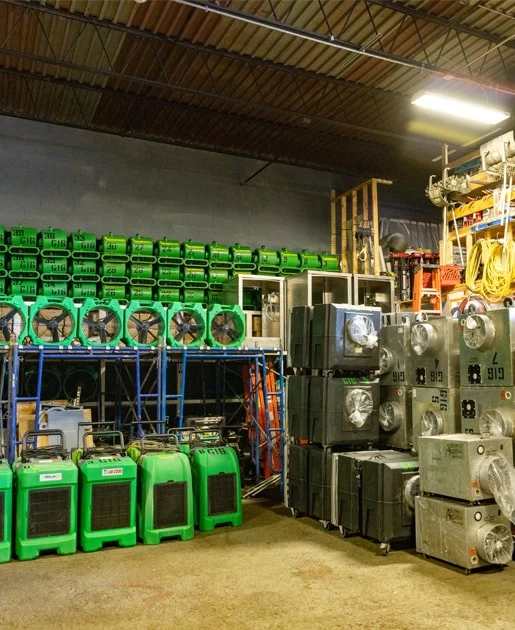
From there, it’s extraction, structural drying, and air quality treatment. Moisture levels are monitored throughout the process and documented for your insurance claim. If mold is present, remediation is handled under the same NYS DOL-licensed scope. If walls, flooring, or structural elements need to be rebuilt, we hold the general contractor license to complete that work too so you’re not starting over with a new company once the drying is done.
Basement Water Damage Restoration Saint Albans, NY
Everything Covered From Groundwater to Full Reconstruction
Flooded basement cleanup in Saint Albans isn’t a single-step job. Depending on the source storm overflow, a sewage backup from an overtaxed drain line, groundwater rising through the foundation, or a burst pipe during a freeze the scope of work can vary significantly. We’re equipped for all of it.
Sewage backups deserve a specific mention here. When southeastern Queens gets hit with heavy rain, the aging sewer infrastructure frequently causes sewage to push back up through basement drains. That’s Category 3 black water bacteria, pathogens, the works. It requires EPA-compliant disinfection, proper protective equipment, and licensed waste disposal. It is not a shop-vac situation, and it’s not something a general handyman is qualified to handle legally. We’re certified for biohazard cleanup and handle the full decontamination scope.
For homeowners in the Addisleigh Park Historic District, there’s an additional layer: NYC Landmarks Preservation Commission rules apply to renovation work on those properties. Our team understands what documentation, material considerations, and compliance steps are required when working on landmark-designated homes so your restoration doesn’t create a compliance issue on top of a water damage issue. From water extraction and structural drying to mold remediation, hazardous material handling, and full reconstruction, the entire job stays under one roof.
Why does my Saint Albans basement keep flooding even when it barely rained?
This is one of the most common questions from homeowners in Saint Albans, and the answer isn’t what most people expect. The groundwater table in southeastern Queens has been rising steadily since the early 2000s, when the Jamaica Water Supply Company stopped pumping groundwater from the local aquifer. According to U.S. Geological Survey data, the water table has risen roughly 40 feet since the 1970s in this area. That means basements in Saint Albans can take on water from below the foundation not from surface rain, not from a broken pipe, but from the ground itself.
This kind of intrusion is different from a standard flood event and requires a different response. Surface drying won’t solve it. What you need is a thorough moisture assessment, proper structural drying to address what’s already saturated, and a clear picture of your ongoing exposure so you can make informed decisions about waterproofing or drainage improvements. If you’ve had multiple episodes without a clear external cause, that groundwater dynamic is likely a factor and should be part of the conversation when a restoration team comes out.
Does homeowners insurance cover flooded basement cleanup in Saint Albans, NY?
It depends on the cause, and the answer matters a lot before you start spending money. Standard homeowners insurance typically covers sudden, internal water damage a burst pipe, a failed water heater, an appliance leak. What it usually does not cover is flooding from external sources, like storm overflow or surface water entering through a window well or foundation crack. That type of damage requires separate flood insurance, typically through the National Flood Insurance Program or a private flood policy.
Saint Albans sits in an area where flood insurance is worth paying close attention to. The neighborhood’s proximity to JFK Airport, its low-lying southeastern Queens geography, and its documented stormwater infrastructure challenges mean that some properties here carry FEMA flood zone designations. If you’re not sure what your policy covers, we handle insurance billing directly and can help you understand what’s claimable before work begins. We communicate with adjusters, document damage in the format carriers require, and advocate on your behalf so you’re not navigating that process alone while your basement is still wet.
How quickly does mold start growing after a basement flood in an older Saint Albans home?
Mold can begin developing within 24 to 48 hours of a water event and in older homes, the timeline can feel even more unforgiving. Pre-war construction in Saint Albans the Colonials, Tudors, and brick two-families built in the 1930s, 1940s, and 1950s tends to have dense plaster walls, older insulation, and subfloor assemblies that hold moisture longer than modern materials do. Water gets in, works its way into the structure, and sits there even after the visible surface looks dry.
The 72-hour mark is the number to keep in mind. After that point without professional treatment, remediation costs typically increase by $2,000 to $8,000 or more depending on how far the mold has spread. That’s why response time matters so much. We use thermal imaging to find moisture inside walls and floors that isn’t visible to the eye, and we don’t sign off on a job as complete until moisture readings confirm every affected area is genuinely dry not just dry on the surface.
My Saint Albans home was built in the 1940s is asbestos a concern during basement cleanup?
Yes, and it’s a legitimate concern that most cleanup companies aren’t equipped to address. Homes built before 1980 and especially before 1960 commonly contain asbestos in pipe insulation, floor tiles, ceiling materials, and joint compound. In Saint Albans, where over 42% of homes were built before 1940, the likelihood of encountering these materials during basement flood cleanup is significant. The Addisleigh Park Historic District, with homes dating to the 1910s and 1930s, represents the highest-risk segment of the local housing stock.
New York State and New York City both have strict regulations around asbestos. Any renovation or demolition work in buildings constructed before 1987 requires an asbestos survey prior to disturbing materials, and remediation must be performed by a licensed contractor. Most water damage companies operating in this market are not licensed for asbestos which means they either skip the testing (a legal violation) or stop work when they find something they can’t legally handle. We hold active NYS DOL Asbestos and USEPA Lead certifications, so if hazardous materials are encountered during your basement cleanup, our team can address them legally and safely without stopping the job.
What's the difference between water extraction and full basement flood restoration?
Water extraction is the first step getting the standing water out. But it’s a small part of the full picture. After extraction, the structure itself is still saturated: the framing, the insulation, the drywall or plaster, the subfloor, sometimes the concrete block foundation walls. If those materials aren’t dried thoroughly and documented properly, you’re left with hidden moisture that leads to mold, structural deterioration, and potential insurance claim complications down the line.
Full basement flood restoration covers the complete scope: extraction, structural drying with industrial equipment, moisture monitoring, mold remediation if needed, air quality treatment, and reconstruction of any materials that can’t be salvaged. In Saint Albans, where homes often have older plaster walls and original hardwood or tile floors, the assessment of what can be dried versus what needs to come out requires experience with pre-war construction not just a standard checklist. We handle the entire process under one contract, which means no gaps between the mitigation phase and the rebuild, and no second contractor to track down when the drying crew packs up.
How does the city's sewer work in Saint Albans affect basement flooding risk for homeowners?
Saint Albans has one of the most documented stormwater infrastructure deficits in all of Queens. For decades, residential and commercial development in southeastern Queens outpaced the build-out of the city’s storm sewer system meaning that during heavy rain, streets fill faster than the infrastructure can drain them, and that water finds its way into basements. The city has invested heavily in addressing this: a $24 million sewer project in South Jamaica and St. Albans was completed in 2022, and a $9.7 million Saint Albans Cloudburst Demonstration Project is expected to begin construction in Summer 2026.
What that means for homeowners right now is that the problem isn’t fully solved yet. Some blocks in Saint Albans still have no storm sewers at all. And even after the Cloudburst project is complete, it won’t address the rising groundwater table or the shared private sewer systems on residential blocks that are in documented need of maintenance. Homeowners who have experienced repeated basement flooding are dealing with a structural issue, not just bad luck during storms. Understanding that context is part of what shapes how we approach your property and it’s something worth discussing directly when you call for an assessment.