Salisbury's Older Homes Deserve More Than a Shop Vac
When your basement floods in a Levitt-era home near Eisenhower Park, the water is only part of the problem. We handle the rest — fast, licensed, and built for what’s actually inside Nassau County’s older homes.
I needed a professional consultation explanation of procedure for safe removal of Asbestos in my apartment complex. Without having an account yet, I was very impressed with the caring, knowledgeable and generous advice offered by Jessica, and will look forward to doing business in the future. Thank you so much! I feel much more informed about a sometimes scary endeavor. Peace. Nancy Silva Mineola, NY.
Mia Munoz
Used this company to clean up some water flood in my house. They were fast and easy to work with.very professional, Would recommend to anyone!
Nini Valle
Great company, had a flood and they responded quickly and efficiently. Billed my insurance company directly. I highly recommend this company!
joe colapietro, jr
I had pipe freeze in my basement right before a snow storm and they made to within an hour to help start the clean up process. They we by our side throughout the entire process and even helped with the insurance company. They did such a great job with the cleanup, repair, remidiation, I contracted them to perform the repairs and finishes in the basement. They came with enough manpower and material to get the job done. Leo and Jessica were nothing but a pleasure to deal with!!
Cristian Arredondo c
I had some water damage in my home and Green Island was able to take care of my issue quickly and effectively. I am very pleased with the work they did. They responded quickly and were very professional.
Michael M
Outstanding service! From the office to the field crew everyone was friendly, helpful and responsive. I highly recommend Green Island Group.
A dried-out basement isn’t the same as a restored one. When water sits in a Salisbury home — even for a day or two — it works its way into concrete, wall cavities, and subfloor material in ways that a dehumidifier from the hardware store won’t reach. By the time things look dry on the surface, the moisture that causes mold is already hiding somewhere you can’t see it.
Most homes in Salisbury were built between 1940 and 1969. That matters because the materials used in that era — floor tiles, pipe insulation, ceiling panels — frequently contain asbestos. When flooding disturbs those materials, you’re not just dealing with water damage anymore. You need a team that’s licensed to handle what’s actually in your home, not just one that shows up with extraction equipment and calls it done.
The flat terrain of the Hempstead Plains doesn’t help either. Unlike hillside communities where water runs off naturally, Salisbury’s minimal drainage gradient means saturated ground builds hydrostatic pressure against basement walls fast. When that happens — after a heavy storm, a sump pump failure, a burst galvanized pipe — the window to act is short. Get the right team in within 72 hours, and you stop mold before it starts. Miss that window, and the cleanup bill grows significantly.
We are a full-service disaster restoration and environmental remediation company serving Nassau County, Suffolk County, and the broader Long Island metro area. Our team holds the NYS DOL Mold License, NYS DOL Asbestos License, USEPA Lead/RRP certification, IICRC Water and Fire Damage certification, and a Nassau County General Contractor license — simultaneously. That combination is genuinely rare in this market.
For Salisbury homeowners specifically, that stack matters. A 1955 Cape Cod off Hempstead Turnpike is not the same job as a newer build in a different part of Nassau County. The materials are different, the risk profile is different, and the licensing requirements are different. We’re equipped for all of it — from the first pump to the final drywall repair — under one roof, one invoice, and one accountable contractor.
You don’t have to coordinate four different companies to get your basement back. That’s the practical difference between a company with real credentials and one that just owns a moisture meter.
From Standing Water to Solid Ground — Here's Our Process
The first call triggers same-day or emergency dispatch, depending on the situation. When our crew arrives, the priority is stopping active water intrusion if it’s still occurring, then assessing the full scope — water category, affected square footage, material types, and whether any hazardous materials have been disturbed. In a pre-1978 Salisbury home, that assessment includes checking for asbestos-containing floor tiles and lead paint before any demolition or removal begins. This step isn’t optional — it’s legally required, and it protects you.
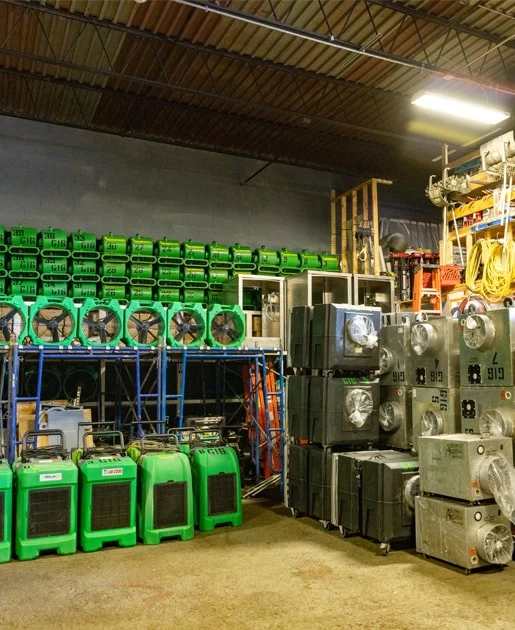
Once the assessment is complete, extraction begins using commercial-grade pumps and industrial equipment calibrated to the actual conditions in your basement. Moisture meters go into walls, under subfloors, and into concrete to find saturation that isn’t visible. Drying is then staged with industrial dehumidifiers and air movers until readings confirm the structure has reached safe moisture levels — not just until it looks and smells okay.
If materials need to come out — drywall, flooring, insulation — our Nassau County General Contractor license means we handle that work legally and pull any required permits through the Town of Hempstead. When structural restoration is needed, the same team that dried your basement puts it back together. One process, start to finish, with no handoffs to unknown subcontractors.
Built for Salisbury's Homes — Not a Generic Checklist
Flooded basement cleanup in Salisbury covers a lot of ground depending on what caused the water and what’s in the home. A burst pipe in January is a Category 1 clean-water event — serious, but manageable with fast extraction and drying. A sewer backup in a home with aging infrastructure — common in mid-century Nassau County construction — is Category 3 contaminated water, which requires full decontamination, biohazard handling, and licensed disposal of affected materials. We handle both, and everything in between.
For Salisbury’s Levitt-era housing stock, every job includes a hazardous materials assessment before any demolition begins. If asbestos-containing tiles or lead paint are present, our NYS DOL Asbestos License and USEPA Lead/RRP certification are what authorize us to handle those materials legally. Most restoration companies in Nassau County don’t hold both. Hiring one that doesn’t creates liability for you as the homeowner — especially in a pre-1978 home where lead paint disturbance triggers federal compliance requirements.
We also assist with insurance documentation and carrier communication. Standard homeowners insurance typically covers sudden accidental events like burst pipes but does not cover natural flooding from storms or groundwater — a distinction that catches a lot of Nassau County homeowners off guard. We help you understand what’s covered, document the damage properly, and build the strongest possible claim from the start.
How quickly does mold grow after a basement floods in Salisbury, NY?
Mold can begin developing within 24 to 48 hours of a water event, and the EPA recommends starting cleanup within that same window. In practical terms, that means if your basement flooded during one of Nassau County’s flash flood events — like the record rainfall that hit the area in August 2024 — and you wait two or three days to call someone, you’re no longer just dealing with water damage. You’re likely dealing with the beginning of a mold problem too.
The flat terrain of the Hempstead Plains means water doesn’t drain away from Salisbury homes quickly. Ground saturation builds up fast during heavy storms, and that moisture lingers in concrete, wall cavities, and subfloor material long after the visible water is gone. Getting a licensed remediation team in within 72 hours is the single most effective thing you can do to keep a water damage event from turning into a mold remediation event — which costs significantly more and takes significantly longer to resolve.
Does homeowners insurance cover flooded basement cleanup in Nassau County?
It depends entirely on what caused the flooding, and this is where a lot of Nassau County homeowners get caught off guard. Standard homeowners insurance typically covers sudden and accidental water damage — a burst pipe, an overflowing appliance, a water heater that fails. It does not typically cover flooding that comes from outside the home, including groundwater intrusion, storm surge, or surface water from heavy rain events. That type of flooding requires a separate flood insurance policy, usually through the National Flood Insurance Program.
For Salisbury homeowners, this distinction matters because the most common flooding scenarios here involve both categories. A burst galvanized pipe in a 1950s home is likely covered. A basement that floods because saturated ground pushed water through the foundation walls during a storm is likely not covered under a standard policy. We help with damage documentation and carrier communication so you understand exactly what you’re working with before you file — and so your claim is as complete and accurate as possible from the start.
My Salisbury home was built in the 1950s — does that affect the cleanup process?
Yes, significantly. Homes built in the 1940s through the 1960s — which describes a large portion of Salisbury’s housing stock, including the Levitt-era construction adjacent to Eisenhower Park — were commonly built with materials now known to contain hazardous substances. The 9-inch vinyl floor tiles found in many of these basements frequently contain chrysotile asbestos. Pipe insulation, ceiling tiles, and joint compound from that era can as well. And any painted surface in a pre-1978 home may contain lead-based paint.
When a basement floods and materials need to be removed or disturbed, federal and New York State law requires licensed contractors for that work. The USEPA Lead/RRP rule requires certified contractors for renovations that disturb lead paint in pre-1978 homes. NYS DOL requires a specific asbestos license for any disturbance of asbestos-containing materials. We hold both licenses, which means the cleanup process in your Salisbury home is handled legally and safely from start to finish — not just the water extraction part.
What is the difference between Category 1, 2, and 3 basement flooding?
Water category describes how contaminated the water is, and it directly affects how the cleanup has to be handled. Category 1 is clean water — a burst supply line, a malfunctioning appliance, or a water heater failure. It’s the most straightforward to remediate because the water itself isn’t a biological hazard. Category 2 is gray water, which contains some level of contamination — an overflowing washing machine or a sump pump failure that pulls in groundwater. Category 3 is black water, which is fully contaminated — sewage backups, floodwater that has contacted the ground surface, or any water that has been sitting long enough to harbor bacteria and pathogens.
In Salisbury’s mid-century housing stock, sewer line backups are a real and recurring scenario. Aging cast iron and clay sewer pipes from the 1950s and 1960s are prone to root intrusion, corrosion, and collapse — and when they fail, the result is Category 3 flooding that requires full decontamination, not just extraction and drying. We’re equipped and licensed to handle all three categories, including the biohazard protocols that Category 3 events require.
How much does flooded basement cleanup typically cost in Nassau County?
The range is wide because the variables are significant. A straightforward Category 1 clean-water event in a smaller unfinished basement can run $1,600 to $3,500 if the response is fast and no structural materials need to be removed. A Category 3 contaminated-water event in a finished basement — or one where mold has already developed because cleanup was delayed — can reach $10,000 to $12,000 or more before structural restoration is factored in. When full reconstruction is needed, total costs in Nassau County can climb well above that.
For Salisbury homeowners specifically, the presence of asbestos-containing materials or lead paint in a pre-1978 home adds a cost layer that doesn’t exist in newer construction. Licensed abatement of those materials is not optional — it’s legally required — and it affects both the timeline and the total project cost. The best way to get an accurate number is a proper on-site assessment that accounts for water category, square footage, material types, and the extent of saturation. We provide that assessment so you know exactly what you’re dealing with before any work begins.
Can Green Island Group handle both the cleanup and the repairs after a basement flood?
Yes, and that’s one of the more practical differences between us and most restoration companies serving the Salisbury area. Holding a Nassau County General Contractor license means the same company that extracts the water, dries the structure, and remediates any mold or hazardous materials can also legally perform the structural repairs — drywall replacement, flooring installation, framing, and finish work — that return your basement to its pre-flood condition.
Most water damage companies stop at “dry.” They hand you back a gutted basement and leave the rebuild to someone else. For a Salisbury homeowner with a median home value above $664,000 and a property tied to the East Meadow school district, leaving a half-finished basement indefinitely while you coordinate a separate general contractor is not a realistic outcome. We take the job from the first pump to the final walkthrough — one point of contact, one timeline, and one contractor accountable for the entire result.