When the Water Table Wins, Here's What Stops the Damage
Sands Point sits on a peninsula with water on three sides and no municipal sewer system — and when a storm hits or groundwater rises, basements pay the price. We respond 24/7 with the licenses and equipment to stop the damage before it compounds.
I needed a professional consultation explanation of procedure for safe removal of Asbestos in my apartment complex. Without having an account yet, I was very impressed with the caring, knowledgeable and generous advice offered by Jessica, and will look forward to doing business in the future. Thank you so much! I feel much more informed about a sometimes scary endeavor. Peace. Nancy Silva Mineola, NY.
Mia Munoz
Used this company to clean up some water flood in my house. They were fast and easy to work with.very professional, Would recommend to anyone!
Nini Valle
Great company, had a flood and they responded quickly and efficiently. Billed my insurance company directly. I highly recommend this company!
joe colapietro, jr
I had pipe freeze in my basement right before a snow storm and they made to within an hour to help start the clean up process. They we by our side throughout the entire process and even helped with the insurance company. They did such a great job with the cleanup, repair, remidiation, I contracted them to perform the repairs and finishes in the basement. They came with enough manpower and material to get the job done. Leo and Jessica were nothing but a pleasure to deal with!!
Cristian Arredondo c
I had some water damage in my home and Green Island was able to take care of my issue quickly and effectively. I am very pleased with the work they did. They responded quickly and were very professional.
Michael M
Outstanding service! From the office to the field crew everyone was friendly, helpful and responsive. I highly recommend Green Island Group.
Your Basement Back — Without the Hidden Problems Left Behind
The visible water is only part of the problem. What gets left behind — moisture trapped inside walls, under flooring, in the insulation around your mechanical systems — is what turns a manageable cleanup into a months-long mold situation. In a Sands Point home averaging over 6,000 square feet, that hidden moisture has a lot of places to go.
The peninsula’s geography makes this worse than most people expect. With Long Island Sound to the north, Manhasset Bay to the west, and Hempstead Harbor to the east, tidal pressure pushes against the water table from three directions. After a heavy rain or a nor’easter, groundwater doesn’t need a visible crack to get in — it seeps through joints, porous concrete, and aging foundation walls that have been under chronic pressure for decades.
When the job is done right, you get a basement that’s genuinely dry — not surface dry. You get documentation for your insurance claim. You get a clear answer on whether what was found during cleanup requires additional remediation. And you don’t get a call three weeks later about mold growing behind the drywall we put back too soon.
Licensed Basement Flooding Remediation, Nassau County
Every License This Job Could Possibly Require — Under One Roof
We hold the NYS DOL Mold License, NYS DOL Asbestos License, USEPA Lead and RRP certifications, IICRC Water and Fire Damage certification, and General Contractor licenses for Nassau County, Suffolk County, and New York City — simultaneously. That combination is genuinely uncommon. Most restoration companies operating on Long Island carry one or two of these credentials. We carry all of them.
That matters specifically in Sands Point, where homes averaging 50 years in age — and many dating back to the Gold Coast era — routinely contain asbestos floor tiles, lead-based paint, and aging pipe insulation. A basement flood that requires any demolition work can disturb those materials. A contractor without the proper licenses can’t legally or safely handle what they find. We can, without stopping the job, without calling in a second crew, and without leaving you in the middle of an unfinished remediation.
From the first call to the final moisture check, the same accountable team sees it through.
What Actually Happens From the First Call to a Dry Basement
When you call, the first priority is getting someone on-site fast. The EPA’s guidance is clear — water damage cleanup needs to start within 24 to 48 hours, and mold prevention requires the space to be dried within 72 hours. That window doesn’t pause for business hours, which is why we dispatch around the clock.
On arrival, our team does a full assessment before any equipment goes in. That means identifying the water source and category — clean water from a burst pipe is handled differently than a sewage backup from an overwhelmed cesspool, which is a real and specific risk in Sands Point given that the entire village runs on septic systems with no municipal sewer connection. Category 3 black water events require full decontamination protocols, and that work is only legal and safe when the contractor is properly licensed for it.
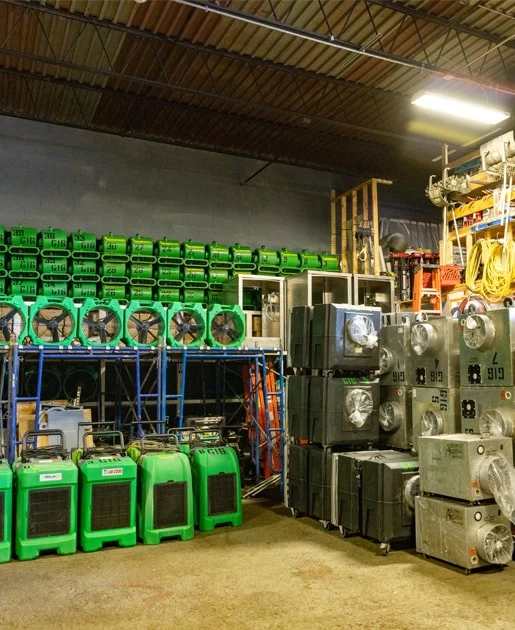
From there: water extraction, structural drying with industrial-grade dehumidifiers and air movers, moisture mapping inside walls and under flooring, and a post-drying inspection before anything gets closed back up. If the assessment turns up asbestos-containing materials or lead — which is realistic in older Sands Point homes — that gets handled in the same job, under the same contract, without starting over with a different company. If permits are required through the Sands Point Village Building Department, our Nassau County General Contractor license covers that too.
From Water Out to Walls Back In — the Full Scope, Done Once
What we deliver isn’t just extraction and a few fans. The full scope runs from emergency water removal through structural drying, mold testing, mold remediation if needed, asbestos abatement if materials are disturbed, lead-safe demolition where required, and complete structural restoration — drywall, flooring, framing, and finish work. One contractor, one contract, one point of accountability.
For Sands Point specifically, that full-service model matters more than it does almost anywhere else in Nassau County. The older housing stock along the Cow Neck Peninsula means legacy materials are a realistic finding, not a remote possibility. The absence of municipal sewers means any flooding event with a sewage component is a biohazard job, not a standard water job. The size of the homes — many with finished basement levels that function as full living spaces — means the restoration scope can be significant. And the Historic Landmarks Preservation Commission means that work on any designated property needs to be handled with the documentation and care that historic preservation requirements demand.
Insurance documentation is part of the process from the start. We photograph damage, document water categories, and communicate with carriers in the language adjusters understand. Whether you’re filing under a standard homeowners policy for a sudden pipe event or working through a separate flood insurance policy for a storm-driven event, getting the documentation right at the beginning is what determines how that claim resolves.
Does homeowners insurance actually cover basement flooding in Sands Point, NY?
It depends entirely on the source of the water — and this distinction matters a lot for Sands Point homeowners. Standard homeowners insurance covers sudden, accidental water events: a burst pipe, a failed water heater, an appliance that malfunctions. It typically does not cover natural flooding from groundwater intrusion or storm surge, which are both realistic risks on the Cow Neck Peninsula given the three-sided coastal exposure and the high water table.
If your property is near the waterfront or in a designated flood zone, you may have a separate flood insurance policy through the National Flood Insurance Program or a private carrier — and that policy operates under completely different rules than your homeowners coverage. Many Sands Point residents carry both. The critical thing is getting the damage documented correctly from the start, because how the water source is characterized in the initial assessment affects which policy applies and how the claim is processed. We assist with that documentation as part of the job — not as an add-on.
How quickly does mold start growing after a basement floods?
The EPA puts the window at 24 to 48 hours for mold to begin developing under the right conditions — and a wet basement in a humid Long Island summer, or a damp basement after a spring nor’easter, provides exactly those conditions. The 72-hour mark is the threshold that matters most: industry research confirms that if a basement is fully dried within 72 hours, mold growth is unlikely. After that window, the remediation equation changes significantly.
In a large Sands Point home, that timeline is even more consequential. A 6,000-plus square foot home with a finished basement has extensive wall cavities, insulation, and floor assemblies where moisture can migrate and hide long after the standing water is gone. Surface-dry is not the same as structurally dry. Professional moisture mapping — using thermal imaging and moisture meters inside walls and under flooring — is what confirms the space is actually dry, not just visually clear. Skipping that step is how mold ends up growing behind freshly installed drywall weeks after a cleanup that seemed complete.
What is Category 3 water damage, and why does it matter for my Sands Point home?
Water damage is classified in three categories based on contamination level. Category 1 is clean water — a supply line break or appliance overflow. Category 2 is gray water — washing machine discharge or a toilet overflow without solid waste. Category 3 is black water — sewage, floodwater from outside, or any water that has contacted biological contaminants. It’s a documented health hazard, and it requires full decontamination protocols, not just extraction and drying.
This is particularly relevant in Sands Point because the entire village relies on cesspools and septic systems — there is no municipal sewer connection anywhere in the village. When heavy rain saturates the ground around a cesspool, or when a septic system is overwhelmed during a storm event, the result can be a sewage backup directly into the basement. That’s a Category 3 event. Legally and safely handling it requires specific licensing and biohazard protocols that many restoration companies operating on Long Island simply don’t hold. We are fully licensed and equipped for Category 3 cleanup, including proper waste disposal under Nassau County Department of Health regulations.
Can I handle flooded basement cleanup myself, or do I need a professional?
For a minor clean-water event — a small pipe drip that was caught quickly, minimal standing water, no finished surfaces affected — some homeowners manage the initial response themselves with a wet vac and fans. But that scenario is the exception, not the rule, and it’s rarely what people are dealing with when they’re searching for help.
The situations that require a licensed professional are more common than most homeowners expect: any event involving sewage or contaminated water, any flooding that has been sitting for more than a few hours, any basement with finished walls and flooring where moisture can migrate invisibly, and any home where the cleanup requires demolition of materials that may contain asbestos or lead. In Sands Point, where homes averaging 50 years old are the norm and many properties date back to the early 20th century, that last point is not hypothetical. Disturbing asbestos-containing materials without a NYS DOL Asbestos License creates direct legal liability — for the contractor and potentially for the homeowner. The cost of getting it wrong far exceeds the cost of doing it right the first time, particularly in a home worth several million dollars.
Why is my Sands Point basement flooding even when it hasn't rained that hard?
This is one of the most common questions from homeowners on the Cow Neck Peninsula, and the answer usually comes down to groundwater pressure rather than surface water. Long Island’s water table sits just a few feet below the surface across most of Nassau County. On a narrow peninsula surrounded by tidal water on three sides, that water table is under additional lateral pressure from Manhasset Bay, Hempstead Harbor, and the Long Island Sound simultaneously. After even moderate rainfall, or during spring snowmelt, groundwater rises and pushes against basement foundations from below and from the sides.
Water doesn’t need a visible crack to enter. It can seep through the joints between foundation blocks, through porous concrete that has degraded over decades, and through the cold joint where your basement floor meets the wall — a common entry point in older construction. NOAA even maintains an active water level gauge at Sands Point specifically because of the village’s coastal water exposure. If your basement is taking on water without an obvious source, chronic groundwater pressure is the most likely explanation, and addressing it properly requires professional moisture mapping, not just a new sump pump.
How much does flooded basement cleanup typically cost in Nassau County?
The range is wide because the variables are significant. A minor clean-water event in an unfinished basement might run $1,500 to $3,000 for extraction and drying. A larger event involving contaminated water, finished surfaces, and necessary mold remediation can reach $10,000 to $15,000 or more. When structural restoration is involved — replacing drywall, flooring, framing — costs can climb considerably higher, and in cases where asbestos abatement or lead-safe demolition is required, that adds scope that most restoration companies aren’t even licensed to perform.
For Sands Point specifically, the size of the homes and the age of the construction stock tend to push jobs toward the more complex end of that range. A finished basement in a 6,000-plus square foot estate home has more surface area, more materials, and more potential for hidden moisture migration than a typical suburban basement. The more important number to keep in mind is what FEMA documents as the average cost of just one inch of water: approximately $25,000 in property damage. The cost of professional cleanup is almost always a fraction of the cost of what happens when cleanup is delayed, incomplete, or handled by a contractor without the right licenses for what they find.