When the Bluff Sends Water Into Your Victorian, You Need More Than a Wet Vac
Sea Cliff basements flood differently than most — and cleaning them up requires more than most companies are licensed to handle. We respond 24/7 with the credentials to do this right, the first time.
I needed a professional consultation explanation of procedure for safe removal of Asbestos in my apartment complex. Without having an account yet, I was very impressed with the caring, knowledgeable and generous advice offered by Jessica, and will look forward to doing business in the future. Thank you so much! I feel much more informed about a sometimes scary endeavor. Peace. Nancy Silva Mineola, NY.
Mia Munoz
Used this company to clean up some water flood in my house. They were fast and easy to work with.very professional, Would recommend to anyone!
Nini Valle
Great company, had a flood and they responded quickly and efficiently. Billed my insurance company directly. I highly recommend this company!
joe colapietro, jr
I had pipe freeze in my basement right before a snow storm and they made to within an hour to help start the clean up process. They we by our side throughout the entire process and even helped with the insurance company. They did such a great job with the cleanup, repair, remidiation, I contracted them to perform the repairs and finishes in the basement. They came with enough manpower and material to get the job done. Leo and Jessica were nothing but a pleasure to deal with!!
Cristian Arredondo c
I had some water damage in my home and Green Island was able to take care of my issue quickly and effectively. I am very pleased with the work they did. They responded quickly and were very professional.
Michael M
Outstanding service! From the office to the field crew everyone was friendly, helpful and responsive. I highly recommend Green Island Group.
What Changes When the Water Is Gone — and the Job Is Actually Done
A flooded basement in Sea Cliff is rarely a simple problem. You’re not dealing with a flat subdivision lot where water drains quickly and the walls are modern drywall. You’re dealing with a 120-foot bluff made of clay-rich soil that holds water for days after the rain stops — which means groundwater keeps pushing through your foundation long after the storm is over. That extended saturation is exactly what turns a manageable water event into a mold situation if the response isn’t fast and thorough.
The other reality is what’s inside the walls. Sea Cliff’s Victorian-era homes — many of them built in the 1870s through the early 1900s — contain original wood framing, horsehair plaster, and in a significant number of cases, asbestos floor tiles and lead paint that predate modern regulations by decades. When a basement floods, that water doesn’t just damage drywall. It disturbs materials that require licensed professionals to handle legally and safely. Most restoration companies operating on the North Shore don’t hold those licenses. We hold all of them — simultaneously, under one roof.
When the job is genuinely finished, your basement is dry to the stud, documented for your insurance carrier, cleared of any hazardous material concerns, and structurally restored. No second contractor needed. No outstanding liability. No hidden moisture waiting to become a mold problem three weeks from now.
Licensed Basement Flooding Remediation, Nassau County
Every License the Job Requires — Not Just the Easy Ones
We are a full-service disaster restoration and environmental remediation company serving Nassau County, Suffolk County, and the greater New York metro area. For homeowners in Sea Cliff, that proximity matters — but what matters more is what we’re actually licensed to do when we arrive.
We hold the NYS Department of Labor Mold License, the NYS DOL Asbestos License, USEPA Lead and RRP certifications, IICRC Water and Fire Damage certification, and active General Contractor licenses in Nassau County and New York City. New York is one of only a handful of states in the country that requires a dedicated state mold license. A lot of companies market themselves as water damage experts without holding it. We hold it — along with every other credential that a flooded basement in a pre-1920 Sea Cliff Victorian actually demands.
We’re also a certified minority- and women-owned business holding NYS MBE, NYS WBE, NYC MWBE, NYS SBE, and NJ DBE designations. That’s not a footnote — it’s part of who we are and how we operate.
From the First Call to a Dry, Documented, Restored Basement
The moment you call, we’re moving. We operate 24 hours a day, seven days a week, and the reason that matters isn’t just convenience — it’s the 72-hour window. The EPA recommends beginning cleanup within 24 to 48 hours of water exposure to prevent mold growth. In Sea Cliff’s coastal humidity, with the organic materials inside Victorian-era construction, that window is real. If it closes, what started as a water extraction job becomes a full mold remediation project. We start the clock in your favor, not against it.
When we arrive, we assess the water source and category first. Clean water from a burst pipe is handled differently than gray water from an appliance failure, which is handled differently than Category 3 black water — sewage backup or storm flooding that carries biological contamination. Sea Cliff’s aging sewer infrastructure, much of it serving homes connected to systems over a century old, makes Category 3 events more common here than in newer communities. We’re equipped and licensed for all three.
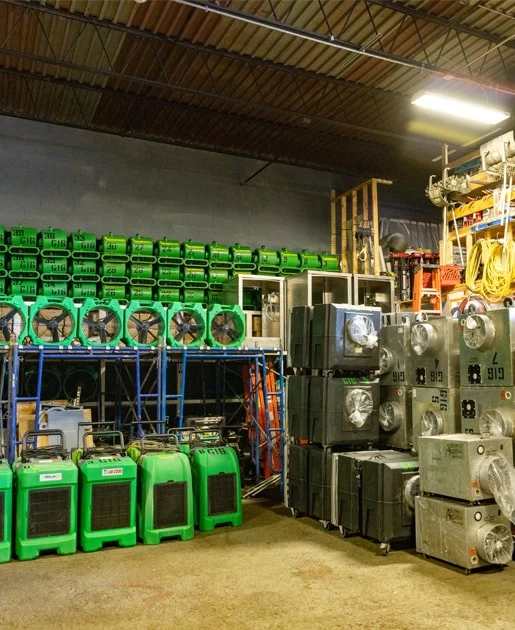
From there, we extract standing water, deploy industrial drying equipment — not box fans, not rental dehumidifiers — and use professional moisture meters to find what’s hiding inside walls, under original flooring, and between joists. In Sea Cliff, where the Building Department requires NYS DOL coordination for asbestos removal, we handle that permitting as part of the process. Once everything is confirmed dry and cleared, we restore. Drywall, framing, flooring, mechanical systems — our Nassau County General Contractor license means we finish the job, not just the extraction.
Built for the Specific Hazards Inside Sea Cliff's Oldest Homes
Flooded basement cleanup in Sea Cliff covers a wider scope than it does in most Nassau County communities — and that’s not a sales pitch, it’s a function of what’s actually in these homes. When we work in Sea Cliff, we account for hazardous materials that are common in pre-1920 Victorian construction: asbestos floor tiles, asbestos pipe insulation, and lead paint on original wood trim. These aren’t hypothetical concerns. The Sea Cliff Building Department explicitly requires NYS Department of Labor coordination for asbestos removal. We hold that license. We handle the permitting. You don’t have to find a separate abatement contractor and coordinate timelines — it’s all under one roof.
For properties in FEMA-designated special flood hazard areas within Sea Cliff, a development permit is required before standard building permits are issued. We’re familiar with that process and factor it into the project timeline so there are no surprises mid-job. Construction in Sea Cliff is also restricted by village code — no work on Sundays or federal holidays — which affects the permitted restoration phase. Our 24/7 emergency response covers extraction and stabilization at any hour, and we schedule permitted structural work in full compliance with village requirements.
Beyond the technical scope, we document everything for your insurance carrier. Standard homeowners insurance covers sudden events like burst pipes but does not cover natural flooding from storms or groundwater — a distinction that caught many Sea Cliff homeowners off guard after Hurricane Ida’s remnants dropped nine inches of rain in four hours in September 2021. We help you understand what’s covered, what isn’t, and how to build the strongest possible claim from the documentation we gather on-site.
Does homeowners insurance cover basement flooding in Sea Cliff, NY?
This is one of the most important questions to understand before you need the answer — because a lot of Sea Cliff homeowners found out the hard way after Hurricane Ida in September 2021. Standard homeowners insurance covers sudden, accidental water damage — a burst pipe, a failed water heater, an appliance leak. It does not cover flooding caused by storms, surface water intrusion, or groundwater rising through your foundation. That type of flooding requires a separate flood insurance policy through the National Flood Insurance Program (NFIP) or a private flood carrier.
If your basement flooded because of the kind of storm event that overwhelms Sea Cliff’s bluff drainage — heavy rain saturating the clay soil, runoff channeling toward your foundation, or a retaining wall failure — that’s likely a flood claim, not a homeowners claim. The distinction matters enormously for what gets paid. When we respond to your home, we document the damage in detail and help you understand which coverage applies to your specific situation. We work directly with your carrier to support the claim, whether it falls under homeowners, flood, or both.
How fast does mold grow after a basement floods, and why does it matter?
The EPA recommends beginning water damage cleanup within 24 to 48 hours of exposure. Industry data is consistent: if a basement is fully dried within 72 hours, mold growth is unlikely. If that window is missed, mold can establish on organic materials — wood, paper, insulation, fabric — and the job shifts from water extraction to full mold remediation. That’s a meaningfully larger project in terms of cost, time, and health risk.
In Sea Cliff specifically, the conditions accelerate that timeline. The coastal humidity along Hempstead Harbor keeps ambient moisture levels higher than inland Nassau County communities. The organic materials inside Victorian-era construction — original wood framing, horsehair plaster, aged cellulose insulation — are particularly hospitable to mold. And Sea Cliff’s clay-rich bluff soils continue releasing groundwater into foundations for days after a storm ends, which means the moisture source doesn’t stop when the rain does. That’s why our 24/7 response isn’t just a convenience feature — it’s the difference between a water damage job and a mold remediation project.
My Sea Cliff home was built in the 1890s — does that affect the cleanup process?
Yes, significantly. Homes built in Sea Cliff’s Victorian resort era — the 1870s through the early 1910s — predate modern building materials by half a century or more. That means there’s a real likelihood of asbestos floor tiles in the basement, asbestos insulation on original pipe runs, and lead paint on wood trim and structural elements. When a basement floods, water doesn’t just damage these materials — it can disturb them, creating a hazardous exposure risk if cleanup is handled by someone without the proper licensing.
The Sea Cliff Building Department explicitly requires NYS Department of Labor coordination for asbestos removal. We hold the NYS DOL Asbestos License and the USEPA Lead and RRP certification, which means we can legally identify, contain, and remove these materials as part of the cleanup process. We don’t subcontract that work to a separate abatement company — it’s handled by our licensed team under one scope of work. For homeowners of National Register-listed properties in Sea Cliff, we also approach restoration with the care that historic materials deserve, preserving original elements where possible rather than defaulting to replacement.
What is Category 3 water damage, and is it common in Sea Cliff?
Water damage is classified into three categories based on contamination level. Category 1 is clean water — a burst supply line, a malfunctioning appliance. Category 2, or gray water, comes from sources like washing machine discharge or toilet overflow without solid waste. Category 3, called black water, is the most serious: it includes sewage backup, floodwater that has contacted the ground surface, and any water carrying biological or chemical contamination. Category 3 is a biohazard event, not a cleanup job, and it requires licensed decontamination protocols and proper disposal of contaminated materials.
Sea Cliff’s aging sewer infrastructure — much of it serving homes connected to systems that have been in the ground for over a century — is vulnerable to backup during extreme rain events. When Ida’s remnants delivered nine inches of rain in four hours in September 2021, sewer systems across the North Shore were overwhelmed. If your basement flooded during a storm and the water had any odor, discoloration, or came up through a floor drain, treat it as Category 3 until a professional confirms otherwise. We are fully equipped and licensed for Category 3 cleanup, including full biohazard decontamination and compliant disposal.
How much does flooded basement cleanup typically cost in Sea Cliff?
Flooded basement cleanup generally runs between $4 and $12 per square foot, depending on the category of water involved, how long the water has been present, and what materials need to be addressed. For a typical basement, that puts total costs somewhere between $1,600 on the low end for a small, clean-water event and $10,000 to $12,000 or more for a larger space with contaminated water or secondary mold growth. If structural restoration is involved — framing, flooring, mechanical systems — costs increase from there.
In Sea Cliff specifically, you should expect costs to run on the higher end of industry ranges. Storm damage cleanup on Long Island averages approximately 32% above the national average, driven by higher labor costs, older housing stock, and strict NYS licensing requirements. That premium is real, and it’s directly tied to what the work actually involves in a pre-1920 Victorian home with potential hazardous materials. The more important number to keep in mind: the average NFIP flood insurance claim payment is nearly $46,000, and FEMA estimates that one inch of water in a home can cause approximately $25,000 in damage. The cost of professional cleanup is a fraction of what improper or delayed cleanup costs.
Why does Green Island Group need a General Contractor license for basement water damage work?
Water extraction and drying are only part of what a flooded basement actually requires. Once the water is out and the space is confirmed dry, the restoration begins — and that’s where a General Contractor license matters. Drywall repair, subfloor replacement, framing work, reinstallation of mechanical systems, and finishing work all fall under general contracting scope. Without that license, a restoration company can extract and dry, but they can’t legally complete the structural work that follows. That means you’d need to find, hire, and coordinate a second contractor — adding time, cost, and a gap in accountability when something doesn’t line up between the two scopes of work.
We hold an active General Contractor license in Nassau County, which means we carry the job from the first call through the final walkthrough without handing it off. For Sea Cliff homeowners with historic Victorian properties, that continuity is especially important. The restoration phase in an 1880s or 1890s home often involves matching original materials, working around non-standard wall assemblies, and making decisions that affect the long-term integrity of a structure that may be listed on the National Register of Historic Places. You want one accountable team making those calls from start to finish — not two separate companies pointing at each other when questions come up.