On a barrier island flanked by the Atlantic and Jamaica Bay, a flooded basement in Seaside isn’t just an inconvenience it’s a race against mold, saltwater damage, and a 72-hour clock that doesn’t stop for anyone.
I needed a professional consultation explanation of procedure for safe removal of Asbestos in my apartment complex. Without having an account yet, I was very impressed with the caring, knowledgeable and generous advice offered by Jessica, and will look forward to doing business in the future. Thank you so much! I feel much more informed about a sometimes scary endeavor. Peace. Nancy Silva Mineola, NY.
Mia Munoz
Used this company to clean up some water flood in my house. They were fast and easy to work with.very professional, Would recommend to anyone!
Nini Valle
Great company, had a flood and they responded quickly and efficiently. Billed my insurance company directly. I highly recommend this company!
joe colapietro, jr
I had pipe freeze in my basement right before a snow storm and they made to within an hour to help start the clean up process. They we by our side throughout the entire process and even helped with the insurance company. They did such a great job with the cleanup, repair, remidiation, I contracted them to perform the repairs and finishes in the basement. They came with enough manpower and material to get the job done. Leo and Jessica were nothing but a pleasure to deal with!!
Cristian Arredondo c
I had some water damage in my home and Green Island was able to take care of my issue quickly and effectively. I am very pleased with the work they did. They responded quickly and were very professional.
Michael M
Outstanding service! From the office to the field crew everyone was friendly, helpful and responsive. I highly recommend Green Island Group.
When water gets into your basement on the Rockaway Peninsula, the conditions it meets are different from anywhere else in Queens. The coastal humidity, the saltwater intrusion through sewer lines during high tides, the shallow water table sitting just below the sand all of it accelerates damage in ways that a standard cleanup approach simply isn’t built for. The sooner the water is out and the space is properly dried, the less likely you are to face a mold remediation bill that dwarfs the original cleanup cost.
The older housing stock in Seaside compounds that risk further. With a significant portion of buildings dating back to the 1940s and earlier, the materials inside your walls and floors weren’t designed with modern waterproofing in mind. Moisture hides in wall cavities, under flooring, and inside insulation and in a neighborhood where ambient humidity rarely lets things dry on their own, that hidden moisture becomes a mold problem within days.
What you get after a proper flooded basement cleanup isn’t just a dry floor. It’s documented moisture readings, treated surfaces, and the confidence that nothing was left behind to grow into a bigger problem three weeks from now.
Fully Licensed, Locally Familiar, and Ready at 2 A.M.
We’ve been serving Queens County for over 30 years, and that means we’ve worked in the buildings throughout Seaside the Mitchell-Lama cooperatives along the beachfront, the older bungalow-era homes on the side streets, the shared utility spaces that flood when Jamaica Bay backs up into the sewer system. We know what’s typically inside these buildings, and we know what a flood does to them.
We hold every license New York State and New York City require for this work NYS DOL Mold License, NYS DOL Asbestos Certification, USEPA Lead Certification, IICRC Water Damage Certification, NYC General Contractor License, and NYC BIC Trade Waste Registration. Those aren’t credentials we list to fill space. They’re what make it legal and safe for us to do this work correctly in buildings like yours.
We’re available 24 hours a day, 7 days a week, 365 days a year. When a nor’easter hits the peninsula at 3 a.m. and your basement is filling up, you need someone who actually picks up the phone and actually shows up.
From Standing Water to Dry and Documented Here's What Happens
The first thing we do when we arrive is assess what you’re actually dealing with. On the Rockaway Peninsula, that assessment matters more than most places because the source of the water changes everything. Clean water from a burst pipe requires a different response than saltwater intrusion from a backed-up sewer during a high-tide event. Black water contamination which is common in Seaside when bay flooding or storm surge is involved requires hazmat-level handling, not a standard extraction setup. We identify the contamination category before we touch anything.
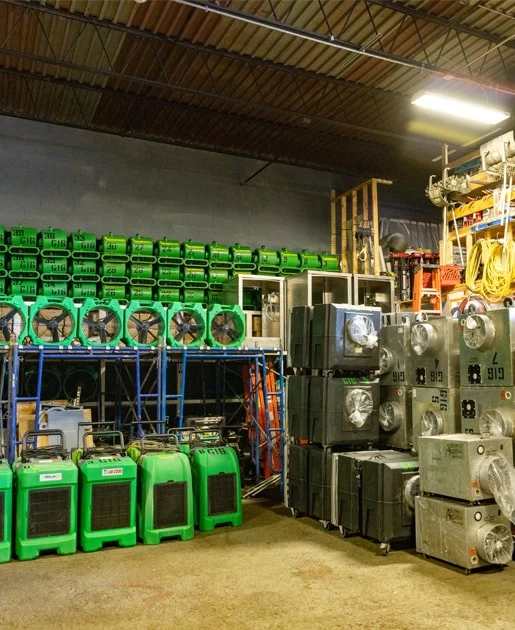
Once we know what we’re working with, we extract the standing water using industrial-grade equipment, then set up commercial drying systems throughout the affected space. We use thermal imaging to find moisture that isn’t visible inside walls, under floors, behind insulation. In Seaside’s coastal environment, skipping that step means leaving the conditions for mold growth in place even after the floor looks dry.
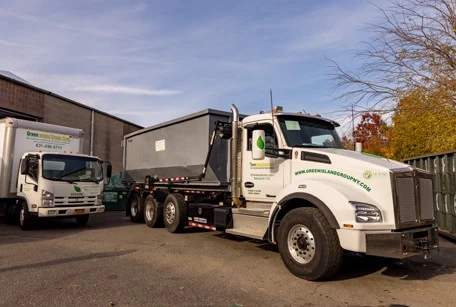
If your building was constructed before 1978 and a substantial portion of Seaside’s housing stock was we test for asbestos and lead before any demolition or material removal begins. New York State law requires it, and it protects you. From there, we handle all debris removal under our NYC BIC Trade Waste Registration, coordinate directly with your insurance adjuster, and carry the project through to full reconstruction if needed. One point of contact, start to finish.
Everything the Job Actually Requires Not Just the Easy Parts
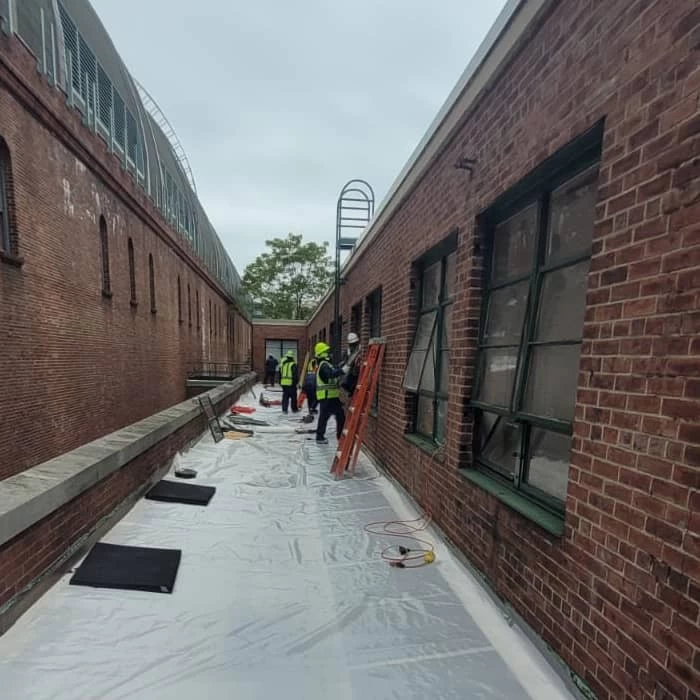
A flooded basement cleanup in Seaside isn’t a one-size job. What’s included depends on what the water brought with it, how long it’s been sitting, and what’s inside the building it touched. At minimum, every job includes contamination assessment, full water extraction, structural drying with commercial-grade dehumidifiers and air movers, thermal imaging to locate hidden moisture, and a documented dryness verification before we leave. That last part matters you get a written record, not just someone’s word that it’s dry.
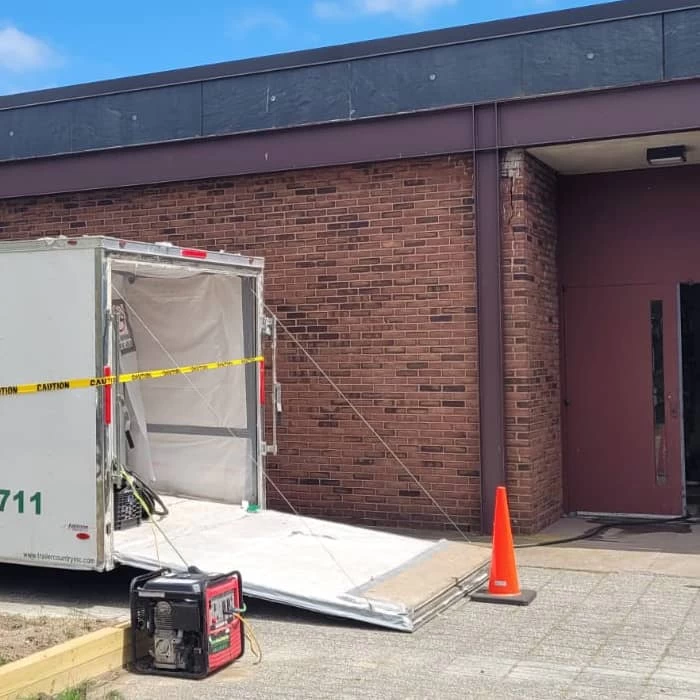
For jobs involving saltwater intrusion, sewage backup, or storm surge all of which are recurring realities for Seaside residents near the Cross Bay Veterans Memorial Bridge corridor and along the bay-facing side of the peninsula we add antimicrobial treatment and full surface sanitization to the scope. If mold is already present, our NYS DOL-licensed mold remediation team handles it under a separate, legally compliant protocol. If asbestos-containing materials or lead paint are disturbed during the flood or the cleanup, our NYS DOL Asbestos and USEPA Lead-certified crews handle abatement before reconstruction begins.
We also work directly with your insurance company. Whether you’re filing under a homeowners policy, an NFIP flood insurance policy, or both which is common for properties in FEMA Zone AE like most of the Rockaway Peninsula we document the damage thoroughly and communicate with your adjuster so you’re not doing that on your own during an already stressful situation.
Does flood insurance cover flooded basement cleanup in Seaside, NY?
It depends on the source of the water, and this is genuinely one of the most confusing parts of filing a claim on the Rockaway Peninsula. Most properties in Seaside fall within FEMA Zone AE, which means federally backed mortgages require flood insurance through the National Flood Insurance Program. That NFIP policy covers damage caused by external flooding storm surge from the Atlantic, bay water from Jamaica Bay, or overflow from sewer systems driven by rising sea levels. Your standard homeowners insurance policy, on the other hand, typically covers internal sources like a burst pipe, a failed sump pump, or an appliance leak.
The problem is that many Seaside flooding events involve both. A nor’easter can overwhelm your sump pump at the same time that bay flooding is backing up through the sewer which means you may have a legitimate claim under two separate policies. We document the damage in a way that supports both filings and communicate directly with adjusters from both carriers so you’re not left trying to sort that out on your own.
How quickly does mold start growing after a basement floods?
Mold can begin developing within 24 to 48 hours under the right conditions and in Seaside, the conditions are almost always right. The Rockaway Peninsula’s coastal humidity means the ambient moisture level in your basement is already elevated before any flooding occurs. Add standing water, saltwater contamination, and building materials that were never designed to dry quickly, and you’re looking at a 72-hour window before mold growth becomes a near-certainty in untreated spaces.
That timeline is why response speed matters so much here. A cleanup that starts 12 hours after a flooding event is a fundamentally different job than one that starts three days later. Early extraction and drying can prevent mold entirely. Delayed response often means the cleanup job becomes a mold remediation job which in New York State must be performed by a licensed contractor under a separate legal protocol and typically costs significantly more. Getting someone out fast isn’t just about comfort it’s about keeping the scope of work manageable.
Is it safe to go into my basement after it floods from a storm?
Not always, and it’s worth being cautious before you assume it is. The first concern is electrical if your basement has any standing water and the electrical panel, outlets, or appliances are in that space, there’s a real shock hazard until the power is confirmed off and the area is assessed. Don’t assume the breaker tripped on its own.
The second concern is contamination. In Seaside specifically, flooding from storm surge, bay water, or sewer backup introduces black water which contains sewage, bacteria, and in some cases chemical contaminants from Jamaica Bay. Exposure to that water without proper protective equipment is a health risk, not just an inconvenience. If you’re not sure what the source of the flooding was, treat it as contaminated until a professional tells you otherwise. A quick visual check from the top of the stairs is reasonable. Wading through it in sneakers is not.
What happens if my flooded basement has asbestos or lead paint?
This is a real concern in Seaside, and it’s one that most water damage contractors aren’t equipped to handle legally. With a median construction year of 1962 and a significant share of buildings dating to the 1930s and 1940s, the Rockaway Peninsula has a lot of housing stock that was built when asbestos pipe insulation, asbestos floor tiles, and lead-based paint were standard materials. A flood that disturbs those materials by saturating them, causing them to crumble, or requiring demolition to dry out the space creates a hazardous material situation that goes beyond standard cleanup.
New York State law requires licensed professionals for both asbestos abatement (NYS DOL Asbestos Certification) and lead paint work (USEPA Lead and RRP Certification). We hold both. Before any demolition or material removal begins in an older building, we test for the presence of these materials. If they’re found, we handle abatement under the required legal protocol before reconstruction proceeds. A contractor who doesn’t hold these certifications cannot legally disturb those materials which means they’ll either skip the testing entirely or leave hazardous conditions in place.
How long does flooded basement cleanup take in Seaside, NY?
A straightforward water extraction and drying job clean water source, no contamination, caught within the first 24 hours typically takes three to five days for the structural drying phase to complete, with the initial extraction done in a matter of hours. The drying timeline depends on how much material absorbed water, the size of the space, and the ambient humidity conditions, which in a coastal neighborhood like Seaside tend to run higher than inland Queens neighborhoods and can extend drying time.
Jobs that involve contaminated water, mold growth, or hazardous materials take longer because each of those elements requires a separate protocol. Mold remediation under the NYS DOL licensing requirements involves containment, removal, treatment, and air testing before clearance is issued. Asbestos abatement has its own timeline and regulatory requirements. If reconstruction is needed after all of that new drywall, flooring, insulation that’s a separate phase. We give you a realistic scope and timeline after the initial assessment, not a number pulled from thin air.
Why should I hire a licensed contractor instead of handling the cleanup myself?
For a small, clean-water spill a slow leak from a pipe that you caught the same day a shop vac and some fans might genuinely be enough. But that’s not what most Seaside basements are dealing with after a flooding event. When the water source is a backed-up sewer, storm surge, or bay flooding, you’re handling black water contamination that carries real health risks. And in buildings with pre-war construction, disturbing wet walls or flooring without testing for asbestos first isn’t just inadvisable it’s illegal under New York State law.
Beyond the safety and legal issues, there’s the insurance angle. Insurance carriers, especially under NFIP flood policies, expect documented professional remediation. If you handle the cleanup yourself and later discover mold or structural damage, you may find that the lack of professional documentation complicates or voids your claim. A licensed contractor provides the paper trail moisture readings, contamination assessments, dryness verification that protects your claim and gives you recourse if something surfaces later. In a neighborhood that’s been through what Seaside has been through, that documentation isn’t a formality. It’s protection.