When Selden's Catch Basins Fail, Your Basement Pays the Price
Selden’s inland drainage infrastructure wasn’t built for today’s storm events and when it gets overwhelmed, the water goes straight down. We respond within the hour, handle your insurance directly, and hold every license New York requires to clean up what’s actually inside your walls.
I needed a professional consultation explanation of procedure for safe removal of Asbestos in my apartment complex. Without having an account yet, I was very impressed with the caring, knowledgeable and generous advice offered by Jessica, and will look forward to doing business in the future. Thank you so much! I feel much more informed about a sometimes scary endeavor. Peace. Nancy Silva Mineola, NY.
Mia Munoz
Used this company to clean up some water flood in my house. They were fast and easy to work with.very professional, Would recommend to anyone!
Nini Valle
Great company, had a flood and they responded quickly and efficiently. Billed my insurance company directly. I highly recommend this company!
joe colapietro, jr
I had pipe freeze in my basement right before a snow storm and they made to within an hour to help start the clean up process. They we by our side throughout the entire process and even helped with the insurance company. They did such a great job with the cleanup, repair, remidiation, I contracted them to perform the repairs and finishes in the basement. They came with enough manpower and material to get the job done. Leo and Jessica were nothing but a pleasure to deal with!!
Cristian Arredondo c
I had some water damage in my home and Green Island was able to take care of my issue quickly and effectively. I am very pleased with the work they did. They responded quickly and were very professional.
Michael M
Outstanding service! From the office to the field crew everyone was friendly, helpful and responsive. I highly recommend Green Island Group.
A Dry Basement and a Clean Bill of Health for Your Home
When the water is gone and the fans are off, most homeowners assume the job is done. It’s not. Moisture hides in wall cavities, under flooring, and behind insulation and in Selden’s older housing stock, that insulation may contain asbestos. What you actually need isn’t just a dry floor. You need documented moisture readings, cleared air quality, and a restoration contractor who knows what’s legally required in a pre-1978 Selden home.
Selden’s housing was built predominantly between 1950 and 1975, which means the walls in your basement almost certainly contain materials that require licensed handling if disturbed by floodwater. Most water damage companies operating in this area aren’t equipped or certified to deal with that. We hold NYS DOL Asbestos and USEPA Lead certifications specifically because homes like yours ranches and colonials built off Middle Country Road need more than a shop vac and a dehumidifier.
The other thing most homeowners don’t realize: mold starts colonizing within 24 to 48 hours. On Long Island, where summer humidity is already high and basements have limited airflow, that timeline is not forgiving. When the job is done right, you’re not just looking at a dry basement you’re looking at a home that’s actually safe to live in, with documentation your insurance company will accept.
Every License New York Requires, One Company That Holds Them All
We’ve completed more than 5,000 restoration projects across New York State over the past 12 years. That’s not a number pulled from a brochure it’s the kind of volume that comes from being an approved emergency response contractor for the NYS Office of General Services, which means the State of New York has independently reviewed and vetted our company to respond to public emergencies. That same standard applies to every residential job in Selden.
Led by CEO Jessica Dussan and VP Leo Torres, we are independently certified by New York State as both a Minority-Owned Business Enterprise and a Woman-Owned Business Enterprise. No franchise competitor serving the Centereach-Selden corridor holds that status. When Selden homeowners call, they reach people who are personally accountable for every job not a national dispatch center routing tickets to whoever’s available.
We hold a Suffolk County General Contractor license alongside our NYS DOL Mold, NYS DOL Asbestos, USEPA Lead, and USEPA RRP certifications. That full licensing stack matters in Selden, where the housing stock is old enough to carry real environmental risk the moment floodwater starts moving through walls.
From the First Call to a Fully Restored Basement Here's What to Expect
The first call is straightforward. You describe what you’re dealing with, and we dispatch a team typically within the hour for Selden addresses, which sit directly on Route 25 with LIE access. No call center, no routing delay. When our team arrives, the first priority is stopping any active water source and assessing the full scope of what’s in front of them, including a check for signs of hazardous materials in the affected areas.
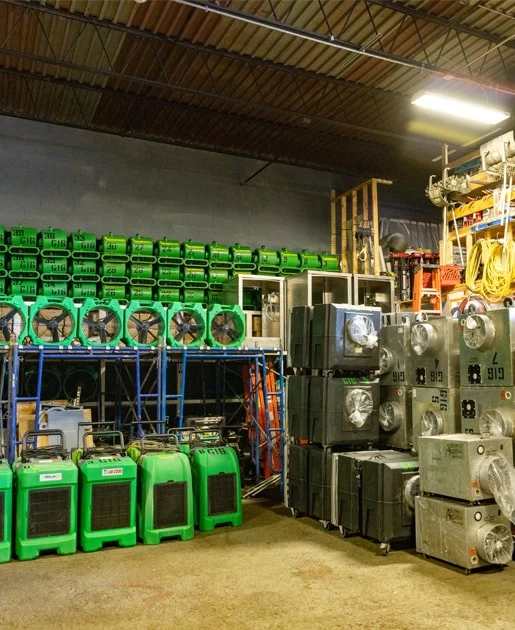
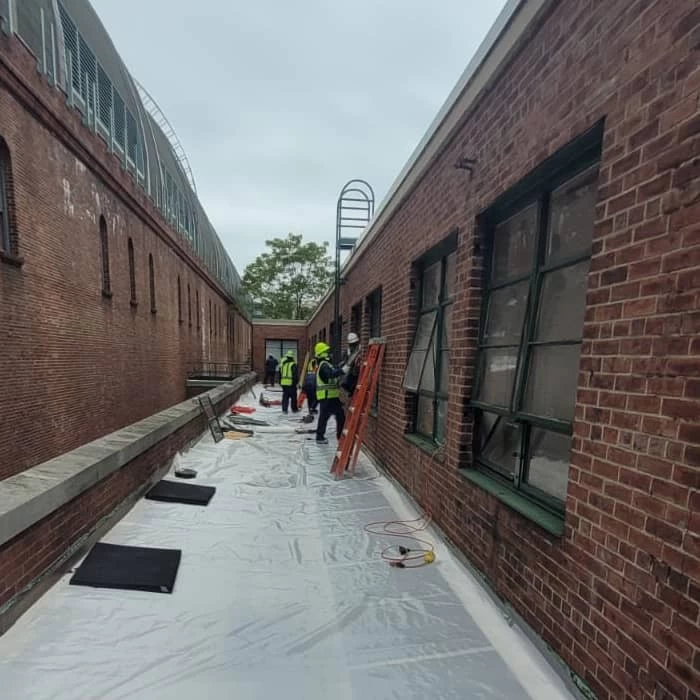
Water extraction comes next, followed by industrial drying using commercial-grade dehumidifiers and air movers that reach moisture levels no consumer equipment can touch. In Selden’s older homes, this phase often requires removing sections of drywall or insulation to dry the structural framing properly and if those materials test positive for asbestos or lead, that work is handled under our NYS DOL and USEPA certifications, not handed off to a subcontractor. The Town of Brookhaven may require permits for structural repairs and reconstruction, and our Suffolk County General Contractor license covers that process from start to finish.
Once the structure is dry and cleared, reconstruction begins drywall, flooring, insulation, whatever the basement needs to be fully livable again. Throughout the entire process, we document everything for your insurance claim, communicate with your adjuster directly, and don’t present you with a surprise invoice at the end.
What's Included When Your Selden Home Needs the Full Scope
Flooded basement cleanup in Selden isn’t a single service it’s a sequence of work that has to be done in the right order by contractors who are licensed to do each phase. We cover the entire sequence under one contract: emergency water extraction, structural drying, moisture testing, mold assessment and remediation, hazardous material handling if required, debris removal, and complete structural reconstruction. You don’t manage multiple vendors. You have one point of contact from the first call to the final walkthrough.
For Selden homeowners dealing with sewage backup which is more common than most people expect in a community with aging municipal lines along the Route 25 corridor the cleanup process involves Category 3 contaminated water protocols, which require a different level of protective handling and disposal than standard water damage. That’s a meaningful distinction that not every restoration company in the area is equipped to handle properly.
Insurance documentation is built into every job. We prepare the scope of work, photograph and log every affected area, and communicate directly with your carrier. Selden residents who aren’t sure whether their homeowners policy covers a basement flood or who’ve never had to make a claim before don’t need to figure that out alone. Our team has navigated Suffolk County insurance claims through nor’easters, sump pump failures, and post-storm groundwater events, and knows exactly what documentation adjusters require.
Does homeowners insurance cover a flooded basement in Selden, NY?
It depends on the cause, and that distinction matters more than most people realize. Standard homeowners insurance in New York typically covers sudden, internal water damage a burst pipe, a failed water heater, or a sump pump malfunction. What it usually does not cover is flooding caused by external groundwater, storm surge, or surface water coming in from outside the home. That type of damage requires a separate flood insurance policy through the National Flood Insurance Program (NFIP).
Here’s where Selden homeowners often get caught off guard: because Selden is an inland community with no surface water bodies, many residents never purchased flood insurance, assuming they weren’t at risk. But when a severe thunderstorm overwhelms the area’s catch basins and water enters through a basement window well or foundation crack, that can be classified as external flooding and a standard homeowners policy may not cover it. We document every job thoroughly from the start, photograph the source and path of water entry, and communicate directly with your adjuster to give your claim the best possible foundation. Knowing the cause of the water intrusion is the first step, and it’s something our team assesses on arrival.
How fast does mold grow after a basement flood on Long Island?
Mold can begin colonizing within 24 to 48 hours of a flood event and in Long Island’s summer humidity, that window can be even tighter. Selden’s basements, particularly in homes built in the 1960s and 1970s, tend to have limited natural ventilation and older insulation materials that absorb and hold moisture. That combination creates exactly the environment mold needs to establish itself quickly.
The problem is that mold doesn’t always show up where you can see it. It grows behind drywall, inside insulation batts, and along the base of wall framing areas that look dry on the surface but aren’t. Consumer fans and dehumidifiers can reduce visible moisture while leaving structural framing damp enough to sustain mold growth for weeks. We use moisture meters and thermal imaging to identify wet areas that aren’t visible to the eye, and dry to documented readings not to how things look. If mold is already present when our team arrives, remediation is handled under our NYS DOL Mold Remediation Contractor license, which is a legal requirement in New York State that many local competitors don’t hold.
My Selden home was built in the 1960s is asbestos a concern during basement flood cleanup?
Yes, and it’s one of the most important questions to ask before any contractor starts tearing out materials in your basement. Homes built before the mid-1970s commonly contain asbestos in pipe insulation, floor tile adhesive, ceiling texture, and insulation batt materials. When floodwater saturates these materials and a contractor removes them without proper testing and handling, it can release asbestos fibers into the air throughout your home.
In New York State, asbestos abatement requires a NYS Department of Labor Asbestos Handling License. We hold this license. Most water damage companies operating in the Selden area including national franchise operators do not. If you’re in a home built before 1978 on a street off Middle Country Road or anywhere else in Selden’s established residential neighborhoods, this is not a theoretical risk. It’s a documented characteristic of the housing stock. Before any drywall, insulation, or floor tile is disturbed during your basement cleanup, our team will assess for the presence of hazardous materials and handle the process under the appropriate certifications not skip the step because it slows things down.
What causes most basement flooding in Selden, and can it be prevented?
The most common cause of basement flooding in Selden is sump pump failure during a power outage and it happens most often during the exact storms that make it most likely: nor’easters, severe summer thunderstorms, and sustained rain events that push Selden’s older catch basin infrastructure past its capacity. Brookhaven Town’s own highway officials have acknowledged publicly that many areas in the town were built with drainage systems that have limited capacity, and that recharge basins can only handle so much before water has nowhere to go.
Beyond sump pump failure, Selden homeowners also deal with groundwater intrusion through foundation cracks, overwhelmed window wells during heavy rain, and frozen pipe bursts during rapid thaw events in winter. The freeze-thaw cycle on Long Island is particularly hard on the older copper and cast-iron plumbing found in Selden’s mid-century housing stock. Prevention starts with a battery-backup sump pump system and regular inspection of foundation sealing but when prevention fails, the response time of your restoration contractor becomes the most important variable. Every hour of standing water in a Selden basement increases the cost and complexity of the cleanup.
How much does flooded basement cleanup typically cost in Suffolk County?
The range is wide because the scope varies significantly depending on how much water entered, how long it sat, what materials were affected, and whether hazardous materials are present. For a straightforward water extraction and structural drying job in a smaller basement, costs can start around $2,000 to $3,000. Once you add mold remediation, asbestos or lead handling, drywall removal and replacement, and structural reconstruction, a mid-sized Selden basement can run $8,000 to $15,000 or more.
The single biggest cost driver is delay. Every hour standing water sits in a basement increases the likelihood of mold colonization, structural damage to framing and subfloor, and contamination spreading to adjacent areas. Homeowners who wait 24 to 48 hours before calling or who attempt DIY cleanup with consumer equipment often end up with a significantly larger bill than if they’d called immediately. Suffolk County’s cost of living is already above the national average, and restoration costs here reflect that. What matters most is getting an honest, line-item estimate before work begins, understanding what your insurance will cover, and working with a contractor who can handle the full scope without subcontracting phases they’re not licensed to perform.
Why should I hire a licensed contractor instead of doing basement flood cleanup myself in NY?
New York State has specific licensing requirements for mold remediation and asbestos abatement that apply regardless of whether the work is being done in a commercial building or a private home. Under New York Labor Law Article 32, mold remediation above a certain threshold must be performed by a licensed contractor. Asbestos disturbance requires a NYS DOL Asbestos Handling License. These aren’t optional guidelines they’re legal requirements, and homeowners who disturb regulated materials without proper handling can face liability that extends well beyond the cleanup itself.
Beyond the legal exposure, DIY cleanup in a Selden home built before 1978 carries real health risk. If your basement walls or floor contain asbestos or lead paint and in a home from the 1960s, there’s a reasonable chance they do disturbing those materials without testing and proper containment puts your family at risk. There’s also the practical issue of equipment: consumer dehumidifiers and fans don’t achieve the air exchange rates needed to dry structural framing properly, which means the basement can look dry while mold is already growing inside the walls. The cost of doing it right the first time is almost always less than the cost of fixing a DIY cleanup that missed something critical.