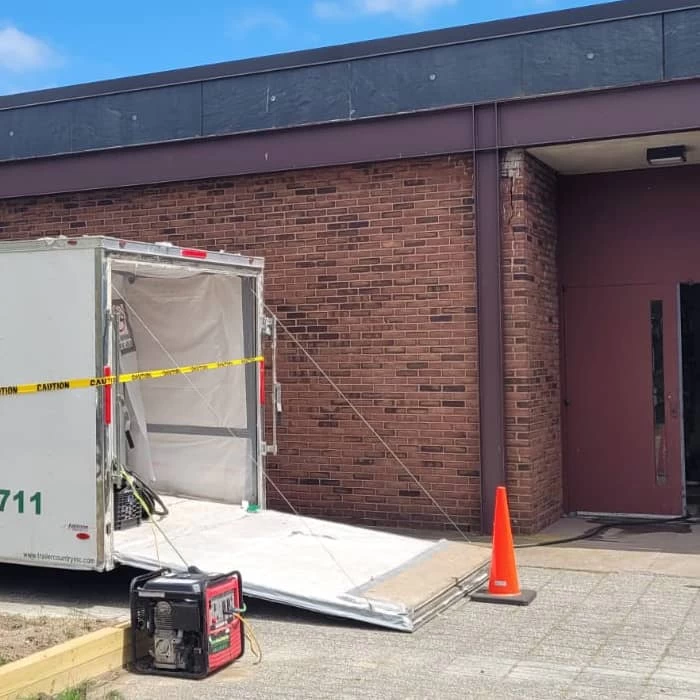
Shelter Island homes face flooding risks that mainland properties simply don’t. We reach you by ferry, handle everything from water extraction to full reconstruction, and bill your insurance directly so you’re not managing a crisis from a distance.
I needed a professional consultation explanation of procedure for safe removal of Asbestos in my apartment complex. Without having an account yet, I was very impressed with the caring, knowledgeable and generous advice offered by Jessica, and will look forward to doing business in the future. Thank you so much! I feel much more informed about a sometimes scary endeavor. Peace. Nancy Silva Mineola, NY.
Mia Munoz
Used this company to clean up some water flood in my house. They were fast and easy to work with.very professional, Would recommend to anyone!
Nini Valle
Great company, had a flood and they responded quickly and efficiently. Billed my insurance company directly. I highly recommend this company!
joe colapietro, jr
I had pipe freeze in my basement right before a snow storm and they made to within an hour to help start the clean up process. They we by our side throughout the entire process and even helped with the insurance company. They did such a great job with the cleanup, repair, remidiation, I contracted them to perform the repairs and finishes in the basement. They came with enough manpower and material to get the job done. Leo and Jessica were nothing but a pleasure to deal with!!
Cristian Arredondo c
I had some water damage in my home and Green Island was able to take care of my issue quickly and effectively. I am very pleased with the work they did. They responded quickly and were very professional.
Michael M
Outstanding service! From the office to the field crew everyone was friendly, helpful and responsive. I highly recommend Green Island Group.
There’s a difference between a basement that looks dry and one that actually is. Water doesn’t stop at the floor it wicks into wall cavities, saturates insulation, and hides behind drywall for weeks before you ever see mold or smell anything. By the time it’s visible, the damage has already been spreading. That’s the reality for a lot of Shelter Island homeowners who return after a long winter away and open a basement door that tells the whole story in one breath.
Shelter Island’s housing stock skews older most of it built in or around the 1970s which means aging waterproofing systems, older drainage tile, and sump pumps that weren’t designed to handle what today’s nor’easters and storm surges throw at them. Add the island’s naturally high water table, surrounded on all sides by Shelter Island Sound and Gardiners Bay, and you’ve got conditions that turn a single storm or power outage into a serious basement flooding event.
When the job is done right, you get a basement that’s structurally dry, properly documented for your insurance claim, and clear of any mold that started growing while you weren’t looking. No lingering smell. No hidden moisture readings spiking behind the walls. No second call in six months because something was missed the first time.
12 Years In. Every License That Matters for Shelter Island Homes.
We’ve been handling environmental restoration and remediation across New York State for over 12 years more than 5,000 completed projects, from emergency water extraction to full structural reconstruction. Our CEO Jessica Dussan and VP Leo Torres run the company and stay personally involved in how jobs get handled. That shows up in reviews, by name.
For Shelter Island specifically, the licensing stack matters more than it does almost anywhere else. The island’s pre-1980 housing stock means asbestos pipe insulation, older floor tiles, and lead paint are common in the basements we’re called into. We hold NYS DOL Mold and Asbestos certifications, USEPA Lead and RRP certifications, and a Suffolk County General Contractor license the exact credentials needed to handle whatever gets uncovered in a Shelter Island home built before 1980.
We’re also a New York State–approved emergency response contractor through the Office of General Services. That’s an independent vetting process not something you put on a website and call it a day.
Basement Flooding Remediation Process Shelter Island
From the Ferry Landing to a Dry Basement Here's the Process
The first thing we do is assess what you’re actually dealing with. That means moisture meters, thermal imaging, and a real look at what’s happening inside the walls not just what’s visible on the floor. If your Shelter Island home has been closed since fall and you’re discovering this now, there’s a good chance the water intrusion has been active for longer than it looks. We find that before it finds you later.
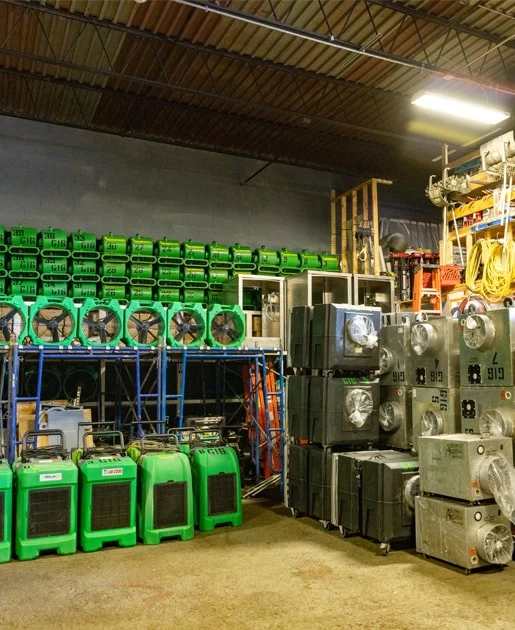
From there, industrial extraction equipment and commercial-grade drying systems go to work. This isn’t fans from a hardware store it’s the kind of equipment that pulls moisture out of concrete, subfloor, and wall assemblies. Given that all of our equipment arrives by ferry, we plan logistics in advance so nothing delays the drying timeline. Every hour matters when mold starts growing within 24 to 48 hours of water contact.
Once the structure is dry and verified with readings not just visually we handle any mold remediation, asbestos or lead abatement if disturbed materials are present, and full reconstruction if walls or flooring need to come out and be rebuilt. We document everything throughout for your insurance carrier and handle the billing directly. You don’t have to coordinate multiple contractors or make multiple ferry trips happen on your behalf.
Flooded Basement Cleaning Services Shelter Island NY
One Company Handles It All Including What's Behind the Walls
Flooded basement cleanup on Shelter Island isn’t the same job it is on the mainland. Every contractor, every piece of equipment, every material replacement it all moves by ferry. That logistical reality means you need one company that can handle the full scope, because coordinating three separate vendors across two ferry terminals while managing a damaged property remotely is a problem you shouldn’t have to solve.
We cover the complete range: emergency water extraction, structural drying, mold remediation, asbestos and lead abatement for pre-1980 homes, and full reconstruction including drywall, flooring, and insulation replacement. If your Shelter Island home is in Shelter Island Heights part of the National Register of Historic Places historic district we approach the work with the care that older, historically significant structures require. That means preserving what can be preserved and properly documenting everything that needs to be replaced.
We also work directly with your insurance company. Whether you’re carrying a standard homeowners policy that covers a burst pipe, a separate NFIP flood policy, or both, we handle the documentation and billing so you’re not fronting costs and chasing reimbursement. For homeowners managing a Shelter Island property from Manhattan or elsewhere, that single-source capability from the first extraction to the final inspection is the difference between a manageable situation and a months-long headache.
Can a water damage contractor actually get to Shelter Island fast enough?
This is the most common concern we hear from Shelter Island homeowners, and it’s a fair one. There’s no bridge to the island access is exclusively by ferry, either through the North Ferry to Greenport or the South Ferry to North Haven. Not every contractor who claims to serve Shelter Island has actually worked through those logistics. Some show up late. Some miss the last boat entirely.
We operate across eastern Suffolk County and have direct experience navigating ferry access for emergency response. We plan around ferry schedules, we know that South Ferry access is more practical for heavy equipment trucks, and we don’t send a crew that isn’t ready to move the moment they land. The mold clock starts within 24 to 48 hours of water contact we take that timeline seriously, and our response planning reflects it.
My Shelter Island basement flooded while the house was closed for winter is it too late?
It’s not too late, but the scope of the job changes depending on how long the water has been sitting. Mold begins colonizing within 24 to 48 hours of moisture exposure. If your Shelter Island home was closed from October through April and there was a flooding event at any point during that time a pipe freeze, a sump pump failure during a nor’easter, foundation seepage from snowmelt you’re likely dealing with an established mold situation, not just residual water.
The good news is that this is a solvable problem. What it requires is a thorough assessment thermal imaging and moisture meters to find what’s hidden in wall cavities and under flooring followed by proper mold remediation, not just surface cleaning. We hold NYS DOL Mold certification, which means we’re licensed to assess and remediate mold legally in New York State. We document the full scope for your insurance carrier and handle the remediation from start to finish. Returning to a Shelter Island home that’s been closed for months is exactly the scenario we’re built for.
Does homeowners insurance cover basement flooding on Shelter Island?
It depends on what caused the flooding. Standard homeowners insurance typically covers sudden and accidental water damage a burst pipe, a failed appliance, or a sump pump overflow but it generally does not cover flooding caused by surface water, storm surge, or rising groundwater. For that type of flooding, you’d need a separate flood insurance policy, typically through FEMA’s National Flood Insurance Program.
Shelter Island’s geography makes this distinction especially important. The island is surrounded by Shelter Island Sound, Gardiners Bay, and the Peconic Bay system, and has a documented history of storm surge flooding including during Hurricane Sandy in 2012, when Bridge Street flooded near the South Ferry terminal. If your property is in a FEMA-designated flood zone, a separate flood policy may be required by your mortgage lender and is worth having regardless. We work with both types of policies, handle documentation for adjusters, and bill directly so you’re not navigating the claims process alone while also managing a damaged property.
How do I know if there's mold after a basement flood, even if I can't see it?
Visible mold is actually a late indicator, not an early one. By the time you see black or green growth on a wall, the colony has been established for a while. The earlier signs are a persistent musty smell, allergy-like symptoms when you’re in the space, or discoloration on drywall or wood that doesn’t look like typical water staining.
The more reliable method is professional moisture testing. We use industrial moisture meters and thermal imaging cameras to detect elevated moisture levels inside wall assemblies, under flooring, and in insulation areas where mold thrives but where nothing is visible to the naked eye. In a Shelter Island home with older construction, these hidden cavities are especially common because the building materials absorb and retain moisture differently than newer construction. If there’s any question about whether your basement is truly dry after a flooding event, the answer is to test not to assume.
My Shelter Island home was built in the 1970s does that affect the cleanup process?
Yes, and it’s something most water damage companies aren’t equipped to handle properly. Homes built before 1980 commonly contain asbestos in pipe insulation, floor tiles, and joint compound materials that are frequently found in basements. They may also have lead paint on walls or structural surfaces. When a basement floods, water doesn’t stay on the floor. It saturates walls, disturbs insulation, and can compromise materials that contain these hazardous substances.
If a contractor without the proper certifications disturbs asbestos or lead during a cleanup, they’re not just cutting corners they’re creating a liability for you as the homeowner and potentially exposing your family to health risks. We hold NYS DOL Asbestos certification, USEPA Lead certification, and USEPA RRP certification. We test before we disturb, we abate properly when it’s required, and we document everything. For a 1970s Shelter Island home, this isn’t an edge case it’s a real and common part of the job.
What should I do first if I discover my Shelter Island basement is flooded?
The first thing is to stay out of standing water if you don’t know the source. If the flooding came from a sewage backup or if there’s any chance the water has been in contact with electrical systems, the space isn’t safe to enter without proper protective equipment. Turn off the electricity to the basement at the breaker if you can do it safely from a dry location, and don’t use standard household fans or shop vacs they’re not effective for structural drying and can spread mold spores if colonization has already started.
Then call a licensed remediation contractor as quickly as possible. On Shelter Island, the 24 to 48 hour mold window is the same as anywhere else, but the ferry logistics mean you want to make that call before you assume someone can be there in an hour. We operate with 24/7 emergency availability and plan ferry access as part of our response not as an afterthought. The sooner we can get eyes on the situation with proper moisture assessment equipment, the clearer the picture becomes and the faster we can stop the damage from compounding.