When the Bay Backs Up, Your Shirley Basement Pays the Price
Shirley’s South Shore location means basement flooding here isn’t just about rain it’s tides, storm surge, and cesspool overflow. We respond within the hour, handle the insurance, and clean up what others can’t legally touch.
I needed a professional consultation explanation of procedure for safe removal of Asbestos in my apartment complex. Without having an account yet, I was very impressed with the caring, knowledgeable and generous advice offered by Jessica, and will look forward to doing business in the future. Thank you so much! I feel much more informed about a sometimes scary endeavor. Peace. Nancy Silva Mineola, NY.
Mia Munoz
Used this company to clean up some water flood in my house. They were fast and easy to work with.very professional, Would recommend to anyone!
Nini Valle
Great company, had a flood and they responded quickly and efficiently. Billed my insurance company directly. I highly recommend this company!
joe colapietro, jr
I had pipe freeze in my basement right before a snow storm and they made to within an hour to help start the clean up process. They we by our side throughout the entire process and even helped with the insurance company. They did such a great job with the cleanup, repair, remidiation, I contracted them to perform the repairs and finishes in the basement. They came with enough manpower and material to get the job done. Leo and Jessica were nothing but a pleasure to deal with!!
Cristian Arredondo c
I had some water damage in my home and Green Island was able to take care of my issue quickly and effectively. I am very pleased with the work they did. They responded quickly and were very professional.
Michael M
Outstanding service! From the office to the field crew everyone was friendly, helpful and responsive. I highly recommend Green Island Group.
The real cost of a flooded basement in Shirley isn’t the water it’s what happens after the water sits. Mold starts growing within 24 to 48 hours. In a 1960s ranch with original drywall and plaster, it spreads faster than most homeowners expect. Getting the basement fully dried, documented, and treated the first time is what keeps a manageable cleanup from turning into a $6,000 mold remediation job down the road.
Shirley’s flooding is also different from what most restoration companies are used to handling. When a storm pushes bay water into the southern neighborhoods near the canals, or when heavy rain overwhelms the area’s drainage and cesspools overflow, what’s in your basement isn’t clean water. It’s contaminated. That distinction matters because the cleanup process, the protective equipment required, and the licensing needed to handle it legally are all different. Most water damage companies aren’t equipped for it.
After a proper flooded basement cleanup in Shirley, you should have documented moisture readings, a clear picture of what was affected, and a basement that’s been treated not just dried. You should also have documentation your insurance adjuster can actually use. That’s what a complete job looks like, and that’s the standard every cleanup here is held to.
Basement Flooding Remediation Experts, Suffolk County
Licensed for Everything Shirley's Flooding Can Throw at Us
We’ve been handling water damage, mold remediation, and environmental restoration across Long Island and New York City for over 12 years. More than 5,000 completed projects across New York State. That’s not a number for a brochure it means we’ve worked in homes just like yours, in communities with the same South Shore flooding patterns, the same post-war housing stock, and the same complicated insurance situations that Shirley homeowners deal with.
What makes us different here specifically is licensing. We hold a NYS DOL Mold license, NYS DOL Asbestos license, USEPA Lead and RRP certifications, and General Contractor licenses for Suffolk County, Nassau County, and New York City. In a community where roughly a third of the homes were built before 1970 the era of asbestos floor tiles and lead-based paint that matters the moment a flood forces you to open up walls or pull up flooring. We’re also a New York State certified MBE and WBE, and an approved emergency response contractor for the NYS Office of General Services. The state vetted us. That credential is public record.
What Actually Happens From Your First Call to a Finished Basement
When you call, you reach a real person not a voicemail, not a scheduling bot. Our documented response time is under one hour, which in Shirley matters more than it might anywhere else. When a storm hits this area, it doesn’t flood one basement it floods dozens at the same time. Being on site fast is the difference between a straightforward drying job and a mold problem that’s already taken hold.
Once on site, our first step is assessment. That means moisture readings, identifying the water source, and classifying the water itself. In Shirley, that last part is critical. If your basement flooded during a storm and your property is still on a cesspool which most homes here are, while the Forge River sewer project works its way through the area there’s a real chance that water is contaminated. That changes the entire scope of the cleanup, the protective measures required, and how materials are handled and disposed of. You’ll know exactly what you’re dealing with before any work begins.
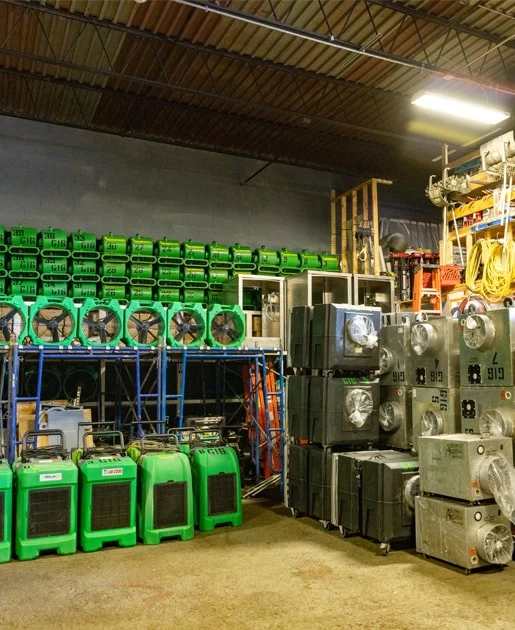
From there, extraction and structural drying happen with industrial-grade equipment, followed by antimicrobial treatment and moisture monitoring until readings confirm the space is genuinely dry not just surface dry. If walls or flooring need to come out, and if those materials test positive for asbestos or lead (common in pre-1978 homes throughout Shirley), that work is handled in-house under the appropriate licenses. No stopping mid-job to bring in a separate hazmat contractor. The Town of Brookhaven requires permits for structural repairs following flood damage, and we manage that process as part of the job.
Flooded Basement Cleaning and Mold Remediation, Shirley
Full Scope, One Contractor, No Gaps in the Middle
A flooded basement cleanup in Shirley can involve a lot more than water extraction and a few dehumidifiers and most companies aren’t equipped to handle the full picture. We cover the entire scope under one contract: emergency water extraction, structural drying, Category 3 contaminated water decontamination, mold remediation, asbestos abatement, lead paint handling, and full reconstruction if needed. That matters in a community where the housing stock is older, the flooding is frequently contaminated, and the last thing you need is three different contractors pointing fingers at each other’s work.
For Shirley homeowners with NFIP flood insurance which many carry given the area’s documented flood exposure and FEMA designations along the South Shore we bill insurance carriers directly and handle adjuster documentation throughout the process. Multiple customers have confirmed this independently in reviews. You don’t need to become an expert in flood insurance claims on top of everything else you’re managing.
If the assessment turns up asbestos or lead which is a real possibility in the ranch homes and Cape Cods built during Shirley’s 1960s development era that work is handled by the same team, under the same contract, with no interruption to the timeline. The goal is a finished basement with documentation you can actually use: for your insurance claim, for your records, and for your peace of mind.
Is the water in my flooded Shirley basement safe to clean up myself?
It depends entirely on where the water came from and in Shirley, that question carries more weight than it does in most places. If your basement flooded during a storm event and your home is still connected to a cesspool rather than a municipal sewer line, there’s a genuine risk that the water in your basement contains sewage contamination. The Save The Great South Bay organization has specifically documented that cesspools in low-lying South Shore communities like Shirley overflow during storms and send human waste into the surrounding water table. That puts basement floodwater in the Category 3 classification what the industry calls blackwater which carries bacteria and pathogens that pose real health risks.
DIY cleanup of Category 3 water without proper protective equipment, containment protocols, and licensed disposal isn’t just dangerous it can also create complications with your insurance claim if the work isn’t documented to professional standards. The Forge River sewer project is still working its way through Shirley, which means the majority of homes in the area remain on cesspools for now. If there’s any doubt about the water source, treat it as contaminated until a professional assessment says otherwise.
How quickly does mold grow after a basement flood, and why does it matter?
Mold can begin colonizing within 24 to 48 hours of a flooding event and in a home with original drywall, wood framing, or plaster walls from the 1950s or 1960s, it moves faster than in newer construction. The older materials common throughout Shirley’s post-war housing stock are more porous and more susceptible to mold growth once they’ve been saturated. By the time you can see mold on a surface, it’s typically been growing behind it for days.
The reason this matters practically is cost. A straightforward flooded basement cleanup handled quickly extraction, drying, antimicrobial treatment, documentation is a very different job than one where mold remediation has to happen first. Mold remediation in a finished basement can run anywhere from $2,000 to $8,000 or more depending on the extent of the spread. Getting someone on site fast is the single most effective thing you can do to control the total cost of a flooding event.
Does homeowners insurance cover basement flooding from storm surge in Shirley, NY?
Standard homeowners insurance covers sudden and accidental water damage things like a burst pipe or a failed water heater. It does not cover flooding that originates from outside the home, including storm surge, rising bay water, or groundwater intrusion. For that, you need a separate flood insurance policy, typically through the National Flood Insurance Program (NFIP). Many Shirley homeowners in FEMA-designated flood zones carry NFIP policies specifically because of the area’s documented South Shore flooding exposure.
The complication is that a single flooding event can involve both covered and non-covered damage for example, a storm that triggers both external flooding and a backed-up interior drain. Filing claims across two separate policies with different documentation requirements is genuinely complicated. We handle direct insurance billing and manage adjuster documentation throughout the process, which means you’re not left trying to figure out which policy covers which damage while also dealing with a wet basement. If you’re unsure what coverage you have, pulling out your declarations page before you call is a useful first step but the assessment and documentation process will help clarify the claim regardless.
My Shirley home was built in the 1960s should I be worried about asbestos during cleanup?
It’s a legitimate concern, and it’s one that’s more relevant in Shirley than in many other communities. Approximately a third of the housing in Shirley was built between 1940 and 1969 the era when asbestos insulation, asbestos floor tiles, and asbestos pipe wrap were standard construction materials. Lead-based paint was also common in homes built before 1978. These materials are generally stable when left undisturbed, but a flooded basement cleanup often requires opening walls, pulling up flooring, or disturbing insulation which can release asbestos fibers or lead dust if the materials are present.
The critical issue is that most water damage companies are not licensed to handle these materials. If a contractor without the proper credentials disturbs asbestos or lead during a cleanup, they’re required to stop work which means your job stalls, you’re now managing a hazmat situation, and you need to find a separate licensed contractor to finish. We hold a NYS DOL Asbestos license, USEPA Lead certification, and USEPA RRP certification, which means if those materials are found during your cleanup, the work continues under the same contract without interruption. For a 1960s ranch or Cape Cod in Shirley, that’s not a hypothetical scenario it’s a realistic one worth planning for.
Why does my basement keep flooding even when it hasn't rained recently?
If you’re in one of Shirley’s southern neighborhoods near the bay or the canal system, there’s a documented explanation: tidal flooding. Research has specifically identified Shirley as a community where full-moon high tides push bay water up into residential streets and yards on otherwise clear days, with no storm activity at all. This is a direct result of sea-level rise combined with the shallow depth of the Great South Bay and the low elevation of the land in southern Shirley. It’s not a drainage problem you can fix with a better sump pump. It’s a geographic reality.
Even in areas further from the water, Shirley’s naturally high water table influenced by the Carmans River estuary and the wetland system of the Wertheim National Wildlife Refuge to the west means that groundwater can rise and push into basements during wet seasons without any surface flooding at all. If you’re seeing moisture along your foundation walls or water pooling on the basement floor after a high tide or a stretch of wet weather, that’s worth having assessed. Persistent low-level water intrusion is exactly the kind of condition that leads to mold colonization over time, even when it doesn’t look like a dramatic flooding event.
How long does a flooded basement cleanup actually take in Shirley?
The honest answer is that it depends on what’s in the water and what it touched. A straightforward Category 1 flooding event clean water from a burst pipe, caught quickly can be extracted and dried within three to five days with the right equipment. A Category 3 contaminated water event, which is more common in Shirley during storm flooding due to the area’s cesspool infrastructure, takes longer because decontamination and proper disposal of affected materials add steps to the process that can’t be skipped.
If the assessment turns up mold that’s already started which happens when flooding goes undetected for more than a day or two, or when a home has had recurring moisture issues from tidal flooding remediation adds additional time before reconstruction can begin. If pre-1980 materials like asbestos floor tiles or lead paint are disturbed during cleanup, those require proper abatement procedures before the space can be rebuilt. The full timeline for a complex job in an older Shirley home can range from one week to three or four weeks depending on scope. What you can count on is a clear assessment at the start that tells you exactly what you’re dealing with, what the process looks like, and what the realistic timeline is before any work begins.