When Your Southampton Basement Floods, Every Hour Counts
Mold starts growing within 24 to 48 hours of flooding and in a seasonal home that’s been sitting unoccupied since October, it may already be ahead of you. We respond 24/7 with licensed crews ready to handle flooded basement cleanup in Southampton, NY from water extraction straight through to full restoration.
I needed a professional consultation explanation of procedure for safe removal of Asbestos in my apartment complex. Without having an account yet, I was very impressed with the caring, knowledgeable and generous advice offered by Jessica, and will look forward to doing business in the future. Thank you so much! I feel much more informed about a sometimes scary endeavor. Peace. Nancy Silva Mineola, NY.
Mia Munoz
Used this company to clean up some water flood in my house. They were fast and easy to work with.very professional, Would recommend to anyone!
Nini Valle
Great company, had a flood and they responded quickly and efficiently. Billed my insurance company directly. I highly recommend this company!
joe colapietro, jr
I had pipe freeze in my basement right before a snow storm and they made to within an hour to help start the clean up process. They we by our side throughout the entire process and even helped with the insurance company. They did such a great job with the cleanup, repair, remidiation, I contracted them to perform the repairs and finishes in the basement. They came with enough manpower and material to get the job done. Leo and Jessica were nothing but a pleasure to deal with!!
Cristian Arredondo c
I had some water damage in my home and Green Island was able to take care of my issue quickly and effectively. I am very pleased with the work they did. They responded quickly and were very professional.
Michael M
Outstanding service! From the office to the field crew everyone was friendly, helpful and responsive. I highly recommend Green Island Group.
There’s a difference between a basement that looks dry and one that actually is. Moisture hides behind drywall, under subfloor materials, and inside insulation and in Southampton’s older housing stock, where homes built in the 1950s and 1960s are common throughout the village and its hamlets, that hidden moisture doesn’t just sit there. It feeds mold, weakens structure, and compounds into a significantly larger problem the longer it goes unaddressed.
Southampton’s geography makes basement flooding particularly unforgiving. The South Fork sits on a shallow glacial water table that can rise within feet of your basement floor after a heavy nor’easter. Storm surge from the Atlantic pushes through low-lying areas in Hampton Bays, North Sea, and Noyack. And when a seasonal home goes unoccupied from fall through spring, a flooding event that would have been a straightforward cleanup in October can turn into a full mold remediation project by May.
What you get when the job is done right isn’t just a dry floor. It’s confirmed moisture readings throughout the space, documentation your insurance adjuster can actually use, and the confidence that nothing was missed behind the walls. That’s the outcome worth paying for especially when the property you’re protecting is worth what Southampton properties are worth.
Licensed Basement Flood Remediation, Southampton, NY
12 Years, 5,000 Projects, and No Franchise Behind Us
Green Island Group is an independently owned restoration company not a franchise, not a dispatch center. Our CEO Jessica Dussan and VP Leo Torres are personally involved in projects and reachable by name. When you call, you’re not getting routed to whoever’s available in the region. You’re reaching people who own the outcome.
We hold a Suffolk County General Contractor license, NYS Department of Labor licenses for both Mold and Asbestos, USEPA Lead and RRP certifications, and we’re an approved emergency response contractor for the New York State Office of General Services. In a town like Southampton where pre-1960 homes are common from the village core out through Shinnecock Hills and Hampton Bays that licensing stack isn’t a formality. It’s what separates a complete remediation from one that leaves hazards behind the walls.
We’ve completed more than 5,000 restoration projects across New York State. We know the East End, we know the flooding conditions specific to the South Fork, and we’re not learning on your property.
Flooded Basement Cleaning Process, Southampton, NY
What Happens From Your First Call to a Finished Southampton Basement
The first call triggers an immediate response. We deploy 24 hours a day, 365 days a year and because Southampton sits at the far end of the South Fork, roughly 90 miles from New York City, we understand that a company dispatching from central Suffolk County isn’t a fast response for you. We’re familiar with the area, familiar with the routes, and we move quickly.
When we arrive, we don’t start pulling things out and calling it an assessment. We use professional moisture meters and thermal imaging cameras to map exactly where the water has traveled behind walls, under floors, inside cavities. This matters especially in Southampton’s older homes, where floodwater can disturb asbestos-containing pipe insulation or lead-based materials that require licensed handling before any demolition work begins. If those hazards are present, we’re legally authorized to handle them. Most water damage companies on the East End are not.
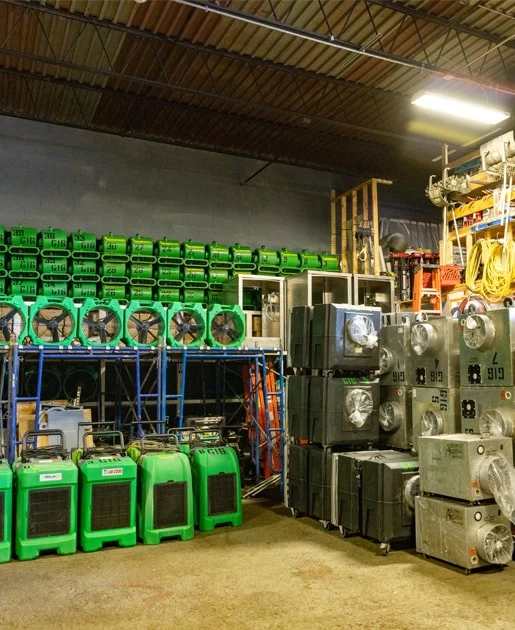
From there, we extract standing water, deploy industrial drying equipment, and monitor moisture levels until the space is genuinely dry not just visually dry. Once remediation is complete, our Suffolk County General Contractor license covers full reconstruction: drywall, flooring, insulation, whatever the space needs to be finished. We document everything throughout the process in the format insurance adjusters require, and we bill your carrier directly. If you’re managing this from Manhattan or Connecticut and can’t be on-site, that documentation and direct billing isn’t a convenience it’s the whole reason you can trust the job is getting done right without you standing there watching.
Basement Flooding Remediation Services, Southampton, NY
Full-Scope Cleanup Built for What Southampton Basements Actually Face
Flooded basement cleanup in Southampton isn’t a single-service job. It’s water extraction, structural drying, mold testing and remediation, hazardous material assessment, and often full reconstruction all under one roof, one contract, and one point of accountability. That’s what we deliver. You don’t get handed off to a separate mold company or a separate GC after the water is gone. We carry it through.
For properties in FEMA Special Flood Hazard Areas which cover significant portions of Hampton Bays, North Sea, Noyack, and East Quogue we document damage in the specific format required for both standard homeowners claims and National Flood Insurance Program (NFIP) policies. Those are two different policy types with two different coverage scopes, and knowing the difference in documentation upfront saves you from a partial denial later.
For seasonal homeowners, the service includes remote-friendly communication from start to finish. We photograph and document the full scope of damage, communicate directly with your insurance adjuster, and provide written assessments you can review from wherever you are. The Town of Southampton Building Department requires permits for structural repairs following flood damage, and for properties in designated flood zones, FEMA’s substantial damage rules may affect how reconstruction is approached. We’re familiar with those requirements and factor them into the scope from the beginning so there are no surprises mid-project.
Does homeowners insurance actually cover flooded basement cleanup in Southampton, NY?
It depends entirely on the source of the water and this is where a lot of Southampton homeowners get caught off guard. A standard homeowners insurance policy typically covers sudden, accidental water damage from internal sources: a burst pipe, a failed water heater, an appliance malfunction. What it does not cover is flooding from external sources storm surge, rising groundwater, or water that enters through your foundation during a coastal storm event.
That external flooding coverage falls under the National Flood Insurance Program, which is a separate federal policy. Large portions of Southampton particularly in Hampton Bays, North Sea, Noyack, and East Quogue fall within FEMA Special Flood Hazard Areas where NFIP coverage is federally required for mortgaged properties. If your basement flooded during a nor’easter or a coastal storm event, your homeowners policy may not apply at all, and your NFIP policy has its own documentation requirements and coverage limits. We work with both policy types, handle adjuster communication directly, and document damage in the format each carrier requires so you’re not navigating that alone.
How quickly does mold actually start growing after a basement floods?
Mold begins colonizing within 24 to 48 hours of a flooding event under the right conditions and Southampton basements frequently provide exactly those conditions. The combination of moisture, organic materials like drywall and wood framing, and the relatively warm temperatures found in basement spaces creates an environment where mold can establish and spread faster than most people expect.
The more important issue for Southampton specifically is the seasonal occupancy gap. If your home was closed up in October and you return in April or May to find water damage, you’re not dealing with a 24-hour window anymore. You may be dealing with months of undisturbed mold growth behind walls, under flooring, and inside insulation cavities. By that point, what would have been a straightforward water extraction and drying job has become a full mold remediation project. That’s why we use thermal imaging and moisture meters rather than visual inspection because mold growing inside a wall cavity doesn’t announce itself until the damage is already significant.
Why does my Hampton Bays basement keep flooding even when it hasn't rained that hard?
This is one of the most common questions we get from homeowners in the northern and western hamlets of Southampton, and the answer is usually hydrostatic pressure. The South Fork of Long Island sits on a glacial outwash plain with a notably shallow water table. In communities like Hampton Bays, Flanders, and North Sea, the water table can sit within just a few feet of the surface during wet seasons. When prolonged rainfall saturates the ground even moderate rainfall over several days that water table rises and pushes against your foundation walls and floor slab from the outside in.
This is different from a roof drainage problem or a surface water issue, and it requires a different approach to diagnose and address. The water isn’t coming in through a gap you can seal with caulk it’s coming through the concrete itself under pressure. We assess the source before recommending any solution, because treating hydrostatic pressure flooding the same way you’d treat a leaking window well leads to recurring problems and wasted money. Understanding the specific flooding mechanism in your home is the first step, and it’s where every job we do starts.
What happens if my flooded Southampton basement has asbestos or lead paint in it?
This is a real concern in Southampton, and it’s one that most water damage companies on the East End are not equipped to handle legally. Homes built before 1980 and there are thousands of them throughout Southampton Village, Shinnecock Hills, Hampton Bays, and the older sections of the town’s hamlets frequently contain asbestos pipe insulation, asbestos floor tiles, asbestos-containing drywall compound, and lead-based paint. When floodwater disturbs these materials, they become active environmental hazards that require licensed handling before any demolition or remediation work can proceed.
We hold NYS Department of Labor licenses for both Asbestos and Mold, along with USEPA Lead and RRP certifications. We are legally authorized to assess, contain, and remediate these hazards as part of a flooded basement cleanup which means you don’t have to stop the job, find a separate abatement contractor, and restart. We handle it within the same scope of work. If you’re hiring a water damage company that doesn’t hold these licenses and your home has pre-1980 construction materials, you’re either getting an incomplete job or one that isn’t being done in compliance with New York State law.
Can I just dry out my flooded basement myself instead of hiring someone?
You can run fans and a dehumidifier, and in a very minor, contained situation a small amount of clean water from a known source, caught within an hour or two that might be sufficient. But most flooded basement situations, especially in Southampton, involve more than surface moisture. Water travels. It wicks into drywall, soaks into insulation, and saturates wood framing well beyond what’s visible to the eye. Consumer-grade dehumidifiers and box fans don’t generate the airflow or the drying capacity to pull moisture out of structural materials at the depth required to prevent mold growth.
The other issue is documentation. If you’re planning to file an insurance claim and most Southampton homeowners should be you need professional moisture readings, photographs, and a written damage assessment taken before any materials are removed or disturbed. If you start pulling out wet drywall yourself before that documentation exists, you may have already compromised your claim. The insurance process starts at the moment of discovery, and having a licensed contractor on-site from the beginning protects your ability to recover costs through your policy.
How do I handle a flooded basement in my Southampton home when I'm not there to deal with it?
This is the reality for a significant number of Southampton homeowners, and it’s something we handle routinely. If your property manager, caretaker, or neighbor discovers water in your basement while you’re in the city or out of state, you don’t need to be on-site for us to begin the job properly. We can coordinate access with whoever has keys, conduct a full documented assessment, and send you a written report with photographs and moisture readings that you can review remotely before any work begins.
From there, we communicate directly with your insurance adjuster, handle the documentation requirements for your specific policy type whether that’s a standard homeowners policy or an NFIP flood policy and keep you informed throughout the process without requiring you to manage it from a distance. For seasonal Southampton homeowners, this kind of remote-capable service isn’t a bonus feature. It’s the baseline expectation, and we’ve structured our process specifically to meet it. You’ll know exactly what was found, what was done, and what it cost without needing to drive out to the East End to find out.