When Moriches Bay Pushes In, You Need More Than a Shop Vac
Speonk basements don’t just flood they flood with water that carries real risk. We respond fast, handle everything from water extraction to full restoration, and bill your insurance directly.
I needed a professional consultation explanation of procedure for safe removal of Asbestos in my apartment complex. Without having an account yet, I was very impressed with the caring, knowledgeable and generous advice offered by Jessica, and will look forward to doing business in the future. Thank you so much! I feel much more informed about a sometimes scary endeavor. Peace. Nancy Silva Mineola, NY.
Mia Munoz
Used this company to clean up some water flood in my house. They were fast and easy to work with.very professional, Would recommend to anyone!
Nini Valle
Great company, had a flood and they responded quickly and efficiently. Billed my insurance company directly. I highly recommend this company!
joe colapietro, jr
I had pipe freeze in my basement right before a snow storm and they made to within an hour to help start the clean up process. They we by our side throughout the entire process and even helped with the insurance company. They did such a great job with the cleanup, repair, remidiation, I contracted them to perform the repairs and finishes in the basement. They came with enough manpower and material to get the job done. Leo and Jessica were nothing but a pleasure to deal with!!
Cristian Arredondo c
I had some water damage in my home and Green Island was able to take care of my issue quickly and effectively. I am very pleased with the work they did. They responded quickly and were very professional.
Michael M
Outstanding service! From the office to the field crew everyone was friendly, helpful and responsive. I highly recommend Green Island Group.
The moment water enters your basement in Speonk, the clock starts. Mold can begin growing within 24 to 48 hours and in Speonk’s humid South Shore climate, where summer air moisture is already elevated and basements can stay damp for days after a storm, that window closes fast. Getting the water out is only step one. The real goal is making sure your home is structurally dry, not just visually dry, so you’re not dealing with a mold problem three months from now.
For homes along the Montauk Highway corridor many built between the 1950s and 1980s a flooded basement can reveal more than just water damage. Older insulation, pipe wrap, and floor materials from that era commonly contain asbestos. When those materials get wet and start to deteriorate, you need a contractor who’s licensed to handle what’s behind the walls, not just what’s on the floor.
And if your property sits closer to Remsenburg and Moriches Bay, the water that enters your basement during a storm surge event isn’t clean water. It’s Category 3 contaminated with bacteria, marine pathogens, and potentially sewage from a compromised septic system. That requires licensed environmental handling. A shop vac and a few fans won’t cut it, and neither will a contractor who isn’t equipped for it.
We’ve been completing restoration projects across Long Island and New York City for over 12 years more than 5,000 jobs completed, including coastal South Shore communities like Speonk and Remsenburg with the same flooding profile and groundwater challenges. Our CEO Jessica Dussan and VP Leo Torres are named, reachable people who appear by name in real customer reviews. You’re not calling a national franchise dispatch center.
We hold a Suffolk County General Contractor license covering Southampton Town, where Speonk is located. Beyond that: NYS DOL Mold licensure, NYS DOL Asbestos licensure, USEPA Lead and RRP certifications, and NYC BIC Trade Waste. In a hamlet where the Speonk Solvent Plume has been a documented community concern for over two decades and where older housing stock lines the streets near the LIRR station those aren’t just credentials on a wall. They’re the specific licenses required to do this job legally and completely.
We’re also a NYS-certified Minority and Woman-Owned Business Enterprise and an approved emergency response contractor for the NYS Office of General Services a designation that requires independent state-level vetting that no national franchise competitor in this area holds.
What Actually Happens From the First Call to the Final Walkthrough
When you call, someone answers not a voicemail, not a call center in another state. We operate 24 hours a day, 365 days a year, and have documented sub-one-hour arrival times, including during nor’easters when South Shore roads are at their worst. The first thing that happens on-site is a full assessment: where the water came from, what category it is, what materials have been affected, and whether any hazardous materials asbestos insulation, lead paint have been disturbed by the damage.
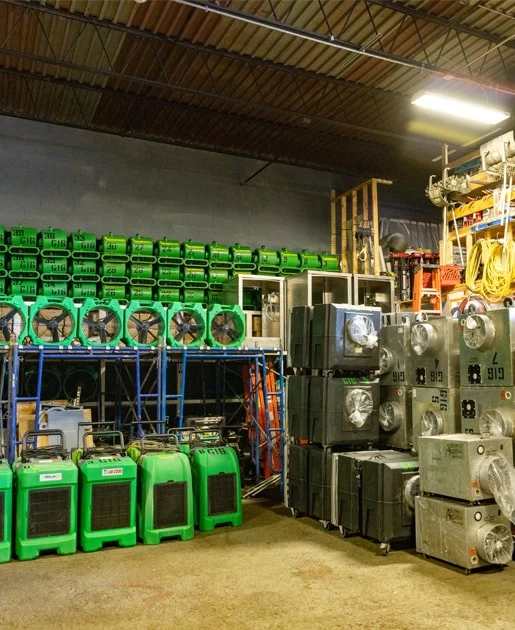
From there, industrial water extraction begins immediately. Commercial-grade pumps remove standing water, followed by professional-grade air movers and dehumidifiers that target structural dryness not just surface dryness. Moisture readings are taken throughout the process to confirm the job is actually done, not just visually complete. If mold remediation, asbestos abatement, or reconstruction is needed, that work happens under the same contract, with the same team, without handing your project off to a subcontractor.
Throughout the entire process, we handle insurance documentation directly. If you carry standard homeowners coverage, NFIP flood insurance, or both which many Remsenburg waterfront property owners do we document the damage correctly for the appropriate carrier and communicate with your adjuster so you don’t have to manage that on top of everything else. Southampton Town permitting requirements for structural repair work are handled as part of the job, not as an afterthought.
Basement Flooding Remediation Near Westhampton Beach
One Company Handles the Water, the Mold, and Everything After
Flooded basement cleanup in Speonk isn’t a single service it’s a sequence of connected steps that have to be done in the right order by someone licensed for each of them. We cover the full scope: emergency water extraction, structural drying, sewage backup decontamination, mold assessment and remediation, asbestos and lead abatement if materials have been disturbed, and complete reconstruction when walls, flooring, or framing need to be replaced. Everything under one roof, one contract, one point of contact.
For Speonk and Remsenburg specifically, the sewage backup decontamination and Category 3 water protocols matter more than they do in most inland communities. When storm surge from Moriches Bay or a backed-up septic system is involved, the contamination level requires OSHA-compliant containment, proper PPE, and licensed disposal not a standard cleanup crew. The same applies to any home in the Speonk hamlet corridor where pre-1980 construction materials may be present. Before any demolition or drywall removal begins, materials are assessed for asbestos and lead so nothing gets disturbed without proper handling.
If your basement has flooded more than once, the underlying issue hydrostatic pressure from Speonk’s high South Shore water table, a failing sump pump, foundation cracks gets documented and communicated clearly so you understand what you’re actually dealing with. The cleanup is the immediate fix. Understanding the cause is what protects you going forward.
Does homeowners insurance actually cover a flooded basement in Speonk?
It depends entirely on the source of the water, and this distinction matters a lot for Speonk and Remsenburg homeowners. Standard homeowners insurance typically covers sudden, accidental water damage a burst pipe, a failed water heater, an appliance malfunction. It does not cover flooding from an external source, which includes storm surge from Moriches Bay, rising groundwater, or overland water flow during a heavy rain event. That type of flooding is covered under a separate NFIP flood insurance policy, which many South Shore property owners carry in addition to standard homeowners coverage.
The critical piece is documentation. The way the damage is reported and categorized in your claim determines which policy responds and how much you recover. We document the damage correctly from the start source identification, water category, affected materials and communicate directly with your adjuster. Getting this wrong at the documentation stage can cost you thousands in denied coverage, and it’s one of the most common mistakes homeowners make when they try to manage the claim themselves during an already stressful situation.
How quickly does mold actually start growing after a basement floods?
Mold can begin colonizing within 24 to 48 hours of flooding under the right conditions and on Long Island’s South Shore, those conditions are almost always present. High ambient humidity, warm summer temperatures, and the porous materials common in older Speonk homes wood framing, drywall, fiberglass insulation give mold exactly what it needs to establish quickly. After 72 hours without proper drying, remediation costs increase significantly because the mold has moved beyond surface growth into the material itself.
The part most homeowners don’t realize is that mold doesn’t need visible standing water to grow. Once moisture has wicked into wall cavities, subfloor material, or insulation, the surface can look and feel dry while the interior of the wall is still wet enough to sustain mold growth. This is why moisture readings taken at multiple depths not just surface checks are a non-negotiable part of any legitimate drying process. Visual dryness is not structural dryness, and the difference between the two is what determines whether you have a mold problem six months from now.
My Speonk home was built in the 1960s does that change what cleanup involves?
Yes, and it’s one of the most important questions you can ask before any contractor starts tearing out wet drywall or damaged insulation. Homes built before 1980 and there are many of them along the Montauk Highway corridor in Speonk commonly contain asbestos in pipe wrap insulation, floor tiles, ceiling tiles, and joint compound. They also frequently have lead paint on walls and trim. When a basement floods and those materials are damaged or disturbed during cleanup, you are legally required to have them handled by a contractor licensed for asbestos and lead abatement.
A water damage company without NYS DOL Asbestos licensure and USEPA Lead and RRP certifications cannot legally perform that work. More importantly, disturbing asbestos-containing materials without proper containment and disposal protocols creates an airborne hazard that extends well beyond the basement. We assess for both before any demolition begins. If abatement is needed, it’s handled in-house under the same contract you don’t need to find a separate licensed abatement contractor and coordinate two separate scopes of work.
What is Category 3 water damage and why does it matter for my cleanup?
Water damage is classified into three categories based on contamination level, and the category determines the cleanup protocols required. Category 1 is clean water a burst supply pipe, a failed water heater. Category 2 is gray water washing machine overflow, dishwasher backup which contains some contaminants. Category 3, sometimes called black water, is grossly contaminated water: sewage backups, storm surge, floodwater from an external source, or water that has been standing long enough to develop bacterial growth.
For Speonk and Remsenburg homeowners, Category 3 is the realistic scenario in any storm surge event involving Moriches Bay or a compromised septic system. This water carries bacteria, pathogens, and potentially chemical contaminants and it cannot be treated the same way as a pipe burst. OSHA-compliant personal protective equipment, containment protocols, and licensed disposal are all required. Porous materials drywall, insulation, carpet, wood framing that have been saturated with Category 3 water typically cannot be dried and saved. They need to be removed and properly disposed of. Any contractor who doesn’t assess water category before starting work is skipping a step that has direct health and legal implications.
Can storm surge from Moriches Bay actually reach basements in Remsenburg?
It can, and it has. Remsenburg sits directly adjacent to Moriches Bay and Seatuck Cove, and Long Island’s South Shore is one of the most storm surge-exposed coastlines in the Northeast. During a significant nor’easter or tropical storm, bay water doesn’t just rise at the shoreline it pushes inland through drainage channels, low-lying yards, and the porous sandy soil that characterizes this part of Long Island. Properties that aren’t at the immediate water’s edge can still experience groundwater intrusion and surface flooding when the water table is overwhelmed by storm surge pressure.
Hurricane Sandy in 2012 caused widespread basement and first-floor flooding across Long Island’s South Shore, damaging or destroying approximately 100,000 homes. The Remsenburg-Speonk area felt that storm directly. Beyond major hurricane events, significant nor’easters which hit the South Shore multiple times per year between October and March regularly drive enough surge and rainfall to overwhelm sump pumps, back up drainage systems, and push water into basements that have never flooded before. If your Remsenburg property is within a mile of the bay, flood insurance through NFIP is worth understanding before the next storm, not after.
How do I choose a water damage contractor I can actually trust in this area?
The most reliable filter is licensing not general contractor licensing alone, but the full stack of licenses required for what a flooded basement in this area can actually involve. In Speonk and Remsenburg, that means NYS DOL Mold licensure, NYS DOL Asbestos licensure, USEPA Lead and RRP certifications, and a Suffolk County General Contractor license covering Southampton Town jurisdiction. If a company can’t confirm all of those, they are not equipped to legally handle the full scope of what your basement may require especially in a community with older housing stock and documented groundwater sensitivity.
Beyond licensing, look for a company that bills insurance directly and can document the damage correctly for your specific policy type. Ask whether they handle the full scope in-house water extraction, mold remediation, abatement, and reconstruction or whether they subcontract pieces of the job out to other companies. Subcontracting isn’t automatically a problem, but it means more coordination, more handoffs, and less accountability when something goes wrong. A company with named leadership, verifiable reviews, and a track record of completed projects in Suffolk County is going to give you more protection than a national franchise operating through a local license with a toll-free number.