When Accabonac Harbor Backs Up, Your Basement Pays for It
Springs sits on three sides of water and when the storms hit, basements flood fast. We respond 24/7 with licensed cleanup, full remediation, and direct insurance billing.
I needed a professional consultation explanation of procedure for safe removal of Asbestos in my apartment complex. Without having an account yet, I was very impressed with the caring, knowledgeable and generous advice offered by Jessica, and will look forward to doing business in the future. Thank you so much! I feel much more informed about a sometimes scary endeavor. Peace. Nancy Silva Mineola, NY.
Mia Munoz
Used this company to clean up some water flood in my house. They were fast and easy to work with.very professional, Would recommend to anyone!
Nini Valle
Great company, had a flood and they responded quickly and efficiently. Billed my insurance company directly. I highly recommend this company!
joe colapietro, jr
I had pipe freeze in my basement right before a snow storm and they made to within an hour to help start the clean up process. They we by our side throughout the entire process and even helped with the insurance company. They did such a great job with the cleanup, repair, remidiation, I contracted them to perform the repairs and finishes in the basement. They came with enough manpower and material to get the job done. Leo and Jessica were nothing but a pleasure to deal with!!
Cristian Arredondo c
I had some water damage in my home and Green Island was able to take care of my issue quickly and effectively. I am very pleased with the work they did. They responded quickly and were very professional.
Michael M
Outstanding service! From the office to the field crew everyone was friendly, helpful and responsive. I highly recommend Green Island Group.
When water gets into your Springs basement, the clock starts immediately. Mold can take hold within 24 to 48 hours, and in Springs where coastal humidity is elevated year-round and the water table sits unusually high thanks to Accabonac Harbor and Three Mile Harbor that window closes faster than it does almost anywhere else on Long Island.
The outcome you’re looking for isn’t just a dry floor. It’s knowing the walls aren’t hiding moisture, the air quality is clean, and your insurance claim is documented correctly from the start. Whether your basement flooded during a nor’easter pushing water in from Three Mile Harbor or a burst pipe that went unnoticed in a seasonal home over the winter, the end result should be the same: a fully remediated space with nothing left behind to cause a problem six months from now.
A lot of Springs homes were built mid-century Cape Cods and ranch-style houses that have been in families for decades. When water gets into those walls, you’re not just dealing with wet drywall. You may be dealing with older insulation, older building materials, and a remediation job that requires licensed handling, not just fans and a dehumidifier. That’s the difference between a cleanup and a real restoration.
Licensed Basement Flooding Remediation, East Hampton NY
Every License the Job Requires, Under One Roof
We are an environmental restoration company serving residential, commercial, and municipal clients across Suffolk County and New York City. Led by CEO Jessica Dussan and VP Leo Torres, we have completed more than 5,000 restoration projects across New York State over 12-plus years and hold the full licensing stack to handle every phase of a flooded basement job legally and completely.
That means a Suffolk County General Contractor license, NYS Department of Labor Mold and Asbestos licenses, USEPA Lead and RRP certifications, and approval as an emergency response contractor through the NYS Office of General Services. When you call about a flooded basement in Springs, you’re not getting a franchise crew dispatched from a call center. You’re getting a licensed, state-vetted team that handles water extraction, mold remediation, hazardous material abatement, and full reconstruction without subcontracting any of it out.
Springs and the broader Town of East Hampton have a mix of year-round homeowners and seasonal property owners. We work with both. Whether you’re a Bonacker whose family has been on Accabonac Road for generations or a property manager handling a vacation home that flooded while the owner was in the city, the process and the standard are the same.
What Actually Happens From the First Call to the Final Walkthrough
When you call, someone answers not a voicemail, not a callback queue. From there, a crew is dispatched and on the way. Our 24/7 emergency response is built for exactly the kind of situation Springs homeowners face: a storm rolls through, Gerard Drive is underwater, and by the time you get to your basement, the damage is already done. Fast arrival matters here in a way it doesn’t in areas with easier highway access. Springs is at the end of the road literally and response time is a real variable, not a marketing talking point.
Once on site, the first priority is stopping any ongoing water intrusion and assessing the full scope. That includes moisture readings behind walls, not just what’s visible on the floor. Water travels, and a basement that looks like a surface problem often has saturation inside the wall cavity that won’t show up until mold does. If the home was built before 1980 which covers a large portion of Springs’ housing stock the assessment also includes checking for asbestos-containing materials or lead paint before any demolition begins. The Town of East Hampton may require building permits for structural work arising from the restoration, and we handle that coordination as part of the job.
From there, extraction and industrial drying begins, followed by mold remediation if needed, hazardous material abatement if applicable, and full reconstruction to get the space back to where it was. At every stage, the documentation is being built for your insurance claim so by the time the job is done, you have everything the adjuster needs.
Basement Flooding Remediation Services, Springs NY
From Standing Water to Fully Restored No Handoffs, No Gaps
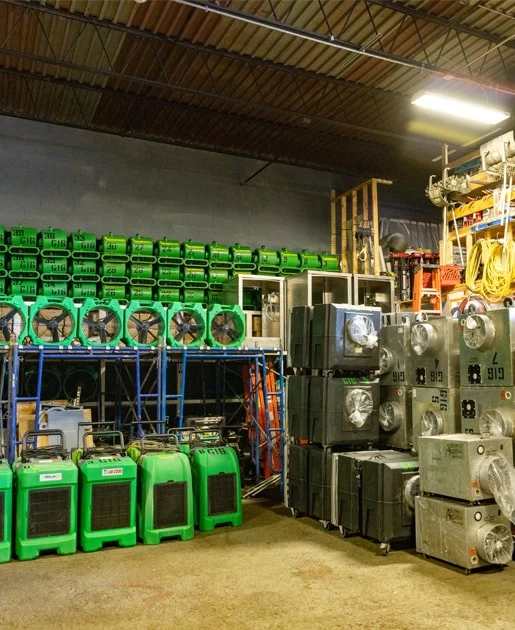
Flooded basement cleanup in Springs isn’t a single-step job, and it shouldn’t be treated like one. We handle the complete scope: emergency water extraction, structural drying with industrial equipment, air quality testing, mold remediation, asbestos and lead abatement in older homes, and full reconstruction of damaged materials. One company, one contract, one point of accountability from start to finish.
This matters especially in Springs, where the flooding scenarios vary widely. A Category 1 event clean water from a burst pipe is a different job than a Category 3 event involving sewage backup or outside floodwater pushed in by storm surge from Accabonac Harbor or Three Mile Harbor. Category 3 water requires OSHA-compliant containment, licensed disposal, and proper decontamination. It is not a mop-and-disinfectant situation, and a contractor who isn’t licensed for it shouldn’t be doing it in your home.
For seasonal and vacation property owners in Springs, we also handle delayed-discovery scenarios the flooding that happened in January and wasn’t found until March. By that point, mold is established, materials are saturated, and the remediation scope is larger. We’re equipped to assess and address advanced damage, document everything thoroughly for an insurance claim, and coordinate directly with your carrier so you’re not managing that process from a distance. If you have a property manager involved, they can be included in the communication loop from day one.
Does homeowners insurance cover a flooded basement in Springs, NY?
It depends on the cause, and this is one of the most important things to understand before you file a claim. Standard homeowners insurance typically covers sudden, accidental water damage a pipe that bursts, a water heater that fails, an appliance that malfunctions. What it usually does not cover is flooding from an external source, meaning water that enters your basement from outside the structure due to a storm, rising groundwater, or coastal surge.
In Springs, that distinction matters more than it does in most places. The hamlet sits between Three Mile Harbor, Accabonac Harbor, and Gardiner’s Bay, and storm events regularly push water toward low-lying properties especially around the Louse Point area and along Gerard Drive. If your basement flooded because of that kind of external water intrusion, you would typically need a separate NFIP flood insurance policy for coverage. We document damage in a way that clearly establishes the cause, which is critical for making sure your claim is filed correctly and not denied on a technicality. If you’re unsure what your policy covers, that conversation starts the moment you call.
How quickly does mold start growing after a basement floods?
Mold can begin developing within 24 to 48 hours of a flood event under the right conditions and Springs has most of those conditions working against you. Elevated coastal humidity, a naturally high water table, and the warm months of the summer rental season all create an environment where mold moves fast once moisture is present. If your basement flooded and you’re waiting to see if it dries out on its own, you’re likely already in the mold window.
The bigger issue is hidden moisture. A basement floor can look and feel dry while the wall cavity behind the drywall is still saturated. That’s where mold establishes itself first, and it won’t be visible until it’s already a significant problem. Professional moisture readings not a visual inspection are the only way to confirm that a space is actually dry. We use industrial moisture detection equipment on every job, and the readings are documented as part of the record. That documentation also matters for your insurance claim, because it proves the scope of the damage was real and professionally assessed.
My Springs vacation home flooded while it was empty what do I do first?
Call a licensed remediation company before you do anything else. The instinct is to start pulling wet materials out or run fans, but if the home has been flooded for days or weeks which is common in Springs, where a large number of properties are seasonal and may sit unoccupied through the winter the damage is likely more advanced than it looks. Mold may already be established behind walls, and if the home was built before 1980, disturbing wet materials without testing them first could mean disturbing asbestos or lead paint.
The delayed-discovery scenario is something we handle regularly in the Springs and East Hampton market. The process starts with a full assessment: moisture readings throughout the affected areas, air quality testing if mold is suspected, and a complete documentation of the damage before any work begins. That documentation is what your insurance adjuster needs, and getting it right from the start prevents disputes later. If you’re managing this from out of town, we can coordinate directly with your property manager and communicate with your insurance carrier on your behalf so you’re not trying to run a restoration project remotely.
What's the difference between water damage cleanup and full basement flooding remediation?
Water damage cleanup typically refers to the extraction and drying phase getting the standing water out and running equipment to dry the space. Basement flooding remediation is the complete process: extraction, drying, mold testing and remediation if needed, removal and disposal of damaged materials, hazardous material abatement if applicable, and reconstruction of the affected areas. They are not the same thing, and in Springs, the difference between the two can be significant.
A lot of homeowners get a cleanup crew in, the visible water is gone, and they think the job is done. Then six months later there’s a mold problem inside the wall, or they go to sell the property and an inspector finds moisture damage that was never properly addressed. In a market where Springs properties routinely hold significant value, an incomplete remediation job is a financial liability. We perform the full scope under one contract so there’s no ambiguity about where one company’s responsibility ends and another’s begins, and no gaps in the documentation that could create problems with an insurance claim or a future home sale.
How do you handle asbestos or lead paint found during a basement cleanup in Springs?
This is more relevant in Springs than many homeowners realize. A significant portion of the housing stock in Springs consists of Cape Cod and ranch-style homes built in the mid-20th century, when asbestos insulation and lead-based paint were standard materials. When a basement floods and walls need to be opened, those materials may be present and disturbing them without proper licensing and containment is both a health risk and a legal issue.
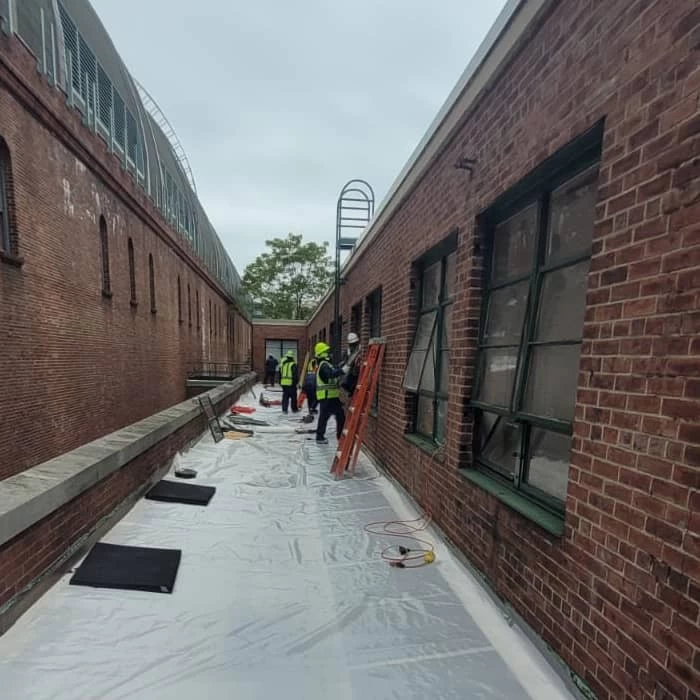
We hold NYS Department of Labor Asbestos licensure and USEPA Lead and RRP certifications. If hazardous materials are identified during the assessment, the work doesn’t stop and get handed off to a separate specialist it continues under the same contract with the appropriate protocols in place. That means proper containment, licensed disposal, and documentation that protects you from liability. Most water damage companies are not licensed for this work. If they open a wall and find something they’re not equipped to handle, the job stalls, costs go up, and you’re suddenly coordinating multiple contractors. That’s not how this should work, and it’s not how we operate.
Why does basement flooding happen so often in Springs compared to other parts of Long Island?
Springs has a geographic situation that most of Long Island doesn’t. The hamlet sits on a peninsula surrounded on three sides by water Three Mile Harbor to the west, Accabonac Harbor to the east, and Gardiner’s Bay to the north. That means the water table in many parts of Springs is naturally shallow, and during prolonged rain events or coastal storms, groundwater rises quickly and can push up through basement floors and walls through hydrostatic pressure alone even without any surface flooding.
On top of that, the low-lying areas of Springs particularly around Louse Point and along Gerard Drive near Accabonac Harbor are directly exposed to wave overtopping and storm surge during nor’easters and major storms. The East Hampton Star has documented flooding events where water overtops Gerard Drive entirely. Add in the flash flooding that hit the South Fork in July 2023, and you have a community that faces flooding from above, below, and the sides depending on the storm. The Town of East Hampton’s own Coastal Resiliency Action Plan acknowledges that storm frequency and intensity are increasing over time. For Springs homeowners, basement flooding isn’t a rare event it’s a recurring reality that’s worth being prepared for before the next storm season arrives.