When the Ground Beneath Your Neighborhood Was Always a Marsh, Flooding Isn't Bad Luck It's Geology
Trainsmeadow wasn’t just named after a meadow it was one. The ground your building sits on was wetland for centuries before anyone laid a foundation on it. When your basement floods, we respond in under an hour, handle everything from sewage extraction to full reconstruction, and bill your insurance directly.
I needed a professional consultation explanation of procedure for safe removal of Asbestos in my apartment complex. Without having an account yet, I was very impressed with the caring, knowledgeable and generous advice offered by Jessica, and will look forward to doing business in the future. Thank you so much! I feel much more informed about a sometimes scary endeavor. Peace. Nancy Silva Mineola, NY.
Mia Munoz
Used this company to clean up some water flood in my house. They were fast and easy to work with.very professional, Would recommend to anyone!
Nini Valle
Great company, had a flood and they responded quickly and efficiently. Billed my insurance company directly. I highly recommend this company!
joe colapietro, jr
I had pipe freeze in my basement right before a snow storm and they made to within an hour to help start the clean up process. They we by our side throughout the entire process and even helped with the insurance company. They did such a great job with the cleanup, repair, remidiation, I contracted them to perform the repairs and finishes in the basement. They came with enough manpower and material to get the job done. Leo and Jessica were nothing but a pleasure to deal with!!
Cristian Arredondo c
I had some water damage in my home and Green Island was able to take care of my issue quickly and effectively. I am very pleased with the work they did. They responded quickly and were very professional.
Michael M
Outstanding service! From the office to the field crew everyone was friendly, helpful and responsive. I highly recommend Green Island Group.
A Dry Basement Isn't the Finish Line It's the Starting Point
Most people think flooded basement cleanup means getting the water out. That’s maybe a third of the job. What actually matters is what happens after the water is gone whether the moisture hiding inside your walls gets found, whether mold gets a chance to establish itself in the 72 hours following the flood, and whether your building ends up truly safe or just dry on the surface.
In Trainsmeadow and the broader Jackson Heights area, the flooding problem runs deeper than a broken pipe or a heavy rainstorm. NYC’s combined sewer system the same pipes that carry stormwater and sewage together backs up into basements when rainfall exceeds what the system can handle. That happened during Hurricane Ida in 2021, when some Queens locations recorded over three inches of rain in a single hour. What came up through basement drains wasn’t water. It was sewage. That’s a different category of contamination entirely, and it requires a licensed response not just a pump and a fan.
The other reality in this neighborhood is the age of the buildings. The core housing stock in Trainsmeadow was built between 1910 and 1939. Those walls, floors, and pipe systems weren’t designed with modern waterproofing or modern drainage in mind. When moisture gets into a pre-war building, it doesn’t just sit there it moves through plaster, through shared walls, into adjacent units. Getting it out completely, and confirming it’s actually gone, requires more than a dehumidifier running for a few days.
Every Certification That Legally Matters Here We Hold It
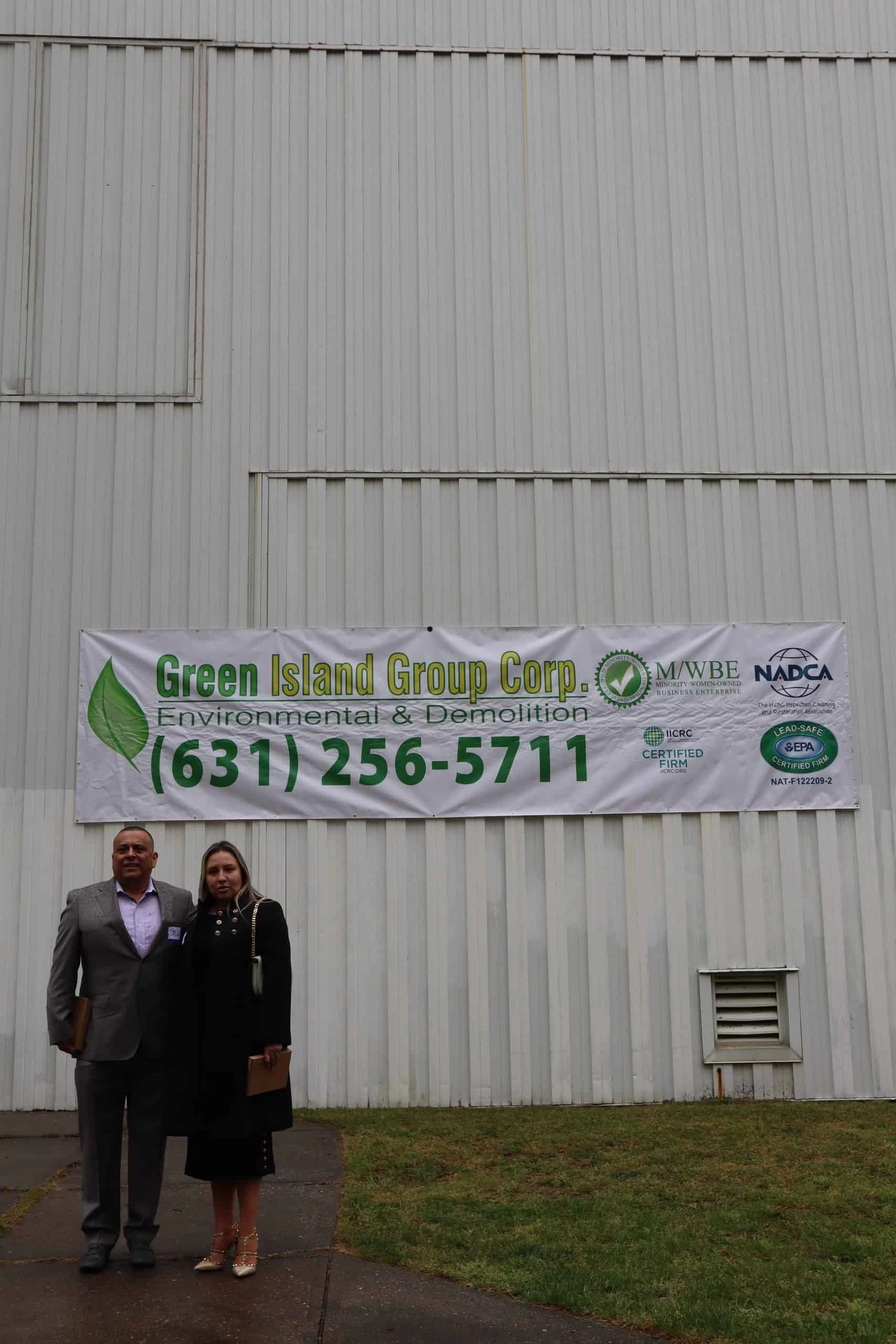
We’re not a generalist contractor who added water damage to a service list. Green Island Group is a full-scope environmental remediation and restoration company with over 30 years of combined experience in the New York market holding more than 17 active certifications, including NYS DOL Mold, NYS DOL Asbestos, USEPA Lead, IICRC Water/Fire Damage, and an active NYC General Contractor license.
That last one matters more than people realize. Reconstruction work after a significant flood structural repairs, electrical, plumbing requires NYC Department of Buildings permits. A contractor without an active NYC GC license can’t legally pull those permits. In a neighborhood like Trainsmeadow, where buildings are landmarked, pre-war, and potentially carrying asbestos or lead in their basement assemblies, the licensing isn’t a formality. It’s the difference between a legal restoration and a liability you’ll discover at your next inspection.
We’re available 24 hours a day, seven days a week, and our response time under one hour is documented in customer reviews, not just claimed on a website.
What Actually Happens From the First Call to a Finished Basement
When you call, the first thing we establish is what type of water you’re dealing with. Clean water from a burst pipe is handled differently than gray water from an appliance backup, and both are handled very differently than black water which is what you get when Queens’ combined sewer system backs up into your basement during a storm. Knowing the category determines the safety protocols, the equipment, and what your insurance claim will look like.
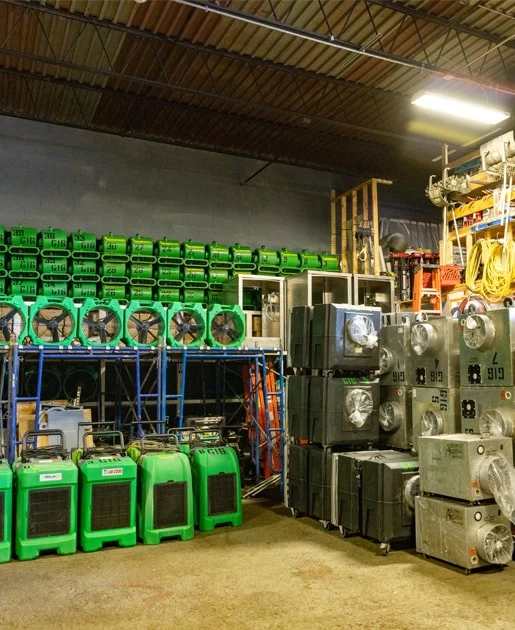
Once our team arrives typically within an hour extraction begins immediately using industrial-grade equipment built for the volume that Trainsmeadow basements can take on during a serious flood event. After extraction, we use thermal imaging to locate moisture that isn’t visible to the eye. In pre-war construction, moisture migrates into wall cavities, under flooring, and through shared assemblies in ways that modern drywall buildings don’t. Missing those pockets is how a “dry” basement becomes a mold problem two weeks later.
Structural drying follows, with equipment staged and monitored until moisture readings confirm the space is genuinely dry not just surface dry. From there, if reconstruction is needed, we handle it under the same contract: permitted, licensed, and fully documented for your insurance file. If your building falls within the Jackson Heights Historic District, we’re familiar with what that means for the scope of exterior work and what may require additional approval. You won’t be handed off to a second contractor to figure that out on your own.
Built for the Basements That Actually Flood in This Part of Queens
The scope of what we handle isn’t limited to water removal. From the initial emergency call through mold prevention, content restoration, and full reconstruction, everything runs through one company and one point of contact. For property managers dealing with a flooded basement in a multi-unit Trainsmeadow building where one event can affect multiple tenants simultaneously that matters operationally, not just as a convenience.
Because the buildings in Trainsmeadow predate modern construction standards, we approach every job with the assumption that hazardous materials may be present. Asbestos pipe insulation, asbestos floor tiles, and lead-based paint are realistic finds in basement spaces of buildings constructed before 1940. We hold NYS DOL Asbestos certification, USEPA Lead certification, and USEPA RRP certification meaning we can legally handle those materials as part of the restoration, not flag them and walk away.
We handle insurance billing directly. Based on documented customer reviews, our team actively supports clients through the adjuster process rather than leaving you to navigate a claim in the middle of a crisis. For Trainsmeadow residents who remember how NYC handled Ida-related flood claims denying nearly every one having a company that knows how to build and present a strong insurance file isn’t a bonus. It’s what gets you made whole.
Is the water in my flooded Trainsmeadow basement safe to be around?
It depends entirely on where the water came from, and in Trainsmeadow, the answer is often more serious than people expect. Clean water from a burst supply line or a failed appliance carries minimal health risk in the short term. But Trainsmeadow sits within NYC’s combined sewer drainage area, which means that during heavy rain events the kind that have become more frequent in central Queens stormwater and sewage travel through the same pipes. When that system backs up, what enters your basement through floor drains or toilet connections is classified as black water: sewage-contaminated water that carries bacteria, pathogens, and waste.
Black water exposure is a genuine health hazard. You should not be in the space without proper protective equipment, and the cleanup cannot be handled the same way you’d handle a clean water flood. It requires licensed remediation, proper containment, and regulated disposal. If your basement flooded during or after a significant rainstorm in Trainsmeadow, treat it as potentially contaminated until a professional has assessed it not after.
How quickly does mold start growing after a basement flood in an older building?
Mold can begin establishing itself within 24 to 48 hours of water exposure under the right conditions and older buildings like the ones throughout Trainsmeadow and the Jackson Heights Historic District tend to create exactly those conditions. Pre-war construction uses materials like plaster, wood framing, and terra cotta tile that hold moisture differently than modern drywall. Moisture doesn’t just sit on the surface it moves into wall assemblies, under flooring, and through structural cavities where it’s warm, dark, and undisturbed. That’s where mold colonies start.
The practical threshold most professionals work with is 72 hours. After that point, you’re no longer just dealing with a water damage job you’re dealing with a mold remediation job on top of it, which adds significant cost and complexity. In a multi-unit Trainsmeadow building where moisture can migrate through shared walls into adjacent apartments, the stakes of waiting are even higher. Getting a licensed team in quickly isn’t overcaution it’s the decision that keeps a manageable cleanup from becoming a building-wide problem.
Will my insurance cover a flooded basement cleanup in Trainsmeadow, NY?
Coverage depends on the cause of the flooding, and the distinction matters a lot in this neighborhood. Standard homeowners insurance typically covers sudden and accidental water damage a burst pipe, a failed water heater, an appliance malfunction. It generally does not cover flooding from an external source, which is where things get complicated in Trainsmeadow. When the combined sewer system backs up into your basement during a storm, insurers may classify that as sewer backup, which requires a separate sewer backup rider. Flood damage from storm surge or surface water typically requires a separate flood insurance policy entirely.
After Hurricane Ida, many Jackson Heights residents discovered this distinction the hard way the city denied financial claims, and standard homeowners policies didn’t cover the sewer backup damage. The lesson from that experience is to know what your policy actually covers before you need it, and to work with a remediation company that documents everything thoroughly. We bill insurance directly and build the kind of detailed damage documentation that gives your claim the best possible standing whether it’s a straightforward covered loss or a more complex situation that requires an adjuster conversation.
Does it matter that my building is in the Jackson Heights Historic District?
For the remediation and drying work itself water extraction, structural drying, mold prevention the Historic District designation generally doesn’t affect the interior scope. That work proceeds the same way regardless of landmark status. Where it becomes relevant is reconstruction. If flood damage requires repairs or alterations to exterior elements of a landmarked building facades, windows, stoops, or other character-defining features those changes require approval from the New York City Landmarks Preservation Commission before work begins. Skipping that step can result in stop-work orders and fines that far exceed the cost of getting it right the first time.
We hold an active NYC General Contractor license, which means we can legally pull the NYC Department of Buildings permits required for reconstruction work. We’re also familiar with the additional layer that landmark status adds for exterior alterations, and we can help property owners understand what requires LPC review and what doesn’t so nothing gets started that shouldn’t, and nothing gets held up that doesn’t need to be.
What does flooded basement cleanup actually cost in the Queens area?
The range is wide, and the type of water is the biggest variable. Clean water cleanup in a smaller basement can run as low as $1,500 to $3,000. Gray water jobs washing machine overflows, dishwasher backups typically land in the $3,000 to $6,000 range. Black water jobs, which are common in Trainsmeadow given the neighborhood’s combined sewer exposure, can run $5,000 to $12,000 or more depending on the square footage, the extent of contamination, and whether reconstruction is needed.
What people often don’t factor in is the cost of waiting. If mold develops because the cleanup was delayed or incomplete, you’re adding $2,000 to $8,000 in mold remediation costs on top of whatever the base job costs. In older buildings where moisture migrates through shared walls, that mold problem can spread beyond the original unit, which multiplies both the remediation cost and the liability. Acting quickly with a licensed team is almost always cheaper than acting slowly with whoever was available first.
Can I clean up a flooded basement myself instead of hiring a professional?
For a minor clean water spill in a finished basement a small appliance leak caught quickly, for example a capable homeowner with the right equipment can sometimes manage it. But in Trainsmeadow, most basement floods aren’t that scenario. The combined sewer system makes black water backups the more common event during heavy storms, and black water is a health hazard that legally requires licensed handling and regulated disposal. You can’t safely clean that up with a shop vac and a fan, and attempting to do so puts your household at real risk.
Beyond the contamination issue, there’s the hidden moisture problem. Consumer-grade dehumidifiers don’t reach the moisture levels inside wall assemblies and under flooring that pre-war construction traps. A basement that looks and feels dry after a DIY effort can have active moisture pockets that produce mold within days. In a building where your walls are shared with neighboring units, that’s not just your problem anymore. The cost of a professional job is almost always less than the cost of fixing what a DIY cleanup missed especially once mold enters the picture.