When the Bronx River Backs Up, Your Tuckahoe Basement Pays the Price
Tuckahoe’s aging sewer system and the Bronx River corridor don’t give you much warning. We respond in under an hour licensed for everything from water extraction to hazardous materials so the damage stops where it started.
I needed a professional consultation explanation of procedure for safe removal of Asbestos in my apartment complex. Without having an account yet, I was very impressed with the caring, knowledgeable and generous advice offered by Jessica, and will look forward to doing business in the future. Thank you so much! I feel much more informed about a sometimes scary endeavor. Peace. Nancy Silva Mineola, NY.
Mia Munoz
Used this company to clean up some water flood in my house. They were fast and easy to work with.very professional, Would recommend to anyone!
Nini Valle
Great company, had a flood and they responded quickly and efficiently. Billed my insurance company directly. I highly recommend this company!
joe colapietro, jr
I had pipe freeze in my basement right before a snow storm and they made to within an hour to help start the clean up process. They we by our side throughout the entire process and even helped with the insurance company. They did such a great job with the cleanup, repair, remidiation, I contracted them to perform the repairs and finishes in the basement. They came with enough manpower and material to get the job done. Leo and Jessica were nothing but a pleasure to deal with!!
Cristian Arredondo c
I had some water damage in my home and Green Island was able to take care of my issue quickly and effectively. I am very pleased with the work they did. They responded quickly and were very professional.
Michael M
Outstanding service! From the office to the field crew everyone was friendly, helpful and responsive. I highly recommend Green Island Group.
The real cost of a flooded basement isn’t always what you see on day one. It’s the mold that starts forming in 24 to 48 hours inside wall cavities and under subfloors the kind that doesn’t show up until it’s a much bigger problem. Getting water out fast is only part of it. The structure has to be dried correctly, or you’re just delaying the next call.
For Tuckahoe homeowners, there’s an added layer most cleanup companies won’t bring up. Many homes here were built before 1978, and when floodwater soaks through walls or disturbs old insulation, you can be dealing with more than moisture. Asbestos and lead paint are realistic possibilities in pre-war construction and most water damage companies in Westchester aren’t licensed to handle them. We are, which means if something turns up behind your walls, you don’t have to stop the job and find someone else.
The other thing worth knowing: if the flooding came in through a floor drain after heavy rain, that’s likely sewage-contaminated water not just rainwater. That changes the entire cleanup protocol. It requires containment, proper PPE, and licensed disposal. Tuckahoe’s shared sewer infrastructure with Bronxville is a documented pressure point during storms, and that’s not a hypothetical risk for residents near the Bronx River corridor. It’s a real one.
Licensed Basement Flooding Remediation in Tuckahoe
12 Years In, and New York State Still Calls Us First
We’ve been handling environmental restoration and water damage cleanup across New York for over 12 years more than 5,000 completed projects across the state, including homes throughout Westchester County and Tuckahoe. Our team is led by CEO Jessica Dussan and VP Leo Torres, and both names show up in customer reviews because we’re actually involved in the work, not just running a call center.
We hold a credential that no local competitor in Tuckahoe can claim: approved emergency response contractor status through the New York State Office of General Services. That means the state of New York has independently reviewed and vetted our licensing, insurance, and capability. It’s not a badge you buy it’s one you earn.
We’re also a NYS-certified Minority and Woman-Owned Business Enterprise. For a close-knit, civically engaged village like Tuckahoe where who you hire actually matters to the community that’s worth knowing.
When you call, someone picks up around the clock, every day of the year. From there, a crew is dispatched with a documented sub-one-hour arrival time, including during storms. That matters in Tuckahoe, where flooding events tied to the Bronx River corridor or a backed-up sewer line can escalate quickly and don’t wait for business hours.
Once on-site, we assess the water source and contamination category before anything else. A burst pipe is handled differently than water backing up through a floor drain after a storm. If there’s any indication of sewage contamination which is a real possibility given Tuckahoe’s combined sewer infrastructure the job shifts to Category 3 protocols: full containment, proper protective equipment, and licensed disposal. That classification matters for your insurance claim too, and we document everything an adjuster needs.
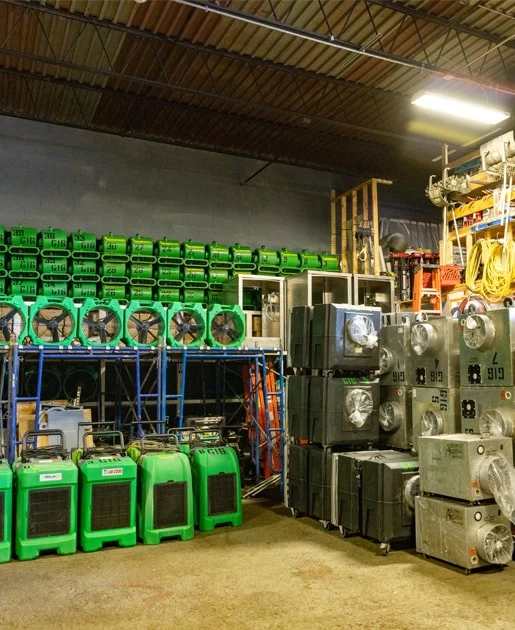
After extraction, we set industrial drying equipment and monitor it to ensure the structure not just the surface is brought to the correct moisture levels. In Tuckahoe’s older housing stock, that means paying attention to plaster walls, original hardwood, and the kind of construction details that don’t dry the same way as modern drywall. If anything behind the walls raises a concern insulation, pipe wrap, old floor tile we’re licensed to test and remediate it on the same job. You won’t be left coordinating a second contractor.
Flooded Basement Cleaning and Mold Prevention Tuckahoe
One License Covers Everything Your Basement Might Be Hiding
We handle the full scope water extraction, structural drying, mold remediation, asbestos abatement, lead abatement, and complete reconstruction under a General Contractor license. That’s not common. Most companies in Westchester do the first two or three steps and hand you off. In a village like Tuckahoe where many homes predate 1950 and the sewer system has known vulnerabilities during heavy rain, having one licensed contractor who can take the job from water removal to finished walls is a real advantage.
We also bill insurance carriers directly and provide the documentation your adjuster actually needs moisture readings, contamination classification, photo records, and a full scope of work. Multiple independent customer reviews confirm this isn’t just a talking point. In a market where Tuckahoe homeowners are carrying significant home equity and property taxes, a denied or underpaid insurance claim is a serious financial outcome. Getting the documentation right from day one protects against that.
Westchester County’s flood disclosure law effective August 2022 now requires landlords to disclose flood history and flood zone status to prospective renters. If you’re a property owner in Tuckahoe, a properly documented and professionally remediated flood event is part of your legal and financial record going forward. Our process is built to produce that documentation as a standard output, not an afterthought.
Why does my Tuckahoe basement flood every time it rains hard?
This is one of the most common questions from homeowners in Tuckahoe, and the answer is more specific than “your sump pump can’t keep up.” Tuckahoe’s sewer system is interconnected with Bronxville’s through the Midland Valley Drainage Basin, and both villages share a gravity-fed drainage corridor that empties toward the Bronx River. When the river rises during a heavy storm, the system can’t drain fast enough and water backs up into the lowest points of nearby structures, which usually means basements.
This isn’t a fluke or a one-time event. Bronxville’s own village government has documented the shared infrastructure problem and noted that the two villages coordinate on flood mitigation because their systems directly affect each other. If your basement floods consistently during or after heavy rain especially if water is coming in through a floor drain that’s almost certainly a sewer backup, not just groundwater intrusion. Those two problems require different responses, and knowing which one you’re dealing with changes the entire cleanup approach.
How quickly does mold start growing after a basement floods?
Mold can begin growing within 24 to 48 hours of a flooding event under the right conditions and basements almost always provide those conditions. Poor ventilation, organic materials like wood and drywall, and residual moisture in wall cavities create exactly the environment mold needs. The part most homeowners don’t realize is that surface drying isn’t enough. If the moisture inside the wall assembly or under the subfloor isn’t brought down to the correct level, mold can establish itself behind finished surfaces where you won’t see it for weeks or months.
In Tuckahoe’s older housing stock homes with plaster walls, original hardwood floors, and traditional framing moisture migrates differently than in modern construction. Water can travel further and sit longer in materials that weren’t designed with modern moisture barriers. That’s why professional drying equipment and moisture monitoring matter here more than in a newer home. Waiting even 12 to 24 hours to address standing water meaningfully increases the likelihood of a mold remediation bill on top of the water damage cleanup and that can add thousands of dollars to the total cost.
Is the water in my flooded basement safe to walk through or clean up myself?
It depends entirely on where the water came from, and that’s not always obvious. A burst pipe in a finished basement is Category 1 clean water, relatively low risk for short-term contact. But water that entered through a floor drain during a storm, backed up from a toilet or utility sink, or came in from outside after heavy rain is a different situation entirely. That water can carry sewage, bacteria, and other contaminants that aren’t visible and don’t have a smell you’d necessarily notice.
In Tuckahoe specifically, the combined sewer infrastructure means that stormwater and sewage share the same pipes in parts of the system. When that system backs up which it does during significant rainfall events what comes up through your floor drain is classified as Category 3 water under industry standards. That requires hazmat-level protective equipment, proper containment, and licensed disposal. Walking through it in rubber boots and mopping it up with household cleaners doesn’t meet that standard and doesn’t eliminate the health risk. If there’s any chance the water came from a drain backup rather than a clean supply line, treat it as contaminated until a professional can confirm otherwise.
Could my flooded basement in Tuckahoe contain asbestos or lead paint?
If your home was built before 1978, it’s a legitimate question not a paranoid one. New York State has the oldest median housing stock in the country, and Tuckahoe has a significant number of homes built before 1960. Asbestos was commonly used in pipe insulation, floor tiles, ceiling tiles, and certain types of wall insulation in homes of that era. Lead paint was standard in residential construction until the federal ban in 1978. When floodwater saturates these materials soaking through walls, warping flooring, or disturbing old insulation it can release fibers or disturb paint in ways that create a secondary hazard.
The practical problem is that most water damage companies in Westchester are not licensed to test for or remediate these materials. If they encounter something suspicious, they either ignore it or stop the job and tell you to hire a separate contractor. We hold NYS DOL Asbestos and USEPA Lead certifications, which means if something turns up during the cleanup, the job doesn’t stop. Our team can handle it under the same contract, with the proper protocols, without leaving you in the middle of a half-finished remediation trying to coordinate a second company.
Will my homeowners insurance cover flooded basement cleanup in Westchester County?
The honest answer is: it depends on the cause, and the documentation you provide from day one makes a significant difference in how the claim is handled. Standard homeowners insurance typically covers sudden and accidental water damage a burst pipe, for example but may not cover flooding from outside the home without a separate flood insurance policy. The distinction between a sewer backup, a groundwater intrusion, and a pipe failure matters to your adjuster, and how the event is classified in the initial documentation often determines how the claim is paid.
This is where professional documentation becomes a financial tool, not just a paperwork requirement. We provide moisture readings, contamination classification, photo records, and a full scope of work that’s structured for adjuster review. We bill insurance carriers directly and have handled this process across thousands of jobs in New York. Westchester County’s 2022 flood disclosure law has also made flood history part of the legal record for property owners which means a properly documented remediation protects you not just for this claim, but for future disclosures if you ever sell or rent the property.
Do I need a permit for basement flood repairs in the Village of Tuckahoe?
For basic water extraction and drying, typically no permit is required. But if the remediation involves structural work replacing framing, opening walls, modifying drainage, or any reconstruction after the cleanup the Village of Tuckahoe’s Building Department may require permits and compliance with the village’s Flood Damage Prevention ordinance. Tuckahoe has a codified flood ordinance that establishes requirements for construction and reconstruction in flood-prone areas, including floodproofing certifications and compliance documentation issued by the village.
This matters more than most homeowners realize, especially if you’re in an area near the Bronx River corridor where flood zone designations apply. Work done without the required permits can create issues when you go to sell the property or file a future insurance claim. Our General Contractor license covers the full scope of post-flood reconstruction, and our team is familiar with Westchester County’s regulatory environment and what the village’s building department typically requires for flood-related work. If permits are needed, that gets handled as part of the job not handed back to you to figure out on your own.