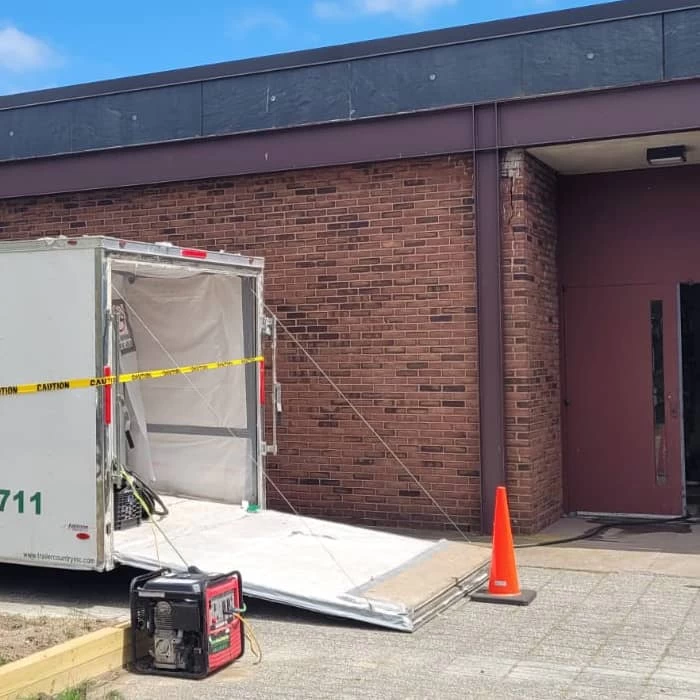
Wading River basements flood differently sandy soil, high water tables, and cesspools that back up when the ground gets saturated. We respond 24/7 with licensed flooded basement cleanup built for exactly that.
I needed a professional consultation explanation of procedure for safe removal of Asbestos in my apartment complex. Without having an account yet, I was very impressed with the caring, knowledgeable and generous advice offered by Jessica, and will look forward to doing business in the future. Thank you so much! I feel much more informed about a sometimes scary endeavor. Peace. Nancy Silva Mineola, NY.
Mia Munoz
Used this company to clean up some water flood in my house. They were fast and easy to work with.very professional, Would recommend to anyone!
Nini Valle
Great company, had a flood and they responded quickly and efficiently. Billed my insurance company directly. I highly recommend this company!
joe colapietro, jr
I had pipe freeze in my basement right before a snow storm and they made to within an hour to help start the clean up process. They we by our side throughout the entire process and even helped with the insurance company. They did such a great job with the cleanup, repair, remidiation, I contracted them to perform the repairs and finishes in the basement. They came with enough manpower and material to get the job done. Leo and Jessica were nothing but a pleasure to deal with!!
Cristian Arredondo c
I had some water damage in my home and Green Island was able to take care of my issue quickly and effectively. I am very pleased with the work they did. They responded quickly and were very professional.
Michael M
Outstanding service! From the office to the field crew everyone was friendly, helpful and responsive. I highly recommend Green Island Group.
There’s a big difference between removing standing water and actually cleaning up a flooded basement. Water extraction is step one. What comes after drying the structure, testing for mold, identifying what got contaminated is where most jobs either get done right or get done halfway.
In Wading River, that second half matters more than most places. The homes along Route 25A and the neighborhoods north toward Wildwood State Park were built largely between the 1950s and 1970s. When those basements flood, there’s a real chance the water disturbed more than drywall pipe insulation, old floor tiles, and wall materials from that era commonly contain asbestos or lead. We assess for that before tearing anything out, not mid-job.
The other factor here is what type of water you’re dealing with. When a major storm saturates Long Island Sound’s North Shore the way the August 2024 event did, which triggered state and federal disaster declarations across Suffolk County cesspools can back up directly into basements. That’s not a mop-and-bleach situation. That’s a licensed environmental cleanup. We carry the certifications to handle it legally and safely, from water extraction through full remediation, so your basement comes back clean not just dry.
Licensed for Every Hazard Your Wading River Basement Might Hide
We’re a Long Island and New York City-based environmental restoration company with over 5,000 completed projects across New York State. We’re led by CEO Jessica Dussan and VP Leo Torres real people whose names show up in real customer reviews, not a franchise call center routing your job to whoever’s available.
What separates us in a market like Wading River is the licensing stack. NYS DOL Mold, NYS DOL Asbestos, USEPA Lead, USEPA RRP, General Contractor licenses in Suffolk County and Nassau County the full range of credentials required to legally handle the hazardous materials that older North Shore homes commonly contain. We’re also an approved emergency response contractor for the NYS Office of General Services, which means New York State has independently vetted our credentials, not just our marketing.
For Wading River homeowners navigating a flooded basement whether it’s groundwater seepage after a wet spring, storm surge from Long Island Sound, or a cesspool backup that licensing isn’t a detail. It’s the difference between a cleanup that’s done right and one that creates a bigger problem down the road.
What Actually Happens From First Call to Finished Basement
When you call, someone picks up day or night. The first thing we do is ask the right questions: When did the flooding start? Is there any sewage smell? Do you know how old your home is? Those answers shape everything about how the job gets approached before anyone sets foot in your basement.
On arrival, our team assesses the water source and classifies it. Clean water from a burst pipe is handled differently than groundwater seepage, and both are handled differently than a cesspool backup. In Wading River, where virtually every home runs on a cesspool or septic system, that classification step isn’t a formality it determines the level of containment, PPE, and disposal protocol required. If there’s any indication the water came in contact with sewage, the job is treated as Category 3 contamination from the start.
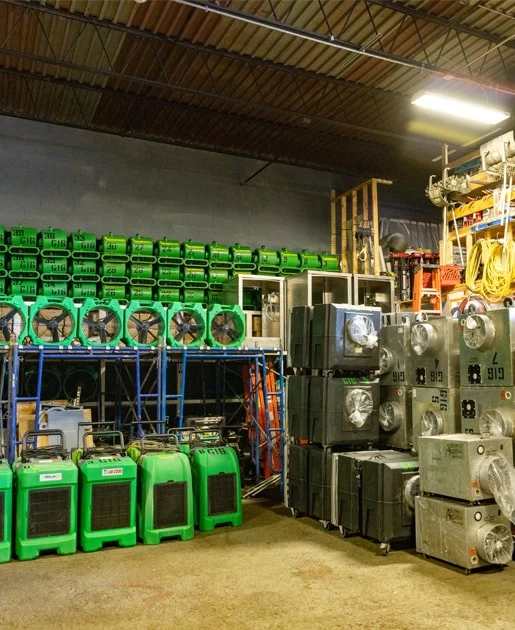
From there: extraction, structural drying with industrial air movers and dehumidifiers, moisture mapping to confirm the walls and subfloor are actually dry, and mold testing if the timeline or conditions warrant it. If your home was built before 1980, we check for asbestos and lead before any demolition begins required by law, and something we’re licensed to handle in-house. Because Wading River straddles the Town of Riverhead and Town of Brookhaven, reconstruction permits may fall under either municipality; we hold contractor licenses covering both, so that doesn’t become your problem to sort out.
Flooded basement cleanup in Wading River isn’t one-size-fits-all, and we don’t treat it that way. What’s included depends on what the job actually requires but the scope always starts with a thorough assessment before any work begins.
Water extraction and structural drying are the foundation. We use industrial-grade equipment to handle the standing water and the moisture locked in walls, floors, and framing because surface-dry and actually-dry are two different things, and the difference shows up as mold three weeks later. We use moisture mapping to confirm the structure is fully dry before closing anything up.
For homes in Wading River’s older neighborhoods particularly those built in the 1950s through 1970s near North Country Road or the Route 25A corridor hazardous material assessment is part of the process, not an add-on. If asbestos or lead is present, we handle abatement under our NYS DOL and USEPA licenses before any demolition or reconstruction happens. Mold remediation, sewage decontamination for cesspool backup events, and full reconstruction through to finished walls are all handled under one contract. We also bill insurance directly and provide the documentation adjusters need which matters especially in Suffolk County, where the line between what a standard homeowners policy covers and what it excludes around groundwater and cesspool events is genuinely complicated.
Does homeowners insurance cover flooded basement cleanup in Wading River, NY?
It depends on what caused the flooding, and in Wading River, that distinction is especially important. Standard homeowners insurance typically covers sudden and accidental water damage a burst pipe, for example but it usually excludes flooding from external sources like groundwater seepage or surface water entering the basement. Flood damage from rising water generally requires a separate flood insurance policy through the National Flood Insurance Program.
The complication specific to Wading River is cesspools. When a major storm saturates the ground and a cesspool backs up into a basement, the coverage question gets murky some policies include sewer or drain backup coverage as an endorsement, others exclude it entirely. We document the water source and damage thoroughly from the start, which gives your adjuster what they need to process the claim accurately. We also bill insurance directly, so you’re not managing that back-and-forth on top of dealing with a flooded basement.
How quickly does mold start growing after a basement floods on Long Island?
The standard answer is 24 to 48 hours, but that’s a controlled-environment estimate. In a coastal North Shore community like Wading River where ambient humidity is naturally elevated year-round from proximity to Long Island Sound mold can begin colonizing faster than that, especially in a basement that already runs humid in summer months.
What that means practically is that the clock starts the moment the water enters, not when you call a cleanup company. If there’s a delay of more than a day or two before extraction and drying begin, mold testing should be part of the job regardless of whether you can see visible growth. We include mold assessment as a standard part of the process on jobs where timing or conditions make it relevant and given Wading River’s humidity profile, that’s more often than not.
My Wading River basement smells like sewage after flooding is that dangerous?
Yes, and it needs to be treated that way from the start. A sewage smell after basement flooding almost always means you’re dealing with Category 3 water also called blackwater which contains bacteria, viruses, and other pathogens that pose real health risks. In Wading River, where every home is on a cesspool or septic system rather than municipal sewer, this scenario is common during and after major storm events. When the water table spikes rapidly, cesspools can become overwhelmed and back up into the home.
Category 3 cleanup isn’t something you handle with household cleaners or a wet vac. It requires OSHA-compliant containment, full personal protective equipment, licensed environmental handling, and proper waste disposal. We’re licensed and equipped for this including a NYC BIC Trade Waste license that covers proper disposal of contaminated materials. Do not go into the basement without protection, and do not let anyone start cleanup who isn’t equipped to handle it at that level.
My house was built in the 1960s should I be worried about asbestos during basement cleanup?
It’s a legitimate concern, and in Wading River it comes up more than people expect. A large portion of the hamlet’s housing stock was built during the post-World War II boom roughly 1947 through the late 1970s and homes from that era commonly contain asbestos in basement areas. Pipe wrap insulation, 9-inch vinyl floor tiles, ceiling tiles, and joint compound were all routinely manufactured with asbestos during that period.
When a basement floods and those materials get wet, disturbed, or need to be removed as part of the cleanup, the legal requirement is that a licensed contractor handles the abatement not a general handyman or a water damage company without environmental credentials. We hold a NYS Department of Labor Asbestos license and assess for hazardous materials before any demolition begins. If asbestos is found, we handle it in-house under that license, not subcontracted out. That keeps the job moving and keeps you from having to coordinate multiple contractors for what should be one continuous process.
How long does flooded basement cleanup typically take in Suffolk County?
The honest answer is that it varies more than most companies will tell you upfront. A straightforward water extraction and drying job clean water source, no hazmat concerns, no mold can be completed in three to five days once drying equipment is running. But most basement flooding jobs in Wading River aren’t that simple.
If the water source was a cesspool backup, decontamination adds time. If the home is pre-1980 and asbestos testing is required before any demolition, that adds a step. If mold has already started growing because there was a delay before cleanup began, remediation extends the timeline further. Structural drying alone typically takes two to four days with industrial equipment running continuously, and moisture levels have to be confirmed at the right threshold before walls get closed up rushing that step is what leads to mold problems months later. We walk through a realistic timeline with you at the assessment stage so you’re not guessing.
Do I need a permit for basement repairs after water damage in Wading River?
For work that goes beyond drying and cleaning replacing drywall, repairing structural elements, or doing any significant reconstruction yes, a permit is typically required. Wading River sits across two town jurisdictions: most of the hamlet falls within the Town of Riverhead, but a portion extends into the Town of Brookhaven. Depending on which side of that line your property sits on, you’re dealing with different municipal offices and potentially different permit requirements.
This is something most out-of-area contractors don’t flag until it becomes a problem usually at the point of sale or during an insurance settlement, when unpermitted work surfaces. We hold General Contractor licenses covering Suffolk County and have worked in both the Town of Riverhead and Town of Brookhaven. We know which jurisdiction your address falls under and what that means for the permit process, so reconstruction work is done correctly from a compliance standpoint, not just a cosmetic one.