When the East River Wins, We Clean Up What It Leaves Behind
Lower Manhattan’s flood exposure is real and if your basement just took on water, the clock is already running. We respond 24/7 with the licenses to handle everything a Wall Street building can throw at a cleanup crew. Whether you’re managing a converted commercial tower or a pre-war residential building in the Financial District, we have the regulatory knowledge and field experience that this neighborhood specifically demands.
I needed a professional consultation explanation of procedure for safe removal of Asbestos in my apartment complex. Without having an account yet, I was very impressed with the caring, knowledgeable and generous advice offered by Jessica, and will look forward to doing business in the future. Thank you so much! I feel much more informed about a sometimes scary endeavor. Peace. Nancy Silva Mineola, NY.
Mia Munoz
Used this company to clean up some water flood in my house. They were fast and easy to work with.very professional, Would recommend to anyone!
Nini Valle
Great company, had a flood and they responded quickly and efficiently. Billed my insurance company directly. I highly recommend this company!
joe colapietro, jr
I had pipe freeze in my basement right before a snow storm and they made to within an hour to help start the clean up process. They we by our side throughout the entire process and even helped with the insurance company. They did such a great job with the cleanup, repair, remidiation, I contracted them to perform the repairs and finishes in the basement. They came with enough manpower and material to get the job done. Leo and Jessica were nothing but a pleasure to deal with!!
Cristian Arredondo c
I had some water damage in my home and Green Island was able to take care of my issue quickly and effectively. I am very pleased with the work they did. They responded quickly and were very professional.
Michael M
Outstanding service! From the office to the field crew everyone was friendly, helpful and responsive. I highly recommend Green Island Group.
When water gets into a basement in Wall Street, it rarely stays simple. The buildings along and around this neighborhood are some of the oldest occupied structures in New York City and what looks like a straightforward flooding cleanup can involve asbestos pipe insulation, lead paint on structural framing, and a sewer system that pushed Category 3 contaminated water through the drain before you even realized what was happening. Getting the water out is step one. What comes after determines whether your building stays healthy or ends up with a mold problem inside the walls six weeks from now.
After a proper flooded basement cleanup, you get more than a dry floor. You get moisture readings that confirm drying goals were actually hit not eyeballed. You get air quality results that tell you the space is safe to reoccupy. And if the work touched any pre-war materials, you get documentation showing it was done by a contractor licensed to do it legally in New York City. That paperwork matters when your condo board is asking questions, your insurance adjuster needs a scope of work, or your building attorney wants proof of compliance.
The Financial District’s flood risk isn’t going away. The city’s $7 billion resilience plan for this neighborhood won’t be finished for years. Until then, every nor’easter, every heavy summer cloudburst, and every coastal storm is a potential event for basements at this elevation. The right cleanup done completely, documented properly, and verified before the crew leaves is what protects the building long after the water is gone.
Licensed Basement Flooding Remediation, Wall Street NY
The Licenses That Actually Matter in a Pre-War Manhattan Building
We hold active New York State Department of Labor licenses for mold remediation, asbestos abatement, and lead abatement in addition to water damage restoration. In most markets, that combination is a differentiator. In Wall Street and the surrounding Financial District, where NYC DEP requires asbestos assessment before remediation work begins in pre-1987 buildings, and where buildings like 1 Wall Street and 63 Wall Street were constructed decades before the 1960 NYC lead paint ban, it is the baseline for doing the job legally.
We operate across all five boroughs with the regulatory knowledge and field experience that Lower Manhattan’s building stock specifically demands. We’ve worked in converted commercial towers, pre-war residential buildings, and the kind of subterranean mechanical spaces that exist nowhere else in this content market. Over 5,000 completed jobs in the NYC metro area backs that up not as a number to impress you, but as evidence that we’ve seen what these buildings look like when they flood, and we know exactly what it takes to bring them back.
What Actually Happens From the First Call to Final Clearance
The first thing that happens when we arrive at a flooded basement in Wall Street is an assessment not just of how much water is present, but of what kind. A burst pipe is a different situation than sewer backup from an overwhelmed combined sewer system, and in this neighborhood, that distinction matters. Category 3 water the sewage-contaminated kind that backs up into Financial District basements when the system gets overloaded during heavy rain requires a completely different protocol than clean water extraction. That gets identified before anything else.
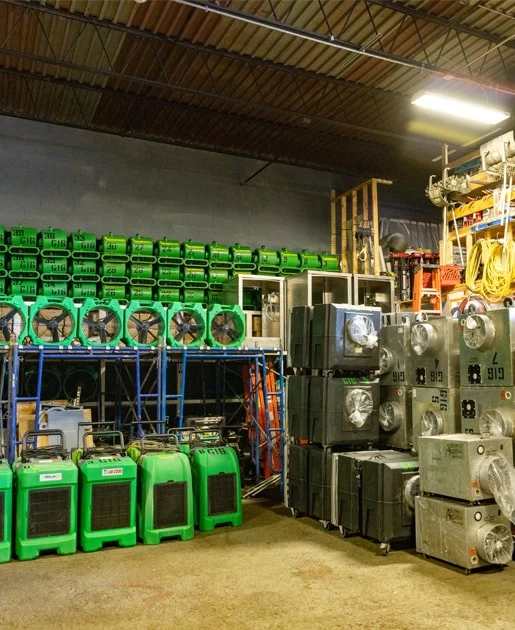
From there, we map moisture throughout the space using calibrated meters and thermal imaging. In a building with elevator pits, mechanical rooms, and utility corridors which describes most of the subterranean infrastructure in this part of Manhattan visible water is rarely the whole story. Moisture hides behind mechanical enclosures, inside insulation, and under flooring in ways you can’t see. Once the full picture is clear, extraction and drying equipment goes in. Industrial air movers, dehumidifiers, and in cases involving contamination, containment barriers and negative air pressure systems.
Before any demolition or material removal begins, pre-1987 buildings in New York City require an asbestos assessment under NYC DEP rules. We handle that in-house no waiting on a third-party inspector to clear the job before work can continue. Once remediation is complete, post-clearance testing confirms the space meets IICRC drying standards and air quality benchmarks. That final documentation is what gets handed to your insurance carrier, your building board, or whoever needs to sign off that the job is actually done.
Flooded Basement Cleaning Services, Financial District
Full-Scope Cleanup Built for Wall Street's Building Reality
A flooded basement cleanup in the Wall Street area covers more ground than it does almost anywhere else in the metro. The age of the building stock, the regulatory requirements specific to New York City, and the nature of the flooding sources here coastal surge, sewer backup, aging building infrastructure mean the scope of work is almost always more complex than it appears on the surface. Our service is built around that reality, not around a suburban template that gets stretched to fit.
Water extraction and structural drying are the foundation. But depending on what the assessment finds, the work may also include mold remediation under NYS DOL licensing requirements, asbestos abatement compliant with NYC DEP protocols, lead-safe work practices under NYC Local Law 31, and Category 3 decontamination if sewer backup was involved. All of that happens under one contractor, with one point of contact, and one complete documentation package at the end. No subcontracting the hazardous materials piece to someone else and hoping the paperwork lines up.
We also handle direct insurance billing, which matters considerably when you’re managing a flooding event in a multi-unit building where the claim involves common areas, mechanical systems, and potentially multiple units simultaneously. The Financial District’s residential buildings many of them converted commercial towers with complex shared infrastructure generate the kind of claims that need a contractor who knows how to document scope, communicate with adjusters, and produce the evidence that supports a complete and accurate claim settlement.
Does basement flooding in Wall Street buildings usually involve asbestos or lead?
In many cases, yes and it’s not something to assume away. Wall Street and the surrounding Historic District include buildings with construction histories going back to the 19th and early 20th centuries. Buildings constructed before 1960 in New York City have a very high probability of containing lead paint, and many pre-1980s buildings contain asbestos in pipe insulation, floor tiles, ceiling materials, and other components commonly found in basement and mechanical spaces. When a basement floods and remediation work begins removing saturated insulation, tearing out water-damaged materials, pulling up flooring those materials get disturbed.
NYC DEP requires an asbestos assessment before remediation work begins in any pre-1987 building. That’s not optional, and it’s not something a contractor without the proper licensing can handle legally. We carry active NYS DOL licenses for both asbestos abatement and lead abatement, so when the assessment finds something, the work doesn’t stop it continues under the appropriate licensed protocol. For building managers in the Financial District, this is one of the most important questions to ask any contractor before they start.
How quickly does mold start growing after a basement floods in Manhattan?
The EPA puts it at 24 to 48 hours and that window applies regardless of whether you’re in a suburban ranch house or a converted Art Deco tower on Wall Street. What changes in a Manhattan building is the consequence of missing that window. Mold in a subterranean mechanical room or basement corridor of a multi-unit building doesn’t stay contained to one space. It can move through shared wall cavities, HVAC systems, and utility chases in ways that eventually affect units far from the original flooding source.
That’s why response time is the most important variable in a flooded basement situation. If water has been sitting for more than a day or two before a crew arrives, the job almost certainly involves mold remediation in addition to water damage cleanup which means NYS DOL mold remediation licensing is required, the scope expands, and the timeline gets longer. Calling immediately after the flooding event is discovered not after you’ve spent a day trying to manage it yourself is what keeps the job manageable and the cost from escalating significantly.
What is Category 3 water damage, and is it common in Lower Manhattan basements?
Category 3 is what the IICRC calls “black water” water that contains sewage, bacteria, or other contaminants that make it genuinely hazardous. It’s not just dirty water. It requires a fundamentally different cleanup protocol: containment, full removal of any porous materials that contacted it, antimicrobial treatment, and air quality verification before the space is cleared for reoccupancy. You cannot simply extract Category 3 water, run dehumidifiers, and call it done.
In Lower Manhattan, Category 3 flooding is more common than most building managers expect. New York City uses a combined sewer system in much of Manhattan one pipe network that handles both stormwater and sewage. During heavy rainfall events, that system gets overwhelmed, and sewage-contaminated water backs up into basement drains. It happened during the remnants of Hurricane Ida in 2021, it happens during intense summer thunderstorms, and it happens during nor’easters that dump several inches of rain in a short window. If your basement has a floor drain and the building sits in Lower Manhattan, sewer backup is a realistic flooding scenario and it requires a contractor who will assess water category on arrival rather than assume the source.
Does homeowner or condo insurance cover flooded basement cleanup in Wall Street, NY?
It depends on the source of the flooding, and the distinction matters more than most people realize. Standard homeowner and condo insurance policies typically cover sudden and accidental water damage a burst pipe, a failed appliance, a sprinkler system malfunction. What standard policies typically exclude is flooding from an external source meaning storm surge, groundwater intrusion, or overland flooding of the kind that inundated Lower Manhattan during Sandy.
Flood insurance through the National Flood Insurance Program (NFIP) or a private flood policy covers the external flooding scenarios. If your building is in a FEMA-designated flood zone which parts of the Financial District are flood insurance is worth reviewing carefully, especially given the neighborhood’s documented storm surge history. We bill insurance carriers directly and can help document the damage in a way that supports the claim, regardless of which policy is responding. Getting the documentation right from the start is what prevents a legitimate claim from getting delayed or underpaid.
How long does a flooded basement cleanup take in a Financial District building?
For a straightforward water intrusion with no hazardous materials and no mold, structural drying typically takes three to five days once extraction is complete that’s the time needed to bring moisture levels in walls, framing, and concrete down to acceptable readings. The actual timeline depends on how much water was present, how long it sat before crews arrived, and what materials absorbed it. Concrete and masonry dry more slowly than drywall, and a basement with thick concrete walls common in the older building stock around Wall Street can take longer to fully dry than a finished suburban basement.
When the job involves asbestos assessment, mold remediation, or Category 3 decontamination, the timeline extends. Asbestos abatement in New York City follows specific NYC DEP protocols that include notification periods and air clearance testing before the space can be reopened. Mold remediation requires post-clearance air sampling to confirm the space is safe. These aren’t delays they’re required steps that protect the building’s occupants and the building manager’s liability. A realistic timeline for a complex job in a pre-war Financial District building is one to two weeks from initial response to final clearance documentation.
What should a Wall Street building manager do the moment a basement floods?
The first priority is safety if the flooding has reached electrical panels, boiler equipment, or elevator pit infrastructure, the building’s electrical systems in that area need to be shut off before anyone enters. In a Financial District building where the basement houses mechanical systems that serve the entire structure, a flooded basement is a building-wide emergency, not just a property damage event. Once it’s safe to enter, document everything with photos and video before anything is moved or touched. That documentation is the foundation of your insurance claim.
Then call us immediately not after you’ve spent a day trying to manage it with a shop vac and fans. Every hour that passes before professional drying equipment is in place is an hour closer to mold growth, and in a building where the basement connects to shared mechanical systems, that risk extends well beyond the flooded space itself. We’re available 24 hours a day for exactly this reason flooding doesn’t happen during business hours, and the response window is too short to wait until morning. When you call, have the building address, an estimate of how much water is present, and any information you have about the likely source. That helps the crew arrive prepared for what they’re walking into.