Wantagh sits low, close to the bay, and close to the water table — and when a storm rolls through or a pipe lets go, basements here don’t just get damp. We respond 24/7 with licensed flooded basement cleanup built for exactly what South Shore homes deal with.
I needed a professional consultation explanation of procedure for safe removal of Asbestos in my apartment complex. Without having an account yet, I was very impressed with the caring, knowledgeable and generous advice offered by Jessica, and will look forward to doing business in the future. Thank you so much! I feel much more informed about a sometimes scary endeavor. Peace. Nancy Silva Mineola, NY.
Mia Munoz
Used this company to clean up some water flood in my house. They were fast and easy to work with.very professional, Would recommend to anyone!
Nini Valle
Great company, had a flood and they responded quickly and efficiently. Billed my insurance company directly. I highly recommend this company!
joe colapietro, jr
I had pipe freeze in my basement right before a snow storm and they made to within an hour to help start the clean up process. They we by our side throughout the entire process and even helped with the insurance company. They did such a great job with the cleanup, repair, remidiation, I contracted them to perform the repairs and finishes in the basement. They came with enough manpower and material to get the job done. Leo and Jessica were nothing but a pleasure to deal with!!
Cristian Arredondo c
I had some water damage in my home and Green Island was able to take care of my issue quickly and effectively. I am very pleased with the work they did. They responded quickly and were very professional.
Michael M
Outstanding service! From the office to the field crew everyone was friendly, helpful and responsive. I highly recommend Green Island Group.
When water gets into a Wantagh basement, the visible mess is only part of the problem. The bigger issue is what you can’t see — moisture that’s already working its way into concrete, drywall, and wood framing, setting the stage for mold growth that typically begins within 24 to 48 hours. A shop vac and a fan won’t catch that. Professional moisture readings will.
Wantagh’s housing stock is mostly postwar — built in the late 1940s through the 1970s — which means the homes here weren’t designed with today’s storm intensity in mind. Older drainage systems get overwhelmed. Sump pumps fail during power outages. And the water table in this part of Nassau County sits close enough to the surface that even a heavy rain event can push groundwater through a foundation wall without any storm surge involved. That’s not a dramatic scenario — it’s a Tuesday in April.
The goal after a flooded basement isn’t just dry. It’s confirmed dry, documented, and cleared of any secondary damage before it compounds. That’s what a complete cleanup actually looks like.
New York State requires a dedicated DOL Mold Remediator license to legally perform mold remediation. Not an IICRC certificate — an actual state-issued license. We hold it. We also carry the NYS DOL Asbestos certification, USEPA Lead/RRP certification, IICRC Water/Fire Damage certification, and a Nassau County General Contractor license. That’s the full stack — and it matters in Wantagh specifically, because most homes here were built before 1978, when asbestos floor tiles and lead-based paint were standard.
We serve Nassau County as a core territory, and Wantagh is not a name we added to a list. We work here regularly — in the same postwar Cape Cods and ranches along Wantagh Avenue and the surrounding streets that have been dealing with South Shore flooding long before Sandy made it national news. When you call us, you’re getting a company that knows this area, knows these homes, and holds every license needed to take the job from water extraction to finished restoration without handing you off to anyone else.
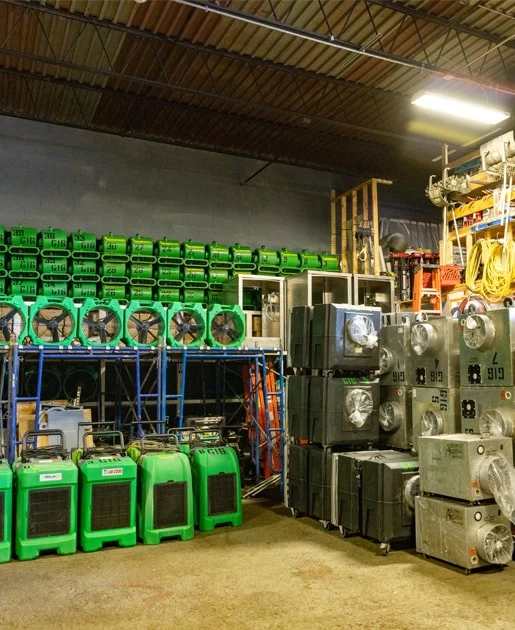
The first thing that happens when we arrive is an assessment — not just a visual walkthrough, but actual moisture readings using professional detection equipment. Water hides inside walls, under flooring, and in concrete that looks dry on the surface. In Wantagh’s older homes, that hidden moisture is especially common because the building materials absorb and hold water differently than newer construction. We find it before it finds you.
Once we know the full scope, extraction starts immediately. Depending on the source — storm surge, groundwater seepage, a burst pipe, or sewage backup — the category of water damage determines the decontamination protocol. Category 3 events, which include exterior floodwater and sewage, require a different level of cleanup than a clean water pipe failure. We identify which you’re dealing with and work accordingly. For homes in Wantagh built before 1978, we also assess for asbestos and lead before disturbing any materials — a step that’s legally required and one that most companies in this market skip because they’re not licensed to handle it.
After extraction and drying, we don’t just hand you a report and leave. Any structural work — drywall, framing, flooring — gets handled under our Nassau County General Contractor license, which covers Town of Hempstead permit requirements. You end up with a finished, usable basement, not a gutted shell waiting on a second contractor.
Most water damage companies in the Wantagh area can extract water and run drying equipment. That’s where a lot of them stop. What they can’t legally do — without the licenses we carry — is handle mold remediation under New York’s DOL requirements, assess or remove asbestos-containing materials, manage lead-based paint disturbance under EPA rules, or pull permits and complete structural restoration under a Nassau County General Contractor license. In a community where the majority of homes were built before 1978 and where the South Shore flooding risk is documented and ongoing, that gap matters.
What you get with us is the complete scope: water extraction, structural drying with professional moisture verification, mold assessment and remediation if needed, hazardous materials handling for older homes, and full structural restoration — drywall, framing, flooring — all under one roof. No subcontractors. No handoffs. No gaps in accountability.
We also help with insurance documentation. Standard homeowners insurance covers sudden accidental events like burst pipes, but it does not cover natural flooding from groundwater or storm surge — which is exactly the type of flooding Wantagh’s South Shore geography produces most often. We help you understand what you have, document the damage properly, and communicate with your carrier in a way that gives your claim the best possible footing.
Does homeowners insurance cover basement flooding from a storm in Wantagh?
This is one of the most common — and most painful — discoveries Wantagh homeowners make after a flooding event. Standard homeowners insurance covers sudden, accidental damage from internal sources like a burst pipe or a failed appliance. It does not cover flooding that originates outside the home — storm surge, groundwater intrusion, or coastal flooding. For a community that sits south of Sunrise Highway in a documented storm surge corridor, that’s a significant gap.
Flood coverage requires a separate NFIP (National Flood Insurance Program) policy or a private flood insurance policy. Many Wantagh homeowners learned this the hard way after Sandy. If you have flood insurance, the average NFIP claim payment has been close to $46,000 — which puts the cost of professional cleanup in real perspective. If you’re unsure what your policy covers, we can help you document the damage thoroughly so you’re in the best position possible when you contact your carrier, regardless of which type of coverage applies.
How quickly does mold start growing after a basement floods?
The EPA puts the window at 24 to 48 hours. That’s not a worst-case estimate — that’s the standard timeline under normal indoor conditions. In a Wantagh basement in spring or summer, where humidity is already elevated and the space may not have great air circulation, conditions can actually accelerate that timeline.
The 72-hour mark is the critical threshold in the restoration industry. If a basement is professionally extracted and dried within 72 hours of a flooding event, mold growth is unlikely. If that window passes — because the cleanup was delayed, incomplete, or done with consumer-grade equipment that doesn’t actually dry structural materials — a water damage event becomes a water damage and mold remediation event. That’s a meaningfully larger job, both in scope and cost. Speed isn’t just a convenience here. It’s the difference between two very different outcomes.
My Wantagh basement floods every spring — is that a drainage problem or a water table problem?
Honestly, it’s often both — and in Wantagh, the two are connected. The water table on Nassau County’s South Shore sits close to the surface, especially after winter snowmelt and spring rainfall saturate the ground. When that happens, the hydrostatic pressure against your foundation increases, and water finds its way through cracks, floor joints, and porous concrete even without a dramatic storm event.
At the same time, Wantagh’s stormwater drainage infrastructure — much of it built alongside the postwar housing stock in the 1950s and 60s — wasn’t designed for the rainfall intensity patterns that are increasingly common in the Northeast. The creek that runs north-south through the hamlet collects runoff from North Wantagh’s residential grid and channels it south toward the bay. When that system gets overwhelmed, homes near the creek bed flood. If your basement floods repeatedly in spring, a professional assessment can tell you whether you’re dealing with hydrostatic seepage, surface drainage failure, or both — and what the right fix actually looks like.
What is Category 3 water damage, and is it likely after a storm in Wantagh?
Water damage is classified in three categories based on contamination level. Category 1 is clean water — a burst supply line, for example. Category 2 is gray water from appliances, overflowing fixtures, or drainage backups. Category 3 is black water — sewage backup or exterior floodwater — and it’s classified as a biohazard. It contains bacteria, pathogens, and contaminants that require full decontamination protocols, not just extraction and drying.
In Wantagh, Category 3 events are not rare. Storm surge and coastal flooding bring exterior water into basements. Heavy rain events can overwhelm municipal sewer lines and cause sewage to back up through floor drains. The Army Corps of Engineers specifically mapped the Wantagh-Seaford flooding corridor after Sandy, and the contamination risk that comes with that type of event is real. If your basement flooded during or after a storm, there’s a reasonable chance you’re dealing with Category 3 water — which means the cleanup requires more than drying equipment. It requires licensed decontamination, and not every company in the area is equipped or trained to do it properly.
Do I really need a licensed contractor for flooded basement cleanup, or can I handle it myself?
For a small, clean water spill in a newer home, a capable homeowner with the right equipment might manage. But in Wantagh, where most homes were built before 1978 and where the flooding risk includes storm surge and groundwater intrusion, the DIY threshold drops quickly.
Here’s the practical issue: homes built before 1978 may contain asbestos floor tiles, asbestos pipe insulation, and lead-based paint. Disturbing those materials during a flood cleanup without proper licensing isn’t just risky — it’s a violation of EPA and NYS DOL regulations. Beyond that, New York State requires a dedicated DOL Mold Remediator license for any mold remediation work. Consumer-grade drying equipment also doesn’t reach the moisture levels inside concrete and wall cavities that professional equipment does, which means a basement that looks dry may still be harboring the moisture that feeds mold for weeks. The cost of doing it right the first time is significantly less than the cost of discovering it wasn’t done right three months later.
How much does flooded basement cleanup cost in Wantagh, NY?
The range is wide because the scope varies significantly. A clean water event in a smaller basement — a burst pipe, a failed sump pump — typically runs in the $1,600 to $4,000 range for professional extraction and drying. A more involved event involving Category 3 water, structural damage, or mold remediation can reach $8,000 to $12,000 or more, depending on square footage and the extent of affected materials.
For Wantagh homeowners specifically, a few factors tend to push jobs toward the higher end of that range: the age of the housing stock (pre-1978 homes require hazardous materials assessment), the type of flooding (storm surge and groundwater events are typically Category 2 or 3), and the frequency of the problem (chronic seepage that’s gone unaddressed often means more extensive mold and structural damage by the time a professional is called). The more useful comparison isn’t cleanup cost versus zero — it’s cleanup cost versus what happens when water damage goes unresolved in a home worth several hundred thousand dollars on the South Shore of Nassau County. FEMA estimates that just one inch of water causes roughly $25,000 in property damage. Professional cleanup is a fraction of that.