I needed a professional consultation explanation of procedure for safe removal of Asbestos in my apartment complex. Without having an account yet, I was very impressed with the caring, knowledgeable and generous advice offered by Jessica, and will look forward to doing business in the future. Thank you so much! I feel much more informed about a sometimes scary endeavor. Peace. Nancy Silva Mineola, NY.
Mia Munoz
Used this company to clean up some water flood in my house. They were fast and easy to work with.very professional, Would recommend to anyone!
Nini Valle
Great company, had a flood and they responded quickly and efficiently. Billed my insurance company directly. I highly recommend this company!
joe colapietro, jr
I had pipe freeze in my basement right before a snow storm and they made to within an hour to help start the clean up process. They we by our side throughout the entire process and even helped with the insurance company. They did such a great job with the cleanup, repair, remidiation, I contracted them to perform the repairs and finishes in the basement. They came with enough manpower and material to get the job done. Leo and Jessica were nothing but a pleasure to deal with!!
Cristian Arredondo c
I had some water damage in my home and Green Island was able to take care of my issue quickly and effectively. I am very pleased with the work they did. They responded quickly and were very professional.
Michael M
Outstanding service! From the office to the field crew everyone was friendly, helpful and responsive. I highly recommend Green Island Group.
When a basement floods in Washington Bridge, the problem is almost never just water. The buildings along these blocks most of them built before 1940 have steam heating systems wrapped in aging insulation, decades-old drain lines, and basement walls that have been absorbing moisture since before your grandparents were born. When that water gets in, it doesn’t stay on the surface. It moves into wall cavities, behind pipe chases, and into materials that look dry but aren’t. What you’re left with, if it isn’t handled correctly, is a mold problem that starts within 48 hours and a remediation job that costs three times what the original cleanup would have.
The other reality in this neighborhood is what’s actually in that water. Washington Heights sits on a combined sewer system the same pipes that carry stormwater also carry sewage. When a heavy storm overwhelms that system, what backs up into your building’s basement through the floor drain isn’t clean water. It’s Category 3 contamination. That requires a completely different protocol than a burst pipe, and most companies either don’t know that or aren’t equipped to handle it. After a proper cleanup, what you should have is a dry, tested, documented basement with written clearance that tells your insurance company, your tenants, and your building’s board exactly what was done and what the air quality readings confirmed.
That’s what done actually looks like here. Not a floor that appears dry. Verified dry, with the numbers to prove it.
Licensed Basement Flooding Remediation in Washington Bridge
The Licenses That Matter Most in Pre-War Manhattan
We hold active New York State Department of Labor licenses for water damage restoration, mold remediation, asbestos abatement, and lead abatement all of them, at the same time. That’s not a flex. In Washington Bridge, it’s a practical necessity. The buildings between the Harlem River and Broadway were built in an era when asbestos pipe insulation was standard and lead paint went on every surface. When a flood disturbs those materials, a company without the right licenses can’t legally finish the job. You’d be left coordinating between three separate contractors while your basement sits wet and the mold clock runs.
We have an established presence serving Washington Bridge and the broader Washington Heights area. We’ve worked in the pre-war building stock here the boiler rooms, the pipe chases, the basement apartments near Highbridge Park and we understand what these jobs actually involve. We bill insurance carriers directly, manage the documentation, and handle the adjuster communication so that part of the process doesn’t fall on you.
Flooded Basement Cleaning Process Washington Bridge
What Happens From the First Call to Final Clearance
The first thing that happens when you call is dispatch. We operate 24/7, and with direct access via the Trans-Manhattan Expressway off 181st Street, our crews can reach Washington Bridge from multiple directions without the delays that make a bad situation worse. On arrival, the first priority is assessment not just how much water is present, but what category it is, what materials it’s contacted, and whether there are any asbestos or lead hazards that need to be identified before work begins. In a pre-war building, that assessment step is not optional. It’s what separates a safe remediation from one that creates a liability.
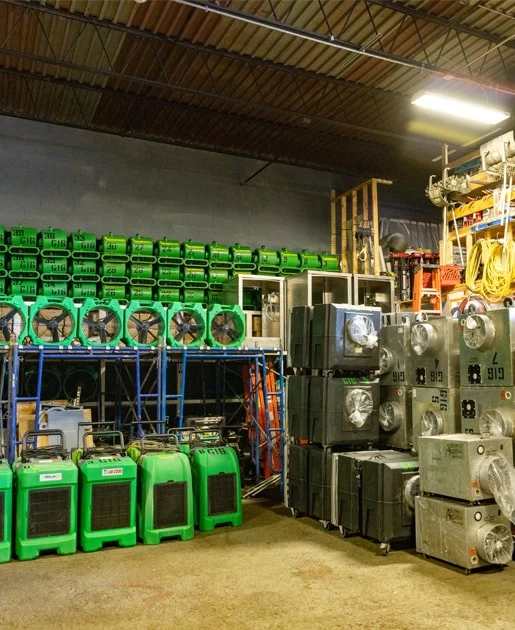
Once the scope is clear, extraction starts. Industrial water removal equipment pulls standing water out fast, and then the structural drying phase begins commercial dehumidifiers and air movers placed strategically based on where moisture readings show water has migrated, not just where the floor looks wet. Thermal imaging helps find what’s hiding inside walls and behind insulation. If the water is Category 3, the contaminated materials are treated and removed under the appropriate protocol before drying equipment goes in.
Throughout the job, moisture readings are logged. Drying goals are set based on IICRC S500 standards. When those goals are met, post-remediation air quality testing confirms the space is clear. You get written documentation of the entire process the kind that closes insurance claims and satisfies building management. Under NYC Local Law requirements and NYS DOL licensing rules, that paperwork isn’t just helpful. In many cases, it’s required.
Basement Flooding Remediation Services Washington Bridge, NY
Full-Scope Cleanup Built for NYC's Oldest Buildings
What we handle in a Washington Bridge basement goes well beyond water extraction. The full scope includes Category 3 sewage water cleanup under proper contamination protocols, structural drying with calibrated equipment and documented moisture targets, mold remediation licensed under NYS DOL requirements, asbestos abatement for the pipe insulation and floor tiles common in pre-1940 construction, lead abatement where required under NYC Local Law 1, selective demolition when materials can’t be dried in place, and post-remediation air quality testing with written clearance documentation.
That last piece the documentation matters more in Washington Bridge than in most places. Building owners in Manhattan Community District 12 are dealing with tenants, boards, and insurance carriers who all want proof. Verbal assurances don’t close claims or satisfy housing inspectors. Our process produces the written record that does.
For building supers and property managers, we also handle the insurance side directly. We document the loss, communicate with the adjuster, and bill the carrier which means you’re not managing a cleanup and a claims process at the same time. The service is the same whether you’re dealing with a flooded boiler room, a basement apartment affected by sewer backup, or a storage area with chronic water intrusion that’s finally become a mold problem. What changes is the protocol. What stays the same is that the job gets done completely, legally, and with the paperwork to prove it.
Is flooded basement water in Washington Bridge safe to clean up yourself?
In most cases in Washington Bridge, no and the reason is specific to how basements flood in this neighborhood. When the combined sewer system that serves Washington Heights gets overwhelmed during a storm, the water that backs up into building basements through floor drains is Category 3 contaminated water. That means it contains sewage, bacteria, and pathogens. Direct contact without proper protective equipment is a genuine health risk, and cleanup without the right protocol containment, removal of contaminated materials, antimicrobial treatment leaves biological hazards behind even after the floor looks clean.
There’s a second issue unique to pre-war buildings: asbestos. Steam heating systems in buildings constructed before 1940 commonly have pipe insulation that contains asbestos. When floodwater disturbs that insulation, it can release fibers into the air. Under New York State law, only licensed asbestos abatement contractors can legally handle that material. A building super cleaning up with a shop vac in a flooded boiler room is potentially disturbing asbestos without knowing it. The risk isn’t hypothetical it’s the specific combination of factors present in most Washington Bridge basements.
How quickly does mold start growing after a basement floods in an NYC apartment building?
The EPA puts the window at 24 to 48 hours from initial moisture exposure. In Washington Bridge’s pre-war buildings, that window can close even faster because of the materials involved. Masonry walls, dense pipe insulation, and wood framing that’s been absorbing humidity for decades are highly conducive to mold growth once they get wet. And because these buildings have complex mechanical systems boiler rooms, pipe chases, utility spaces moisture can migrate into areas that aren’t immediately visible and stay wet long after the surface looks dry.
The practical implication is that response time matters more here than in a newer building with modern materials. If you’re dealing with a flooded basement in Washington Bridge and you’re waiting to see if it dries out on its own, you’re likely past the mold growth window within two days. After 72 hours, materials that could have been dried in place may need to be removed instead. That’s a more expensive job, a longer timeline, and more disruption to the building. Getting professional equipment in during that first 48-hour window is the difference between a cleanup and a gut job.
Does homeowners or building insurance cover flooded basement cleanup in Washington Bridge, NY?
It depends on the cause of the flooding, and the distinction matters a lot in this specific neighborhood. Standard homeowners and building insurance policies typically cover sudden, accidental water damage a burst pipe, for example. What they often exclude is flooding caused by external sources, including storm surge or surface water. However, sewer backup coverage is frequently available as a rider, and given how often Washington Bridge basements flood due to combined sewer overflow during heavy rain, that rider is worth having.
For building owners in Manhattan Community District 12, the documentation we provide is directly relevant to how smoothly a claim gets processed. Insurance adjusters need an itemized scope of work, moisture readings, photographs of the loss, and post-remediation clearance documentation. We handle that documentation as a standard part of the job and bill carriers directly where coverage applies. If you’re unsure what your policy covers, we can help you understand what documentation your carrier will need before the adjuster arrives which puts you in a much stronger position than walking into that conversation without records.
What does a flooded boiler room cleanup in Washington Bridge actually involve?
A flooded boiler room in a Washington Bridge pre-war building is one of the more complex cleanup scenarios in the NYC metro area, and it’s worth understanding why. These rooms contain the building’s heating system typically a steam boiler with a network of pipes running throughout the building and those pipes are very often wrapped in asbestos-containing insulation. Before any water extraction or drying equipment goes in, a licensed contractor needs to assess whether that insulation has been disturbed and whether asbestos abatement is required before the rest of the work can proceed. Under NYS DOL regulations, that’s not optional.
Once the hazard assessment is complete, the process involves extracting standing water, removing any contaminated or unsalvageable materials under the appropriate protocol, setting up structural drying equipment targeted at the specific moisture readings in that space, and treating surfaces with antimicrobial agents where Category 3 contamination is present. The boiler itself needs to be assessed by a qualified technician before it’s returned to service that’s a building management responsibility, but we can coordinate the sequencing so the remediation doesn’t delay the building’s heat restoration longer than necessary. The whole job is documented from start to finish for insurance and building management records.
How do I know the basement is actually dry and safe after cleanup, not just dry on the surface?
This is the right question to ask, and the honest answer is that you can’t tell with your eyes. A floor can look and feel dry while the wall cavity behind it is still holding moisture at a level that will grow mold within days. The only way to know is with calibrated moisture meters that measure moisture content inside building materials not just on the surface and with post-remediation air quality testing that confirms mold spore levels are within acceptable ranges.
Our process sets specific drying goals at the start of the job based on IICRC S500 standards, then tracks moisture readings throughout the drying phase until those goals are met. When the numbers confirm the structure has reached target moisture levels, post-remediation air quality testing is conducted. The results along with the moisture log, the scope of work, and the methods used are compiled into written clearance documentation. For Washington Bridge building owners dealing with tenants, boards, or insurance carriers, that written clearance is what actually closes the loop. It’s the difference between telling someone the basement is safe and being able to prove it.
Can Green Island Group handle a flooded basement in a Washington Heights building with multiple affected units?
Yes, and multi-unit scenarios are something we’re specifically set up to handle. In Washington Bridge’s dense residential buildings, a basement flood doesn’t always stay in the basement. Water can migrate through floor penetrations into ground-floor units, travel along pipe chases to upper floors, or affect basement apartments that are directly in the path of the intrusion. When that happens, the scope of the job expands beyond a single space, and coordinating multiple licensed contractors to cover different parts of the building creates delays and gaps in accountability.
Because we hold active licenses for water damage restoration, mold remediation, asbestos abatement, and lead abatement, we can follow the damage wherever it goes in the building without stopping work to bring in a separate contractor. For property managers and building owners in Manhattan Community District 12, that single point of accountability matters both for the speed of the remediation and for the insurance documentation, which needs to reflect the full scope of the loss across all affected areas. We coordinate directly with building management and insurance carriers throughout the process, so the communication burden doesn’t fall entirely on the super or the owner while the building is still in an active emergency.