When West Hempstead's Sewers Back Up, Your Basement Pays the Price
West Hempstead’s aging combined sewer system doesn’t forgive a heavy storm — and your basement is usually the first thing that takes the hit. We handle flooded basement cleanup fast, completely, and with every license New York actually requires.
I needed a professional consultation explanation of procedure for safe removal of Asbestos in my apartment complex. Without having an account yet, I was very impressed with the caring, knowledgeable and generous advice offered by Jessica, and will look forward to doing business in the future. Thank you so much! I feel much more informed about a sometimes scary endeavor. Peace. Nancy Silva Mineola, NY.
Mia Munoz
Used this company to clean up some water flood in my house. They were fast and easy to work with.very professional, Would recommend to anyone!
Nini Valle
Great company, had a flood and they responded quickly and efficiently. Billed my insurance company directly. I highly recommend this company!
joe colapietro, jr
I had pipe freeze in my basement right before a snow storm and they made to within an hour to help start the clean up process. They we by our side throughout the entire process and even helped with the insurance company. They did such a great job with the cleanup, repair, remidiation, I contracted them to perform the repairs and finishes in the basement. They came with enough manpower and material to get the job done. Leo and Jessica were nothing but a pleasure to deal with!!
Cristian Arredondo c
I had some water damage in my home and Green Island was able to take care of my issue quickly and effectively. I am very pleased with the work they did. They responded quickly and were very professional.
Michael M
Outstanding service! From the office to the field crew everyone was friendly, helpful and responsive. I highly recommend Green Island Group.
Dry Floors Aren't Enough in a 1950s West Hempstead Home
Here’s what most homeowners in West Hempstead don’t realize until it’s too late: the water you can see is the easy part. In a home built in the 1940s or 1950s — which describes a huge portion of West Hempstead’s housing stock — moisture moves fast into wall cavities, original insulation, and wood framing. What looks dry on the surface can be quietly feeding mold growth behind the walls for weeks.
West Hempstead’s older Cape Cods and colonials weren’t built with modern waterproofing. They weren’t designed to handle the kind of storm events that now overwhelm the hamlet’s combined sewer system and push water back through basement floor drains. When that happens, you’re not dealing with clean water — you’re dealing with a contaminated backup that requires a completely different level of cleanup than a burst pipe would.
The outcome you’re looking for isn’t just a dry basement. It’s a basement that’s been properly extracted, dried to verified moisture levels, tested for hidden contamination, and cleared for safety — so you’re not dealing with a mold problem or a health issue three months from now. That’s what a complete flooded basement cleanup actually looks like.
New York State is one of the few states in the country that requires a dedicated mold remediator license — separate from a general contractor license, separate from an IICRC certification. We hold all of them. NYS DOL Mold License. NYS DOL Asbestos License. USEPA Lead and RRP certifications. IICRC Water Damage Restoration certification. Nassau County General Contractor license. That’s not a marketing list — it’s what legally qualifies us to handle every hazard a flooded basement in West Hempstead can present.
That matters here more than most places. With a median home construction year of 1952 and over 40% of homes built before 1950, a flooded basement in West Hempstead has a real chance of involving asbestos floor tiles, lead paint, or pipe insulation that can’t just be ripped out and tossed. We assess it, we handle it legally, and we do it all without handing you off to a second contractor for the rebuild. From the Lakeview section near Hempstead Lake State Park to the Cathedral Gardens area, we know West Hempstead — and we’re licensed to work throughout Nassau County.
What Actually Happens From First Call to Final Walkthrough
When you call, the first thing we’re doing is figuring out what you’re actually dealing with. Not all basement flooding is the same. A burst pipe is a Category 1 event — clean water, straightforward extraction. A sewer backup through a basement floor drain in West Hempstead is a Category 3 event — contaminated black water that requires full biohazard decontamination before anything else happens. We ask the right questions upfront so we show up prepared, not guessing.
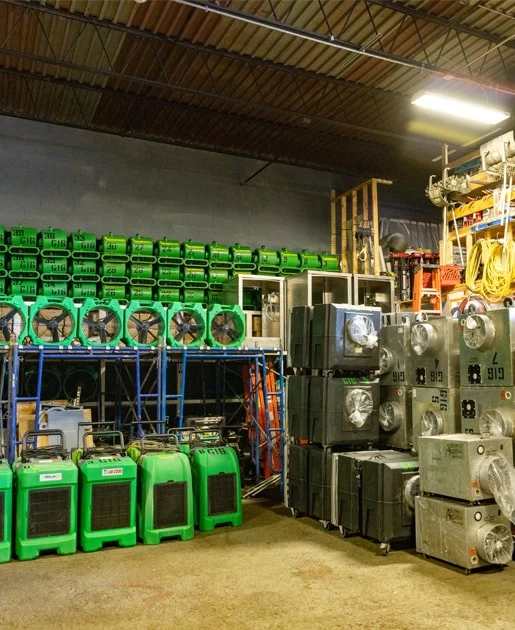
Once we’re on site, we extract the standing water, then we go deeper. Industrial drying equipment — not rental dehumidifiers — gets placed strategically based on the layout of your basement and where moisture is most likely to migrate. In a pre-1960 home with original framing and insulation, that means checking inside wall cavities with professional moisture meters, not just eyeballing the floor. If we find asbestos-containing materials that were disturbed by the water — floor tiles, pipe wrap, joint compound — we handle that under our NYS DOL Asbestos License before any demo work begins.
After drying is complete and moisture readings confirm the space is clear, we document everything for your insurance claim. If structural repairs are needed — drywall, subfloor, framing — our Nassau County General Contractor license means we can pull the permits through the Town of Hempstead and handle the full rebuild. You don’t coordinate a second contractor. We close the loop.
Built for Older Homes, Contaminated Water, and Nassau County Permits
What’s included in a flooded basement cleanup from us goes well beyond water extraction. Every job starts with a contamination assessment — because in West Hempstead, where the sewer system and the housing stock are both aging, the nature of the water matters as much as the volume of it. We determine the water category, remove standing water, and begin structural drying using commercial-grade equipment sized for the actual square footage of your basement.
For homes built before 1978 — which is the majority of West Hempstead — we follow USEPA Lead-Safe Work Practices on any work that disturbs painted surfaces. If there’s any indication of asbestos-containing materials in the basement, we test and handle it under our NYS DOL Asbestos License before a single tile gets touched. This isn’t optional in New York. It’s the law, and it’s what protects your family and your home’s value.
Once the space is dry and cleared, we provide full documentation for your insurance carrier — damage reports, moisture readings, photo records, and remediation logs. If your basement needs to be rebuilt — new drywall, insulation, subfloor, or anything structural — we handle that under our Nassau County General Contractor license, permitted through the Town of Hempstead. One company, start to finish.
Why does my West Hempstead basement flood every time it rains hard?
West Hempstead runs on an aging combined sewer system — meaning stormwater and sewage share the same pipes. During heavy rain, those pipes can become overwhelmed, and when they do, the water has nowhere to go except back up through the lowest point in the system — which is usually your basement floor drain. This isn’t a problem with your home specifically. It’s a known infrastructure issue in West Hempstead, and it affects homes throughout the hamlet, particularly older Cape Cods and colonials that were built when the system was designed for a fraction of today’s storm intensity.
The flat terrain across Nassau County makes this worse. Unlike areas with natural grade and runoff, West Hempstead’s landscape doesn’t drain quickly. Water saturates the ground, raises the water table, and creates hydrostatic pressure against basement walls — sometimes pushing water through the foundation itself even without a direct drain backup. If your basement floods consistently during storms, the answer isn’t just a better sump pump. It’s understanding the specific entry point and addressing it properly.
How quickly does mold start growing after a basement flood?
The EPA recommends starting cleanup within 24 to 48 hours of water intrusion. The broader industry standard is clear: if a basement is fully dried within 72 hours, mold growth is unlikely. Beyond that window, you’re no longer just dealing with a water damage job — you’re dealing with a mold remediation job on top of it, and costs increase significantly.
In an older West Hempstead home with original wall insulation, wood framing, and decades-old drywall, the conditions for mold are almost ideal once moisture gets in. Organic materials, warmth, and trapped humidity create exactly what mold needs to establish behind walls and under subfloors — in places you won’t see until you smell it. That’s why response time matters so much. The longer the moisture sits, the deeper it migrates, and the more of your home’s structure becomes involved. Getting a crew in fast isn’t about urgency for its own sake — it’s about keeping a manageable cleanup from turning into a major remediation.
Does my homeowners insurance cover a flooded basement in West Hempstead?
It depends on the cause, and the distinction matters a lot. Standard homeowners insurance typically covers sudden, accidental water damage — a burst pipe, a failed water heater, an appliance malfunction. What it generally does not cover is flooding from natural causes, groundwater intrusion, or water that backs up through a sewer or drain unless you have a specific sewer backup rider on your policy.
In West Hempstead, where a significant portion of basement flooding is tied to the combined sewer system backing up during heavy rain, many homeowners are surprised to find their standard policy doesn’t apply. If you have a sewer backup endorsement, you may be covered — but coverage limits vary. Flood insurance through FEMA’s National Flood Insurance Program covers natural flooding but has its own exclusions and waiting periods. The most important thing you can do immediately after a basement flood is document everything before cleanup begins — photos, video, moisture readings. Proper documentation is what makes or breaks an insurance claim, and it’s part of what we provide on every job.
My West Hempstead home was built in the 1950s — does that affect the cleanup process?
Yes, significantly. Homes built in the 1940s and 1950s — which describes a large portion of West Hempstead’s housing stock — were constructed with materials that are now regulated hazards. Floor tiles from that era frequently contain asbestos. Pipe insulation and joint compound may as well. Paint on basement walls and structural elements in pre-1978 homes may contain lead. When a flood disturbs these materials, you can’t just extract the water and start tearing things out.
Under New York State law, any disturbance of asbestos-containing materials requires a licensed asbestos contractor — not just someone who’s “seen it before.” USEPA regulations require Lead-Safe Work Practices on renovation work in pre-1978 homes. We hold both the NYS DOL Asbestos License and the USEPA Lead/RRP certification. Before any demolition or material removal begins in your basement, we assess what’s there and handle it legally. This protects your family during the cleanup and protects you from liability down the road.
How long does it take to completely dry out a flooded basement?
For most residential basements with clean water intrusion and no structural complications, professional drying typically takes three to five days using commercial-grade equipment. Contaminated water events, larger spaces, or basements with finished walls and ceilings can extend that timeline to a week or more — because moisture trapped inside wall assemblies takes longer to extract than surface water.
The key word is “verified.” Drying isn’t complete when the floor looks dry — it’s complete when professional moisture meters confirm that wall cavities, subfloor assemblies, and structural framing have returned to acceptable moisture content levels. In an older West Hempstead home where the wall insulation may be original and the framing is decades old, that verification step matters more than it would in a newer construction. Consumer dehumidifiers and fans can create the appearance of a dry basement while leaving elevated moisture levels inside the walls — which is exactly the condition that leads to mold growth weeks later.
Is it safe to stay in my house while the basement is being cleaned up?
In most clean-water flooding scenarios — a burst pipe, a failed appliance — staying in the home during cleanup is generally fine, provided the affected area is isolated and the mechanical systems (HVAC, electrical) haven’t been compromised. The bigger concern is air quality and contamination spread, particularly if the HVAC system’s air handler or ductwork is located in the basement, which is common in West Hempstead’s older Cape Cods and colonials.
If the flooding involved a sewer backup — which is a real and documented risk in West Hempstead given the hamlet’s combined sewer system — the situation changes. Category 3 black water contains bacteria and pathogens that require full biohazard protocols. In that scenario, limiting access to the basement and increasing ventilation in the rest of the home is strongly advisable until decontamination is complete. If asbestos-containing materials were disturbed during the flood, that’s a separate containment consideration entirely. We assess all of this on arrival and give you a straight answer about what’s safe and what isn’t — so you’re not guessing while the work is happening.