When Your Whitestone Basement Floods, You Need a Response in Minutes, Not Hours
Green Island Group responds to flooded basements in Whitestone in under an hour licensed, insured, and ready to handle everything from water extraction to full reconstruction. We operate 24/7 because basement floods don’t wait for business hours, and neither do we.
I needed a professional consultation explanation of procedure for safe removal of Asbestos in my apartment complex. Without having an account yet, I was very impressed with the caring, knowledgeable and generous advice offered by Jessica, and will look forward to doing business in the future. Thank you so much! I feel much more informed about a sometimes scary endeavor. Peace. Nancy Silva Mineola, NY.
Mia Munoz
Used this company to clean up some water flood in my house. They were fast and easy to work with.very professional, Would recommend to anyone!
Nini Valle
Great company, had a flood and they responded quickly and efficiently. Billed my insurance company directly. I highly recommend this company!
joe colapietro, jr
I had pipe freeze in my basement right before a snow storm and they made to within an hour to help start the clean up process. They we by our side throughout the entire process and even helped with the insurance company. They did such a great job with the cleanup, repair, remidiation, I contracted them to perform the repairs and finishes in the basement. They came with enough manpower and material to get the job done. Leo and Jessica were nothing but a pleasure to deal with!!
Cristian Arredondo c
I had some water damage in my home and Green Island was able to take care of my issue quickly and effectively. I am very pleased with the work they did. They responded quickly and were very professional.
Michael M
Outstanding service! From the office to the field crew everyone was friendly, helpful and responsive. I highly recommend Green Island Group.
When the water’s gone, you want to know it’s actually gone not just off the floor. Hidden moisture sitting in the walls of a 1950s block foundation doesn’t announce itself. It just grows. We use thermal imaging to find what eyes miss, so by the time we leave, you’re not crossing your fingers hoping the job was done right.
Whitestone has one of the most documented flooding histories in all of Queens. The city spent $128 million in 2024 upgrading the sewer system here specifically because residents had been dealing with chronic basement flooding for years. That new infrastructure helps but it doesn’t fix your aging drain lateral, your sump pump, or the hydrostatic pressure pushing against your foundation from the East River water table. Those are private-side problems, and that’s exactly where we work.
Homes throughout Whitestone were built mostly in the 1950s and 1960s. That means basement walls, pipes, and framing that were never designed with today’s storm intensity in mind. A proper basement water cleanup here isn’t just about extraction it’s about understanding what’s behind the walls, what materials might be present, and making sure the remediation is done in a way that actually protects a home worth close to a million dollars or more.
Licensed Basement Flooding Remediation in Whitestone
Every License This Job Legally Requires We Hold Them
Green Island Group is a full-service environmental remediation and restoration company serving Whitestone and the broader Queens area. We hold the NYS DOL Mold License, NYS DOL Asbestos License, IICRC Water Damage certification, USEPA Lead and RRP certifications, and an active NYC General Contractor license. That’s not a list we rattle off to sound impressive it’s the actual stack of credentials required to do this work legally and completely in New York City.
Most of the homes near Francis Lewis Boulevard and throughout the 11357 ZIP code were built before 1978. That means there’s a real chance your basement has asbestos pipe insulation, lead paint, or both. A company without the right licenses has to either stop work when they find those materials or pretend they didn’t. We don’t have that problem.
We operate 24 hours a day, seven days a week, and we bill your insurance directly. You don’t need to manage the claim we handle the documentation, the adjuster communication, and the paperwork so you can focus on your home.
What Actually Happens From First Call to Finished Basement
You call, and we’re moving. Response time in Whitestone is under an hour. When we arrive, the first thing we do is assess the water source and contamination category clean water from a burst pipe is handled differently than a sewage backup, and in a neighborhood with aging cast iron drain lines like Whitestone, backups are more common than people expect. Knowing what you’re dealing with upfront determines how the entire job is handled.
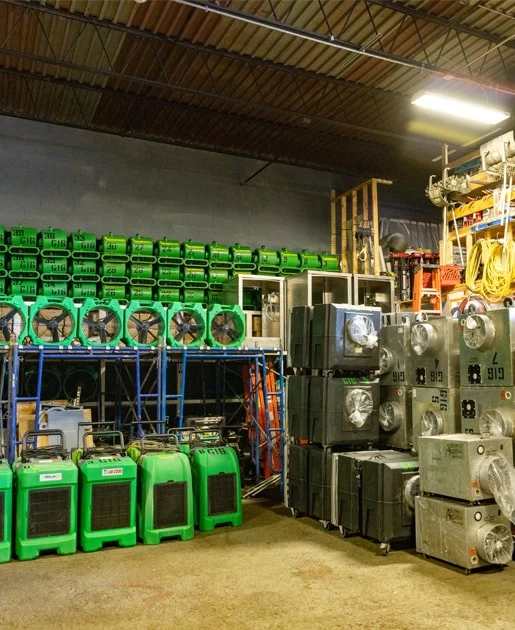
Once the assessment is done, we extract standing water using industrial-grade equipment and set up commercial drying systems throughout the affected space. This isn’t a fan-and-dehumidifier situation it’s calibrated drying based on moisture readings taken at multiple points, including inside walls and under flooring. In Whitestone’s older homes, moisture migrates into plaster walls and original wood framing in ways that surface-level drying simply won’t reach.
From there, we move into the remediation phase sanitization, mold prevention treatment, and if needed, full mold remediation under our NYS DOL Mold License. If the flood revealed structural damage, rotted framing, or anything that requires reconstruction, we handle that too under our NYC General Contractor license. No handoffs, no gaps, no “that part isn’t our department.” One company takes it from flooded to finished.
Built for Whitestone's Older Homes and Real Flood Risks
Flooded basement cleanup in Whitestone isn’t a one-size situation. A Malba waterfront property that took on storm surge from a nor’easter looks completely different from a mid-block Colonial on a side street off the Whitestone Expressway dealing with a failed sump pump. We handle both and everything in between.
What’s included goes beyond water removal. Every job we do covers full extraction, structural drying with documented moisture readings, antimicrobial treatment, and a detailed damage report formatted for your insurance carrier. If hazardous materials are identified asbestos insulation on old basement pipes, lead paint on block walls we’re licensed to handle them in the same engagement. You don’t get handed off to a separate hazmat company mid-job.
For basements that need reconstruction after the cleanup, our NYC General Contractor license means we can pull permits, manage the rebuild, and bring the space back to finished condition. Given that homes in the 11357 ZIP code are valued anywhere from $930,000 into the millions, cutting corners on the back end of a flood job isn’t something we’re willing to do and it’s not something you should accept from anyone working in your home.
Does the new Whitestone sewer system mean my basement won't flood anymore?
The $128 million sewer project completed in Whitestone in May 2024 was a significant improvement nearly six miles of new storm sewers across more than 120 blocks, specifically designed to reduce the combined sewer overflows that had been flooding basements here for years. The NYC DEP Commissioner acknowledged directly that Whitestone residents had reported chronic flooding for a long time, and this project was the city’s response to that.
That said, the new public infrastructure addresses one specific cause of basement flooding: combined sewer overflow during heavy rain events. It does not touch the private-side infrastructure inside your property. Your drain lateral running from the basement floor drain to the city main, your foundation waterproofing, your sump pump, and your internal plumbing are all still subject to the same age-related vulnerabilities they’ve always had. Whitestone’s housing stock was built primarily in the mid-20th century, and those systems weren’t designed for today’s rainfall intensity. The city fixed their part the rest is still on you.
How quickly does mold start growing after a basement flood?
Mold can begin establishing itself within 24 to 48 hours of a flood event sometimes faster if the space is warm and the moisture level is high. By 72 hours, active mold growth is likely in any area where water made contact with organic material: wood framing, drywall, insulation, cardboard boxes, anything porous. Waiting on cleanup doesn’t just extend the problem it compounds the cost. Mold remediation added on top of a cleanup that was delayed by even a few days can add thousands of dollars to the total job.
In Whitestone’s older homes, this window matters even more. Plaster walls, original wood framing, and block foundations absorb moisture differently than modern construction materials they hold it longer and release it slower. What looks dry on the surface can still be wet two inches in. That’s why documented moisture readings and thermal imaging aren’t optional extras on a job here they’re how you actually confirm the space is dry before you close it back up.
Does homeowners insurance cover flooded basement cleanup in Whitestone, NY?
It depends on the cause, and this is where a lot of homeowners get surprised. Standard homeowners insurance typically covers sudden and accidental water damage a burst pipe, a failed water heater, an appliance leak. It generally does not cover flooding from external sources like storm surge, groundwater intrusion, or rising water from outside the home. For that type of coverage, you’d need a separate flood insurance policy, typically through the National Flood Insurance Program.
In Whitestone, where the East River is the northern boundary and parts of the neighborhood particularly near Malba and the waterfront sit in designated flood zones, knowing which policy covers which scenario is genuinely important. If your basement flooded from a sewage backup, that may require a separate sewer backup rider on your homeowners policy. The average water damage claim through homeowners insurance runs close to $14,000, and NFIP claims can reach $52,000 or more. We bill insurance directly and work with your adjuster, which means we handle the documentation and communication so you’re not navigating that process alone while also dealing with a flooded basement.
What if my Whitestone basement has asbestos pipes can you still do the cleanup?
Yes and this is actually one of the more important questions to ask any restoration company before you hire them for a job in Whitestone. The majority of homes in the 11357 ZIP code were built between the 1940s and 1960s, and asbestos pipe insulation on basement heating systems was standard practice during that era. When a basement floods, that insulation can be disturbed, damaged, or made friable meaning it can release fibers into the air if it’s handled improperly.
We hold the NYS DOL Asbestos License, which is the legal authorization required to handle asbestos-containing materials in New York State. Most water damage restoration companies do not hold this credential. When they encounter asbestos during a cleanup, they either have to stop the job entirely or proceed without the legal authorization to do so neither of which is a good outcome for you. We can identify, contain, and properly handle asbestos materials within the same project scope, so the cleanup doesn’t get derailed when something unexpected turns up behind the walls or around the pipes.
How much does flooded basement cleanup typically cost in Queens, NY?
The range is wide because the variables are wide. A clean water event from a burst pipe in a finished basement might run $3,000 to $7,000 for extraction, drying, and basic remediation. A sewage backup or black water event in an older home with contaminated materials, potential hazardous content, and reconstruction needed on the back end can reach $30,000 to $60,000 or more. The single biggest cost driver is how long the water sat before professional cleanup began every hour increases the scope.
In Whitestone specifically, the age of the housing stock adds a layer of complexity that affects cost. If asbestos materials are present and need to be handled, or if lead paint is disturbed during the demolition phase, those require licensed remediation that adds to the total. That said, most of this cost runs through insurance and our documentation process is specifically designed to support a strong claim. We provide detailed damage reports, moisture logs, and photo documentation in the format adjusters expect, which directly affects how smoothly your claim moves.
Is Green Island Group familiar with flooded basement jobs specifically in Whitestone?
Whitestone is a neighborhood we know well not just geographically, but in terms of what the homes here actually look like and what tends to go wrong in them. The mid-century single-family homes throughout the 11357 ZIP code, the waterfront exposure near Malba and along the East River, the aging private drain infrastructure that the 2024 public sewer upgrade didn’t address these aren’t abstract talking points for us. They’re the actual conditions we work in when we respond to a call here.
We hold an active NYC General Contractor license, which means we’re specifically authorized to work within New York City limits not just on Long Island. A lot of restoration companies serving Queens are licensed for Nassau or Suffolk County but aren’t properly credentialed for work inside the five boroughs. That distinction matters when a job involves permits, regulated materials, or reconstruction in a New York City home. We’ve built the credential stack required to do this work completely and legally in Whitestone, and that’s not something every company calling themselves a restoration contractor can say.