When Your Woodbury Home Floods, the Next Hour Matters More Than You Think
When your basement floods, the clock starts immediately — and in a Woodbury home worth over a million dollars, who you call in the next hour shapes everything that follows. We respond 24/7 with the full licensing stack that Woodbury’s older housing stock actually demands. Most water damage companies hold one certification. We hold every license this job legally requires in New York State.
I needed a professional consultation explanation of procedure for safe removal of Asbestos in my apartment complex. Without having an account yet, I was very impressed with the caring, knowledgeable and generous advice offered by Jessica, and will look forward to doing business in the future. Thank you so much! I feel much more informed about a sometimes scary endeavor. Peace. Nancy Silva Mineola, NY.
Mia Munoz
Used this company to clean up some water flood in my house. They were fast and easy to work with.very professional, Would recommend to anyone!
Nini Valle
Great company, had a flood and they responded quickly and efficiently. Billed my insurance company directly. I highly recommend this company!
joe colapietro, jr
I had pipe freeze in my basement right before a snow storm and they made to within an hour to help start the clean up process. They we by our side throughout the entire process and even helped with the insurance company. They did such a great job with the cleanup, repair, remidiation, I contracted them to perform the repairs and finishes in the basement. They came with enough manpower and material to get the job done. Leo and Jessica were nothing but a pleasure to deal with!!
Cristian Arredondo c
I had some water damage in my home and Green Island was able to take care of my issue quickly and effectively. I am very pleased with the work they did. They responded quickly and were very professional.
Michael M
Outstanding service! From the office to the field crew everyone was friendly, helpful and responsive. I highly recommend Green Island Group.
The goal isn’t just getting the water out. It’s making sure your home is structurally sound, free of mold, and safe to live in — with documentation that holds up if you ever sell. That’s what a complete job actually looks like.
Woodbury’s housing stock tells a specific story. A large share of homes here were built in the 1950s and 1970s, and when those basements flood, water doesn’t just damage drywall. It can disturb asbestos floor tiles and lead-based paint that were standard materials in that construction era. A company that only handles water extraction isn’t equipped for what your home may actually contain — and in New York State, handling those materials without the right licenses isn’t just risky, it’s illegal.
Then there’s the groundwater reality that’s specific to this area. Long Island’s water table sits just a few feet below the surface, and after a heavy rain or a slow snowmelt, that table rises and pushes against your foundation from the outside. The marshlands along Trail View State Park on Woodbury’s eastern border contribute to elevated groundwater conditions throughout the community. This isn’t a pipe-burst situation you can dry out with fans and call it done. It’s a moisture problem that requires real detection equipment and a team that understands what’s happening beneath your foundation — not just inside your walls.
Every License Woodbury Homeowners Actually Need Under One Roof
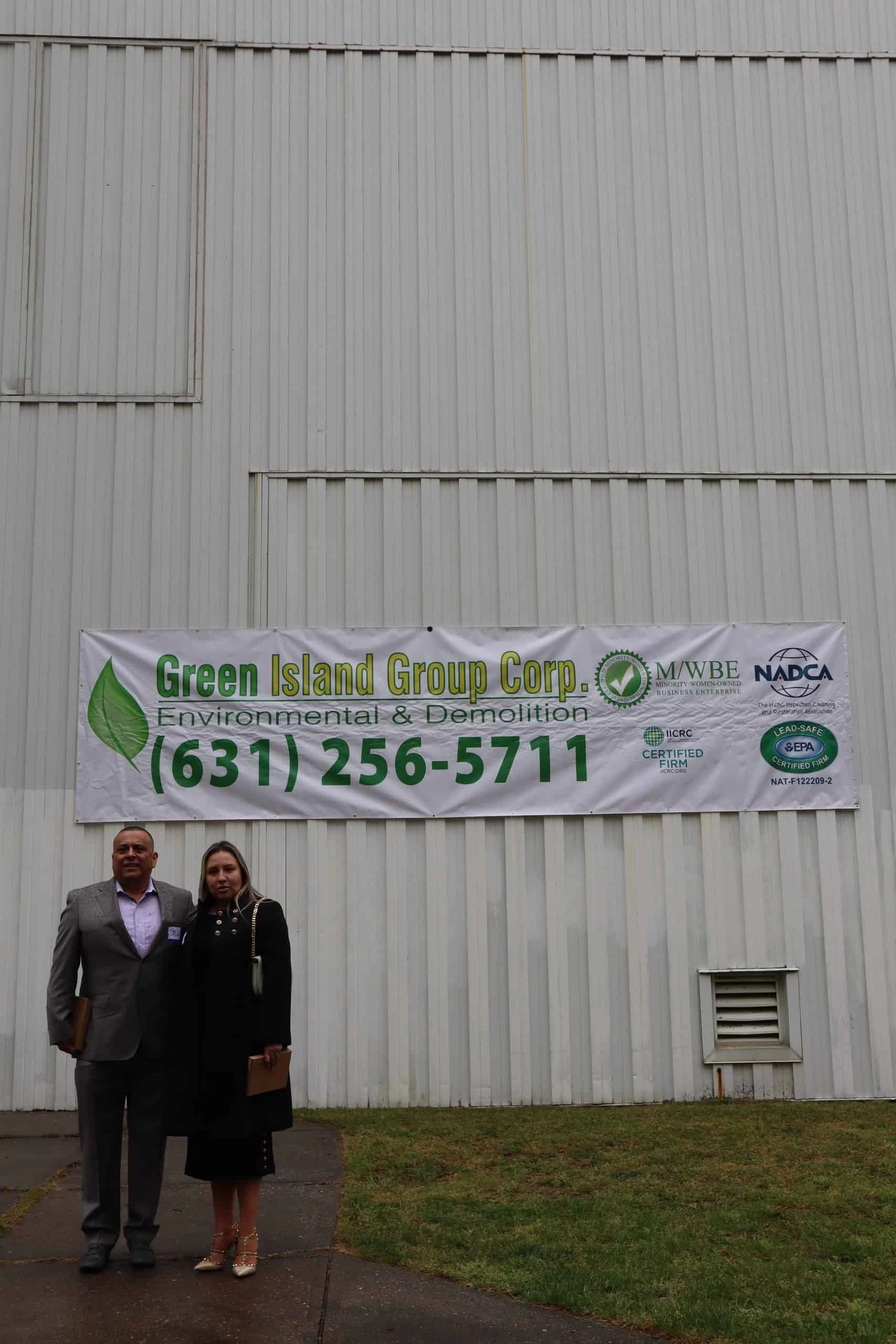
We hold the NYS DOL Mold License, NYS DOL Asbestos License, USEPA Lead and RRP certifications, IICRC Water and Fire Damage certification, and a Nassau County General Contractor license — all active, all verifiable. That combination matters in Woodbury specifically, where homes are older, values are high, and a single missed hazard can turn a cleanup job into a legal and financial liability.
Most companies operating in this space hold one certification, maybe two. When you’re dealing with a 1960s-era home near the Syosset Central School District — a community where property values are tied directly to the quality and condition of your home — the credentials of who you hire aren’t a minor detail. They’re the difference between a properly remediated basement and a problem that resurfaces at your next appraisal or resale disclosure.
We also handle your insurance documentation from the moment we arrive. That means damage reports, carrier communication, and a claim file built to support your coverage — not just a cleanup bill handed to you at the end.
What Happens From Your First Call to the Day Your Basement Is Restored
When you call, you reach a real person — not a call center routing your job to whoever’s available. We ask the right questions upfront so we show up prepared, not guessing. Given that mold can begin growing within 24 to 48 hours of water exposure, the first conversation matters.
On arrival, the first thing we do is assess the source and category of water. Clean water from a burst pipe is handled differently than groundwater seepage or a sewage backup — and in Woodbury, where aging lateral lines and sump pump failures during nor’easters are common, that category assessment shapes everything that follows. We use moisture meters and thermal imaging to find water that’s migrated behind walls and under flooring, because visible water is rarely the whole picture. Industrial extraction equipment removes standing water, and commercial-grade drying systems are set up to bring structural moisture levels down within the 72-hour window that prevents mold from taking hold.
If your home was built before 1980, we test for asbestos and lead before any demolition begins. This is a legal requirement in New York State, and it’s a step that many contractors skip. Once the space is fully dried and cleared, we handle all structural restoration — drywall, flooring, framing — under our Nassau County General Contractor license. You don’t need to find a second contractor or manage a handoff. We take it from the first call to the finished basement.
Basement Flooding Remediation Services Woodbury NY
Built for the Specific Hazards Woodbury Basements Actually Face
Flooded basement cleanup in Woodbury isn’t a one-size situation. The service we deliver here is shaped by what this community’s homes actually contain and what this area’s water table actually does. That means every job starts with a full moisture and hazard assessment — not just a visual walkthrough.
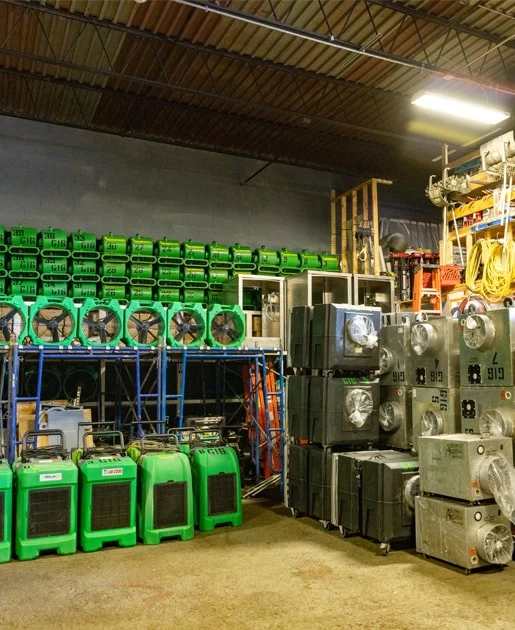
Water extraction and structural drying are the foundation. We use truck-mounted extraction units and industrial air movers calibrated to the specific square footage and material composition of your basement. For homes in communities like Hunters Run or The Preserve, where construction types and finished basement configurations vary significantly, the drying approach is customized to the actual conditions — not a standard setup applied to every job. Moisture readings are documented throughout the process so there’s a verifiable record that the space reached safe levels before we close it up.
Mold remediation is performed under our NYS DOL Mold License, which is a legal requirement for remediation work in New York — not a voluntary credential. If your home was built before 1980, asbestos and lead testing and abatement are handled in-house under our NYS DOL Asbestos License and USEPA Lead and RRP certifications. Full structural restoration — replacing damaged drywall, flooring, and framing — is completed under our Nassau County General Contractor license. And throughout the entire process, we’re building your insurance claim file so you’re not navigating that conversation alone.
Does homeowners insurance cover a flooded basement in Woodbury, NY?
It depends entirely on what caused the flooding, and this is where a lot of Woodbury homeowners get caught off guard. Standard homeowners insurance covers sudden and accidental events — a burst pipe, a failed water heater, an appliance overflow. It does not cover natural flooding from groundwater, stormwater, or rising water tables, which is actually the most common cause of basement flooding in Nassau County’s inland communities like Woodbury.
If your basement flooded because the water table rose after a heavy rain — which is exactly what happened during the August 2024 storm event that triggered New York State emergency assistance for Nassau County homeowners — your standard policy likely won’t cover it unless you also carry separate flood insurance through the National Flood Insurance Program. The distinction matters enormously when your home is worth over a million dollars and the repair estimate is in the tens of thousands. When we arrive, we document everything with insurance carriers in mind — the source, the extent, the affected materials — so your claim file is as strong as it can be regardless of which policy applies.
How quickly does mold start growing after a basement floods?
Mold can begin growing within 24 to 48 hours of water exposure, and the window to prevent it entirely is roughly 72 hours from the moment water enters the space. After that point, you’re no longer just dealing with water damage — you’re dealing with a mold remediation job on top of it, which adds time, cost, and complexity to the entire project.
In Woodbury, where a significant portion of homes are 50 to 70 years old, that timeline is even more consequential. Older construction materials — wood framing, older drywall compositions, organic insulation materials common in mid-century builds — absorb moisture faster and provide better conditions for mold growth than modern materials. If your basement has any finished areas with carpet, wood paneling, or drop ceilings, mold can establish itself in hidden cavities before it’s visible to the naked eye. This is why we use thermal imaging and moisture meters, not just visual inspection. Getting ahead of the 72-hour window isn’t an upsell — it’s the difference between a drying job and a full remediation.
My Woodbury home was built in the 1960s — do I need to worry about asbestos in a flooded basement?
Yes, and it’s something most water damage companies won’t bring up because they’re not licensed to handle it. Homes built before 1980 commonly contain asbestos in floor tiles, pipe insulation, ceiling tiles, and joint compound — all materials that may be present in a basement. When those materials get wet and damaged, they can become friable, meaning fibers can be released into the air during cleanup or demolition. Disturbing asbestos without proper containment and licensed abatement is a health hazard and a legal violation in New York State.
We hold the NYS DOL Asbestos License, which means we can test, contain, and properly abate asbestos-containing materials in your Woodbury home before any demolition work begins. If you hire a standard water damage company that isn’t licensed for asbestos, they either won’t touch those materials — leaving you to find a separate abatement contractor — or they’ll disturb them without proper protocols. Neither outcome is acceptable in a home of this value. We handle the assessment and abatement in-house so the job doesn’t stop halfway through waiting on a second contractor.
What's the difference between water extraction and full basement flood cleanup?
Water extraction is just the first step — it removes standing water from the floor. Full basement flood cleanup goes significantly further, and the difference matters more than most people realize until they’re dealing with the aftermath of a job that stopped too early.
After extraction, structural drying brings moisture levels in walls, floors, and framing down to safe thresholds. This takes industrial air movers, dehumidifiers, and moisture meters — not box fans from a hardware store. Then comes mold prevention and remediation if the timeline was tight or if moisture migrated into concealed cavities. In older Woodbury homes, that often means testing for asbestos and lead before any demolition of wet materials begins. Finally, full restoration replaces what had to come out — drywall, flooring, framing — so the basement is returned to its pre-loss condition. The cost difference between a partial cleanup and a complete one is significant upfront, but the cost of a partial cleanup that leads to mold, structural damage, or a failed home inspection six months later is almost always higher.
How much does flooded basement cleanup typically cost in Nassau County?
The range is wide because the variables are wide. Water damage restoration in Nassau County runs from roughly $1,000 to $7,600 for standard residential situations, but for the types of homes common in Woodbury — larger square footage, finished basements, older construction with potential hazardous materials — costs toward the higher end or beyond are realistic. FEMA estimates that just one inch of water causes approximately $25,000 in property damage, and when you factor in mold remediation, asbestos abatement, and full structural restoration, a comprehensive job on a mid-century Woodbury home can run higher than a basic cleanup estimate suggests.
The most important thing to understand is that the cost of doing it right the first time is almost always less than the cost of fixing a job that was done wrong or left incomplete. Mold that wasn’t fully remediated, moisture that wasn’t fully dried, asbestos that was disturbed without proper abatement — these aren’t just health risks, they’re disclosure liabilities when you sell a home in a market where the average property value exceeds $1 million. We give you a clear assessment of what the job actually requires before work begins, so there are no surprises partway through.
Why does Green Island Group hold so many licenses — and why does that matter for my Woodbury home?
Because the work a flooded basement actually requires in a home like yours spans multiple regulated categories — and in New York State, each one carries its own licensing requirement. Mold remediation requires an NYS DOL Mold License. Asbestos abatement requires an NYS DOL Asbestos License. Lead paint disturbance requires USEPA Lead and RRP certification. Structural restoration requires a General Contractor license — in Nassau County specifically, since that’s where Woodbury sits. These aren’t overlapping credentials. Each one covers a distinct scope of work, and doing that work without the corresponding license is illegal.
For Woodbury homeowners specifically, this matters because the housing stock here was built in an era when asbestos and lead were standard materials, and because New York State’s mold licensing law is one of the strictest in the country. A company that holds IICRC certification only — which is the most common credential you’ll see advertised in this space — is qualified to dry and extract, but not legally authorized to remediate mold, abate asbestos, or disturb lead paint. That means they either stop short of a complete job or they proceed without the proper authorization. When your home is worth over a million dollars and sits in one of the top-ranked school districts in the United States, the credentials of who you hire aren’t a formality. They’re the foundation of a job done right.