When Your Woodhaven Basement Floods, Every Hour Counts
Pre-war homes throughout Woodhaven don’t forgive a slow response to water intrusion. When water hits the basement of a Victorian or Colonial-era house in this neighborhood, we respond fast, handle your insurance claim, and are licensed for everything your basement might reveal mold, asbestos, lead, and full structural restoration.
I needed a professional consultation explanation of procedure for safe removal of Asbestos in my apartment complex. Without having an account yet, I was very impressed with the caring, knowledgeable and generous advice offered by Jessica, and will look forward to doing business in the future. Thank you so much! I feel much more informed about a sometimes scary endeavor. Peace. Nancy Silva Mineola, NY.
Mia Munoz
Used this company to clean up some water flood in my house. They were fast and easy to work with.very professional, Would recommend to anyone!
Nini Valle
Great company, had a flood and they responded quickly and efficiently. Billed my insurance company directly. I highly recommend this company!
joe colapietro, jr
I had pipe freeze in my basement right before a snow storm and they made to within an hour to help start the clean up process. They we by our side throughout the entire process and even helped with the insurance company. They did such a great job with the cleanup, repair, remidiation, I contracted them to perform the repairs and finishes in the basement. They came with enough manpower and material to get the job done. Leo and Jessica were nothing but a pleasure to deal with!!
Cristian Arredondo c
I had some water damage in my home and Green Island was able to take care of my issue quickly and effectively. I am very pleased with the work they did. They responded quickly and were very professional.
Michael M
Outstanding service! From the office to the field crew everyone was friendly, helpful and responsive. I highly recommend Green Island Group.
Most water damage companies will extract the water, run some fans, and hand you a bill. What they won’t tell you is that moisture left inside a plaster wall or under original hardwood flooring common in Woodhaven’s Victorian and Colonial homes will feed mold for weeks before you ever smell it. By the time it’s visible, you’re looking at a remediation job that costs thousands more than it would have a week earlier. The outcome you actually want isn’t just a dry floor. It’s a basement that’s been properly assessed, fully dried at the structural level, cleared of contamination, and documented for your insurance claim so you’re not dealing with this again in six months.
For Woodhaven homeowners specifically, that means accounting for things newer neighborhoods don’t have to think about. Roughly 58% of homes in this neighborhood were built before 1940. That’s asbestos pipe insulation in basement mechanical rooms. That’s lead paint in wall assemblies that get disturbed the moment you start pulling drywall. That’s cast-iron and clay sewer laterals that have been patched and re-patched for a century. When a basement floods in a home this old, the cleanup isn’t just a water problem it’s a potential hazardous materials event. We hold the NYS DOL Asbestos, USEPA Lead, and NYS DOL Mold licenses to handle all of it legally, under one roof, without stopping work and handing you off to someone else.
Licensed for What Woodhaven Basements Actually Contain
We’re a full-service environmental remediation and restoration company serving Queens and the five boroughs, with over 30 years of combined experience in exactly this kind of work. We hold more than 17 active certifications and licenses including NYS DOL Mold, NYS DOL Asbestos, USEPA Lead, IICRC Water Damage, and an NYC General Contractor license which means we’re not just equipped to clean up water. We’re legally authorized to handle everything a flooded basement in a century-old Woodhaven home can uncover.
We’ve worked throughout Woodhaven. We know the housing stock along Forest Parkway, we understand why the lower-elevation streets near Atlantic Avenue flood differently than the homes closer to Forest Park, and we know that the water table in this specific section of Queens County has been rising since public-supply pumping stopped in the 1974. That’s not something you read off a checklist it’s the kind of knowledge that changes how we assess a job and what we recommend when the water is gone.
What Happens From Your First Call to a Finished Basement
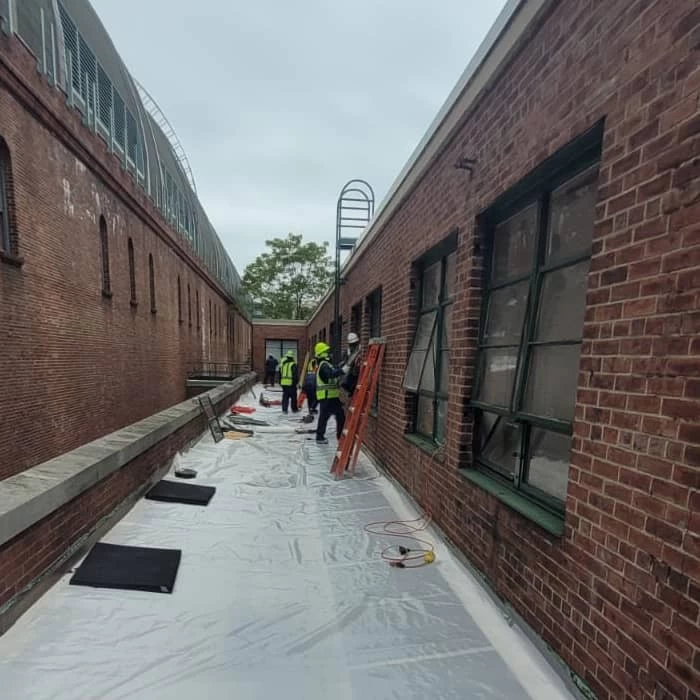
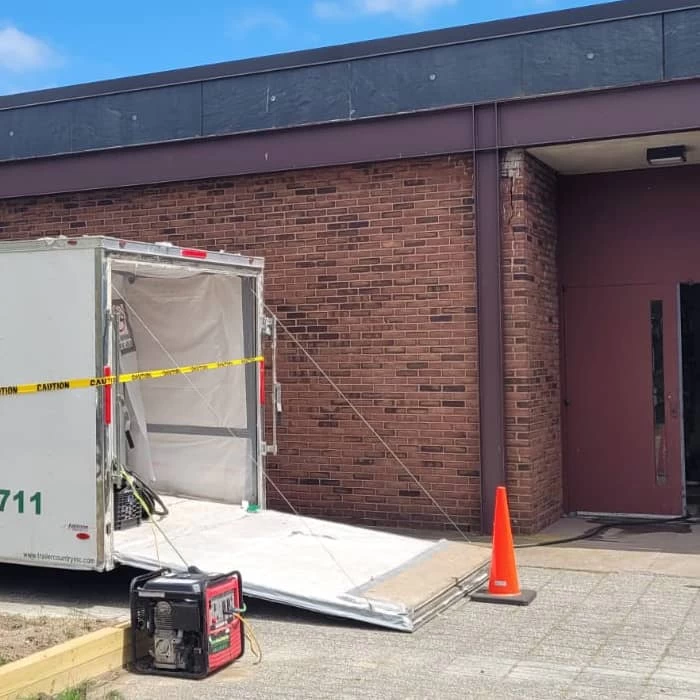
When you call, we respond typically within the hour. A licensed technician arrives, assesses the source and category of water intrusion, and begins extraction immediately. In Woodhaven, that assessment matters more than most places. We’re checking for sewer backup contamination, which is common here when the combined sewer system gets overwhelmed during heavy rain. We’re also scanning for hazardous materials in the basement assembly before any demolition starts. If your home was built before 1940, we treat that as a near-certainty until we’ve confirmed otherwise.
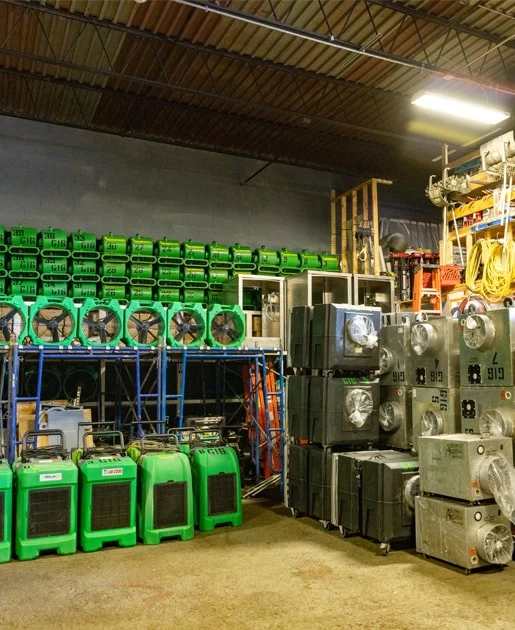
Once extraction is complete, we use thermal imaging to locate moisture inside wall cavities, under flooring, and behind original plaster areas where consumer dehumidifiers and fans simply can’t reach. Industrial drying equipment goes in, and we monitor moisture levels daily until the structure meets IICRC drying standards. If mold has already started which it can within 24 to 48 hours in a closed basement remediation happens as part of the same job, not as a separate call to a separate company.
From there, if reconstruction is needed, we handle that too. Drywall, flooring, mechanical room restoration we pull the necessary NYC Department of Buildings permits and take the job through to finished condition. You deal with one company, one point of contact, and one insurance claim. We document everything for your adjuster and bill your insurance directly wherever coverage applies.
Every License Needed for a Pre-War Woodhaven Basement
Flooded basement cleanup in Woodhaven isn’t a single service it’s a sequence of legally distinct work that requires separate certifications at each stage. Water extraction and structural drying require IICRC certification. Mold assessment and remediation require an active NYS DOL Mold License state law, not optional. If asbestos-containing materials are disturbed, that work requires NYS DOL Asbestos certification. If lead paint is present in a pre-1978 home, USEPA Lead and RRP certification is required before any renovation work begins. We hold all of these, which is why we can take a job from emergency water removal through complete structural reconstruction without stopping and referring you out.
For Woodhaven residents dealing with sewage backup which happens regularly when the neighborhood’s aging combined sewer system gets overwhelmed during storms the contamination classification matters. Sewage-affected water is Category 3, meaning it requires proper containment, removal, and disposal under NYC DEP protocols. We handle that classification correctly, which protects your family and keeps your insurance claim clean.
If your basement requires reconstruction after the cleanup is complete, we operate under our NYC General Contractor license and pull all required NYC Department of Buildings permits. That’s not a detail to overlook unpermitted reconstruction work in New York City can create serious problems when you sell the property. We do it right from the start so you don’t have to revisit it later.
Does homeowners insurance cover flooded basement cleanup in Woodhaven, NY?
It depends on the cause of the flooding, and this is where a lot of Woodhaven homeowners get caught off guard. Standard homeowners insurance typically covers sudden, internal water damage a burst pipe, a failed water heater, an appliance malfunction. What it usually does not cover is flooding from an external storm event, which requires a separate flood insurance policy through the National Flood Insurance Program or a private carrier.
The gray area that affects Woodhaven specifically is sewer backup. When the neighborhood’s combined sewer system gets overwhelmed during a heavy rain event something that happens multiple times a year in southwestern Queens sewage can back up through basement floor drains and toilet connections. Whether that’s covered depends on whether your policy includes a sewer backup endorsement, which is a separate add-on that many homeowners don’t realize they’re missing until they need it. We document damage thoroughly and communicate directly with your adjuster to make sure you receive fair coverage for everything that qualifies under your policy.
How fast does mold grow after a basement flood, and why does it matter?
Mold can begin growing inside wall cavities and under flooring within 24 to 48 hours of a flood event. After 72 hours without professional treatment, you’re typically looking at a remediation scope that costs $2,000 to $8,000 more than it would have if you’d called immediately. In Woodhaven’s pre-war housing stock, this problem is compounded by construction methods that don’t exist in newer homes. Plaster-and-lath walls, original hardwood subfloors, and dense basement insulation create pockets where moisture sits and mold grows completely out of sight. By the time you see a stain or smell something off, the remediation job is already significantly larger. Calling within the first few hours not after you’ve tried fans and a hardware store dehumidifier is the single most cost-effective decision you can make.
What makes flooded basement cleanup in an older Woodhaven home more complicated?
Age is the defining factor. Approximately 58% of Woodhaven’s homes were built before 1940, and many of the Victorian and Colonial homes near Forest Parkway are over 120 years old. Homes of that era were built with materials and systems that are now classified as hazardous: asbestos insulation wrapped around basement pipes and boilers, lead paint in wall assemblies that gets disturbed the moment demolition starts, and original cast-iron or clay sewer laterals that have degraded over decades and are prone to root intrusion and collapse.
When a basement in one of these homes floods, the cleanup can’t start with a shop vac and end with a dehumidifier. It requires a licensed assessment of what’s in the walls before anything gets torn out, and it requires certified handling of any hazardous materials that are found. Companies that don’t hold NYS DOL Asbestos and USEPA Lead certifications either skip that assessment which creates liability for you or stop work and refer you to a specialist, which adds time and cost. We’re licensed for all of it, so the job doesn’t stall when something unexpected turns up.
Why does Woodhaven have such a persistent basement flooding problem?
There are a few overlapping reasons specific to this neighborhood. First, Woodhaven sits in a section of Queens County where public-supply pumping ceased in 1974. Since then, the local water table has been rising a trend documented in USGS research specifically identifying this area. That means some Woodhaven basements face hydrostatic pressure from below, not just surface water intrusion from above. No amount of weatherproofing fixes a rising water table.
Second, the neighborhood’s combined sewer system which carries both stormwater and sewage in the same pipes was designed for a different era’s rainfall patterns. Queens now regularly sees 2 to 3 inches of rain fall in a matter of hours, which overwhelms the system and causes backups into basement connections. The southern section of Woodhaven, closer to Atlantic Avenue, sits at just under 30 feet above sea level and is the most vulnerable to surface water accumulation when drainage can’t keep up. If your basement has flooded more than once, it’s rarely bad luck it’s geography and infrastructure working against you.
How much does flooded basement cleanup typically cost in Queens, NY?
The range is wide because the scope varies significantly depending on the size of the basement, the category of water involved, and what’s found during the assessment. For most residential jobs, flooded basement cleanup runs between $4 and $12 per square foot, with total costs typically landing somewhere between $1,600 and $12,000. Sewage backup cleanup, which is Category 3 contamination, sits at the higher end of that range because of the containment, disposal, and sanitization requirements involved.
In Woodhaven specifically, the presence of hazardous materials in older homes can add to the scope. If asbestos-containing pipe insulation needs to be safely removed before drying can begin, or if lead paint is present in a disturbed wall assembly, those are additional licensed procedures with their own costs. Mold remediation, if the flooding wasn’t addressed quickly, adds another $2,000 to $8,000 depending on the extent of growth. The most useful thing you can do is call early not because it changes the assessment, but because catching it in the first 24 hours consistently results in a smaller, less expensive job than waiting a few days to see if it dries on its own.
Does Green Island Group handle the insurance claim for basement flooding in Woodhaven?
Yes and for most Woodhaven homeowners, this is one of the most valuable parts of working with us. We document the damage thoroughly from the moment we arrive: photos, moisture readings, contamination classification, and a detailed scope of work. That documentation is what your adjuster needs to process a fair claim, and it’s something that gets missed or underdone when homeowners try to manage the claim themselves while also dealing with an active emergency.
We bill insurance directly wherever coverage applies, and we communicate with your adjuster on your behalf throughout the process. Woodhaven has a large number of homeowners navigating insurance claims for the first time sometimes in a second language, sometimes without a clear understanding of what their policy actually covers versus what requires a separate endorsement. We’ve been through this process enough times to know where claims get underpaid and where adjusters push back, and we advocate for you at each of those points. You focus on your family and your home. We handle the paperwork.