When Brosewere Bay Backs Up, Your Woodsburgh Basement Pays
Woodsburgh sits right on the water — and when Southern Nassau County floods, it shows up in your basement first. We respond 24/7 with licensed flooded basement cleanup built specifically for South Shore homes like yours.
I needed a professional consultation explanation of procedure for safe removal of Asbestos in my apartment complex. Without having an account yet, I was very impressed with the caring, knowledgeable and generous advice offered by Jessica, and will look forward to doing business in the future. Thank you so much! I feel much more informed about a sometimes scary endeavor. Peace. Nancy Silva Mineola, NY.
Mia Munoz
Used this company to clean up some water flood in my house. They were fast and easy to work with.very professional, Would recommend to anyone!
Nini Valle
Great company, had a flood and they responded quickly and efficiently. Billed my insurance company directly. I highly recommend this company!
joe colapietro, jr
I had pipe freeze in my basement right before a snow storm and they made to within an hour to help start the clean up process. They we by our side throughout the entire process and even helped with the insurance company. They did such a great job with the cleanup, repair, remidiation, I contracted them to perform the repairs and finishes in the basement. They came with enough manpower and material to get the job done. Leo and Jessica were nothing but a pleasure to deal with!!
Cristian Arredondo c
I had some water damage in my home and Green Island was able to take care of my issue quickly and effectively. I am very pleased with the work they did. They responded quickly and were very professional.
Michael M
Outstanding service! From the office to the field crew everyone was friendly, helpful and responsive. I highly recommend Green Island Group.
When the water recedes, the real work begins. What most Woodsburgh homeowners don’t realize is that a basement that looks dry can still be holding moisture inside the walls, under the floor, and in the concrete itself. Left alone, that hidden moisture becomes a mold problem within 24 to 72 hours — and in a bay-adjacent community like Woodsburgh, where ambient humidity is already elevated, that window closes fast.
Getting your basement truly dry means more than running a shop vac and opening a window. It means industrial extraction equipment, professional moisture detection, and structural drying that reaches the places you can’t see. That’s the difference between a basement that’s actually remediated and one that just looks okay until it isn’t.
For Woodsburgh homeowners specifically, there’s another layer to this. Many homes in the village date back to the early 20th century. When water enters a basement in a home that old, it can disturb asbestos-containing floor tiles or expose lead-painted surfaces — materials that require licensed handling, not just cleanup. A company that holds only a water damage certification isn’t equipped for that. We hold the full licensing stack — NYS DOL Mold, NYS DOL Asbestos, and USEPA Lead/RRP — so the job gets done completely, legally, and safely the first time.
Licensed Basement Flooding Remediation Nassau County
Every License That Matters in New York, Under One Roof
New York State is one of the only states in the country that requires a dedicated Department of Labor license to perform mold remediation. That’s not a technicality — it means that a large portion of contractors marketing themselves as flood cleanup companies in Woodsburgh and the surrounding Five Towns cannot legally remediate mold if they find it. We hold the NYS DOL Mold license, along with IICRC Water Damage certification, NYS DOL Asbestos licensure, USEPA Lead/RRP certification, and General Contractor licenses for Nassau County, Suffolk County, and New York City.
That combination matters in Woodsburgh. This is a community of older homes, a high water table, and direct coastal exposure to Southern Nassau County storm events. The Five Towns area has been in the path of Sandy, Ida, and every nor’easter in between. When flooding happens here, it often isn’t simple. We’re also a NYS-certified minority- and women-owned business — a level of accountability and community investment that no national franchise operating in this ZIP code can match.
What Actually Happens From Your First Call to Final Clearance
When you call, you reach a real person — not a form, not a callback queue. From there, we dispatch a crew to your Woodsburgh home, and the first thing we do is assess the scope: where the water came from, what category it is, how far it has traveled, and whether any hazardous materials are involved. In a home built before 1978, that last question matters more than most people expect.
Water is categorized by contamination level. A burst pipe is clean water. A sewer backup or storm surge overflow — the kind that can affect homes near Brosewere Bay — is Category 3, which carries bacteria and biological hazards. The extraction and decontamination process for Category 3 water is fundamentally different from a simple pipe leak, and it requires licensed biohazard protocols, not just a pump and a fan. Our crew will identify which situation you’re dealing with and respond accordingly.
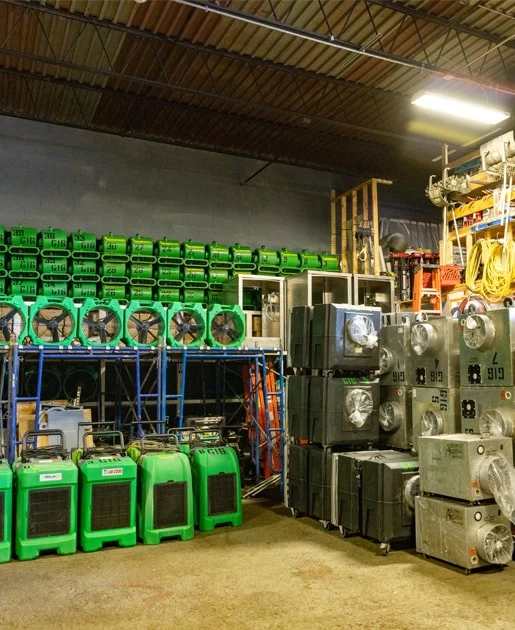
After extraction, we set up industrial air movers and dehumidifiers to dry the structure — not just the surface. Moisture readings are taken throughout the process to confirm the walls, subfloor, and concrete are reaching safe levels. If mold is found, we handle remediation under our NYS DOL Mold license. Once everything clears post-remediation verification, we can also handle the structural rebuild — drywall, flooring, framing — under our Nassau County General Contractor license. One company, start to finish.
Built for South Shore Homes, Not Generic Flood Jobs
Flooded basement cleanup in Woodsburgh isn’t a one-size-fits-all job. The South Shore water table is shallow, and homes in low-lying areas near Brosewere Bay can take on groundwater pressure flooding even without a named storm — just sustained rain and saturated ground is enough. Then add the coastal flood risk that comes with being south of Sunrise Highway in Southern Nassau County, and you’re dealing with a flooding profile that demands more than a basic extraction company.
Our flooded basement cleanup service covers water extraction, structural drying, moisture mapping, mold assessment and remediation, Category 3 biohazard decontamination when applicable, and full documentation for your insurance carrier. For older Woodsburgh homes where asbestos or lead may be present, we handle those hazards in-house under the appropriate licenses — no subcontracting, no handoffs, no gaps in accountability.
We also assist with insurance documentation and carrier communication, which is especially relevant here. If your flooding came from storm surge or tidal overflow rather than a sudden pipe failure, your standard homeowners policy may not cover it — but a separate NFIP flood insurance policy might. Many Woodsburgh homeowners carry both, and knowing which applies to your specific event can significantly affect your recovery. We’ve worked through this process with Nassau County homeowners before and can help you build the documentation your adjuster needs.
Does homeowners insurance cover basement flooding from a storm in Woodsburgh?
This is one of the most important questions to get right, and the answer depends entirely on what caused the flooding. Standard homeowners insurance covers sudden, accidental water damage — a burst pipe, a failed water heater, an appliance malfunction. It does not typically cover flooding that originates outside your home, including storm surge, rising groundwater, or tidal overflow from nearby bodies of water like Brosewere Bay.
For that type of flooding, you’d need a separate flood insurance policy — most commonly through the National Flood Insurance Program (NFIP). Many Woodsburgh homeowners carry both policies, but knowing which one applies to your specific event, and how to document the damage to satisfy your adjuster, is where a lot of claims go sideways. We assist with damage documentation and insurance communication as part of the cleanup process, so you’re not navigating that on your own while also dealing with a flooded basement.
How quickly does mold start growing after a basement floods in Woodsburgh?
The industry standard is 24 to 72 hours from initial water exposure. In a bay-adjacent community like Woodsburgh, where ambient humidity levels are already higher than inland Nassau County, conditions can favor mold growth even faster than that benchmark suggests.
What makes this especially important is that mold doesn’t always start where you can see it. It begins in wall cavities, behind baseboards, under flooring, and in insulation — places that look fine on the surface but are still holding moisture. By the time visible mold appears, it’s already been growing for a while. Getting a professional crew on-site quickly, with industrial drying equipment and moisture detection tools, is the only reliable way to beat that window.
My Woodsburgh home was built in the 1920s — is that a problem during flood cleanup?
It’s something that needs to be addressed upfront, yes. Homes built before 1978 may contain lead-based paint, and homes built before the mid-1980s may contain asbestos in floor tiles, pipe insulation, and other building materials common to that era. When a basement floods in a home of that age, water can disturb those materials — and once disturbed, they require licensed handling under NYS DOL Asbestos regulations and USEPA Lead/RRP standards.
Most water damage cleanup companies are not licensed for asbestos or lead. They can extract the water and run the dryers, but if they encounter a compromised asbestos floor tile or lead-painted surface, they either stop the job or proceed without the proper license — neither of which is good for you. We hold both certifications, which means a flooded basement in a century-old Woodsburgh home can be handled completely, legally, and safely without you needing to coordinate additional contractors.
What is Category 3 water damage, and how do I know if I have it?
Water damage is classified in three categories based on contamination level. Category 1 is clean water — a burst supply line, a fresh appliance leak. Category 2 is gray water, which carries some contaminants — an overflowing washing machine or dishwasher, for example. Category 3 is black water, and it’s the most serious: sewage backup, floodwater from storm surge or groundwater, or any water that has been standing long enough to become biologically contaminated.
For Woodsburgh homeowners, Category 3 is a real possibility during significant storm events. When Southern Nassau County receives a Coastal Flood Warning and water enters your basement from the outside — through window wells, foundation cracks, or overwhelmed drainage systems — that water has likely picked up contaminants along the way. It doesn’t always look or smell different from clean water, which is why you shouldn’t assume. Category 3 cleanup requires full decontamination protocols, not just extraction and drying, and it should only be handled by a licensed restoration contractor.
Can I clean up a flooded basement myself to save money?
For a very minor, clean-water event — a small appliance leak caught immediately — DIY cleanup with a wet vac and a dehumidifier can be adequate. But for anything beyond that, the risks of going it alone are significant and can end up costing far more than professional cleanup would have.
The core problem is hidden moisture. Consumer-grade equipment doesn’t dry wall cavities, subflooring, or concrete to the depth that industrial equipment does. What feels dry to the touch can still be holding enough moisture to support mold growth for weeks. In a South Shore home near Brosewere Bay, where the environment is already humid, that gap between “feels dry” and “actually dry” is wider than it would be in a drier climate. Beyond moisture, there’s the hazmat question: if your home was built before 1978 and you’re disturbing floor materials or wall surfaces during cleanup, you may be exposing yourself to asbestos or lead without realizing it. At that point, you’ve turned a cleanup job into a health risk.
Why does Green Island Group work with homeowners on insurance claims?
Because the documentation phase of a flood claim is where a lot of recoveries fall short — and it’s entirely preventable. Insurance adjusters require specific types of evidence: moisture readings, photo documentation, damage scope reports, and in some cases, a formal assessment from a licensed contractor. If that documentation is incomplete or inconsistent, claims get delayed or reduced.
For Woodsburgh homeowners dealing with South Shore flooding, the insurance picture can be genuinely complicated. You may have a standard homeowners policy and a separate NFIP flood policy, and the event that flooded your basement might touch both — or neither, depending on how it’s documented. We’ve worked through this process with Nassau County homeowners across a range of flooding scenarios and know what adjusters need to see. Helping you build that file isn’t a side service — it’s part of how the job gets done right.