When the Carmans River Rises, Your Basement Pays the Price
Yaphank is literally named for the river running through it and when that river swells, basements in this hamlet feel it fast. We respond 24/7 with licensed flooded basement cleanup that goes from water extraction to finished restoration without handing you off to anyone else.
I needed a professional consultation explanation of procedure for safe removal of Asbestos in my apartment complex. Without having an account yet, I was very impressed with the caring, knowledgeable and generous advice offered by Jessica, and will look forward to doing business in the future. Thank you so much! I feel much more informed about a sometimes scary endeavor. Peace. Nancy Silva Mineola, NY.
Mia Munoz
Used this company to clean up some water flood in my house. They were fast and easy to work with.very professional, Would recommend to anyone!
Nini Valle
Great company, had a flood and they responded quickly and efficiently. Billed my insurance company directly. I highly recommend this company!
joe colapietro, jr
I had pipe freeze in my basement right before a snow storm and they made to within an hour to help start the clean up process. They we by our side throughout the entire process and even helped with the insurance company. They did such a great job with the cleanup, repair, remidiation, I contracted them to perform the repairs and finishes in the basement. They came with enough manpower and material to get the job done. Leo and Jessica were nothing but a pleasure to deal with!!
Cristian Arredondo c
I had some water damage in my home and Green Island was able to take care of my issue quickly and effectively. I am very pleased with the work they did. They responded quickly and were very professional.
Michael M
Outstanding service! From the office to the field crew everyone was friendly, helpful and responsive. I highly recommend Green Island Group.
There’s a difference between removing water and actually restoring your basement. Most companies stop at the surface. What you actually need is structural drying that reaches the wall cavities, the subfloor, and the insulation because that’s where the real damage hides after a flooding event in a home like yours.
Yaphank’s housing stock is largely post-WWII construction, and those older homes absorb water differently than newer builds. Moisture wicks into drywall, gets behind paneling, and settles under flooring long before you can see or smell anything wrong. By the time mold becomes visible, it’s already been growing for days. The window to stop it cleanly is 24 to 48 hours after that, remediation costs climb significantly.
The Carmans River drainage area covers 73 square miles of central Suffolk County. That means a heavy rainstorm miles away from your street can still push water toward your foundation. Add in Long Island’s characteristically high water table, and you’ve got a basement that faces pressure from multiple directions not just from above. What you need after a flood isn’t a quick dry-out. You need someone who understands what’s actually happening to your home and can fix all of it.
We’ve been handling water damage, mold remediation, and full environmental restoration across Long Island and New York City for over 12 years. More than 5,000 completed restoration projects. That’s not a marketing number it’s the kind of volume that means your situation, whatever it looks like, isn’t something we’re figuring out for the first time. We’ve worked through basements in Yaphank and throughout the Carmans River corridor enough times to understand the specific pressures that homes in this area face.
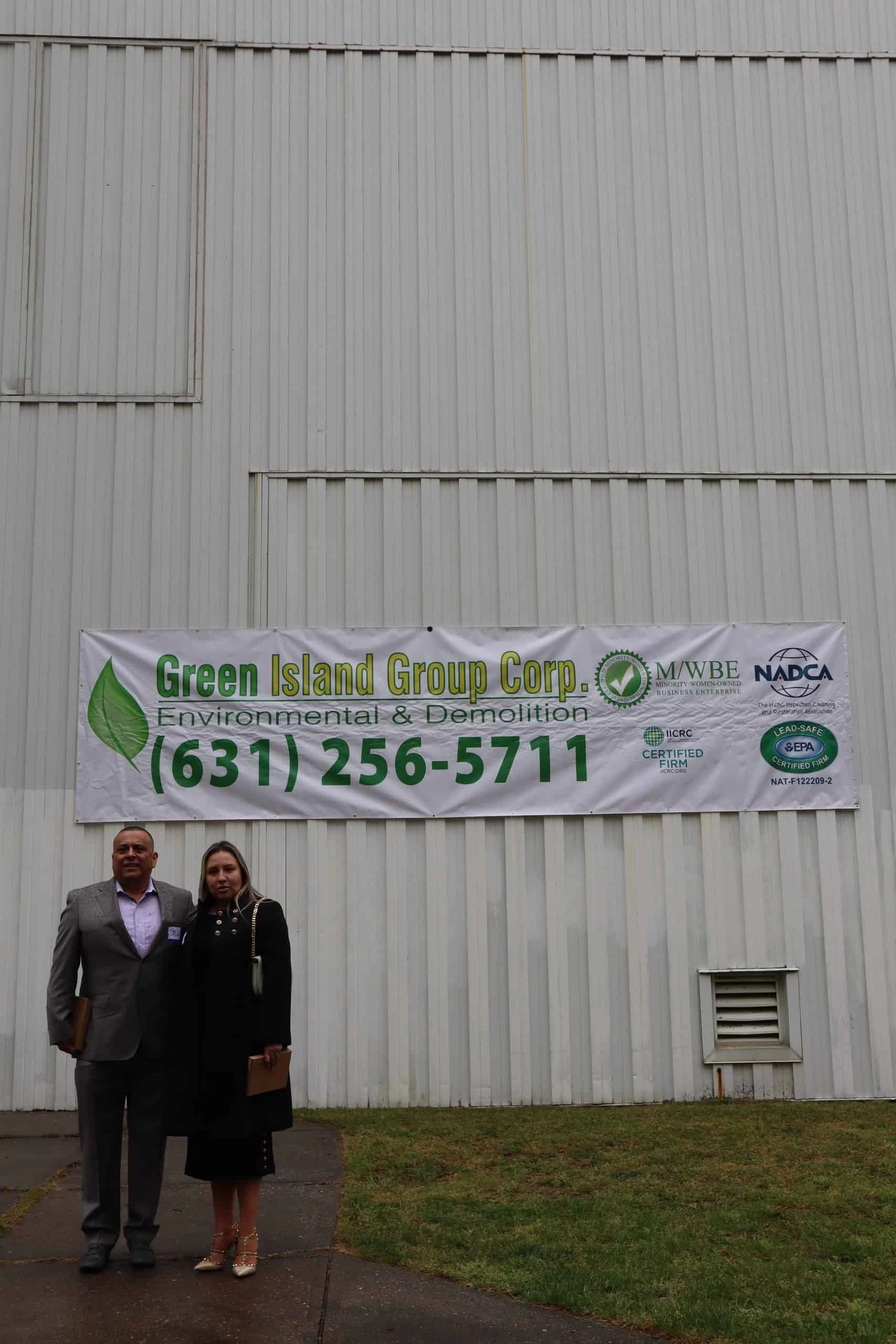
We hold a Suffolk County General Contractor license, NYS DOL Mold and Asbestos licenses, USEPA Lead and RRP certifications, and we’re an approved emergency response contractor for the NYS Office of General Services the same state body whose Suffolk County Police Headquarters sits right on Yaphank Avenue. We’re also a New York State certified MBE and WBE, independently verified by the state.
What that licensing stack means for you practically: we can handle every phase of your basement restoration water extraction, structural drying, mold remediation, hazardous material abatement, and full reconstruction under one contract, without subcontracting any part of the work. One team, one point of contact, start to finish.
From Standing Water to Finished Basement Here's the Sequence
The first call triggers an emergency response. We arrive typically within an hour assess the source and category of the water, and begin extraction immediately. Whether it’s a burst pipe, groundwater intrusion through your foundation, or overflow from a storm event like the August 2024 flash flooding that hit Suffolk County hard, the first priority is always stopping the spread and removing standing water as fast as possible.
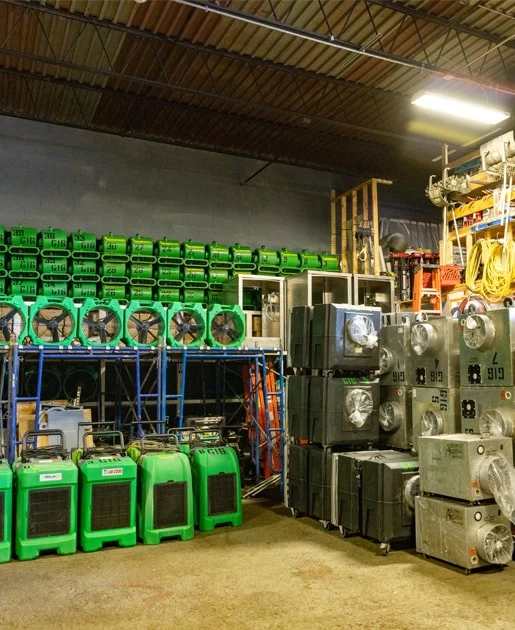
Once the water is out, we set industrial drying equipment and begin monitoring moisture levels throughout the affected area walls, floors, ceiling if necessary. In Yaphank’s older homes, this step matters more than most people realize. Water travels. It gets behind the original plaster, under the vinyl floor tiles, into the framing. We don’t call a basement dry until the readings confirm it, not just until it looks dry.
If the flooding disturbed older materials pipe insulation, floor tiles, joint compound we assess for asbestos and lead before any demolition begins. This is required by New York State law, and it’s something most water damage companies in the area can’t legally handle. We can. After abatement, if needed, comes mold remediation, structural repairs, and full reconstruction. Throughout the process, we handle your insurance documentation and communicate directly with your adjuster so you’re not managing that on top of everything else.
Every License Needed to Handle What's Actually in Your Basement
A flooded basement in Yaphank isn’t always just a water problem. In homes built during the 1950s through 1980s which describes a significant portion of the residential housing in the Town of Brookhaven flooding can disturb asbestos-containing materials like pipe insulation, vinyl floor tile backing, and ceiling tiles. It can also disturb lead-based paint on walls and trim. When that happens, the cleanup legally requires NYS DOL Asbestos licensing and USEPA Lead certification. We hold both. Most water damage companies operating in this area do not.
Our flooded basement cleanup scope covers water extraction and emergency drying, moisture mapping and structural assessment, mold remediation under NYS Labor Law Article 32, asbestos and lead abatement where required, and full basement reconstruction including drywall, flooring, framing, and insulation. All of this falls under our Suffolk County General Contractor license and is performed by our own crews not handed to a subcontractor. Any structural work that requires a building permit through the Town of Brookhaven’s Building Division gets handled as part of the process, not as an afterthought.
We also bill your insurance directly. That means we prepare the documentation, submit to your carrier, and work with your adjuster you don’t have to manage that conversation while you’re dealing with a damaged home. Multiple verified customers have confirmed this is exactly how the process works, not just how we describe it.
Why does my Yaphank basement keep flooding even when it hasn't rained hard?
This is one of the most common questions we hear from homeowners in the Carmans River corridor, and the answer usually comes down to groundwater pressure rather than surface water. Long Island’s water table sits close to the surface across much of Suffolk County, and in Yaphank a hamlet positioned along a river watershed that drains over 73 square miles the water table can rise significantly during wet periods even without a major storm directly overhead.
What you’re likely experiencing is hydrostatic pressure: groundwater pushing against your foundation walls and floor from the outside. It finds the path of least resistance, which is usually a crack in the foundation, a joint between the wall and floor slab, or a deteriorating window well seal. The water that appears in your basement may have traveled from rainfall that happened days earlier and miles away. A proper assessment will identify the entry point and determine whether the fix is a drainage solution, foundation sealing, or both but the first step is getting the moisture out and stopping the active intrusion before mold takes hold.
How quickly does mold start growing after a basement floods on Long Island?
Mold can begin colonizing within 24 to 48 hours of a flooding event under the right conditions and Long Island’s humid summers give it exactly the right conditions. Yaphank sits in a river-adjacent environment where ambient humidity is already elevated compared to drier inland areas, which means the clock moves faster than it might in a different climate.
The part most homeowners don’t account for is that mold doesn’t need the floor to still be wet. It needs moisture in the material drywall, wood framing, insulation and that moisture can persist for weeks after the visible water is gone if the space wasn’t properly dried with industrial equipment. By the time you see mold on a wall surface, it’s typically already well-established behind it. Getting professional drying started within the first 24 hours isn’t just the smart move it’s the difference between a manageable cleanup and a remediation job that costs significantly more and takes significantly longer.
Does homeowners insurance cover flooded basement cleanup in Suffolk County?
It depends entirely on the source of the water, and that distinction matters more than most people realize. Standard homeowners insurance policies typically cover sudden and accidental water damage a burst pipe, a failed water heater, an appliance malfunction. If that’s what caused your basement to flood, you’re likely covered, and the cleanup and restoration costs should fall under your policy.
What standard homeowners insurance does not cover is flooding from external water sources groundwater intrusion, storm surge, or overflow from a body of water like the Carmans River. For that kind of coverage, you’d need a separate flood insurance policy, typically through the National Flood Insurance Program. Many Yaphank homeowners don’t carry it, which means that when a major storm event like the August 2024 flash flooding causes basement water intrusion, they’re navigating a coverage gap. We help you understand what your specific policy covers from the moment we arrive, and we handle all documentation and direct billing to your carrier so the claims process doesn’t fall entirely on you.
Could my flooded basement in Yaphank contain asbestos or lead that I need to worry about?
If your home was built before 1980 which applies to a large share of the residential housing stock in the Town of Brookhaven, including throughout Yaphank then yes, this is a real consideration and not one to dismiss. Asbestos was commonly used in pipe insulation, vinyl floor tile backing, ceiling tiles, and joint compound during the construction era that produced most of this area’s homes. Lead-based paint was standard on interior walls, trim, and window frames through the late 1970s.
When a flooded basement requires removal of water-damaged drywall, flooring, or insulation, those materials can be disturbed in ways that release asbestos fibers or lead dust into the air. New York State law requires that this work be performed by a contractor holding NYS DOL Asbestos and USEPA Lead certifications. We hold both. Before any demolition begins in an older home, we assess the materials involved and follow proper abatement protocols if required which protects your family, keeps the job legal, and ensures your insurance claim isn’t jeopardized by unlicensed work.
How much does flooded basement cleanup typically cost in Yaphank, NY?
The honest answer is that cost varies significantly based on the size of the basement, the source and category of the water, how long it sat before cleanup began, and whether hazardous materials like asbestos or mold are involved. A straightforward clean-water extraction and drying job in a smaller basement might run in the $2,500 to $4,500 range. A more involved scenario Category 3 water from sewage or external flooding, mold remediation required, older materials that need abatement can reach $8,000 to $15,000 or more.
The factor that most directly affects your out-of-pocket cost is how quickly you act. Every day that water sits in a basement compounds the damage mold spreads, materials deteriorate further, and the scope of remediation grows. Waiting 72 hours or more before starting professional cleanup can add thousands of dollars to the final bill. If your flooding is covered under your homeowners policy, we bill your insurance directly and work with your adjuster to document everything accurately, which takes most of the financial pressure off your plate from the start.
What should I do in the first hour after discovering my basement is flooded in Yaphank?
The first thing to assess is whether it’s safe to enter. If there’s any chance the water has reached electrical outlets, panels, or appliances, stay out and shut off the circuit breaker from a dry location before going in. If the water source is a burst pipe or appliance, locate your main water shutoff and stop the flow immediately. Don’t run a shop vac or fans on your own before a professional assesses the water category if the water came from a sewage backup or external source, it may contain contaminants that require proper protective equipment to handle safely.
Once you’ve done what you can safely do, call for emergency response. The 24 to 48 hour mold window starts the moment the flooding occurs, not the moment you make the call. Yaphank’s position in the Carmans River watershed means that during heavy rain events the kind Suffolk County sees in late summer and nor’easter season multiple homes in the area may be dealing with the same situation simultaneously. Getting your call in early matters. Document everything with photos before any cleanup begins, because that documentation is what your insurance claim is built on.