Babylon's Post-War Housing Stock Deserves More Than a Wrecking Ball
Most homes in Babylon were built between the 1940s and 1970s and almost every one of them has something hiding in the walls, floors, or ceiling tiles. House demolition here isn’t just about tearing something down. It’s about doing it legally, safely, and without handing you a surprise bill halfway through.
I needed a professional consultation explanation of procedure for safe removal of Asbestos in my apartment complex. Without having an account yet, I was very impressed with the caring, knowledgeable and generous advice offered by Jessica, and will look forward to doing business in the future. Thank you so much! I feel much more informed about a sometimes scary endeavor. Peace. Nancy Silva Mineola, NY.
Mia Munoz
Used this company to clean up some water flood in my house. They were fast and easy to work with.very professional, Would recommend to anyone!
Nini Valle
Great company, had a flood and they responded quickly and efficiently. Billed my insurance company directly. I highly recommend this company!
joe colapietro, jr
I had pipe freeze in my basement right before a snow storm and they made to within an hour to help start the clean up process. They we by our side throughout the entire process and even helped with the insurance company. They did such a great job with the cleanup, repair, remidiation, I contracted them to perform the repairs and finishes in the basement. They came with enough manpower and material to get the job done. Leo and Jessica were nothing but a pleasure to deal with!!
Cristian Arredondo c
I had some water damage in my home and Green Island was able to take care of my issue quickly and effectively. I am very pleased with the work they did. They responded quickly and were very professional.
Michael M
Outstanding service! From the office to the field crew everyone was friendly, helpful and responsive. I highly recommend Green Island Group.
One Contract. No Handoffs. No Mid-Project Surprises.
The biggest problem with hiring a demolition contractor in Babylon isn’t finding someone with an excavator. It’s finding someone who can legally handle everything the project actually requires and in this town, that list is longer than most people expect.
Before any structure in Babylon can be legally demolished, New York State requires a pre-demolition asbestos survey. That’s not optional, and it’s not a formality. Babylon exploded in population between 1940 and 1960 a 485% increase which means the overwhelming majority of residential structures here were built during the exact decades when asbestos was used most heavily in home construction. Floor tiles, joint compound, ceiling materials, pipe insulation it shows up in almost every pre-1980 home we walk into. If your contractor isn’t licensed to survey for it and abate it, they legally cannot finish your demolition without bringing someone else in. That handoff costs you time, money, and control over your own project.
When you work with us, the survey, the abatement if needed, the structural demolition, the debris removal, and the site prep all happen under one contract. You don’t manage multiple crews or wait for one company to finish before another can start. And for Babylon’s South Shore communities where storm damage along the Great South Bay has left more than a few structures in compromised condition that kind of coordinated response matters even more.
The Credentials That Make This a Complete Solution
We hold a NYS Department of Labor Asbestos Contractor License, EPA Lead RRP Certification, a Suffolk County Home Improvement Contractor License, and an NYC BIC Trade Waste License among others. That’s not a list of marketing badges. Those are the actual licenses required to legally complete a full demolition project in Suffolk County from survey through disposal.
Most demolition contractors working in Babylon hold a general contractor license and not much else. That means the moment asbestos or lead is confirmed which happens on nearly every pre-1980 demo in West Babylon, North Babylon, or the village itself they have to stop and bring someone else in. We don’t stop. The work continues under the same team, the same contract, and the same timeline.
We’ve served homeowners across western Suffolk County, including throughout Babylon, and have direct experience navigating the Town’s demolition permit process including the utility compliance requirements from LIPA, National Grid, and the Suffolk County Water Authority that most homeowners don’t even know exist until they’re already behind schedule.
What Actually Happens From First Call to Clean Lot
It starts with a site visit and pre-demolition assessment. Before any pricing is finalized, the structure gets walked and evaluated not just for what needs to come down, but for what’s inside it. In Babylon’s housing stock, that assessment almost always includes identifying asbestos-containing materials. Knowing what’s there before work begins is the only honest way to quote a demolition project. It’s also what New York State law requires.
From there, the permit process begins. In the Town of Babylon, a demolition permit requires a notarized application, contractor insurance documentation, and Letters of Compliance from LIPA, National Grid, the Suffolk County Water Authority, and the applicable sewer district. If your property sits within the incorporated Village of Babylon which has its own building department, separate from the Town the permit goes to the Village, not the Town. Filing with the wrong department adds weeks. We know which jurisdiction applies to your address and file correctly the first time.
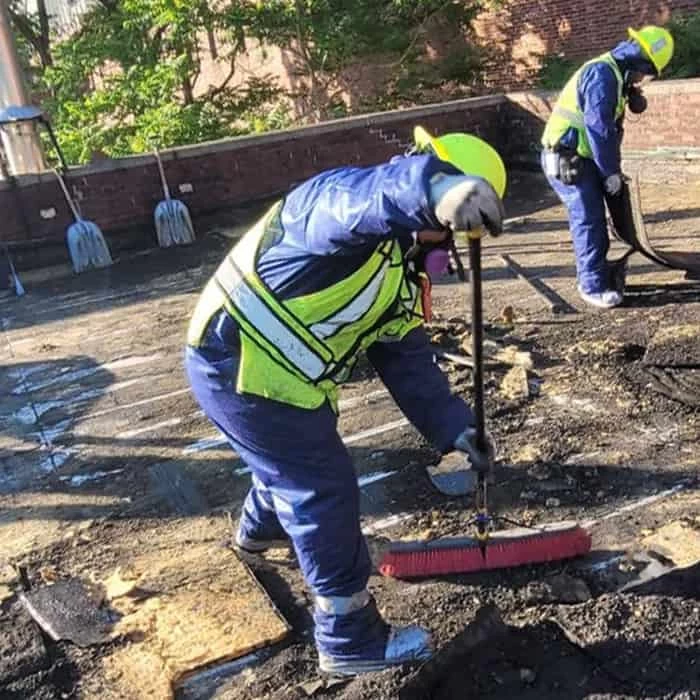
Once permits are in hand and utilities are formally disconnected, demolition begins. If asbestos abatement is required, it’s completed first under the NYS DOL license before structural work starts. After the structure comes down, all debris including any hazardous materials is transported to a licensed disposal facility with full documentation. You receive disposal manifests for your records, and the site is graded and left ready for whatever comes next, whether that’s new construction, a sale, or simply a clean lot.
What's Included When Babylon's Housing Stock Is Involved
A house demolition in Babylon is rarely just a structural job. The homes in West Babylon, North Babylon, Copiague, and the village itself were built during an era that left behind asbestos in floor tiles and joint compound, lead in paint and plumbing, and in some bayfront properties, structural conditions shaped by decades of tidal flooding and storm surge. What’s included in our demolition project reflects that reality.
Every project starts with a thorough pre-demolition environmental survey. If asbestos-containing materials are identified and in this zip code, they usually are we handle abatement in-house under our NYS DOL Asbestos Contractor License before any structural demolition begins. Lead is addressed under EPA RRP Certification. The structural demolition follows, coordinated with the permit timeline established with the Town or Village of Babylon Building Department. All debris is removed and disposed of at a licensed facility, with manifests provided to you.
For properties in Babylon’s coastal communities particularly those near the Great South Bay in Copiague or the bayfront sections of Babylon village site conditions from flood damage or below-grade deterioration are assessed upfront so there are no structural surprises mid-project. Financing is also available, including 0% APR options, for homeowners dealing with estate settlements, storm damage, or condemned property situations where the cost wasn’t part of any plan.
Do I need a permit to demolish a house in Babylon, NY?
Yes and the permit process in Babylon is more involved than most people expect. A demolition permit is required for any residential structure, and the application must be notarized, include full contractor insurance documentation, and come with Letters of Compliance from LIPA, National Grid, the Suffolk County Water Authority, and the applicable sewer district. Each of those agencies has its own process and its own timeline, and the permit won’t be issued until all of them are satisfied.
There’s also an important jurisdictional detail specific to Babylon: if your property is within the incorporated Village of Babylon, your permit goes to the Village of Babylon Building Department not the Town. The Village is a separate legal jurisdiction with its own application requirements and fee schedule. Submitting to the wrong department is a common mistake that adds weeks to the timeline. Knowing which department to file with and having established contacts at each utility is part of what an experienced local contractor brings to the table.
Does every house demolition in Babylon require asbestos testing?
Under New York State Department of Labor regulations, a pre-demolition asbestos survey is required before any structure is demolished, regardless of the building’s age. In Babylon specifically, this is not a formality it’s a substantive investigation that almost always turns up something. The town’s residential housing stock is concentrated in the 1940s through 1970s construction window, which is the peak era of asbestos use in homes. The most common materials we find in Babylon-area homes include floor tiles, drywall joint compound, ceiling tiles, and pipe insulation around older boiler systems.
If asbestos is found, it must be abated by a NYS DOL-licensed asbestos contractor before structural demolition can legally proceed. This is where many homeowners run into trouble their demolition contractor isn’t licensed for abatement, so the project stalls while they find someone who is. Working with us means the project keeps moving under one team and one timeline, without the delays that come from a mid-project handoff.
How much does house demolition typically cost in Babylon, NY?
For a standard residential demolition in Babylon, costs generally range from $15,000 to $40,000 or more depending on the size of the structure, site conditions, and what the pre-demolition survey turns up. Asbestos abatement, if required, adds to that number and in Babylon’s post-war housing stock, it’s more the rule than the exception. The scope of abatement depends on what materials are found and how extensively they’re present throughout the structure.
The most important thing you can do to avoid cost surprises is make sure the pre-demolition survey is completed before any final price is agreed upon. A contractor who quotes a demolition without first surveying for hazardous materials is either planning to find asbestos later and charge you more, or planning to ignore it neither of which is acceptable. We conduct the environmental assessment upfront so the full scope is known before work begins. Financing is available, including 0% APR, for homeowners who need flexibility on the front end.
What's the difference between the Town of Babylon and Village of Babylon for demolition permits?
This is one of the most practically important distinctions for anyone planning a demolition in Babylon. The Town of Babylon is the municipal government that covers the broader area including hamlets like West Babylon, North Babylon, Copiague, Wyandanch, Lindenhurst, and Deer Park. The Village of Babylon is a separately incorporated jurisdiction located within the town’s boundaries, with its own mayor, its own Board of Trustees, and its own Building Department.
If your property is within the Village of Babylon, your demolition permit must be filed with the Village of Babylon Building Department not the Town. The Village has its own application forms, its own fee schedule, and its own review process. Contractors who don’t work regularly in this area often don’t know the distinction and file with the wrong department. The result is a rejected application and a delay that can push back your entire project timeline by several weeks. Knowing your property’s exact jurisdiction before the permit process starts is something an experienced local contractor handles as a matter of course.
How long does the house demolition process take in Babylon, NY?
The timeline varies based on a few key factors, but for a typical residential demolition in Babylon, you’re generally looking at two to six weeks from first contact to a clean lot with the permit process being the biggest variable. Obtaining Letters of Compliance from LIPA, National Grid, the Suffolk County Water Authority, and the sewer district takes time, and each agency moves at its own pace. Starting that process early is critical, especially for homeowners who have a builder scheduled to break ground.
If asbestos abatement is required which is common in Babylon’s older housing stock that work must be completed before structural demolition begins, which adds time to the schedule. However, when the same contractor handles both the abatement and the demolition, there’s no gap between one phase ending and the next beginning. The timeline is tighter because there’s no coordination lag between separate companies. For storm-damaged or condemned properties in Babylon’s bayfront communities, emergency response timelines can be compressed when the situation requires it.
Can Green Island Group handle a storm-damaged home demolition in Babylon's waterfront areas?
Yes and this is a situation we’re familiar with in Babylon specifically. The South Shore communities along the Great South Bay, including parts of Copiague, Babylon village, and the waterfront sections of West Babylon, sit roughly one to two feet above sea level. That geography has made these neighborhoods repeatedly vulnerable to storm surge, tidal flooding, and structural damage from major weather events. The legacy of Hurricane Sandy alone left a lasting mark on Babylon’s bayfront housing stock, and subsequent storms have continued to affect properties that were never fully restored.
Storm-damaged structures often come with complications that a standard demolition doesn’t compromised foundations, waterlogged materials, potential mold alongside asbestos, and in some cases, active condemnation orders that create legal urgency around the timeline. We hold both an NYS DOL Asbestos Contractor License and Mold Remediation Contractor License, which means the full scope of what a flood-damaged Babylon home might contain can be addressed without bringing in a separate environmental firm. The pre-demolition assessment accounts for these conditions upfront, so the project is scoped accurately and executed without mid-project surprises.