Bayside Homes Are Old. The Rules Are Strict. We Handle Both.
Most Bayside homes were built in the 1950s and 60s and tearing one down in New York City means permits, asbestos surveys, and DOB compliance before a single wall comes down. We manage all of it, in-house, start to finish.
I needed a professional consultation explanation of procedure for safe removal of Asbestos in my apartment complex. Without having an account yet, I was very impressed with the caring, knowledgeable and generous advice offered by Jessica, and will look forward to doing business in the future. Thank you so much! I feel much more informed about a sometimes scary endeavor. Peace. Nancy Silva Mineola, NY.
Mia Munoz
Used this company to clean up some water flood in my house. They were fast and easy to work with.very professional, Would recommend to anyone!
Nini Valle
Great company, had a flood and they responded quickly and efficiently. Billed my insurance company directly. I highly recommend this company!
joe colapietro, jr
I had pipe freeze in my basement right before a snow storm and they made to within an hour to help start the clean up process. They we by our side throughout the entire process and even helped with the insurance company. They did such a great job with the cleanup, repair, remidiation, I contracted them to perform the repairs and finishes in the basement. They came with enough manpower and material to get the job done. Leo and Jessica were nothing but a pleasure to deal with!!
Cristian Arredondo c
I had some water damage in my home and Green Island was able to take care of my issue quickly and effectively. I am very pleased with the work they did. They responded quickly and were very professional.
Michael M
Outstanding service! From the office to the field crew everyone was friendly, helpful and responsive. I highly recommend Green Island Group.
When a house demolition goes the way it should, you’re not just left with a cleared lot. You’re left with a clean title, a closed permit, and no outstanding violations from the NYC Department of Buildings. That matters more in Bayside than almost anywhere else in Queens because the DOB doesn’t forgive missed steps, and a Stop Work Order mid-project can stall your rebuild by months.
Bayside’s housing stock tells the story clearly. The Colonials and Tudors lining the streets off Bell Boulevard, the ranches in Bayside Hills, the Cape Cods near Bay Terrace nearly all of them were built before 1969. That means asbestos is almost always part of the conversation, and lead paint isn’t far behind. When those materials are handled correctly by a certified contractor before demolition begins, you avoid EPA enforcement exposure, protect your neighbors, and keep your project on schedule.
The other thing that changes when this is done right: you stop managing it. No coordinating between a demolition company and a separate abatement contractor. No chasing permits on your own through DOB NOW. No wondering whether the crew that showed up is actually licensed to do what they’re doing. You hand it off, and we handle it.
12 Years In. Every Borough. We Don't Subcontract the Hard Parts.
We’ve been doing demolition and environmental work across New York State for over 12 years all five boroughs included. That means Bayside isn’t a stretch for us. We know the NYC DOB permit process, we’ve filed ACP 5 forms on pre-1987 structures hundreds of times, and we understand what it takes to work cleanly in a dense residential neighborhood where your neighbor’s foundation is ten feet away.
What actually sets us apart in a market like Bayside is the in-house capability. Asbestos abatement, lead compliance, full structural demolition, debris removal it’s all one team, one timeline, one contractor. You’re not waiting for a hazmat subcontractor to finish before the demo crew can start. That integration is what keeps projects moving, especially in a borough where every delay costs real money.
With over 5,000 completed projects and a 4.7-star rating built on real outcomes insurance claims handled directly, same-day emergency response, permits pulled correctly the first time our track record speaks for itself.
From First Call to Clear Lot Here's What to Expect
It starts with a site assessment. Before anything else, our team walks the property, evaluates the structure, and determines what’s present asbestos-containing materials, lead paint, any environmental conditions that need to be addressed before demolition can legally begin. For most Bayside homes built before 1969, this step isn’t optional. New York City requires an ACP 5 asbestos compliance form before the DOB will issue a demolition permit, and that form has to be backed by a real survey done by a certified contractor.
Once the environmental picture is clear, permits get filed through the DOB NOW system. This is where a lot of homeowners run into trouble when they try to manage it themselves one missing document, one incorrect filing, and the permit gets held. We’ve done this enough times in Queens to know exactly what the DOB needs and how to keep the process from stalling.
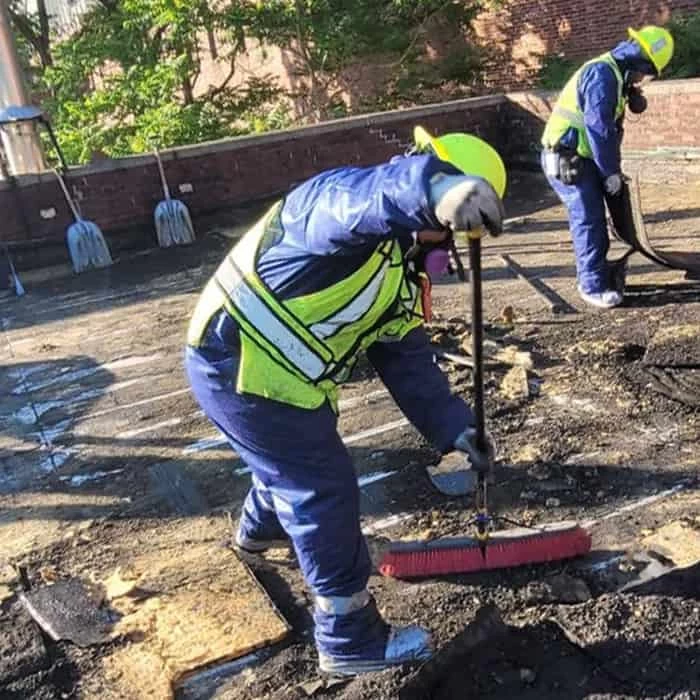
After permits are approved, abatement happens first if required, then the structural demolition follows. Our crew handles debris removal and site clearance as part of the job you’re not left with a pile of rubble and a bill for a separate hauler. If your project was triggered by flooding or storm damage, which happens more often near the Clearview Expressway corridor than most people expect, we can respond quickly and work within your insurance claim timeline from the start.
Everything the Job Requires Not Just the Easy Parts
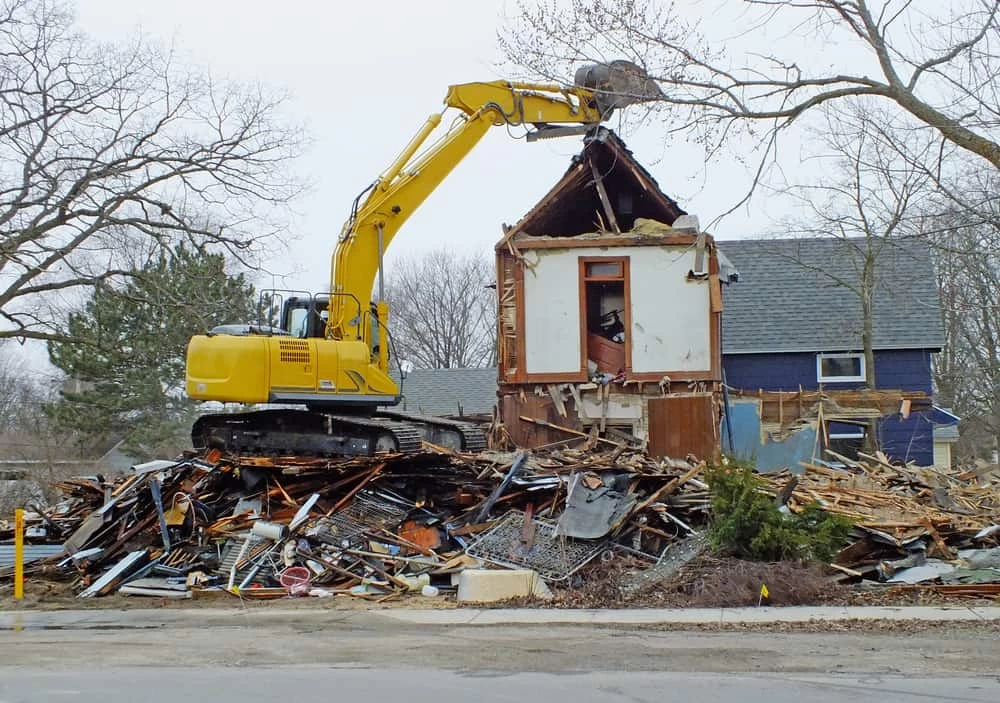
House demolition in Bayside isn’t a one-trade job. The regulatory environment in New York City means that a legitimate, fully compliant teardown involves environmental assessment, certified abatement if needed, DOB permitting, the physical demolition itself, and site clearance all coordinated in the right sequence. We cover every one of those phases under one roof, which is genuinely uncommon in this market.
For Bayside specifically, the asbestos piece is almost never avoidable. Homes built between 1940 and 1969 which describes the majority of the neighborhood’s single-family housing stock frequently contain asbestos in floor tiles, pipe insulation, roofing materials, and joint compound. The NYS Department of Labor requires certified abatement before demolition can proceed on these structures. We hold that certification in-house, meaning there’s no gap between the environmental work and the demolition work.
Beyond full teardowns, we also handle selective and interior demolition for homeowners doing major renovations gutting a kitchen, opening up a floor plan, clearing a basement after flooding. If your home near Bay Terrace or in the Bayside Hills area took on water during one of the flash flooding events that have hit the neighborhood in recent summers, partial structural demolition and remediation may be exactly what’s needed. Whatever the scope, the work is done by a licensed, insured crew that operates legally within New York City limits not a general contractor stretching outside their lane.
Do I need a permit for house demolition in Bayside, NY?
Yes and in New York City, the permit process is more involved than what you’d face in Nassau or Suffolk County. Every demolition permit in Bayside has to be filed through the NYC Department of Buildings’ DOB NOW electronic system. Before that permit can even be issued, you need to demonstrate asbestos compliance specifically, an ACP 5 form that certifies the project’s handling of any friable asbestos-containing materials. For a full demolition, you’ll also need to coordinate utility disconnections with Con Edison and other providers before work begins.
Skipping the permit isn’t a gray area. Unpermitted demolition in New York City triggers an immediate Stop Work Order and civil fines starting at $2,500 for a first offense and those fines escalate quickly. Beyond the financial hit, an unpermitted demo can create title issues that complicate future construction financing or a property sale. The permit process exists to protect you as much as anyone else, and working with a contractor who knows the DOB system means you’re not learning it the hard way.
My Bayside home was built in the 1950s does that mean it has asbestos?
Not necessarily, but it means a certified survey is required before anyone can say definitively. Homes built before April 1, 1987 fall under New York City’s ACP 5 requirement, which means a licensed inspector has to assess the property for asbestos-containing materials before a demolition permit will be issued. For homes built in the 1940s through 1960s which covers most of Bayside’s single-family housing stock asbestos was commonly used in floor tiles, pipe insulation, roofing shingles, drywall joint compound, and textured ceiling finishes.
If asbestos is found, that doesn’t stop the project. It means abatement has to happen first, performed by a NYS DOL-certified contractor, before demolition can proceed. We handle both the survey coordination and the abatement in-house, so finding asbestos doesn’t mean bringing in a second contractor and starting a new timeline. It just becomes the next step in the same project, managed by the same team.
How much does house demolition typically cost in Bayside, Queens?
For a standard single-family home in Bayside, full demolition typically runs between $15,000 and $25,000 depending on the size of the structure, the scope of hazardous material abatement required, and site-specific factors like access, proximity to neighboring structures, and debris volume. NYC permit fees can add $2,000 to $12,000 on top of that depending on project complexity. Asbestos abatement, if needed, adds cost but it’s a required step, not an optional upgrade.
What affects cost most in Bayside specifically is the age of the housing stock and the density of the neighborhood. Older homes often contain more layers of hazardous materials than newer construction, and working on a tight residential block with adjacent structures requires more careful equipment staging and debris management than a wide-open suburban lot. The best way to get an accurate number is a site walk not a ballpark over the phone. A contractor who quotes you a firm number without seeing the property is leaving out something.
Can we handle demolition if my Bayside home was damaged by flooding?
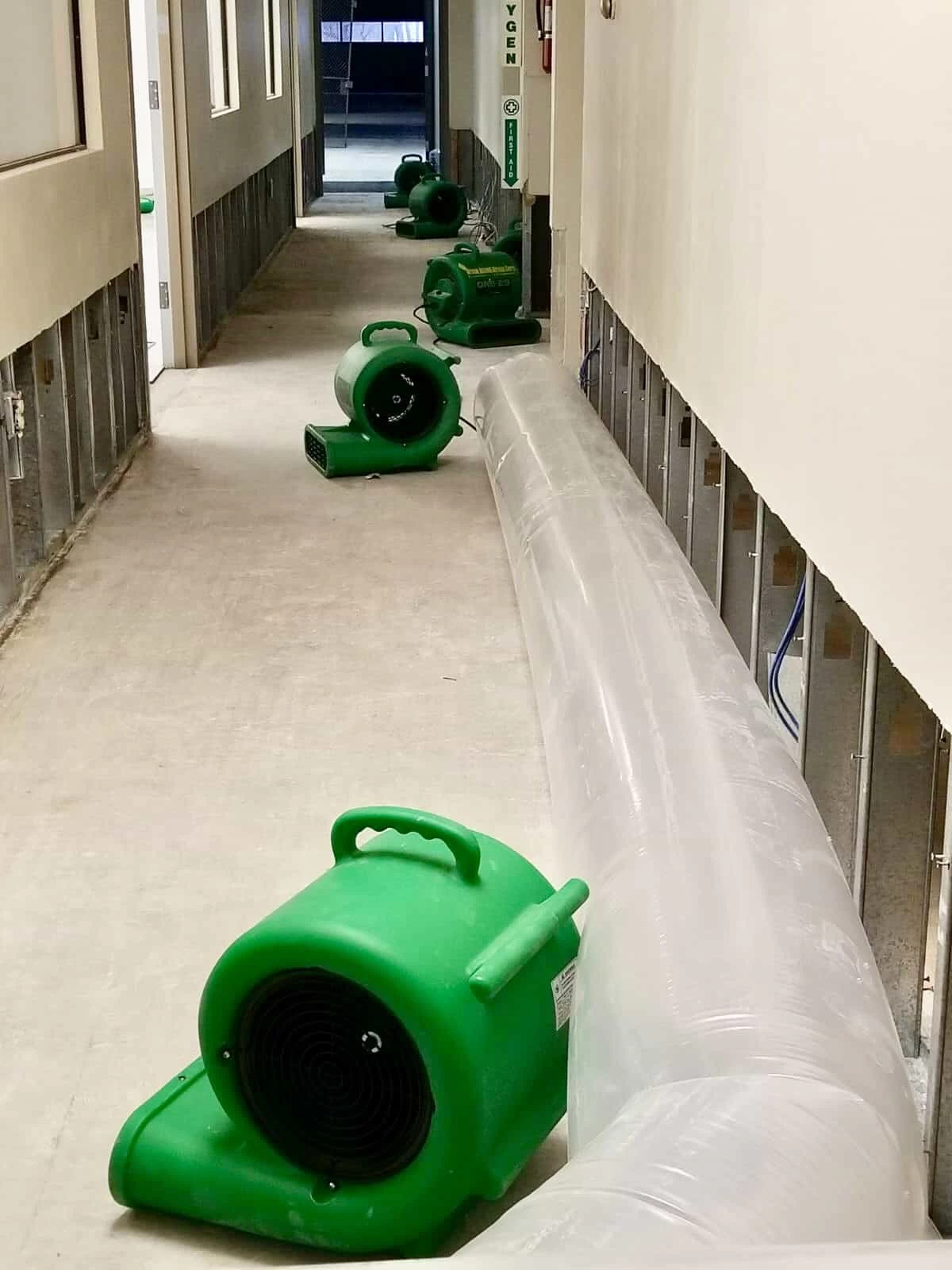
Yes and this is one of the more common calls we receive from Bayside homeowners. The neighborhood’s location near the Clearview Expressway corridor and Little Neck Bay makes it susceptible to flash flooding during heavy rain events. The LIRR Port Washington line near the Bayside station was blocked by flooding as recently as July 2025, and basement flooding in older homes along that corridor is a recurring issue. When water intrusion compromises a foundation, saturates structural framing, or triggers mold growth, partial or full demolition is often the right move.
We’re available 24 hours a day, seven days a week not as a tagline, but as a documented operational reality confirmed by customer reviews. For flooding situations specifically, we also work directly with homeowners’ insurance carriers and can bill insurance directly, which removes a significant burden when you’re already dealing with temporary housing and a claims process. Fast response matters in these situations because mold can establish itself within 24 to 48 hours of water intrusion in an older structure.
What is the difference between full demolition and selective demolition in Bayside?
Full demolition means taking the entire structure down to the foundation or removing the foundation entirely if the lot is being cleared for new construction. This is common in Bayside when a homeowner or developer wants to replace an aging 1950s ranch or Cape Cod with new construction, which makes economic sense at Bayside’s current median home values near $958,000. The teardown cost is a small fraction of what a new build on that lot can yield.
Selective demolition sometimes called interior demolition means removing specific elements of the structure while leaving the shell intact. This applies when you’re gutting a kitchen, opening walls for a renovation, clearing a basement after flooding, or reconfiguring a floor plan. Both types of work in Bayside require permits and, depending on the age of the structure, environmental assessment before work begins. The scope of hazmat testing required for a selective demo in a pre-1969 home is narrower than a full teardown, but it’s still a required step under NYC regulations not something to skip because the project feels small.
How do I know if a demolition contractor is actually licensed to work in New York City?
This is one of the most important questions you can ask, and a lot of homeowners don’t ask it until something goes wrong. New York City has its own contractor licensing requirements that are separate from Nassau County or Suffolk County. A contractor who is fully licensed for demolition work in Long Island is not automatically authorized to pull permits and operate within the five boroughs. You can verify a contractor’s status directly through the NYC Department of Buildings’ online license lookup it takes about two minutes and tells you whether their license is active and in good standing.
Beyond the DOB license, look for NYS DOL certification for asbestos abatement if your home was built before 1987, proof of general liability insurance, and workers’ compensation coverage. In Bayside, where the majority of homes predate 1969, asbestos certification isn’t a bonus credential it’s a baseline requirement for anyone doing legitimate demolition work. We hold all of these credentials and operate legally within New York City limits. If a contractor can’t produce documentation for all of the above, that’s your answer before you sign anything.