Pre-War Homes in Bellaire Need More Than a Wrecking Crew
Most houses in Bellaire were built before 1939. That means asbestos surveys, DEP notifications, and DOB permits before a single wall comes down we handle all of it.
I needed a professional consultation explanation of procedure for safe removal of Asbestos in my apartment complex. Without having an account yet, I was very impressed with the caring, knowledgeable and generous advice offered by Jessica, and will look forward to doing business in the future. Thank you so much! I feel much more informed about a sometimes scary endeavor. Peace. Nancy Silva Mineola, NY.
Mia Munoz
Used this company to clean up some water flood in my house. They were fast and easy to work with.very professional, Would recommend to anyone!
Nini Valle
Great company, had a flood and they responded quickly and efficiently. Billed my insurance company directly. I highly recommend this company!
joe colapietro, jr
I had pipe freeze in my basement right before a snow storm and they made to within an hour to help start the clean up process. They we by our side throughout the entire process and even helped with the insurance company. They did such a great job with the cleanup, repair, remidiation, I contracted them to perform the repairs and finishes in the basement. They came with enough manpower and material to get the job done. Leo and Jessica were nothing but a pleasure to deal with!!
Cristian Arredondo c
I had some water damage in my home and Green Island was able to take care of my issue quickly and effectively. I am very pleased with the work they did. They responded quickly and were very professional.
Michael M
Outstanding service! From the office to the field crew everyone was friendly, helpful and responsive. I highly recommend Green Island Group.
One Call Covers the Permits, the Hazmat, and the Teardown
Here’s what most Bellaire homeowners don’t realize until they’re already in the middle of it: the New York City Department of Buildings won’t issue a demolition permit for any building constructed before April 1987 without a completed ACP-5 Asbestos Assessment Report. In Bellaire, where the majority of homes were built before 1939, that requirement applies to nearly every single full demolition project on every block. If your contractor doesn’t handle that in-house, you’re coordinating two separate vendors, two separate schedules, and twice the risk of something falling through the cracks.
Working with us means the asbestos survey happens on the front end, the DEP notification gets filed on time, and the DOB permit is in place before any crew shows up with equipment. No gaps, no handoffs, no surprise delays three weeks in because someone forgot to file the ACP-7.
Beyond the regulatory side, Bellaire’s housing stock is old enough that structural deterioration, outdated plumbing, and decades of deferred maintenance are common realities. Some of these homes have simply aged past the point where renovation makes financial sense. When that’s where you are, a clean, compliant, fully managed demolition is the most straightforward path forward and it should feel that way from the first conversation.
12 Years, 5,000+ Projects, and We Know Bellaire's Streets
We are an owner-operated environmental and demolition contractor that has been working across Queens and New York City for over 12 years. The company is run by Leopoldo Torres, and our team has completed more than 5,000 restoration and demolition projects across New York State including sustained work throughout eastern Queens, from Queens Village to Hollis and the surrounding neighborhoods that share Bellaire’s pre-war residential character.
We’re not a generalist contractor that added demolition to a list of services. We’re a licensed, certified demolition and environmental firm meaning asbestos abatement, mold remediation, oil tank removal, and full building demolition are all handled in-house, under one license, with one point of contact. For homeowners in Bellaire’s established residential blocks, that means the process is simpler, faster, and a lot less stressful than it would be if you were piecing it together yourself.
We also bill insurance companies directly and work with homeowners through the claims process a detail that matters when the demolition wasn’t planned and the insurance adjuster is already involved.
What Actually Happens Before, During, and After the Teardown
The first step is a site assessment. Before anything gets scheduled or priced, we walk the property and evaluate what’s there structure, condition, access, and any environmental concerns that need to be addressed before demolition can legally begin. In Bellaire, that almost always includes an asbestos investigation, given the age of the housing stock. That’s not a surprise add-on here it’s a standard part of the process.
Once the assessment is complete, we handle the permit filings with the NYC Department of Buildings, the required ACP-5 documentation for the DEP, and the utility disconnection coordination with Con Edison and National Grid. These steps have to happen in the right order, and getting them out of sequence is one of the most common reasons demolition projects stall. We manage the sequencing so you don’t have to.
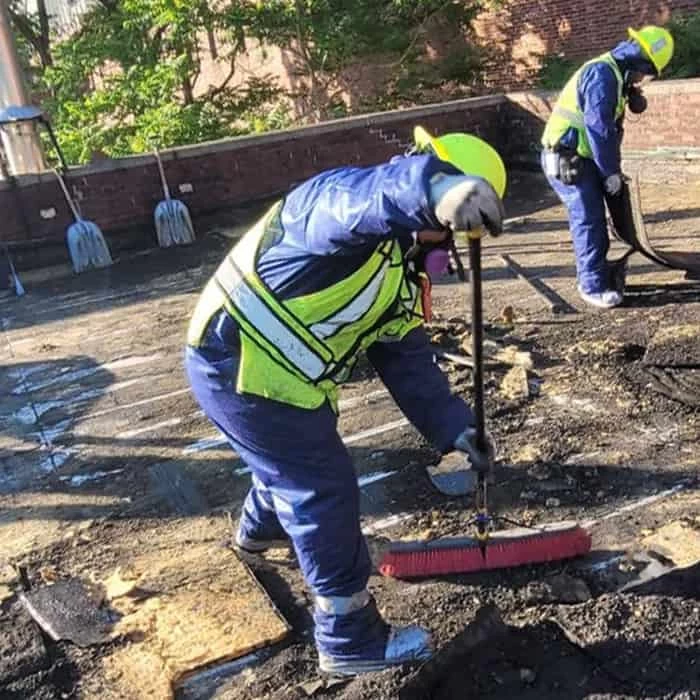
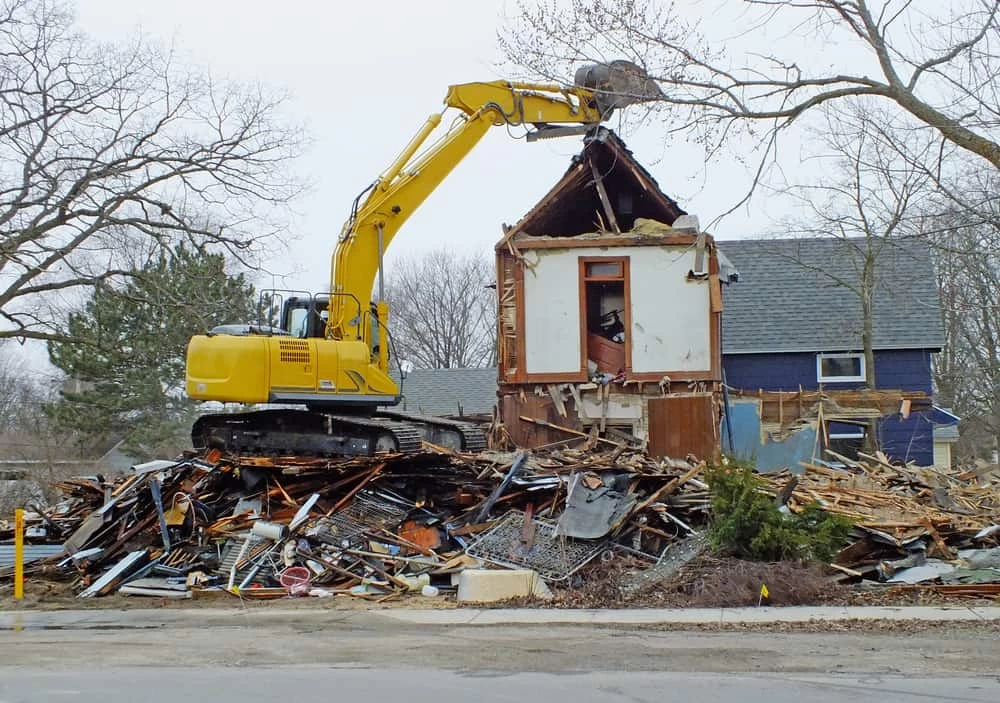
When everything is in place permits issued, utilities disconnected, DEP notifications filed the physical demolition begins. Depending on the scope, that’s either a full structural teardown or selective interior demo targeting specific areas. Either way, debris is removed and the site is cleared. If asbestos-containing materials were identified during the survey, abatement is completed first, documented properly, and signed off before the demolition crew moves in. The end result is a clean site, a closed permit, and no loose ends.
Full Demolition or Selective Teardown Done Right Either Way
We handle both full house demolition and selective interior demolition, and the scope of what’s included goes well beyond just the physical work. For Bellaire homeowners, that means the asbestos survey, the DEP filings, the DOB permit, utility coordination, the actual demolition, debris removal, and final site clearance are all managed through us. You’re not assembling a team you’re making one call.
For full demolitions, we bring the equipment and the regulatory knowledge to take a structure down completely and leave the lot clean and permit-closed. This is the path for properties where the cost of renovation has outpaced the value of saving the structure something that comes up regularly in Bellaire’s Bellaire Estates and Bellaire Park sub-areas, where aging single-family and multi-family homes are being reassessed by long-term owners and estate heirs alike.
For selective interior demolition gut renovations, kitchen and bathroom teardowns, wall removal for structural modifications the same compliance standards apply. Pre-1939 homes in Bellaire carry a near-universal presumption of asbestos-containing materials and lead paint, and both require certified handling before interior demo work begins. We’re a NYS DOL certified asbestos abatement contractor, which means this isn’t subcontracted out or skipped over. It’s built into how every project is run, regardless of scope.
Do I need an asbestos inspection before demolishing my house in Bellaire, NY?
In almost every case, yes and it’s not optional. The NYC Department of Buildings requires a completed ACP-5 Asbestos Assessment Report before it will issue a demolition permit for any building constructed before April 1, 1987. Given that most homes in Bellaire were built before 1939, this requirement applies to virtually the entire neighborhood. The ACP-5 must be completed by a DEP-certified asbestos investigator, and if asbestos-containing materials are found, an ACP-7 notification has to be filed with the NYC DEP at least seven days before abatement can begin.
Skipping this step doesn’t make the asbestos go away it just means your project gets stopped by the city, you face potential DEP fines, and you’re back at square one. We’re a certified asbestos abatement contractor and handle the ACP-5 investigation in-house, so there’s no separate vendor to schedule and no gap between the environmental assessment and the demolition work itself.
How much does house demolition typically cost in Queens, NY?
For a standard residential demolition in Queens, you’re generally looking at a range of $15,000 to $35,000 or more depending on the size of the structure, the scope of hazmat work required, permit fees, and debris removal. In Bellaire specifically, the asbestos factor is almost always part of the equation and that adds cost that some contractors don’t include in their initial estimates. If you’re getting a quote that seems unusually low, it’s worth asking directly whether the ACP-5 asbestos survey, DEP filing fees, and abatement work are included.
The other cost variable is the structure itself. A pre-war single-family home on a standard Bellaire lot is a different project than a semi-attached two-family in the R3-2 zone, which requires additional planning around shared walls and adjacent property protection. We provide transparent estimates that include the full scope permits, hazmat, demolition, and site clearance so the number you see at the start is the number that holds.
What permits are required for house demolition in New York City?
The primary permit is the demolition permit issued by the NYC Department of Buildings. But that permit doesn’t get issued until the ACP-5 Asbestos Assessment Report is on file with the DEP. If asbestos is found, you also need an A-TRU asbestos abatement permit before abatement work can start, and the DEP must receive an ACP-7 notification at least seven days in advance. On top of that, utilities gas, electric, and water need to be formally disconnected with Con Edison, National Grid, and the NYC water authority before demolition begins.
For larger projects, the DOB may also require a Licensed Site Safety Manager on-site. And depending on the scope and proximity to neighboring properties, FDNY compliance requirements may come into play as well. In a neighborhood like Bellaire, where detached and semi-detached homes sit close together on residential blocks, adjacent property protection is also a real consideration that affects how the work is planned and executed. We manage all of this coordination it’s not something you should have to track yourself.
How long does the house demolition process take from start to finish in Queens?
The physical demolition of a single-family home can often be completed in a matter of days once everything is in place. The longer part of the timeline is the front-end regulatory work the asbestos survey, permit filings, DEP notifications, and utility disconnections. In New York City, the DEP requires at least seven days’ notice before asbestos abatement can begin, and DOB permit processing adds additional time depending on the project and current queue.
Realistically, from the initial assessment to a cleared site, most residential demolition projects in Queens run anywhere from three to six weeks when the process is managed correctly. Projects that stall tend to do so because the regulatory steps were started late, filed out of order, or handled by a contractor who doesn’t do this work regularly. We’ve navigated this process across thousands of NYC projects and know how to keep things moving without cutting corners that come back to create problems later.
Can storm or water damage to my Bellaire home lead to a demolition requirement?
It can, and it happens more often than people expect. Bellaire’s pre-war and mid-century homes were built with plumbing and drainage systems that are now decades past their original design life. A burst pipe during a winter cold snap, water intrusion through a failing roof after a nor’easter, or flooding that saturates a crawl space can cause structural damage and mold growth that escalates quickly sometimes within 24 to 48 hours. When that damage reaches load-bearing elements or spreads through wall cavities in a home that already has aging materials, partial or full demolition of the affected sections becomes necessary before any remediation can happen.
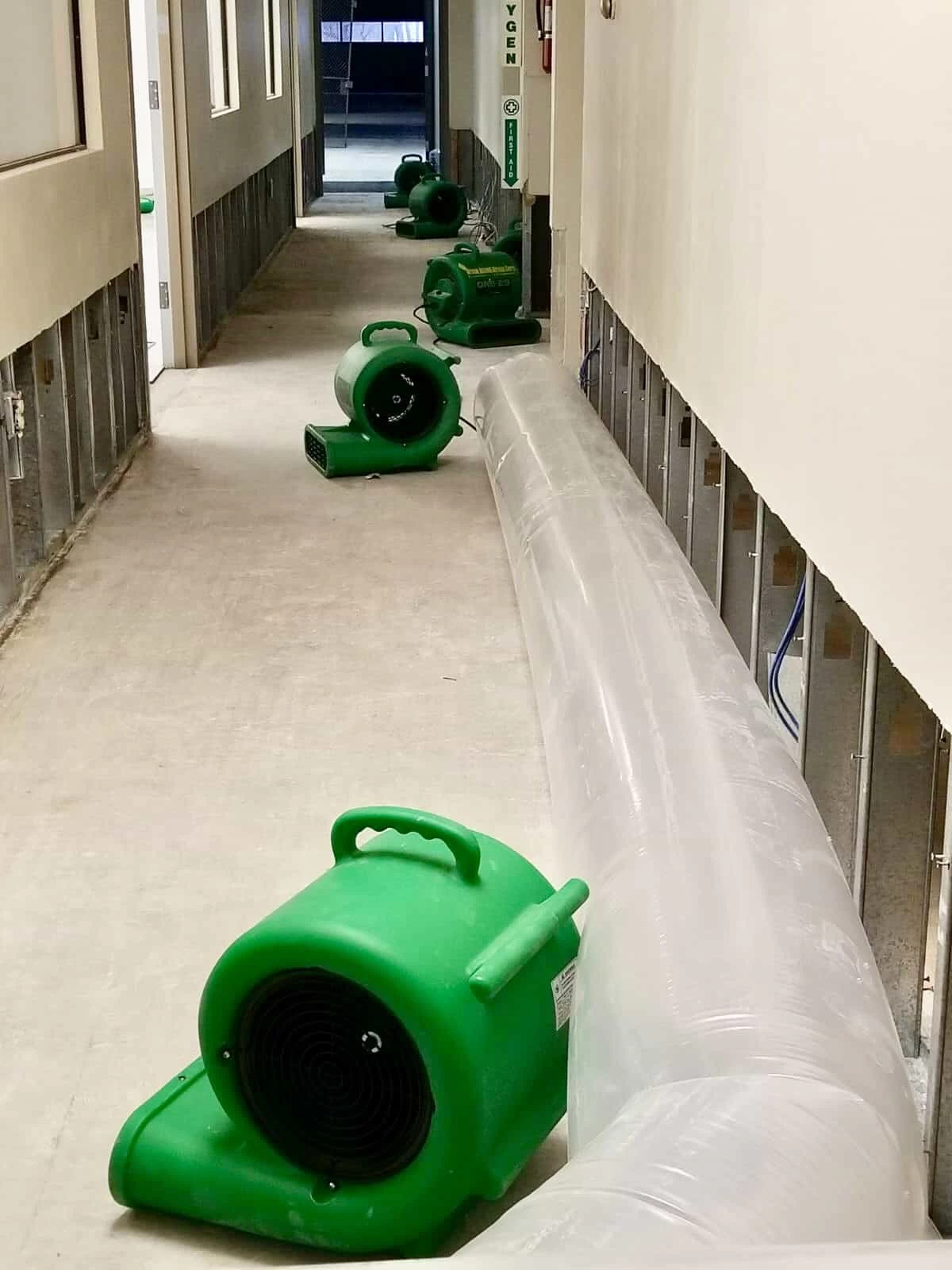
We handle both the demolition and the remediation side of these situations, and our team is available 24 hours a day. If you’re dealing with an emergency, you don’t need to find a separate mold remediation contractor after the demolition crew leaves it’s all handled in-house. We also work directly with insurance carriers, which matters when you’re managing a claim at the same time as an active damage situation.
What happens if I demolish a house in NYC without the proper permits?
The consequences are serious and they come fast. The NYC Department of Buildings can issue a stop-work order with a minimum fine of $2,500 for a first offense on unpermitted demolition work. If asbestos-containing materials were disturbed without proper DEP notification and abatement procedures, the fines from the DEP can reach into the tens of thousands of dollars and the liability for those violations falls on the property owner, not just the contractor. Beyond the fines, unpermitted demolition work can create title issues that complicate any future sale or redevelopment of the property.
In Bellaire, where median home values are approaching $800,000, the financial risk of cutting corners on permits is genuinely significant relative to the cost of doing it right. An unlicensed contractor who skips the ACP-5 survey and pulls the wrong paperwork doesn’t save you money it creates a liability that can cost far more than the initial savings. We operate fully within NYC DOB, DEP, and USEPA requirements on every project, and the permits are never an afterthought.