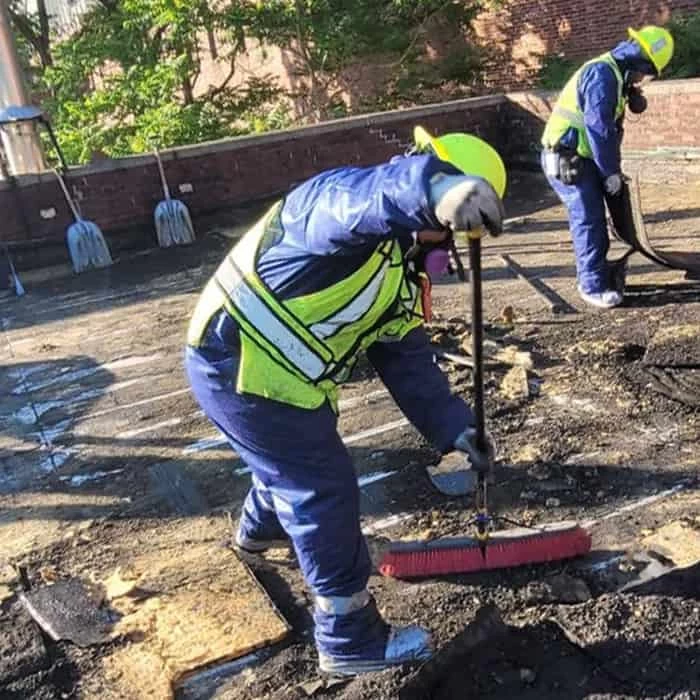
I needed a professional consultation explanation of procedure for safe removal of Asbestos in my apartment complex. Without having an account yet, I was very impressed with the caring, knowledgeable and generous advice offered by Jessica, and will look forward to doing business in the future. Thank you so much! I feel much more informed about a sometimes scary endeavor. Peace. Nancy Silva Mineola, NY.
Mia Munoz
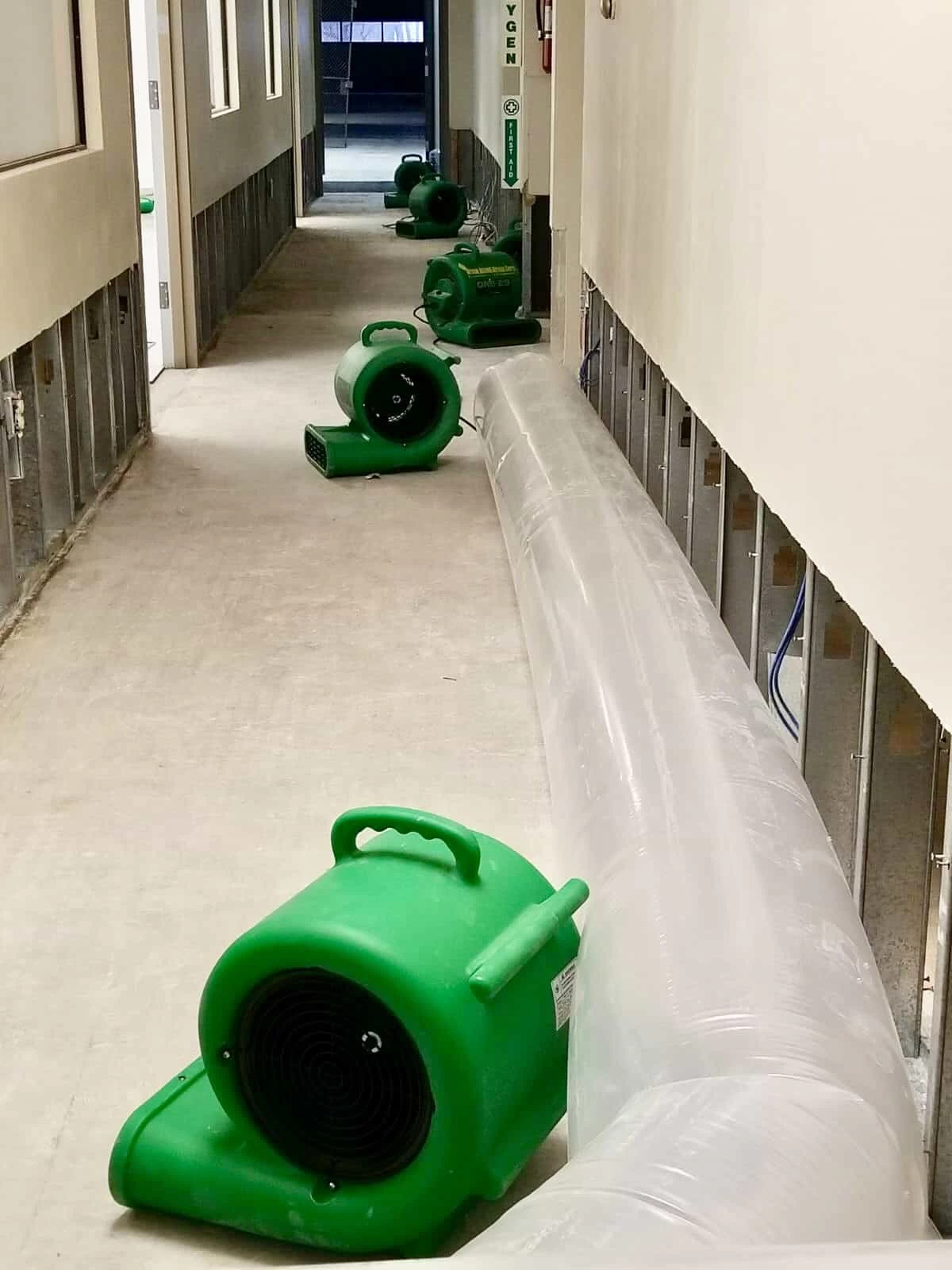
Used this company to clean up some water flood in my house. They were fast and easy to work with.very professional, Would recommend to anyone!
Nini Valle
Great company, had a flood and they responded quickly and efficiently. Billed my insurance company directly. I highly recommend this company!
joe colapietro, jr
I had pipe freeze in my basement right before a snow storm and they made to within an hour to help start the clean up process. They we by our side throughout the entire process and even helped with the insurance company. They did such a great job with the cleanup, repair, remidiation, I contracted them to perform the repairs and finishes in the basement. They came with enough manpower and material to get the job done. Leo and Jessica were nothing but a pleasure to deal with!!
Cristian Arredondo c
I had some water damage in my home and Green Island was able to take care of my issue quickly and effectively. I am very pleased with the work they did. They responded quickly and were very professional.
Michael M
Outstanding service! From the office to the field crew everyone was friendly, helpful and responsive. I highly recommend Green Island Group.
When a demolition job goes sideways in Bellerose, it usually comes down to one thing: the contractor didn’t know what they were walking into. A home built in 1944 isn’t just old it’s almost guaranteed to have asbestos somewhere. Floor tiles, pipe wrap, roofing material, textured ceilings. The law requires a certified survey before any demo begins, and skipping that step doesn’t just create a health risk. It creates a legal one that lands on you, not the contractor.
Then there’s the permit question. If your property sits on the Queens side of the line, you’re dealing with the NYC Department of Buildings. If you’re in Bellerose Village on the Nassau County side, it’s Village Code Chapter 68 and the Bellerose Village Building Department on Superior Road. These are two completely different systems, and a contractor who only knows one of them will cost you time. Weeks of it, sometimes.
When we handle it, you get a clear timeline, proper documentation, and a site that’s clean and ready for whatever comes next whether that’s new construction, a sale, or simply closing the chapter on a structure that’s run its course. No stop-work orders. No surprise discoveries mid-project. Just a job done correctly from the first phone call to the last debris haul.
We’ve been doing demolition and remediation work across Nassau County and all five boroughs for over 12 years. That means we’ve pulled permits through the NYC DOB and through Nassau County’s village-level building departments including the specific requirements that apply to Bellerose Village. This isn’t a company learning your neighborhood on your dime.
What makes the difference for most Bellerose homeowners is that we’re both a licensed demolition contractor and a certified asbestos abatement company. You don’t need to hire a hazmat firm, wait for them to clear the site, and then bring in a separate demo crew. That entire process happens under one roof, on one schedule, with one point of contact.
Owner Leo Torres has built this company on 5,000-plus completed projects across New York State, a 4.7-star rating from real customers, and a straightforward approach: show up, do the work right, and handle everything the job requires not just the parts that are easy.
It starts with a site assessment. Before anything else, we evaluate the structure, identify what materials are present, and determine which permits apply to your specific property. In Bellerose, that last part matters more than most places your address determines whether you’re in NYC DOB territory or under Bellerose Village jurisdiction, and the permit process is different for each.
If the assessment turns up asbestos-containing materials which is common in homes built before 1978, and nearly every home in Bellerose qualifies abatement happens before demolition begins. That’s not optional under New York State law. We handle the abatement in-house, file the required notification with the NYC Department of Environmental Protection (at least seven days before work starts, as required), and coordinate the clearance testing so the demo crew isn’t waiting on a third party to finish.
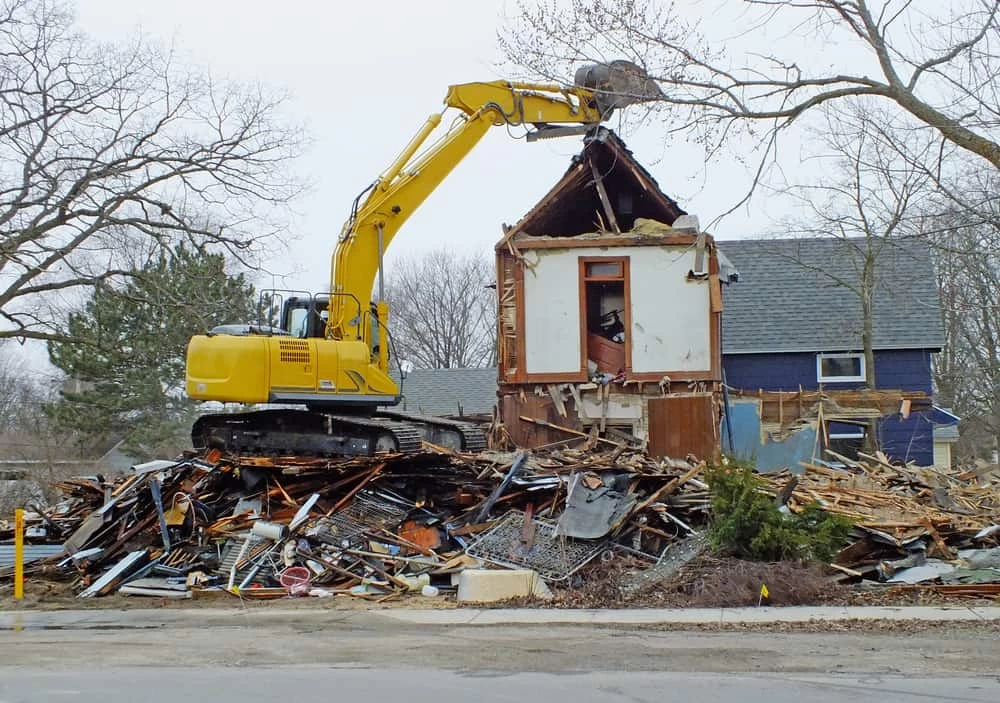
Once the site is clear, demolition proceeds in a controlled sequence utilities disconnected, structure brought down safely, debris removed and disposed of properly. When it’s done, you have a clean, permitted, inspection-ready site. If your project was triggered by storm damage or a flood, we can work directly with your insurance carrier throughout the process so that piece isn’t sitting on your plate while everything else is happening.
House demolition in Bellerose isn’t a one-size job. The scope depends on whether you need a full teardown or selective interior demolition, which side of the Queens-Nassau line your property sits on, and what the structure contains. We handle all of it full residential demolition, partial or interior demo for renovation prep, and complete site clearance from start to finish.
Every project includes the required asbestos survey under NYS DOL Industrial Code Rule 56. If asbestos is found and in an 80-plus-year-old Tudor or Colonial Revival home, the odds are high abatement is handled in-house before demo begins. The same goes for lead paint: under the EPA’s RRP Rule, any home built before 1978 requires certified lead-safe work practices, and we carry that certification. Fines for non-compliance run up to $43,000 per violation per day, which is exactly the kind of exposure you want a licensed contractor absorbing, not you.
We also handle debris removal, site cleanup, and coordination with local inspectors for final sign-off. If there’s an underground oil tank on the property not uncommon in Bellerose’s older homes that requires separate handling under NYS DEC guidelines, and that’s part of the conversation during the initial assessment. Nothing gets left for you to sort out after the fact.
Do I need a permit to demolish a house in Bellerose, NY?
Yes and in Bellerose, the answer is a little more involved than most places because of where the neighborhood sits. If your property is in Bellerose, Queens, you need a demolition permit through the NYC Department of Buildings. The fee is calculated based on your street frontage, number of stories, and a rate of $0.25 per unit, with a minimum of $250. If you’re in Bellerose Village on the Nassau County side, the permit process runs through the Bellerose Village Building Department at 50 Superior Road under Village Code Chapter 68, and exterior changes may also require review by the village’s Architectural Review Committee.
The important thing to know is that these are two separate systems with different forms, different timelines, and different inspectors. A contractor who only operates on one side of that line regularly will run into delays on the other. We work in both jurisdictions routinely, so the permit process gets handled correctly from the start no amended filings, no stop-work orders, no surprises.
Does my Bellerose home have asbestos, and does that affect demolition?
If your home was built before the late 1970s and the average Bellerose home was built around 1944 there’s a very real chance it contains asbestos-containing materials somewhere. The most common locations in homes of that era are pipe insulation, 9×9 vinyl floor tiles, roofing materials, textured ceiling coatings, and certain types of siding. You can’t always see it, and you definitely can’t confirm it without a certified survey.
New York State law under Industrial Code Rule 56 requires a certified asbestos survey before any demolition or renovation work begins. This isn’t a suggestion it’s a legal requirement, and it applies regardless of which side of the Queens-Nassau line your property sits on. If asbestos is found, it has to be properly abated before demo can start. We’re NYS DOL-certified for asbestos abatement, so the survey, the abatement, and the demolition all happen through the same company on the same schedule. You don’t end up coordinating between two separate contractors or waiting on a hazmat crew to clear the site before anyone else can move.
How much does house demolition typically cost in the Bellerose area?
In the New York metro area, full house demolition for a standard residential structure typically runs somewhere between $15,000 and $40,000 or more depending on size, materials, and scope. That range accounts for permit fees, the mandatory asbestos survey, abatement if needed, debris removal, and site cleanup. In Bellerose specifically, the older housing stock most homes are 80-plus years old means asbestos abatement is a common line item, not an edge case.
What you want to be careful about is a bid that looks low but doesn’t include the survey, the permits, or the disposal costs. Those items surface eventually, and by the time they do, you’re already mid-project with limited options. A complete, itemized estimate upfront tells you a lot about how a contractor operates. Given that Bellerose home values are averaging close to $750,000, the demolition cost is usually a fraction of the land value and the cost of doing it incorrectly (failed inspections, stop-work orders, EPA violations) almost always exceeds the cost of doing it right the first time.
What happens if a storm damages my Bellerose home and it needs to be demolished?
Storm-triggered demolition is more common in Bellerose than most people realize. The neighborhood’s older homes many of them Tudors and Colonial Revivals built in the 1920s through 1950s have aging roofs, older structural systems, and mature trees on relatively small lots. When a severe windstorm rolls through, a downed tree through a roof or a compromised wall can push a home past the point of reasonable repair. It happens, and it’s been documented locally.
When that’s your situation, you’re dealing with demolition and an insurance claim at the same time, which is genuinely overwhelming. We bill insurance companies directly and have experience managing the documentation, the adjuster relationship, and the scope of work coordination that insurance-triggered projects require. You don’t have to become an expert in your policy while also figuring out what to do with a damaged structure. We handle both tracks simultaneously. The other thing worth knowing: emergency response is available 24/7, so if something happens overnight or on a weekend, you’re not waiting until Monday morning to get someone on the phone.
Can I just hire a general contractor for house demolition in Bellerose, or do I need a specialist?
Technically, a licensed general contractor can pull a demolition permit. But in Bellerose, where the majority of homes were built before 1978 and almost certainly contain some form of asbestos or lead paint, demolition isn’t just a structural exercise it’s a hazmat project first. And hazmat work requires separate certifications that most general contractors don’t hold.
If your GC doesn’t have NYS DOL asbestos abatement certification, they’ll need to subcontract that piece. That means a second company, a second mobilization, a second schedule, and a gap in accountability when something doesn’t go according to plan. It also means the demo crew is sitting idle until the abatement crew finishes and clearance testing comes back clean. We hold all the required certifications in-house demolition, asbestos abatement, lead-safe practices so the job moves as one continuous project, not two separate ones trying to coordinate around each other.
How long does house demolition take in Bellerose, NY from start to finish?
The physical demolition of a standard single-family home usually takes one to three days once work begins. But the full timeline from first call to cleared site is longer than that, and in Bellerose it’s important to plan for the regulatory steps that come before any equipment shows up.
The asbestos survey alone takes a few days to schedule, conduct, and receive lab results. If abatement is required, that adds time depending on the scope typically several days to a week or more for a full residential abatement. On the Queens side, NYC DEP requires notification at least seven days before abatement activities begin. Permit processing through the NYC DOB or the Bellerose Village Building Department adds additional lead time. Realistically, you’re looking at three to six weeks from initial assessment to completed site clearance when everything runs smoothly. The best way to shorten that timeline is to start early get the assessment done, understand what the project requires, and let the permitting process run while the planning happens in parallel. We walk you through that sequencing from the first conversation so nothing catches you off guard mid-project.