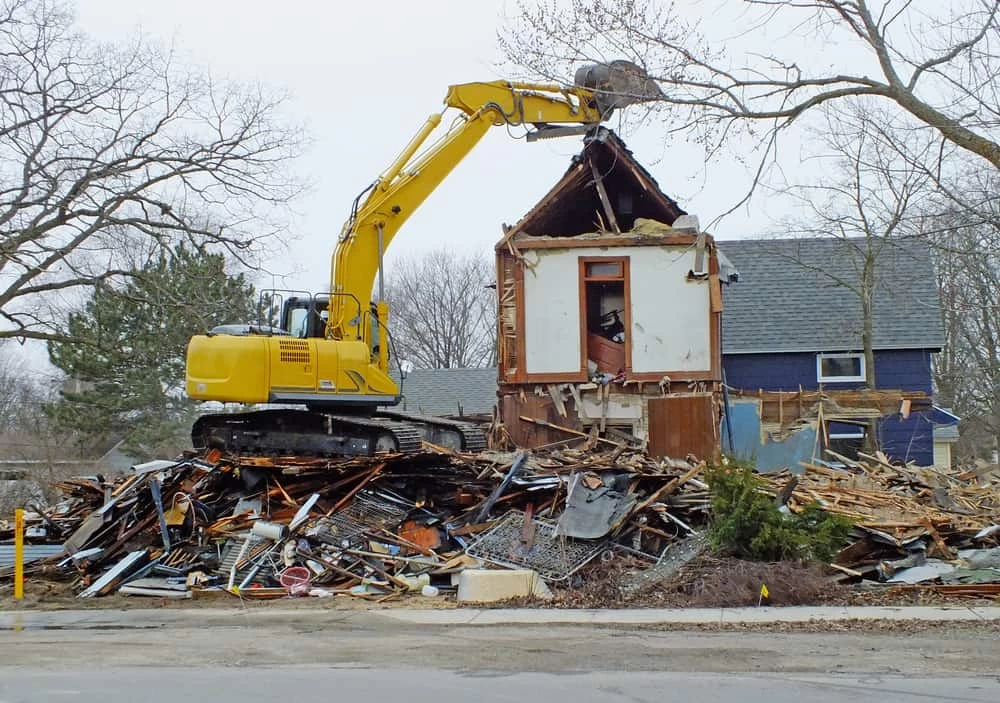
Briarwood's Aging Homes Deserve More Than a Wrecking Ball
Most homes in Briarwood were built in the 1950s and demolishing them the right way means handling asbestos, permits, and NYC regulations before a single wall comes down. We handle all of it.
I needed a professional consultation explanation of procedure for safe removal of Asbestos in my apartment complex. Without having an account yet, I was very impressed with the caring, knowledgeable and generous advice offered by Jessica, and will look forward to doing business in the future. Thank you so much! I feel much more informed about a sometimes scary endeavor. Peace. Nancy Silva Mineola, NY.
Mia Munoz
Used this company to clean up some water flood in my house. They were fast and easy to work with.very professional, Would recommend to anyone!
Nini Valle
Great company, had a flood and they responded quickly and efficiently. Billed my insurance company directly. I highly recommend this company!
joe colapietro, jr
I had pipe freeze in my basement right before a snow storm and they made to within an hour to help start the clean up process. They we by our side throughout the entire process and even helped with the insurance company. They did such a great job with the cleanup, repair, remidiation, I contracted them to perform the repairs and finishes in the basement. They came with enough manpower and material to get the job done. Leo and Jessica were nothing but a pleasure to deal with!!
Cristian Arredondo c
I had some water damage in my home and Green Island was able to take care of my issue quickly and effectively. I am very pleased with the work they did. They responded quickly and were very professional.
Michael M
Outstanding service! From the office to the field crew everyone was friendly, helpful and responsive. I highly recommend Green Island Group.
What Changes When the Job Is Done Right in Briarwood
When your Briarwood home is 70 years old and sitting in a dense Queens neighborhood, demolition is not a simple teardown. The average Briarwood home was built around 1952 well inside the window when asbestos was used in insulation, floor tiles, ceiling materials, and pipe wrapping. Before the NYC Department of Buildings will even issue a demolition permit, you need a certified asbestos investigation and the right DEP paperwork in place. When that process is handled correctly from the start, your project moves on schedule instead of stalling for weeks at a permit office.
The other thing that changes is your exposure. Briarwood is a tight-knit neighborhood homes sit close together, streets are narrow, and your neighbors are close enough to be directly affected by how a demolition is managed. Proper dust containment, debris control, and liability coverage are not optional here. When the job wraps, your lot is clear, your neighbors are not filing complaints, and you are not fielding calls from the DOB about an unpermitted teardown.
For homeowners dealing with fire or water damage in one of Briarwood’s older mid-century homes, getting a contractor on-site fast matters. Every day without a plan is another day of compounding damage, insurance delays, and uncertainty. Speed and compliance together that is what a clean outcome actually looks like here.
We have been doing demolition and environmental work across New York State for over 12 years including all five NYC boroughs. That means we have worked in neighborhoods like Briarwood before: dense, mid-century residential blocks where the housing stock is aging, the regulatory requirements are strict, and the margin for error is low. We are not learning the NYC DOB and DEP process on your project.
What makes us different from a standard demolition contractor is that we handle the full scope in-house. Asbestos investigation, abatement if needed, permit filing, and the teardown itself all under one contract, one timeline, and one point of contact. No subcontractors disappearing between phases. No gap between the abatement crew finishing and the demo crew arriving.
Owner Leo Torres built this company on the idea that a homeowner should never have to manage five different contractors to get one job done. With over 5,000 completed projects and a 4.7-star track record, that approach has held up.
The first step is an on-site assessment. Before any permits are pulled or equipment is scheduled, our team evaluates the structure, identifies what materials are present, and determines what the NYC DEP asbestos investigation process will require for your specific property. In Briarwood, where virtually every home built before 1978 is presumed to contain lead-based paint and where asbestos is common in the 1940–1969 construction era, this step is not a formality it is what keeps your project from hitting a wall later.
Once the investigation is complete, the permit process begins. In New York City, a full demolition permit requires a DEP-certified asbestos clearance (the ACP-5 form), a Construction Safety Compliance pre-demolition inspection, a dust control plan, and full DOB review which typically runs four to eight weeks. We manage all of that filing directly. You are not handed a stack of forms and told to figure it out.
When permits are approved and any required abatement is complete, the demolition itself moves quickly. Our crew handles debris removal and site clearance as part of the job not as an add-on. By the time we leave, your lot is ready for whatever comes next, whether that is a new build, a sale, or simply a clean slate.
House demolition in Briarwood covers more ground than most people expect going in. It starts with the DEP-certified asbestos investigation mandatory for any structure built before 1980 under NYC regulations, and relevant to nearly every home in this ZIP code. If asbestos-containing materials are found, abatement happens before demolition proceeds. We are certified under NYS DOL Industrial Code Rule 56 to perform that abatement in-house, so there is no waiting on a separate contractor to finish before the teardown can begin.
From there, the scope includes full permit management with the NYC Department of Buildings, coordination with Con Edison and National Grid for utility disconnections, structural demolition, debris hauling, and final site clearance. For properties near the Van Wyck Expressway on Briarwood’s western edge, vibration management and containment are factored into the plan from the start not treated as an afterthought when a neighbor raises a concern.
If your demolition is tied to an insurance claim which is common when older Briarwood homes sustain fire or water damage we bill insurance carriers directly and help move the claims process forward. The estimate you receive covers the full scope of work. Permit fees, asbestos survey costs, debris removal none of it is hidden in the fine print.
Do I need an asbestos inspection before demolishing my Briarwood home?
Yes and it is not optional. Under NYC DEP regulations, any building being demolished must undergo a certified asbestos investigation before the Department of Buildings will accept a demolition permit application. If the investigation finds asbestos-containing materials, full abatement must be completed and DEP clearance paperwork (ACP-7 and ACP-21 forms) must be submitted before demolition can proceed.
In Briarwood, this applies to the overwhelming majority of homes. The neighborhood’s housing stock was built predominantly between 1940 and 1969 a period when asbestos was used extensively in insulation, floor and ceiling tiles, roofing materials, and pipe wrapping. Assuming your home is clear without an investigation is a risk that can result in a stop-work order, DEP fines, and a project that stalls for weeks. Having a contractor who handles the investigation and abatement in-house means that process runs on a single timeline instead of depending on a handoff between two separate companies.
How long does a house demolition permit take to get approved in NYC?
For a full demolition in New York City, plan for four to eight weeks of permit processing time. That timeline accounts for the DEP asbestos clearance process, the Construction Safety Compliance pre-demolition inspection, and full DOB review which, as of 2025, is required for all full demolitions involving mechanical equipment and cannot be fast-tracked through professional certification.
The practical implication for Briarwood homeowners is that the permit process needs to start well before you want demolition to begin. If you are planning a spring or summer rebuild, the permitting process should be initiated in winter. Delays typically happen when the asbestos paperwork is incomplete, when the CSC Demolition Cover Sheet is missing from the application, or when utility disconnection confirmations from Con Edison or National Grid have not been secured. A contractor who has navigated this process many times in NYC boroughs knows exactly what each submission needs to avoid a rejection that resets the clock.
What does house demolition in Briarwood, NY typically cost?
The cost of demolishing a house in Briarwood depends on the size of the structure, what hazardous materials are present, and what the permit process requires for your specific property. As a general range, full residential demolition in the New York City area runs between $6,000 and $25,000 for a standard single-family home, with the average falling around $15,000 for a 2,000-square-foot structure.
What drives that number higher in Briarwood specifically is the regulatory layer. NYC demolition permit fees alone can reach $10,000 to $12,000. If asbestos abatement is required which is likely given the neighborhood’s 1940–1969 housing stock that adds to the project cost. The same is true for lead paint compliance under the EPA’s Renovation, Repair, and Painting Rule, which applies to any pre-1978 structure. A low estimate that excludes these mandatory costs is not a deal it is an incomplete number that will grow once the project is underway. The estimate you receive from us covers the full scope, so you know what you are actually spending before work begins.
Can I demolish a house in Queens without a permit?
No. Demolishing a structure in New York City without a permit is a serious violation. The NYC Department of Buildings can issue a Stop Work Order immediately, and the minimum fine for unpermitted demolition starts at $2,500 for a first offense with additional penalties possible depending on the scope of the violation and whether hazardous materials were disturbed without proper DEP notification.
Beyond the fines, unpermitted demolition in a dense neighborhood like Briarwood creates real liability exposure. If a neighbor’s property is affected a cracked foundation, debris on their lot, dust contamination and there is no permit on file, you are personally responsible without the protection that a properly permitted and insured job provides. The permit process in NYC is genuinely involved, but it exists for reasons that are easy to understand once you have seen what happens when it is skipped. Working with a licensed contractor who pulls permits as a standard part of every job is the only way to protect yourself and your property.
What happens to the debris after my house is demolished in Briarwood?
Debris removal is part of the job not a separate line item to negotiate after the fact. Once the structure is down, our crew handles hauling and disposal of all demolition materials in compliance with NYC and NYS waste disposal regulations. Any materials identified as hazardous asbestos, lead paint debris, contaminated soil are handled under separate disposal protocols required by the DEP and EPA, with documentation provided to confirm proper disposal.
For Briarwood specifically, debris logistics require some coordination given the neighborhood’s narrow residential streets and proximity to the Van Wyck Expressway. Staging and haul routes are planned in advance to avoid blocking traffic on local roads or creating safety issues near the expressway corridor. By the time the job is complete, the lot is cleared and graded ready for a foundation pour, a new build, or whatever your next step is. You should not be left managing a pile of rubble after we leave.
Does homeowners insurance cover demolition costs after fire or water damage in Queens?
In many cases, yes but the coverage depends on your specific policy and the cause of the damage. When a structure is rendered uninhabitable or unsafe due to a covered event like fire, a burst pipe, or storm damage, most standard homeowners policies include some provision for debris removal and demolition as part of the overall claim. The challenge is that insurance carriers move at their own pace, and many homeowners do not know how to push the process forward while also managing displacement and repairs.
We work directly with insurance carriers and have experience navigating claims tied to demolition in Queens. We bill insurance directly where coverage applies, which removes the burden of you fronting costs and waiting for reimbursement. For Briarwood homeowners dealing with damage in an older home where the combination of aging materials, asbestos, and lead paint adds regulatory complexity to an already stressful situation having a contractor who understands the insurance side of the process is genuinely useful, not just a convenience.