Most homes in East Atlantic Beach were built before 1950. When it’s time to tear one down, the process is more involved than most contractors will tell you upfront — and getting it wrong costs more than getting it right the first time.
I needed a professional consultation explanation of procedure for safe removal of Asbestos in my apartment complex. Without having an account yet, I was very impressed with the caring, knowledgeable and generous advice offered by Jessica, and will look forward to doing business in the future. Thank you so much! I feel much more informed about a sometimes scary endeavor. Peace. Nancy Silva Mineola, NY.
Mia Munoz
Used this company to clean up some water flood in my house. They were fast and easy to work with.very professional, Would recommend to anyone!
Nini Valle
Great company, had a flood and they responded quickly and efficiently. Billed my insurance company directly. I highly recommend this company!
joe colapietro, jr
I had pipe freeze in my basement right before a snow storm and they made to within an hour to help start the clean up process. They we by our side throughout the entire process and even helped with the insurance company. They did such a great job with the cleanup, repair, remidiation, I contracted them to perform the repairs and finishes in the basement. They came with enough manpower and material to get the job done. Leo and Jessica were nothing but a pleasure to deal with!!
Cristian Arredondo c
I had some water damage in my home and Green Island was able to take care of my issue quickly and effectively. I am very pleased with the work they did. They responded quickly and were very professional.
Michael M
Outstanding service! From the office to the field crew everyone was friendly, helpful and responsive. I highly recommend Green Island Group.
When a house demolition is handled correctly in East Atlantic Beach, you’re not just getting a cleared lot. You’re getting a clean slate that’s legally ready for whatever comes next — whether that’s new FEMA-compliant construction, a sale, or simply removing a structure that’s become a liability.
Nearly every home on this barrier island predates 1980, which means asbestos testing isn’t optional — it’s required by New York State law before any demolition permit can be issued. When that step is handled in-house, alongside the permit work and the actual teardown, you don’t end up stuck waiting on three different contractors to coordinate. The whole project moves on one timeline, not three.
And because East Atlantic Beach sits directly in a coastal flood zone, how the demolition is documented matters for what you build next. Proper site clearance, elevation documentation, and coordination with FEMA compliance requirements during the teardown phase can mean the difference between a smooth new construction start and a permit process that drags on for months.
We’re a full-service demolition and environmental contractor based in Suffolk County, serving all of Nassau County — including East Atlantic Beach — along with the five boroughs and beyond. We’ve been doing this for over 12 years, and we’ve completed more than 340 demolition projects across the New York metro area.
What makes us different in a community like East Atlantic Beach isn’t just experience — it’s that we handle asbestos inspection, certified abatement, permitting, demolition, debris removal, and site cleanup all under one roof. We already have an established track record in the Village of Atlantic Beach, right next door on the same barrier island. We know the access routes, the Town of Hempstead permit process, and the PSEG disconnection requirements specific to this area.
We hold NYS DOH asbestos licensing, EPA and OSHA certifications, and Nassau County contractor credentials. We’re also NYS and NYC M/WBE Certified. And we’re available 24/7 — because in a coastal community, emergencies don’t wait for business hours.
Building Demolition Process East Atlantic Beach, NY
No Surprises — Here's Exactly How the Job Runs
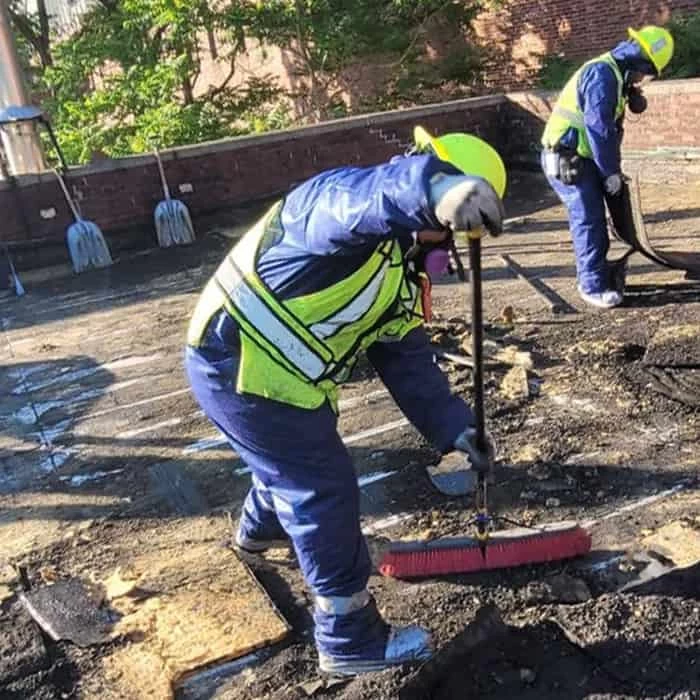
It starts with an assessment. We come out, evaluate the structure, and determine what’s there — including any hazardous materials. For pre-1980 homes, which covers nearly every property in East Atlantic Beach, that means a certified asbestos inspection before anything else happens. If asbestos is found, we handle abatement in-house with a licensed crew before demolition begins. No outsourcing, no waiting on a third party to clear the site.
From there, we manage the permit process with the Town of Hempstead Building Department. That includes coordinating the Nassau County Department of Health Rodent Free Inspection — which expires in just 10 days, so timing matters — and handling the PSEG Long Island service disconnection through their Building and Renovation Services line. These are the steps that stall projects when contractors aren’t familiar with them. We’ve done this enough times in this area that it’s routine for us.
Once permits are in hand and utilities are disconnected, demolition begins. We bring the right equipment onto the island, work within the physical constraints of the site, and manage debris removal carefully on residential streets. When the structure is down, we leave the lot clean, documented, and ready for whatever comes next. If you’re rebuilding, we can handle that too.
House demolition in East Atlantic Beach isn’t a simple tear-it-down situation. The housing stock here is old, the regulatory requirements are real, and the coastal environment adds layers that inland Nassau County towns simply don’t deal with. We account for all of it from day one.
Every project includes environmental assessment and asbestos testing as the first step — not an afterthought. If abatement is needed, we handle it with our own certified crew. We pull all required permits through the Town of Hempstead, coordinate the utility disconnection with PSEG Long Island, and manage the Nassau County Health Department inspection on a timeline that works. We also handle full debris removal and site cleanup, so what you’re left with is a clear, clean lot — not a pile of material you’re responsible for disposing of.
For homeowners who’ve experienced storm damage and are navigating an insurance claim, we can help document the damage and coordinate with your adjuster. That’s not something most demolition contractors offer, but in a community that’s been through what East Atlantic Beach has been through since Sandy, it matters. If you’re planning to rebuild after the teardown, we offer full restoration and remodeling services — so the same team that cleared your lot can help you build what comes next.
Does my East Atlantic Beach home require asbestos testing before demolition?
If your home was built before 1980 — which covers the overwhelming majority of properties in East Atlantic Beach, where the median construction year is 1951 — then yes, asbestos testing is legally required before a demolition permit can be issued in New York State. This isn’t a suggestion or a precaution. It’s a regulatory requirement, and skipping it can result in stop-work orders, fines, and environmental liability that falls on you as the homeowner.
The testing itself involves a NYS DOH-certified inspector collecting samples from suspect materials — things like floor tiles, pipe insulation, ceiling materials, roofing, and the asbestos-cement siding that was extremely common on Long Island homes built in the 1930s through 1950s. If asbestos is found, we remove and dispose of it properly before demolition begins.
How do we get a demolition permit for a house in East Atlantic Beach, NY?
Because East Atlantic Beach is an unincorporated hamlet, demolition permits go through the Town of Hempstead Building Department — not a village hall, and not the City of Long Beach. That’s an important distinction, because the process and the requirements are specific to Hempstead Town.
To pull a demolition permit, you’ll need a site survey with spot elevations at each corner of the structure, photographs of all building elevations, confirmation of PSEG Long Island service disconnection, and a Nassau County Department of Health Certificate of Rodent Free Inspection. That last item expires just 10 days from the date it’s issued, so the sequencing has to be right — you can’t get it too early or it expires before the permit is finalized. We manage this entire process. We know the Town of Hempstead requirements, we coordinate the PSEG disconnection through their Building and Renovation Services line, and we time the Health Department inspection so it doesn’t expire before it’s needed.
How much does it cost to demolish a house in East Atlantic Beach?
The honest answer is that it depends on the size of the structure, the foundation type, and what hazardous materials are present. In the New York metro area, full residential demolition typically runs higher than national averages — generally in the range of $10,000 to $30,000 or more for a standard single-family home, with asbestos abatement adding cost depending on the scope of what’s found.
In East Atlantic Beach specifically, nearly every home will require asbestos inspection and likely some level of abatement given the age of the housing stock. That’s a real cost, but it’s a required one — and it’s built into the overall project when you work with a contractor who handles it in-house rather than outsourcing it. For homeowners with storm-damaged properties, some of these costs may be covered through homeowners insurance or FEMA assistance programs. We can help you understand what documentation is needed to support a claim before work begins, which can make a meaningful difference in what you’re ultimately paying out of pocket.
Can we tear down and rebuild a house in East Atlantic Beach after storm damage?
Yes, and it’s actually one of the most common scenarios we see on the Long Beach Barrier Island. Since Hurricane Sandy in 2012, a significant number of homes in East Atlantic Beach have been demolished and rebuilt to current FEMA elevation standards. The teardown-and-rebuild approach is often more practical than trying to elevate an existing pre-war structure, especially when the cost of bringing an old home into FEMA compliance exceeds what it would cost to start fresh with a properly elevated new build.
If your home has been structurally compromised by storm surge, flooding, or wind damage, the process starts with an assessment to determine whether repair or demolition makes more financial sense. From there, we handle the full demolition — including asbestos abatement if needed, permitting through the Town of Hempstead, and site clearance — and can carry the project forward into new construction. If you’re working with an insurance adjuster or navigating a FEMA claim, we can help document the damage in a way that supports your case before any work begins.
How long does a house demolition take in East Atlantic Beach from start to finish?
The actual physical demolition of a single-family home typically takes one to three days once everything is in place. The longer part of the timeline is what comes before — and that’s where most homeowners are caught off guard.
In East Atlantic Beach, the pre-demolition phase involves asbestos inspection, any required abatement, permit acquisition through the Town of Hempstead, PSEG disconnection, and the Nassau County Health Department rodent inspection. Depending on how quickly each step moves, the full pre-demolition process can take anywhere from a few weeks to a couple of months. Working with a contractor who handles all of these steps in-house — rather than leaving you to coordinate them separately — compresses that timeline significantly. Spring is typically the busiest planning season in beach communities like East Atlantic Beach, so if you’re targeting a spring or early summer demolition, starting the process in late winter gives you the best chance of hitting your target window.
Is Green Island Group available for emergency demolition in East Atlantic Beach after a storm?
Yes. We operate 24 hours a day, seven days a week, every day of the year — and that’s not a line on a website. It’s how we actually operate, and it’s reflected in customer accounts of us arriving within an hour of an emergency call.
For East Atlantic Beach, that availability is genuinely relevant. Nor’easters hit the south shore hard, and when a structure is compromised by storm surge or wind damage, waiting days for a contractor to show up isn’t an option. A structurally unsafe home on a narrow barrier island street creates risk for the property and for everyone around it. When you call us after a storm, we assess the situation quickly, help you understand what needs to happen and in what order, and mobilize the right crew. We also understand that post-storm situations often involve insurance claims, and we can help document what we find before anything is touched — which protects your claim and gives your adjuster a clear picture of the damage.