When your Farmingdale home has outlived its usefulness, we handle the entire demolition process — permits, asbestos, teardown, and site clearing — so you don’t have to figure it out alone.
I needed a professional consultation explanation of procedure for safe removal of Asbestos in my apartment complex. Without having an account yet, I was very impressed with the caring, knowledgeable and generous advice offered by Jessica, and will look forward to doing business in the future. Thank you so much! I feel much more informed about a sometimes scary endeavor. Peace. Nancy Silva Mineola, NY.
Mia Munoz
Used this company to clean up some water flood in my house. They were fast and easy to work with.very professional, Would recommend to anyone!
Nini Valle
Great company, had a flood and they responded quickly and efficiently. Billed my insurance company directly. I highly recommend this company!
joe colapietro, jr
I had pipe freeze in my basement right before a snow storm and they made to within an hour to help start the clean up process. They we by our side throughout the entire process and even helped with the insurance company. They did such a great job with the cleanup, repair, remidiation, I contracted them to perform the repairs and finishes in the basement. They came with enough manpower and material to get the job done. Leo and Jessica were nothing but a pleasure to deal with!!
Cristian Arredondo c
I had some water damage in my home and Green Island was able to take care of my issue quickly and effectively. I am very pleased with the work they did. They responded quickly and were very professional.
Michael M
Outstanding service! From the office to the field crew everyone was friendly, helpful and responsive. I highly recommend Green Island Group.
Most homeowners in Farmingdale don’t think about demolition until they have to. Maybe the structure has been deteriorating for years. Maybe a storm pushed things past the point of repair. Either way, once you’re at this decision, the last thing you need is a contractor who handles one piece of the puzzle and hands you off to someone else for the rest.
With more than a quarter of Farmingdale’s homes built before 1950 and a median construction year of 1961, the reality is that most full demolitions here involve asbestos-containing materials — floor tiles, insulation, pipe wrap, ceiling materials. New York law requires certified testing and abatement before any demolition work begins. If you hire a demolition-only company, you’ll quickly find yourself coordinating a separate environmental contractor, waiting on scheduling, and watching your timeline stretch. That friction disappears when one team handles everything.
What you’re left with after a properly managed demolition is a clean, cleared lot — no debris, no hazardous material liability, no unresolved permits, and no surprises waiting for you down the road. For homeowners in Farmingdale sitting on land that’s now worth $540,000 or more, that cleared lot is the foundation for whatever comes next. A new build, a sale, a fresh start. That’s the outcome worth focusing on.
340 Projects In. We Know What Farmingdale's Housing Stock Looks Like.
We’ve been doing this work across Long Island and New York for over 12 years. More than 340 completed demolition projects — residential teardowns, commercial structures, interior gut jobs — across Nassau County, Suffolk County, and New York City. That’s not a marketing number. It’s the kind of volume that means we’ve seen the complications, handled the inspections, and navigated the permit offices before.
We already serve East Farmingdale and South Farmingdale, which means we know the Nassau County Department of Health’s process, the Village of Farmingdale’s building department requirements, and what the housing stock in this area actually looks like up close. We’re not guessing at what your 1960s ranch might contain — we’ve been inside dozens of them. We’ve handled the asbestos, the lead paint, the outdated electrical systems, and the foundation issues that come with homes built during Farmingdale’s post-war construction boom.
We’re EPA-certified, OSHA-certified, NYS DOH-licensed for asbestos work, and carry full liability insurance. We also hold NYS and NYC M/WBE certification — a government-verified credential that requires real vetting, not self-designation. When accountability matters, credentials like that aren’t a footnote.
It starts with a site assessment. We come out, walk the property, evaluate the structure, and identify anything that needs to be addressed before demolition can legally begin — asbestos-containing materials, lead paint, structural hazards. For most Farmingdale homes built before 1980, that asbestos inspection isn’t optional. It’s required by New York State, and we handle it with our own certified inspectors, not a third party you have to schedule separately.
Once testing is complete and any abatement is handled, we move into the permit phase. In Farmingdale, that means filing with the Village’s Superintendent of Buildings for the demolition permit and coordinating with the Nassau County Department of Health for the required Rodent Free Certificate. That certificate has a hard deadline — demolition must begin within ten days of the inspection date, or the process restarts. We manage that timeline so you don’t accidentally miss the window.
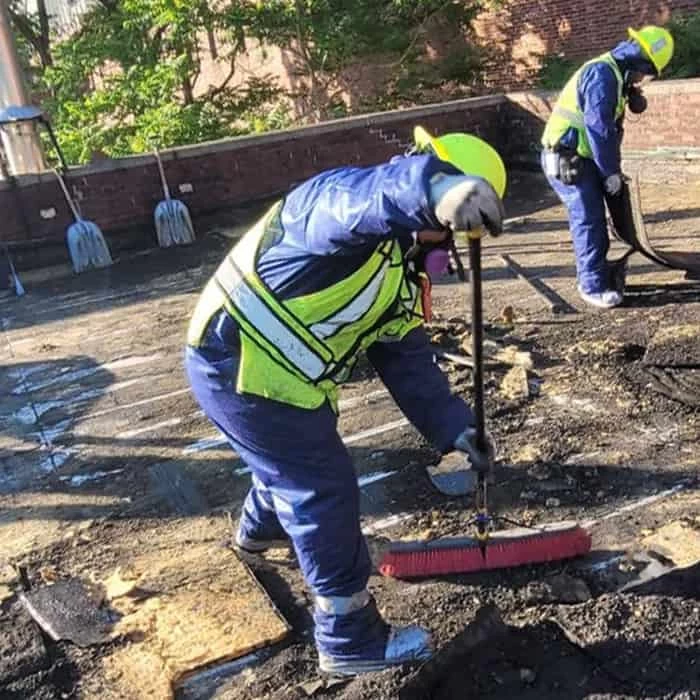
When permits are in hand and utilities are formally disconnected — gas, electric, water, sewer — the physical demolition begins. Depending on the scope, that’s typically one to a few days for a standard residential structure. After the structure is down, we handle debris removal and site clearing, including proper disposal of any materials that require certified handling under New York environmental regulations. You get a clean lot, documented compliance, and a clear path forward.
A lot of demolition companies will show up for the teardown and leave the complicated parts to you. The asbestos testing, the permit navigation, the Nassau County Health Department coordination, the debris disposal — those become your problem. That’s not how we work.
Every house demolition project we take on in Farmingdale includes the full scope: certified asbestos inspection, abatement if required, permit filing with the Village of Farmingdale’s building department, Nassau County Rodent Free Certificate coordination, utility disconnection oversight, structural demolition, debris removal, and site clearing. If your project involves lead paint — which is likely in any pre-1978 home in this area — that’s handled under EPA-certified protocols as part of the same process. Nothing gets handed off, and nothing gets skipped.
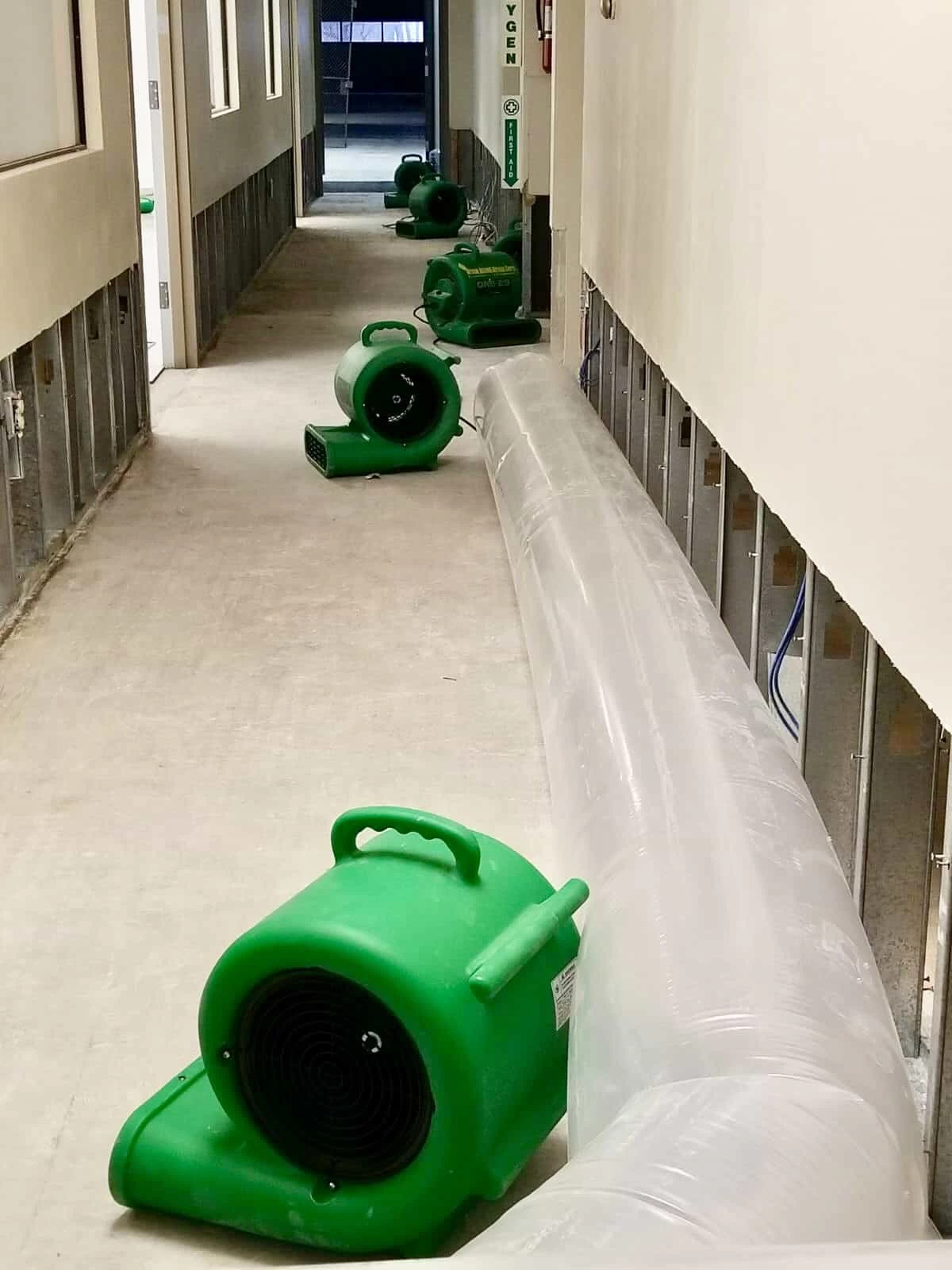
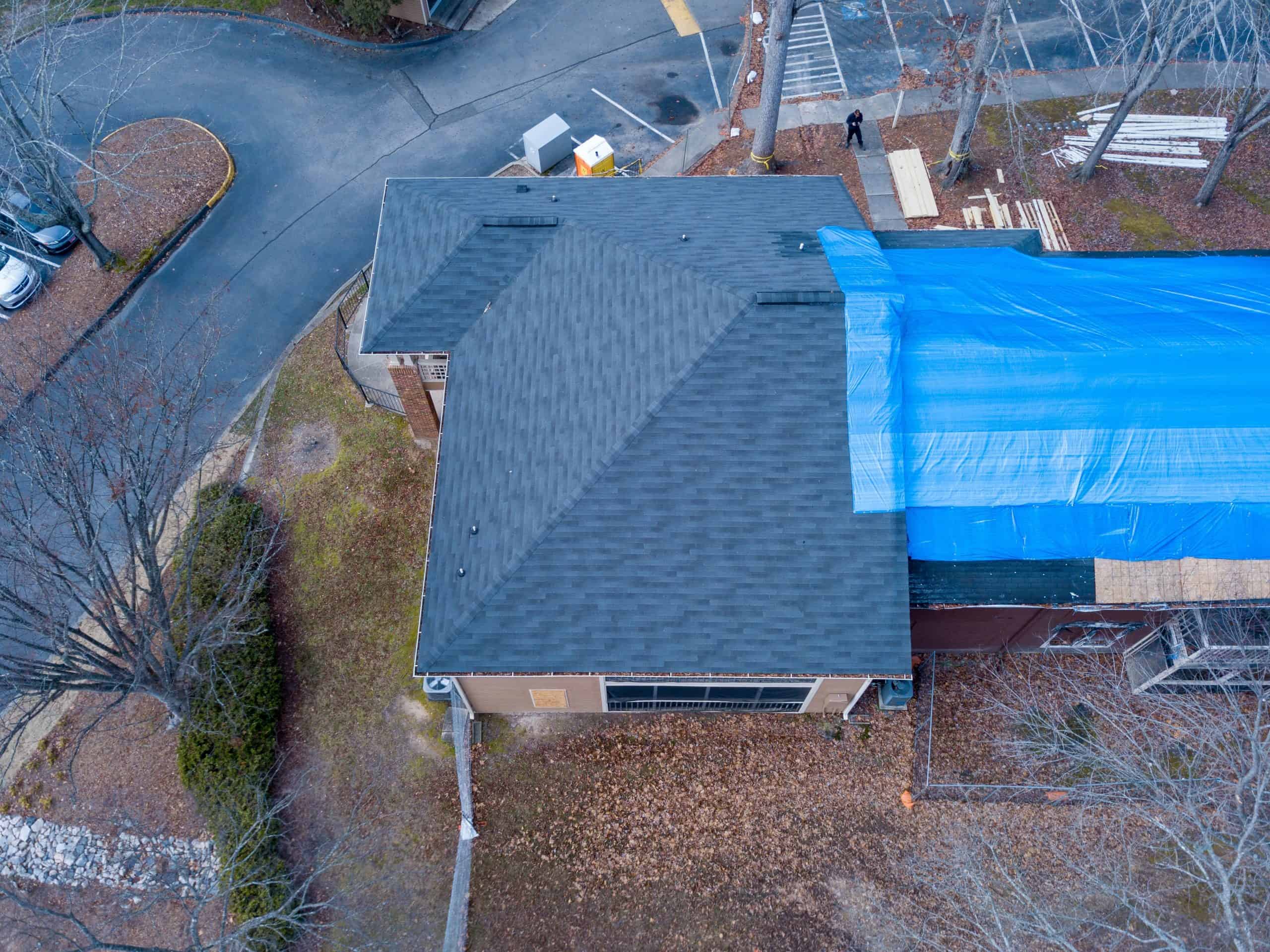
For homeowners dealing with storm damage, fire, or flooding, we also offer 24/7 emergency response. Nor’easters and coastal storms have left more than a few Farmingdale homes structurally compromised over the years, and when that happens, timing matters. Beyond demolition, we can take a project through full restoration and rebuild if that’s the direction you’re heading — environmental remediation, structural drying, remodeling, and reconstruction, all under one roof. If you’re managing a commercial property near Republic Airport, we handle commercial building demolition as well.
Do I need a permit to demolish a house in Farmingdale, NY?
Yes, and in Farmingdale specifically, you’re dealing with two separate requirements — not one. The Village of Farmingdale is an incorporated village with its own building department, so you need to file a demolition permit directly with the Village’s Superintendent of Buildings. That’s separate from the general Nassau County process that applies to unincorporated communities nearby.
On top of that, Nassau County requires a Rodent Free Certificate from the Nassau County Department of Health before any demolition can begin. The critical detail most homeowners don’t know: once that inspection is done and the certificate is issued, demolition must start within ten days. If you miss that window, the inspection needs to be redone and a new certificate issued. It’s a procedural requirement that can delay your project significantly if you’re not tracking it. We manage both the Village permit and the county certificate as a standard part of every project — you don’t have to coordinate between two government offices while also planning a demolition.
Does my Farmingdale home need asbestos testing before demolition begins?
If your home was built before 1980 — which describes the vast majority of Farmingdale’s housing stock, given the area’s median construction year of 1961 — then yes, asbestos testing is legally required before demolition can proceed in New York State. This isn’t a precaution. It’s a regulatory requirement enforced by the NYS Department of Labor’s Asbestos Control Bureau.
Asbestos was routinely used in floor tiles, ceiling tiles, insulation, pipe wrap, roofing shingles, and wallboard in homes built through the late 1970s. In a Farmingdale home from the 1940s, 1950s, or 1960s, the presence of asbestos-containing materials is not a remote possibility — it’s something to plan for. If testing confirms asbestos is present, certified abatement must be completed before the demolition crew can touch the structure. We’re NYS DOH-licensed for both the inspection and the abatement, so you’re not waiting on a separate environmental company to finish before we can start. The whole process moves on one schedule.
How much does house demolition typically cost in Nassau County?
Nationally, full residential demolition averages somewhere between $6,000 and $25,000, with most homeowners paying around $15,000 to $16,000 for a standard 2,000 square foot home. In the New York metro area — and Nassau County specifically — that number runs 20 to 30 percent higher due to stricter environmental regulations, higher labor costs, and the logistical realities of working in a dense suburban market.
For a Farmingdale homeowner, a realistic budget for full residential demolition is typically in the $15,000 to $30,000 range, depending on the size of the structure, whether foundation removal is included, and how much hazardous material abatement is required. Asbestos abatement adds cost, but it’s a non-negotiable part of the process in older homes — and trying to cut corners on it creates liability that follows you. Given that median home values in Farmingdale now exceed $540,000, the economics of doing this correctly and rebuilding on a cleared lot are often far more favorable than they appear at first glance.
What happens to the debris and materials after a house is demolished?
After the structure comes down, everything that remains on the lot needs to be removed, sorted, and disposed of properly. For a standard residential demolition, that means concrete, wood framing, drywall, roofing materials, and general construction debris — all of which gets hauled off and disposed of in compliance with New York State environmental regulations.
The more involved piece is hazardous material disposal. Any asbestos-containing materials identified during the abatement phase must be bagged, labeled, and transported to a licensed disposal facility — there are specific chain-of-custody documentation requirements under New York law that govern this process. The same applies to lead paint debris. This is not something you want a contractor to handle loosely, because improper disposal creates liability for the property owner, not just the contractor. We handle all debris removal and disposal as part of the demolition scope, and everything that requires certified handling gets documented accordingly. When we leave, the lot is clear and the paperwork is clean.
Is it better to demolish and rebuild or renovate an aging home in Farmingdale?
It depends on the condition of the structure, but for a lot of Farmingdale homes — particularly those built in the 1940s through 1960s — demolition and rebuild is often the more practical path than people initially expect. Homes of that age frequently have foundation issues, outdated electrical and plumbing systems, asbestos, lead paint, and structural configurations that don’t meet current building codes. Renovating around all of that can cost as much as a new build while still leaving you with a home that’s fundamentally old.
When land values are as high as they are in Farmingdale right now, the lot itself carries significant value. A new construction home on an established lot, in an established neighborhood, served by the existing school district and infrastructure, can deliver a dramatically better result than pouring money into a structure that’s fighting you at every turn. That said, every property is different. A site assessment gives you real information about what you’re working with — and that’s always the right starting point before making a decision either way.
Can you handle demolition for a storm-damaged home in Farmingdale on short notice?
Yes. We operate 24 hours a day, seven days a week, and emergency response is something we’ve built into how we work — not something we figure out after you call. Long Island’s coastal proximity means that nor’easters, tropical storms, and severe weather events periodically leave homes in Farmingdale and across Nassau County structurally compromised in ways that require immediate attention. A damaged roof or destabilized wall doesn’t wait for a Monday morning appointment.
When you call us after a storm, we can typically have someone on-site for an assessment within hours. From there, we move through the necessary steps — structural evaluation, permit coordination, hazardous material assessment — as quickly as the regulatory process allows. If you’re also navigating a homeowner’s insurance claim at the same time, we’ve been through that process many times and can help you understand what documentation your insurer will need and how to communicate the scope of damage accurately. Getting the demolition handled quickly and correctly is the first step toward getting your property — and your life — back on track.