Glendale's Pre-War Homes Need More Than a Wrecking Ball
Most homes in Glendale were built before 1940. That means asbestos surveys, NYC DOB permits, and DEP notifications before a single wall comes down. We handle all of it one call, one crew, no gaps.
I needed a professional consultation explanation of procedure for safe removal of Asbestos in my apartment complex. Without having an account yet, I was very impressed with the caring, knowledgeable and generous advice offered by Jessica, and will look forward to doing business in the future. Thank you so much! I feel much more informed about a sometimes scary endeavor. Peace. Nancy Silva Mineola, NY.
Mia Munoz
Used this company to clean up some water flood in my house. They were fast and easy to work with.very professional, Would recommend to anyone!
Nini Valle
Great company, had a flood and they responded quickly and efficiently. Billed my insurance company directly. I highly recommend this company!
joe colapietro, jr
I had pipe freeze in my basement right before a snow storm and they made to within an hour to help start the clean up process. They we by our side throughout the entire process and even helped with the insurance company. They did such a great job with the cleanup, repair, remidiation, I contracted them to perform the repairs and finishes in the basement. They came with enough manpower and material to get the job done. Leo and Jessica were nothing but a pleasure to deal with!!
Cristian Arredondo c
I had some water damage in my home and Green Island was able to take care of my issue quickly and effectively. I am very pleased with the work they did. They responded quickly and were very professional.
Michael M
Outstanding service! From the office to the field crew everyone was friendly, helpful and responsive. I highly recommend Green Island Group.
When a demolition project goes wrong in Glendale, it usually isn’t because of the demolition itself. It’s because someone skipped the asbestos survey on a 1910 row house, pulled the wrong permit or didn’t pull one at all and the NYC Department of Buildings showed up with a Stop Work Order. That one mistake can freeze your project for weeks and cost you thousands before the first wall even comes down.
Glendale’s housing stock is some of the oldest in Queens. The brick row houses along Cooper Avenue, the wood-frame semi-detached homes in the Evergreen and Liberty Park sections, the Tudor-style townhouses near Myrtle Avenue nearly all of them were built in an era when asbestos was standard in roofing, flooring, pipe insulation, and drywall compound. Under New York State law, a certified asbestos survey is mandatory before any demolition begins, regardless of what the structure looks like from the outside. That’s not optional, and it’s not something you can handle after the fact.
Then there’s the flooding. Streets in Glendale particularly along 77th Avenue and other low-lying blocks deal with chronic basement flooding from aging combined sewer infrastructure. Queens Community Board 5 formally petitioned the NYC DEP about it in 2023. When water damage reaches the point where a structure needs to come down, you don’t have time to coordinate three separate contractors. You need one team that can assess the damage, handle the hazmat, pull the permits, and get to work without you managing the handoffs.
We’ve been doing demolition and environmental work across New York State for over 12 years including all five NYC boroughs. That matters in Glendale because the neighborhood isn’t governed by Nassau or Suffolk County permit offices. Your project falls under the NYC Department of Buildings, Community District 5, and the city’s DEP notification requirements. That’s a different process than most suburban contractors are used to, and it’s one we’ve navigated hundreds of times.
Owner Leo Torres runs the company directly and stays involved from the first call through final site clearance. Our team is certified for asbestos abatement under NYS DOL Industrial Code Rule 56, fully licensed, insured, and carries the credentials required to work on the pre-war building types that define Glendale’s neighborhoods from the yellow Kreischer brick row houses in Lower Glendale to the wood-frame homes tucked between Forest Park and the Evergreens Cemetery. Over 5,000 completed projects. A 4.7-star track record. And a direct line to someone who actually picks up.
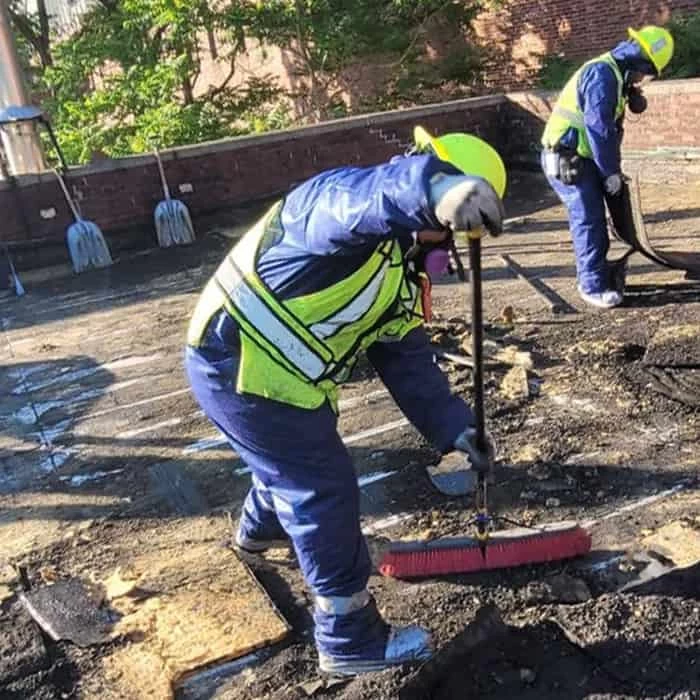
It starts with a site assessment. Before any permits are pulled or equipment is scheduled, our team walks the property, evaluates the structure, and identifies what hazardous materials are likely present. In Glendale, that almost always means asbestos and often lead paint. Both require certified testing and documentation before demolition can legally begin.
Once the hazmat survey is complete, we handle the NYC DOB permit application and, if asbestos is confirmed, submit the required notification to the NYC DEP at least seven days before abatement starts. This is where a lot of projects stall when homeowners try to piece together separate contractors the sequencing has to be right, and the paperwork has to match. We coordinate utility disconnections for gas, electric, and water as well, which the city requires before any structural demolition proceeds.
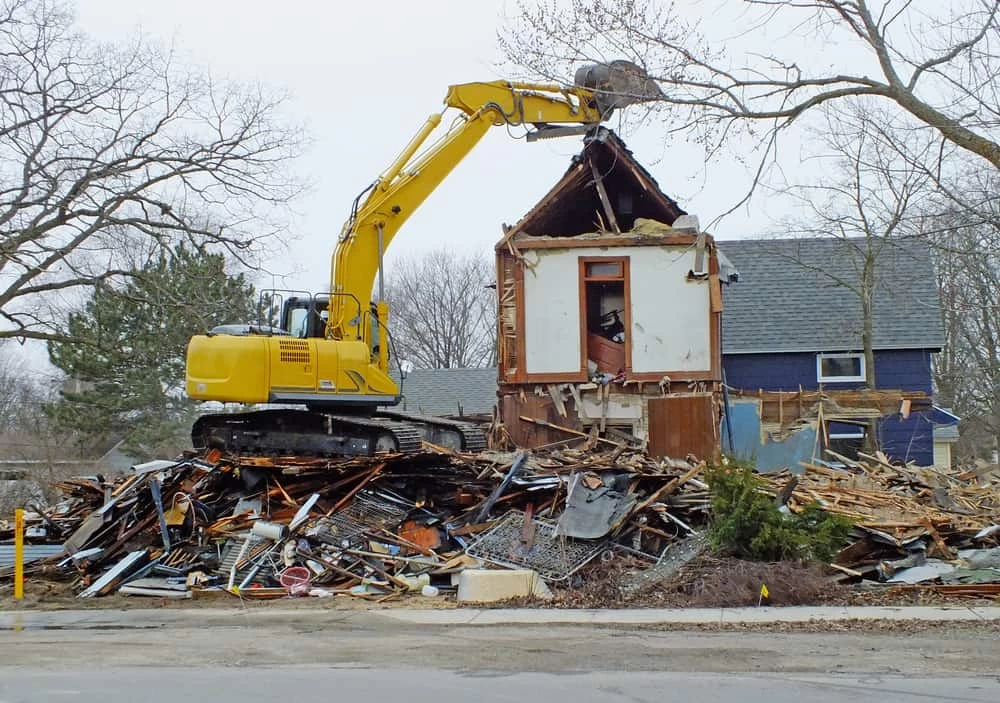
When abatement is cleared and permits are in hand, demolition begins. Glendale’s dense residential streets require careful equipment staging most blocks have semi-detached homes on narrow lots with limited driveway clearance, and access routes are limited to a handful of main corridors like Myrtle Avenue and Cooper Avenue. Our crew works with that in mind, containing debris, managing dust, and protecting adjacent properties throughout. After the structure is down, debris is removed and the site is cleared ready for whatever comes next.
Full Demolition, Hazmat Included Not Quoted Separately
One of the most common frustrations homeowners run into is getting a demolition estimate that looks reasonable until they find out asbestos abatement, permit fees, debris removal, and site cleanup are all separate line items that weren’t mentioned upfront. In NYC, permit fees alone for a full demolition can reach $10,000 to $12,000. Asbestos abatement in a pre-war Glendale home adds more. When those costs surface mid-project, the “affordable” bid stops looking affordable.
We provide full-scope estimates from the start. That means the asbestos survey, abatement, NYC DOB permits, DEP notifications, structural demolition, debris hauling, and site clearance are all accounted for before you commit to anything. Whether you’re dealing with a full teardown, a selective interior demo, or a flood-damaged structure that’s been sitting since the last bad storm hit 77th Avenue, the scope is clearly defined before work begins.
For homeowners dealing with insurance claims which is common in Glendale given the neighborhood’s documented flooding history we bill insurance carriers directly and help navigate the claims process. You’re not expected to manage that on top of everything else. Our service covers residential demolition of all types: single-family homes, semi-detached row houses, multi-family structures, and partial or interior demolition for properties that need selective work rather than a full teardown.
Do I need a permit to demolish a house in Glendale, NY?
Yes and in Glendale, that means a permit from the New York City Department of Buildings, not a county office. Because Glendale falls within NYC’s jurisdiction (Queens Community District 5), the permit process is more involved than what you’d encounter in Nassau or Suffolk County. You need a formal Demolition Permit before any structural work begins, and the application requires documentation of the building’s dimensions, utilities, and hazardous materials status.
If asbestos is present which is extremely likely in Glendale’s pre-war housing stock you also need to notify the NYC DEP at least seven days before abatement begins. Skipping any of these steps can result in a Stop Work Order and fines starting at $2,500 for a first offense, with violations under the EPA’s RRP Rule reaching up to $43,000 per day. We handle the entire permit process on your behalf, including the DEP notification and all required documentation.
Does my Glendale home have asbestos, and does that affect demolition costs?
If your home was built before 1978 which covers the vast majority of Glendale’s housing stock there’s a strong chance it contains asbestos somewhere. In homes built in the late 1800s and early 1900s, which are common throughout Glendale’s Evergreen and Liberty Park sections and along Myrtle Avenue, asbestos can show up in floor tiles, roofing shingles, pipe insulation, siding, drywall compound, and acoustic ceiling materials. You won’t know for certain until a certified survey is done, but in this neighborhood, it’s the rule rather than the exception.
Yes, it affects cost but the bigger risk is not accounting for it upfront. Under NYS DOL Industrial Code Rule 56, a certified asbestos survey is legally required before demolition begins. If a contractor quotes you a price without mentioning asbestos at all, that’s a red flag. We perform the survey and abatement in-house, which means no scheduling gaps between a separate abatement company and your demo crew, and no surprise invoices after the fact.
How long does house demolition typically take in Queens, NY?
The physical demolition of a standard single-family or semi-detached home in Glendale usually takes one to three days once all the pre-work is done. The pre-work is where the timeline actually lives. Asbestos testing, abatement, NYC DOB permit processing, DEP notification periods, and utility disconnections all have to happen in sequence and the DEP notification alone requires a minimum seven-day waiting period before abatement can begin.
From the first call to the day demolition starts, a realistic timeline for a Glendale project is typically two to four weeks, depending on permit processing speed and the extent of hazardous materials found during the survey. Emergency situations like a flood-damaged structure that poses an immediate safety risk can sometimes be expedited through the DOB’s emergency demolition process. If timing is a concern for your specific situation, that’s worth discussing during the initial assessment so the right approach can be identified early.
My basement flooded and the structure is damaged can Green Island Group help?
This is one of the most common situations we handle in Glendale. The neighborhood’s chronic basement flooding problem driven by aging combined sewer infrastructure, downward-sloping driveways, and the topography of streets like 77th Avenue means water damage serious enough to compromise a structure’s integrity isn’t rare here. When that happens, you’re often dealing with mold growth, rotted framing, and in some cases, foundation issues that make the structure unsafe to occupy.
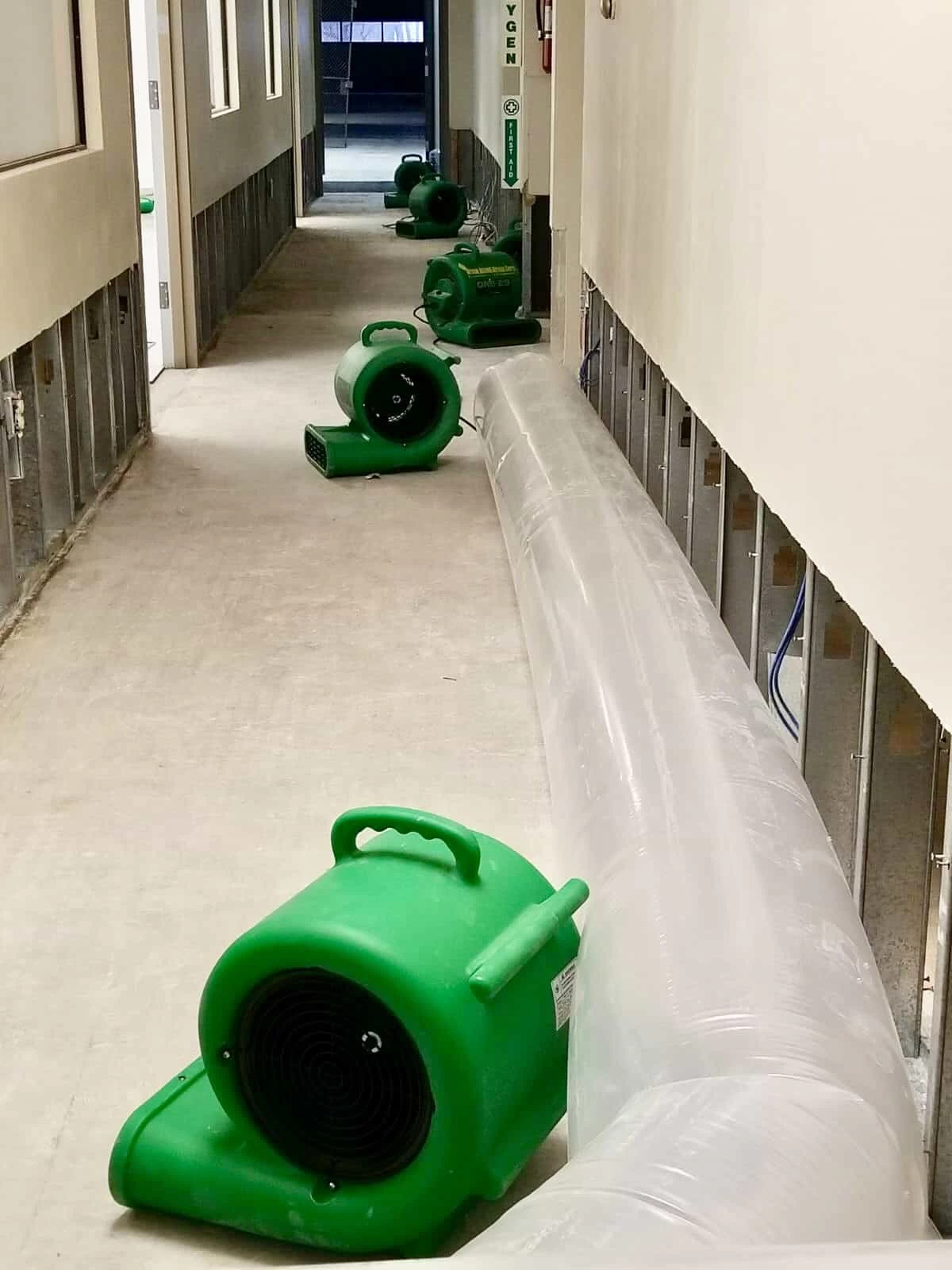
We handle water damage assessment, mold remediation, and structural demolition under one roof. If the damage is covered by homeowners insurance, we bill the insurance carrier directly and help document the claim. You don’t need to coordinate a mold company, a demolition contractor, and an insurance adjuster separately the process runs through one point of contact. If you’re not sure whether the damage warrants full demolition or a partial teardown, the initial assessment will give you a clear answer before any commitment is made.
What's the difference between full demolition and selective interior demolition?
Full demolition means the entire structure comes down foundation, framing, everything leaving a cleared lot. Selective or interior demolition means removing specific elements: a damaged addition, a deteriorated floor system, interior walls, or a flooded basement level, while keeping the rest of the structure intact. Which one makes sense depends on the condition of the building, your plans for the property, and in some cases, whether the home falls within one of Glendale’s historic districts.
Lower Glendale contains three national historic districts in the Evergreen and Liberty Park sections. If your property is within one of those boundaries, certain types of demolition may require additional review before the NYC DOB will issue a permit. That’s not necessarily a dealbreaker it just affects the process and timeline. We can identify early on whether your address triggers any historic review requirements and factor that into the permit strategy before you’re surprised by it mid-project.
How do I know if a demolition contractor in Glendale is actually licensed for this work?
In New York City, demolition contractors need to be licensed through the NYC DOB, and any contractor performing asbestos abatement must hold a separate certification under NYS DOL Industrial Code Rule 56. These aren’t the same thing, and a lot of contractors who advertise demolition services in Queens don’t hold both. If a contractor can’t show you their asbestos abatement certification and their NYC DOB licensing, they shouldn’t be touching a pre-war home in Glendale.
You can verify contractor licensing directly through the NYC DOB’s Buildings Information System and the NYS DOL’s asbestos contractor registry both are publicly searchable online. Green Island Group holds a Home Improvement Contractors license, five additional verified licenses, and full NYS DOL asbestos abatement certification. We carry general liability and workers’ compensation insurance, and our BuildZoom score of 90 confirms active, verified licensure. Before you sign anything with any contractor, ask for their license numbers and look them up. A legitimate operation will hand that information over without hesitation.