Great River Teardowns Done Right From Survey to Clean Lot
Most homes in Great River were built in the 1960s and 70s. That means asbestos is almost always part of the conversation and you need a contractor who can handle that legally, not hand it off to someone else.
I needed a professional consultation explanation of procedure for safe removal of Asbestos in my apartment complex. Without having an account yet, I was very impressed with the caring, knowledgeable and generous advice offered by Jessica, and will look forward to doing business in the future. Thank you so much! I feel much more informed about a sometimes scary endeavor. Peace. Nancy Silva Mineola, NY.
Mia Munoz
Used this company to clean up some water flood in my house. They were fast and easy to work with.very professional, Would recommend to anyone!
Nini Valle
Great company, had a flood and they responded quickly and efficiently. Billed my insurance company directly. I highly recommend this company!
joe colapietro, jr
I had pipe freeze in my basement right before a snow storm and they made to within an hour to help start the clean up process. They we by our side throughout the entire process and even helped with the insurance company. They did such a great job with the cleanup, repair, remidiation, I contracted them to perform the repairs and finishes in the basement. They came with enough manpower and material to get the job done. Leo and Jessica were nothing but a pleasure to deal with!!
Cristian Arredondo c
I had some water damage in my home and Green Island was able to take care of my issue quickly and effectively. I am very pleased with the work they did. They responded quickly and were very professional.
Michael M
Outstanding service! From the office to the field crew everyone was friendly, helpful and responsive. I highly recommend Green Island Group.
When you’re tearing down a house in Great River whether it’s a postwar ranch on a waterfront lot or a dated Cape Cod you’ve held through an estate the biggest risk isn’t the demolition itself. It’s the gaps between contractors. Most demo crews don’t hold environmental licenses. That means you’re either hiring a separate firm for the asbestos survey and abatement, or you’re working with someone who skips steps that New York State law requires. Either way, you’re managing the coordination, absorbing the delays, and taking on liability that shouldn’t be yours.
We handle the entire project under one contract. We perform the pre-demolition asbestos survey, complete any required abatement, then move straight into structural demolition, debris removal, and site grading without a handoff, without a scheduling gap, and without you chasing two different crews. For Great River properties specifically, where nearly every home in the teardown market was built during the asbestos era, that integrated capability isn’t a convenience. It’s the difference between a project that stays on schedule and one that stalls for weeks waiting on a separate environmental firm.
The Town of Islip issues demolition permits with a four-month expiration window and no renewals. That clock starts the moment your permit is pulled. When abatement and demolition are handled by the same licensed team, there’s no lag between phases and no risk of the permit expiring before the job is done.
Every License the Job Requires Verified and On File
We hold the NYS Department of Labor Asbestos Contractor License, the NYS DOL Mold Remediation License, the EPA Lead RRP Certification, and the Suffolk County Home Improvement Contractor License, among others. These aren’t credentials listed for show they’re the licenses that legally allow us to perform every phase of a compliant demolition in Suffolk County without subcontracting the work to someone you’ve never met.
We’ve worked throughout Great River and the Town of Islip for years, and across Long Island’s South Shore. We know the Town of Islip Building Division’s documentation requirements, how the Suffolk County Department of Health Services review process works when a septic system is involved, and what PSEG Long Island and National Grid need before a structure can come down. If you’re near Timber Point or along the Connetquot River corridor in Great River, we’ve likely worked on a project close to yours.
If you want to verify any of our license numbers before picking up the phone, do it. We’d rather earn your call than ask for it.
What Happens From Your First Call to a Clean, Graded Lot
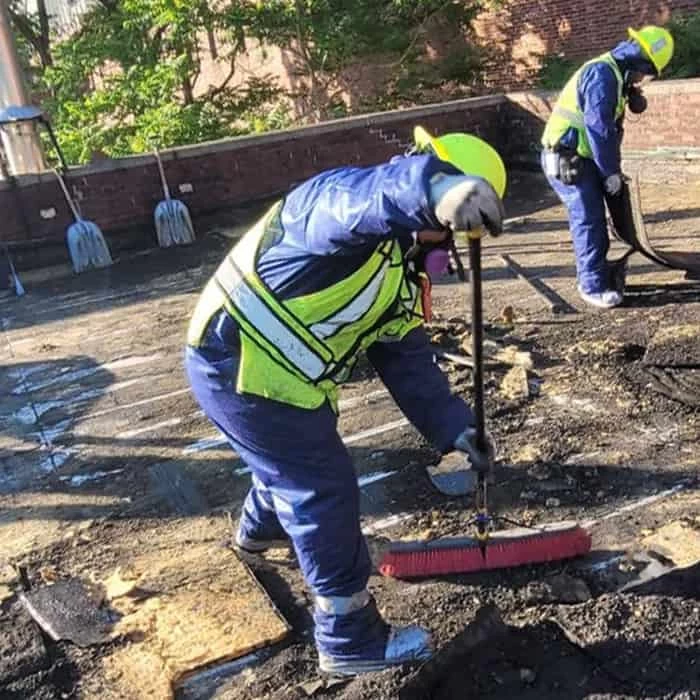
It starts with a site visit and a pre-demolition survey. Before anything else, we assess the structure and conduct a licensed asbestos inspection required by New York State law and by the Town of Islip Building Division before they’ll issue a demolition permit. If asbestos-containing materials are present, which is common in Great River homes built before 1978, we handle the abatement ourselves. No waiting on a third party. No scheduling around someone else’s calendar.
Once abatement is complete and clearance testing is done, we pull the demolition permit through the Town of Islip and coordinate utility disconnections with PSEG Long Island, National Grid, and the Suffolk County Water Authority. These disconnections have to happen before any structural work begins it’s not optional, and it’s not something to rush. We manage all of it.
Then comes the actual teardown. Depending on your project, that means full structural demolition, foundation removal or filling as your builder specifies, and complete debris hauling with licensed disposal documentation. When we’re done, you have a clean, graded lot and a closed permit ready for whatever comes next, whether that’s a builder breaking ground or a property sale.
What's Included When Great River's Housing Stock Is Involved
Full house demolition in Great River isn’t a straightforward teardown in most cases. The hamlet’s housing stock skews heavily toward homes built in the 1950s, 60s, and 70s and that era of construction almost always means asbestos floor tiles, pipe insulation, boiler wrap, or textured ceilings that need to be professionally assessed and, if necessary, removed before a single wall comes down. Homes built before 1978 also fall under EPA lead paint requirements. We’re licensed to handle both, and we document everything so you’re protected.
For waterfront and near-waterfront properties along the Great South Bay or the Connetquot River, there’s an added layer. Flood-compromised structures especially those that took on water during major storm events can have hidden mold and structural instability that affects how demolition is safely approached. Our NYS DOL Mold Remediation License means we can address that before the crew moves in, not discover it mid-project.
Every project includes the pre-demolition hazmat survey, abatement if required, permit coordination with the Town of Islip, utility disconnection management, structural demolition, full debris removal with licensed disposal manifests, and final site grading. You won’t get a bill at the end for something we didn’t tell you about upfront. The estimate reflects the full scope including what the survey finds.
Does the Town of Islip require an asbestos survey before issuing a demolition permit?
Yes and this catches a lot of Great River homeowners off guard. The Town of Islip Building Division requires an asbestos survey as part of the demolition permit application. You cannot get the permit without it. This requirement exists because New York State law mandates a licensed asbestos inspection before demolition of any structure, regardless of age but the Town of Islip enforces it at the permit stage, which means it’s not something you can address after the fact.
For homes in Great River, where the median year built is 1970, this survey almost always turns up something. Vinyl floor tiles, pipe insulation, ceiling texture, and joint compound were all commonly made with asbestos-containing materials during that era. If the survey finds ACMs, abatement has to happen before structural demolition can begin. Working with a contractor who handles both the survey and the abatement in-house rather than coordinating two separate firms is the most reliable way to keep the permit timeline intact and avoid costly delays.
How much does house demolition typically cost in Great River, NY?
Full house demolition in the New York metro area generally ranges from $15,000 to $50,000 or more, depending on the size of the structure, site accessibility, and what the pre-demolition survey finds. For Great River specifically, asbestos abatement is a near-certainty given the age of the housing stock, and that can add anywhere from $1,500 to $30,000 or more to the total cost depending on the extent of the materials involved. The range is wide because every house is different a clean 1,200-square-foot ranch is a different project than a 2,500-square-foot home with original boiler insulation and nine-inch floor tiles throughout.
What you should be cautious of is a contractor who gives you a demolition price before conducting a survey. That number will change when hazmat is found and it usually is found in Great River. The more honest approach is to complete the survey first, understand the full scope, and then price the project accurately. That’s how we structure our estimates, and it’s the only way to give you a number you can actually plan around.
What happens if mold is found in a Great River home before demolition?
Mold is more common in Great River teardowns than most people expect, particularly in properties that have experienced water intrusion from storm events or long-term moisture issues near the bay. Under New York State law (Article 32), any mold remediation involving more than 10 square feet requires a licensed mold remediation contractor. If mold is discovered during the pre-demolition assessment, it has to be addressed before structural demolition proceeds not because it slows things down unnecessarily, but because disturbing a mold-affected structure without proper containment can spread contamination and create health and liability issues.
We hold the NYS DOL Mold Remediation Contractor License, which means we handle this in-house rather than bringing in a third party. For properties along the Connetquot River or near the Great South Bay that may have taken on water during Hurricane Sandy or subsequent nor’easters, this is a realistic scenario worth planning for. We assess it upfront, tell you what we find, and handle it as part of the overall project scope.
Who is responsible for pulling the demolition permit in Great River the homeowner or the contractor?
In most cases, the licensed demolition contractor pulls the permit on your behalf. That’s how we handle it we submit the application to the Town of Islip Building Division, provide the required insurance documentation, and include the asbestos survey results as part of the permit package. You don’t need to navigate the Building Division at One Manitton Court in Islip on your own.
What’s worth knowing is that the Town of Islip demolition permit expires four months from the date it’s issued, with no renewals available. That’s a firm window, and it’s one of the reasons why working with a contractor who handles both environmental remediation and structural demolition matters so much. If abatement and demolition are managed by two separate firms, scheduling gaps between them eat directly into that four-month clock. When it’s all handled by one team, the transition from abatement to demolition happens as quickly as clearance testing allows and the permit window stays intact.
How long does a full house demolition take in Great River, NY?
The structural demolition itself once the permit is in hand and utilities are disconnected typically takes anywhere from one to three days for a standard single-family home. But the full timeline from first call to clean graded lot is longer than most homeowners initially expect, and it’s worth understanding why.
The pre-demolition asbestos survey, abatement if required, permit application and review, and utility disconnection coordination all happen before the first piece of equipment arrives on site. In the Town of Islip, permit review timelines can vary depending on current workload at the Building Division, and utility disconnections with PSEG Long Island and National Grid have their own scheduling requirements. Realistically, from the time you engage us to the time the lot is graded, you’re typically looking at four to eight weeks for a straightforward project longer if significant abatement is required. We give you a realistic timeline estimate at the outset so you can plan around it, not be surprised by it.
Can we handle demolition on a flood-damaged or storm-compromised property in Great River?
Yes and this is a situation we’re familiar with on the South Shore. Great River’s position on the Great South Bay and the Connetquot River puts a number of its properties in FEMA-designated flood zones, and the coastal flooding that came with Hurricane Sandy in 2012 left lasting structural and environmental damage on some properties that still hasn’t been fully resolved. Demolishing a flood-compromised structure requires a different level of assessment than a standard teardown. Water intrusion affects structural integrity in ways that aren’t always visible, and prolonged moisture exposure almost always means mold which has to be addressed under NYS Article 32 before demolition can safely proceed.
We hold both the NYS DOL Mold Remediation License and the relevant demolition credentials, so we can assess and remediate the environmental conditions before the structural work begins. We also have experience working with insurance adjusters on storm-damage claims, which can be relevant if the demolition is insurance-driven. If your property has flood or storm history, tell us upfront it affects the assessment process and helps us give you an accurate scope from the start.