One Contract. Clean Site. No Surprises on a $2M Lot.
Huntington Bay homes sit on some of the most valuable land on Long Island’s North Shore and most of them were built in the 1960s. That combination means your house demolition project needs more than a crew with heavy equipment. It needs a licensed contractor who knows what’s inside those walls, knows the Village’s permit process, and can handle every phase without handing you off to someone else.
I needed a professional consultation explanation of procedure for safe removal of Asbestos in my apartment complex. Without having an account yet, I was very impressed with the caring, knowledgeable and generous advice offered by Jessica, and will look forward to doing business in the future. Thank you so much! I feel much more informed about a sometimes scary endeavor. Peace. Nancy Silva Mineola, NY.
Mia Munoz
Used this company to clean up some water flood in my house. They were fast and easy to work with.very professional, Would recommend to anyone!
Nini Valle
Great company, had a flood and they responded quickly and efficiently. Billed my insurance company directly. I highly recommend this company!
joe colapietro, jr
I had pipe freeze in my basement right before a snow storm and they made to within an hour to help start the clean up process. They we by our side throughout the entire process and even helped with the insurance company. They did such a great job with the cleanup, repair, remidiation, I contracted them to perform the repairs and finishes in the basement. They came with enough manpower and material to get the job done. Leo and Jessica were nothing but a pleasure to deal with!!
Cristian Arredondo c
I had some water damage in my home and Green Island was able to take care of my issue quickly and effectively. I am very pleased with the work they did. They responded quickly and were very professional.
Michael M
Outstanding service! From the office to the field crew everyone was friendly, helpful and responsive. I highly recommend Green Island Group.
What You Get When Demolition Is Done Right in Huntington Bay
When demolition is handled correctly, you end the project with a clean, graded site and a closed permit not an open violation, a surprise asbestos bill, or a call from the village building inspector. That’s the difference between a contractor who understands the Huntington Bay process and one who’s figuring it out on your property.
Huntington Bay’s housing stock averages about 62 years old. That places most homes squarely in the era when asbestos was standard in floor tiles, pipe insulation, roofing, and joint compound. New York State law requires a pre-demolition asbestos survey before any structure comes down no exceptions. If that survey isn’t done before work starts, the project stops, the cost goes up, and the timeline falls apart. Getting it done upfront, by the same contractor handling the teardown, means none of that happens to you.
The village’s coastal position on Huntington Harbor also matters. Decades of salt air, humidity, and water intrusion leave their mark on older homes often in the form of mold that doesn’t show up until walls come down. That’s not a reason to panic, but it is a reason to work with a contractor who’s licensed to handle it on the spot rather than stopping the job to bring someone else in.
Every License the Job Requires Before We Touch a Thing
We hold the NYS Department of Labor Asbestos Contractor License, the NYS DOL Mold Remediation Contractor License, the EPA Lead RRP Certification, and a Suffolk County Home Improvement Contractor License all active, all verifiable. That’s not a list of credentials for the wall. It’s what allows us to take your Huntington Bay project from pre-demolition survey through final debris removal without subcontracting any phase of the work.
We’ve done real work in Huntington Bay not templated location pages, but actual projects on East Neck and throughout the village. We know that Huntington Bay is an incorporated village with its own building department, its own building inspector, and its own Certificate of Compliance requirement that has to be closed out before the permit is done. We know that filing with the Town of Huntington instead of the Village is a mistake that costs homeowners weeks. That kind of local knowledge comes from operating here, not from reading about it.
From First Call to Clear Site Here's What to Expect
The first step is a pre-demolition survey. Before anything is scheduled or priced, we assess the structure for asbestos, lead, and mold. In a village where the average home was built around 1962, this step almost always turns up something and knowing what’s there before the quote is finalized is what keeps your total cost from shifting mid-project. You get a written estimate that reflects actual conditions, not best-case assumptions.
Once the scope is confirmed, we handle the permit filing with the Village of Huntington Bay’s building department not the Town’s. That distinction matters. The village has its own process, its own inspector, and its own timeline. We also coordinate utility disconnections with PSEG Long Island and National Grid before any structural work begins. These disconnections typically add one to three weeks to the pre-construction phase, and accounting for them upfront keeps your builder’s schedule intact.
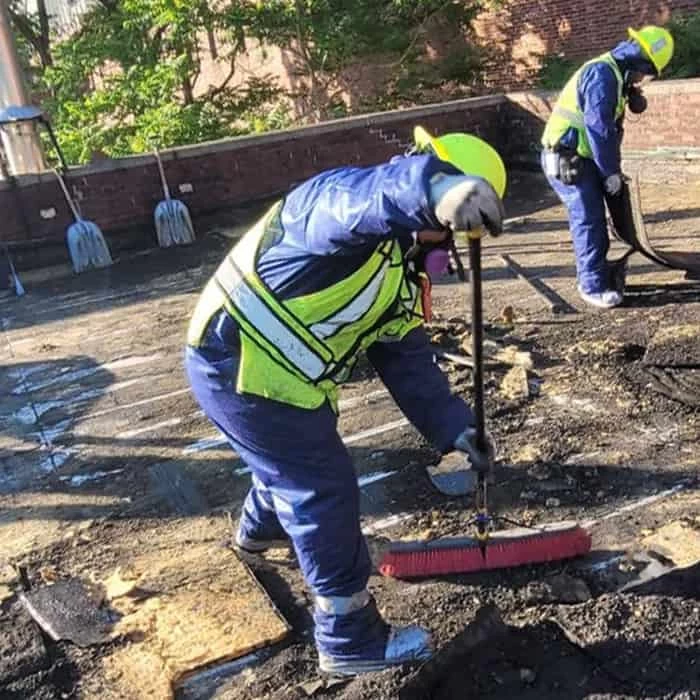
When abatement is complete and the permit is active, structural demolition proceeds. Debris is removed and disposed of at licensed facilities, with full documentation provided to you something that matters if you’re selling the property, closing an estate, or applying for new construction permits. The project closes with a Certificate of Compliance from the village, and the site is graded and ready for whatever comes next.
What's Included in Every Huntington Bay Demolition Project
Every house demolition project we take on in Huntington Bay includes the pre-demolition environmental survey, permit management with the Village of Huntington Bay building department, utility disconnection coordination, licensed asbestos abatement if required, full structural demolition, debris removal and licensed disposal, and site grading. That’s one contract, one crew, one point of contact from start to finish.
For waterfront and near-waterfront properties on East Neck where moisture intrusion, salt air exposure, and aging foundations are the norm rather than the exception mold is a common finding during demolition. We’re licensed under New York State Article 32 to remediate mold as part of the project scope, which means that finding doesn’t stop your job. It’s handled and documented, and the work continues on schedule.
If you’re managing an estate settlement, coordinating with a builder on a teardown-rebuild, or dealing with a storm-damaged structure that’s been condemned, we’ve handled all three scenarios in Huntington Bay. We also offer financing options, including 0% APR, for situations where the cost arrives before the liquidity does estate settlements in particular. Every project ends with full disposal documentation and a closed permit, so there are no loose ends when we leave.
Do I need a permit to demolish a house in Huntington Bay, NY?
Yes and the permit needs to come from the right place. Because Huntington Bay is an incorporated village, demolition permits are issued by the Village of Huntington Bay’s own building department, not the Town of Huntington’s Department of Engineering Services. This is a distinction that trips up contractors who aren’t familiar with the village’s structure, and filing with the wrong department creates delays that can push your project back by weeks.
The village building inspector reviews the application, and once work is complete, a Certificate of Compliance or Certificate of Occupancy must be issued to formally close out the permit. That closeout step is required it’s not optional paperwork. If you’re planning a teardown-rebuild and your builder is waiting on a start date, accounting for the village’s permit timeline from the beginning is the best way to protect that schedule. We handle the permit filing as part of every project we take on in Huntington Bay.
Is an asbestos test required before demolishing a house in Huntington Bay?
Under New York State law, yes a pre-demolition asbestos survey is required before any structure is demolished or significantly renovated, regardless of the building’s age or apparent condition. This isn’t a recommendation. It’s a legal requirement enforced by the NYS Department of Labor.
In Huntington Bay specifically, this requirement is highly relevant to nearly every full demolition project. The average home in the village was built around 1962, which places it squarely in the era when asbestos was routinely used in floor tiles, pipe and boiler insulation, roofing shingles, exterior siding, textured ceilings, and joint compound. Finding asbestos-containing materials in a Huntington Bay home of that era is common not alarming, but something that has to be handled correctly before structural work begins. We conduct the survey, perform any required abatement under our NYS DOL Asbestos Contractor License, and document everything so the permit can close cleanly.
How much does house demolition cost in Huntington Bay, NY?
For a full residential demolition in the New York metro area, costs typically range from $15,000 to $50,000 or more, depending on the size of the structure, the materials involved, and what the pre-demolition survey finds. In Huntington Bay, where homes tend to be larger and older, it’s reasonable to plan for the middle-to-upper end of that range before hazmat findings are factored in.
The variable that moves the number most is asbestos. If the survey identifies asbestos-containing materials which is common in homes built in the 1960s abatement adds to the total cost. The exact amount depends on where the materials are located and how much is present. What we can tell you is that we conduct the survey before finalizing your estimate, so the number you receive reflects actual site conditions. There are no mid-project surprises because we don’t quote without looking first. For estate situations or unexpected demolition needs, we also offer financing options including 0% APR.
What happens if mold is found during a house demolition on Huntington Harbor?
Mold found during demolition is more common in Huntington Bay than in most inland communities on Long Island. The village’s position on Huntington Harbor and Northport Bay means its older homes have been exposed to decades of coastal humidity, salt air, and in many cases water intrusion through aging foundations and building envelopes. When walls come down on a home like that, mold in the wall cavities, basement, or crawl space is a realistic finding not a worst-case scenario.
Under New York State Article 32, any mold remediation above 10 square feet requires a licensed mold remediation contractor. We hold that license, which means a mold finding doesn’t require stopping the project and bringing in a separate environmental firm. We remediate it as part of the existing scope, document it properly, and keep the job moving. If mold is identified during the pre-demolition survey or early in the demolition process, we’ll update your scope and cost in writing before proceeding no verbal surprises, no after-the-fact invoices.
Can one contractor handle asbestos abatement and full demolition in Huntington Bay?
Yes but only if that contractor holds the right licenses, and most don’t. A standard demolition contractor in New York is not automatically licensed to perform asbestos abatement. The NYS Department of Labor requires a separate Asbestos Contractor License for that work, and most demo companies either don’t have it or subcontract it to an environmental firm. That split creates coordination risk, schedule gaps, and a second contract for the homeowner to manage.
We hold the NYS DOL Asbestos Contractor License alongside a full general contractor license for Suffolk County, which means we legally perform both phases under one agreement. For a Huntington Bay homeowner working with a builder on a teardown-rebuild or an estate trustee trying to move a property efficiently having one contractor responsible for the entire project from survey through site clearance is a meaningful operational advantage. It also means there’s one party accountable if anything goes sideways, rather than two contractors pointing at each other.
How long does a full house demolition take in Huntington Bay, NY?
The physical demolition of a residential structure the actual teardown typically takes one to three days depending on the size of the home and site conditions. But the full project timeline, from first call to closed permit, is longer than most homeowners expect when they start planning.
The pre-demolition survey, permit filing with the Village of Huntington Bay building department, and utility disconnections with PSEG Long Island and National Grid all happen before a single wall comes down. Utility disconnections alone can take one to three weeks depending on scheduling. If asbestos abatement is required, that adds time as well the scope and duration depend on what the survey finds. Realistically, for a full house demolition in Huntington Bay from initial engagement to a graded, permit-closed site, you should plan for four to eight weeks total. If you’re coordinating with a builder, that timeline should be communicated to them early so your new construction schedule is built around it, not disrupted by it.